
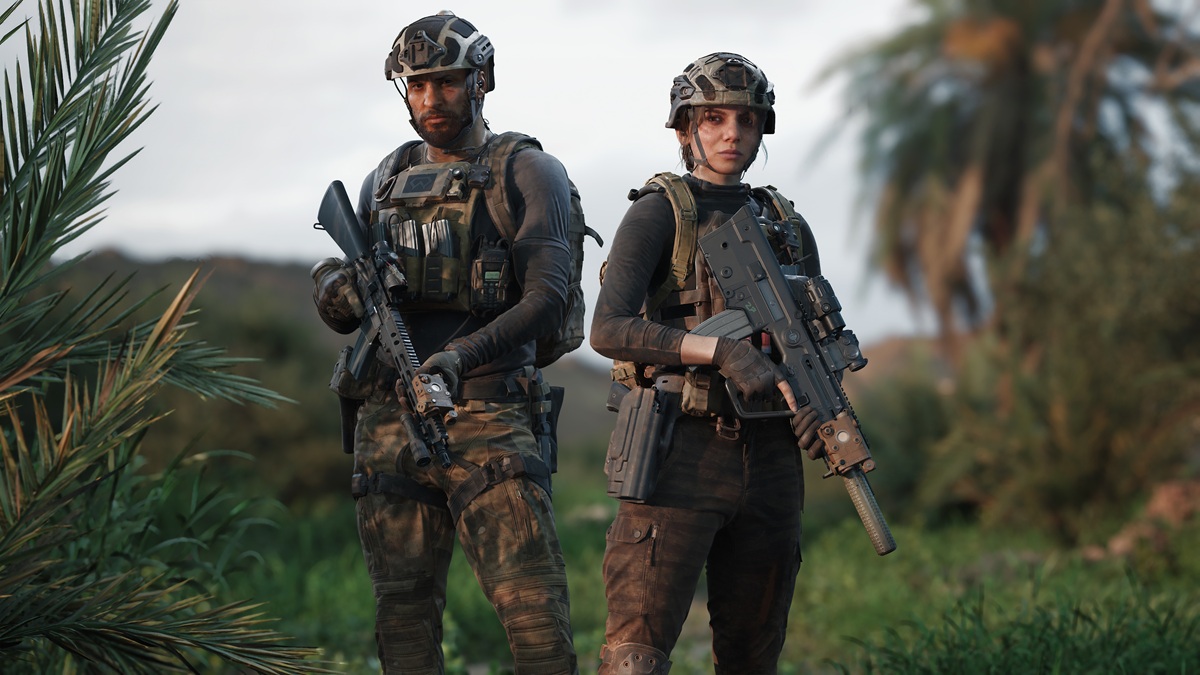
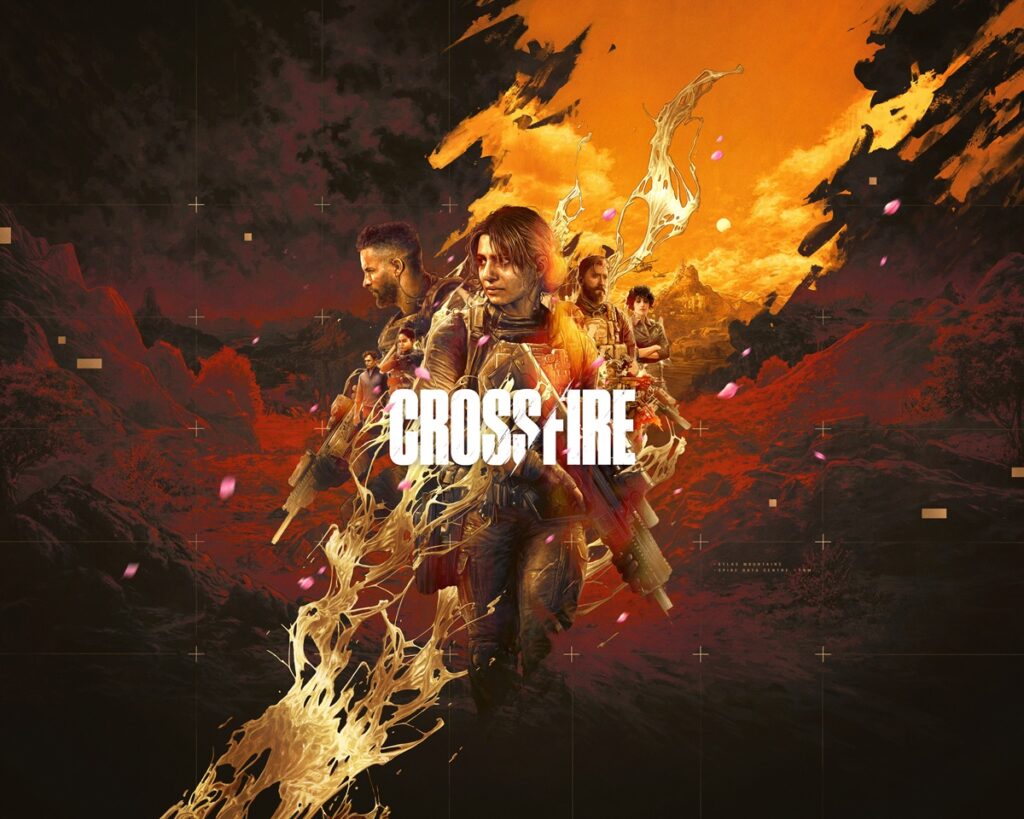
This week at Summer Game Fest, That’s No Moon Entertainment revealed a deep look at its independent triple-A game under development: Crossfire.
It’s a new single-player version of the popular multiplayer franchise owned by South Korea’s Smilegate, and it aims to elevate Crossfire through a tightly woven tapestry of storytelling and innovative game mechanics.
That’s not easy to do, as the bar is high in the first-person shooter market with competing titles like Call of Duty, Battlefield and many more titles. Yet some upstarts are seeing success, like Embark Studios with ARC Raiders and Void Interactive with Ready or Not.
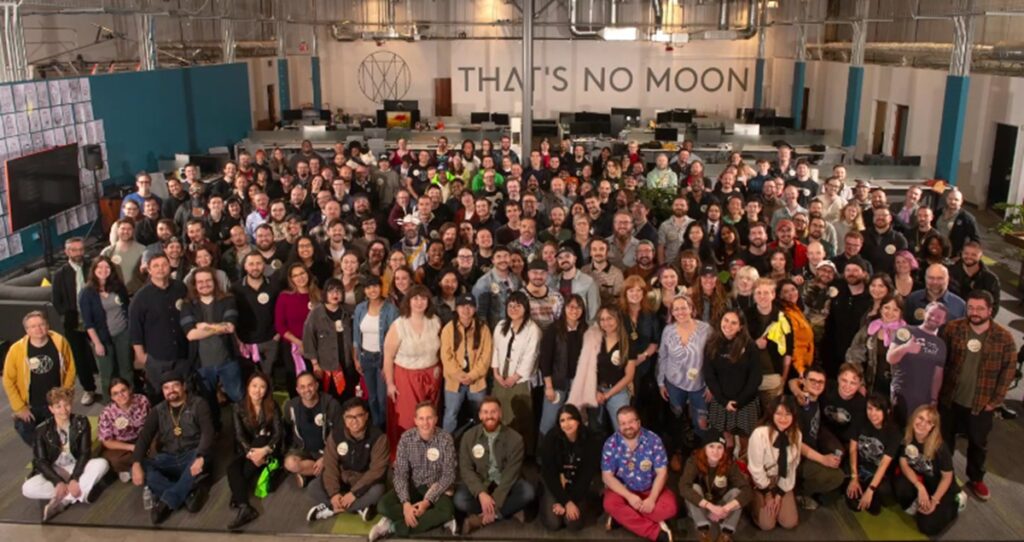
Jacob Minkoff and Taylor Kurasaki, a couple of the cofounders of That’s No Moon, started the company in 2019 after a long history of working together on games like the Uncharted series at Naughty Dog and Call of Duty. They started That’s No Moon because they began to see limitations working at big companies that had to keep a tight rein to make players happy.
At That’s No Moon, they got funding from Smilegate and it gave them the freedom to dream up their own idea of what should come next: a narrative-driven single-player tactical action-adventure, based on modern military combat but inspired by a turning point in human history that is based on science fiction. They saw an opportunity thanks to the unique nature of the Crossfire IP, which depicted two diametically opposed factions warring with each other.
The two sides had fundamental disagreements, but there was no judgment that one was right and the other was wrong. There was no hate, Kurosaki said, and so it was simply two different systems at war with each other. There was some gray area, just like the real world, Kurosaki said.
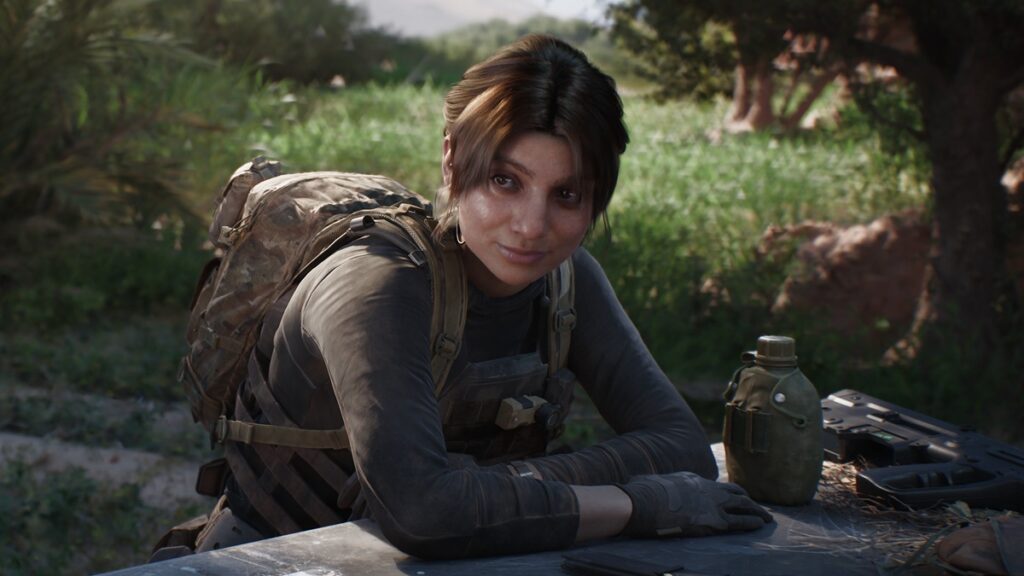
That’s No Moon’s debut project immerses players in the story of Layla Kasem (Claudia Doumit – Amazon’s Emmy-nominated series The Boys) and Delroy Cross (Ricky Whittle – Starz television series – American Gods), two enemy operators who must forge a fraught alliance to survive a lethal existential threat. One of the interesting choices the team made is that you don’t play as both operators; rather, you only play as Layla and not as Cross. They are from two opposing factions, but they have to work together as they face an existential threat.
And in doing so, they come to recognize the other as human and not being so different after all. As a player, you’ll play as Layla, but you’ll root for both of them to survive.
Smilegate invested in That’s No Moon and injected $100 million into it. That’s pretty amazing, but Crossfire has an enormous audience, as its registered players in 80 countries have surpassed 1.1 billion players and its concurrent players has topped eight million.
And yet That’s No Moon is providing a cinematic narrative that can elevate Crossfire’s experience, raising it to something epic. At least that’s the bet at That’s No Moon, and we’ll see how it all turns out. For this moment, it’s quite encouraging to see something as ambitious as this title while others shave back their dreams.
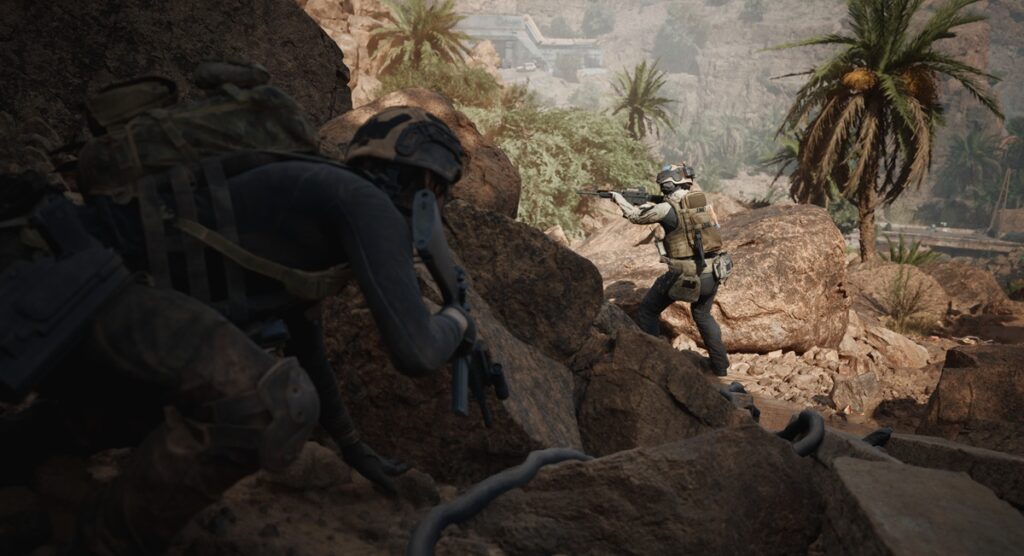
Pushing the medium forward, Crossfire introduces Adaptive Cover, a genre-reinventing cover system that dynamically adjusts the player’s stance to respond to the terrain and enemy positions around them. The player-character will intuitively maintain cover, delivering an unprecedented tense and realistic experience. With Adaptive Cover, players will be able to use the terrain to outthink and outmaneuver highly lethal enemies.
That’s No Moon’s core DNA is expressed by thoroughly connecting narrative and design, allowing the player to connect to the characters through both cinematics and gameplay. This ethos is at the heart of Crossfire, an experience that showcases genre-reinventing gameplay and industry-leading performance capture technology to bring its story to life.
Crossfire is slated for future release on PlayStation 5, Xbox Series X|S, and PC for Steam and via Epic Games Store. This title is a Smilegate IP developed by That’s No Moon Entertainment. Publishing responsibilities are managed by Smilegate for console platforms and by Team K1 for PC.
The team didn’t want to focus on a multiplayer or live ops game, even though that has been more fashionable for startup studios.
The game is a tactical action adventure that is comprised of grounded combat, with very high lethality. The high lethality requires a stealth forward approach, so that you don’t die, and then the second pillar of that is this deep cinematic storytelling with relatable characters, Kurosaki said.
These two operators have to move through the world together in a way that they feel the tension about their differences. Given the existential threat and the lethality of the enemy force, they have to work together.
If you knew That’s No Moon Entertainment got its funding from Smilegate, you would not be surprised that the team is making a Crossfire game. But while people love the gameplay of the multiplayer title, they don’t really know its backstory. It’s a valuable IP without much story, and giving it story is where Minkoff and Kurosaki came in.
“What was really amazing is Crossfire has the themes that really align with our vision of how we see the world and the kind of games we like to make,” Kurosaki said.
“Delroy Cross and Layla are these ideologically opposed different operators who are forced to work together to overcome this existential threat, so the other great thing about working on this and working with our partners at Smilegate is they’ve been so supportive of us and they have let us make the best game of our careers,” Kurosaki said. “They have not micromanaged us, they recognize that we are the subject matter experts, and they all they want to do is enable us to make something meaningful, something special, something that is pushing the medium forward.”
Here’s an edited transcript of our interview.
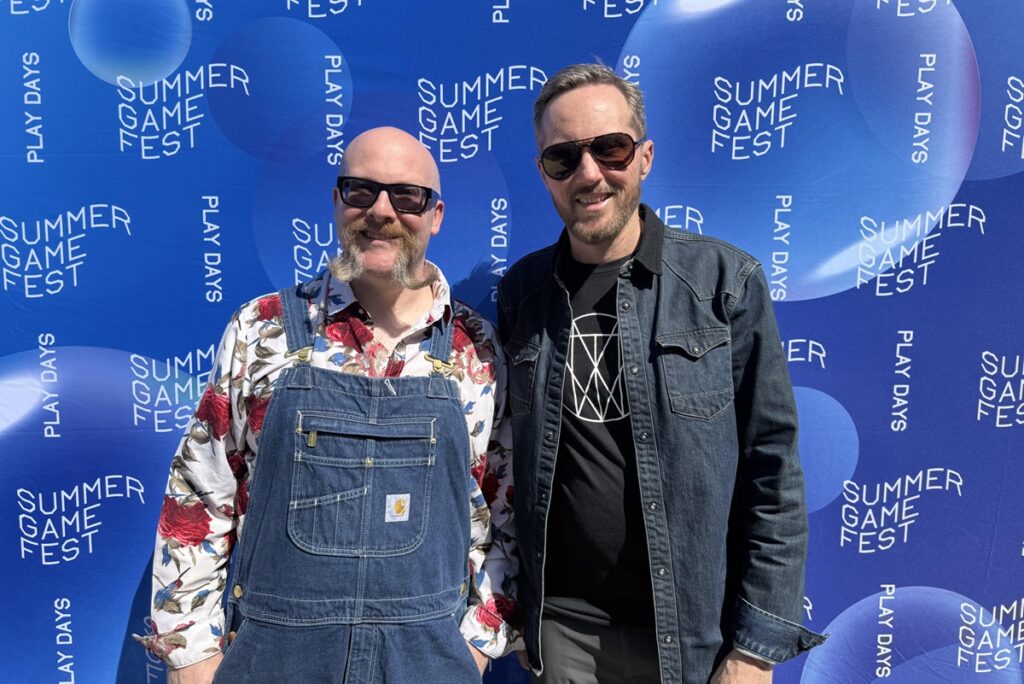
GamesBeat: What kind of reaction did you see to the unveiling?
Taylor Kurosaki: Amazing. It was incredible. It was beyond our wildest dreams. When we were at Naughty Dog, we had the Sony machine. When we were on Call of Duty we had the Activision machine. It was never a question whether we would be noticed. But the flip side is that those places didn’t allow us to be as innovative as we wanted. The double-edge sword was, we’ll get a chance to make something that feels not only personal to us, but feels like we’re pushing the medium forward. But what if nobody notices? And that hasn’t been the case.
GamesBeat: The interesting thing about the Crossfire IP, it’s not so canonized, I guess? You can’t kill off Nathan Drake. There are things Call of Duty can’t do. In this case it seems like Crossfire doesn’t have really strict limits.
Kurosaki: They actually have quite a deep story bible, deep lore. The thing is, though, the controlling idea of the whole thing–at its most fundamental, it’s two ideologically opposed factions, but neither one is inherently good or evil. There’s no mustache-twirling villain. That resonated with us. That’s the kind of story we’ve always wanted to tell. We don’t really like telling stories with–the only mustaches we should be worried about are these.
Sometimes we’ve had people say to us, create an enemy that I’ll want to hate. Hate as an emotion is not an emotion that I can really identify with. They say you should write what you know. We asked the inventor of Crossfire–we said, “Was this your intention? Are we just reading into it, or did you intend for this to be a story about people that believe in different things and fight vehemently for the things they believe in, but neither one is inherently good or evil?” And he said, “Yes, that was exactly the intention.” We felt that way too.
When Smilegate reached out to us, they said, “We want to be associated with high-quality entertainment globally. Right now we’re not so much. We want to work with the best people in the industry and we want to enable them to do their best work. We don’t want to micromanage. We just want to support.” That’s what got us interested in the first place, that creative control. Not a lot of dealing with bad notes. Being supported and encouraged to innovate. They said, “It just has to be awesome.” There was no mandate, where it had to be in this era of Crossfire or anything like that.
We also really enjoy taking existing IP, as you know, and reimagining it, telling our own artistic take on it. Again, it was perfect. It’s an IP that thematically aligns with how we see the world. Knowing that they were going to back us doing what we wanted to do was perfect.
GamesBeat: I don’t know if it’s an outdated impression I have of Crossfire, but it was an IP that ran on anything. The multiplayer could run on Android phones all the way up to whatever else you wanted to use on the high end. Did you have any marching orders on that front?
Jacob Minkoff: The goal with this has always been, from the start, to make a prestige triple-A single-player narrative-driven action-adventure game of the highest quality. That means it’s going to run on PC and console and all that stuff. But we want to push the medium forward. No one ever said to us, “Your vision of adaptive cover is going to be too processor-intensive and so you’re not allowed to work on it.” They said, “We want you to innovate.”
We’re a new studio. We’re independent. Smilegate also doesn’t have a huge presence in the west. We know, for us and for them, that we have to do something new. We have to stand out. We have to do something special. We know that we have a team that’s capable of executing these narrative-driven triple-A games to the highest level of quality and innovating within that space. That’s what we focused on.
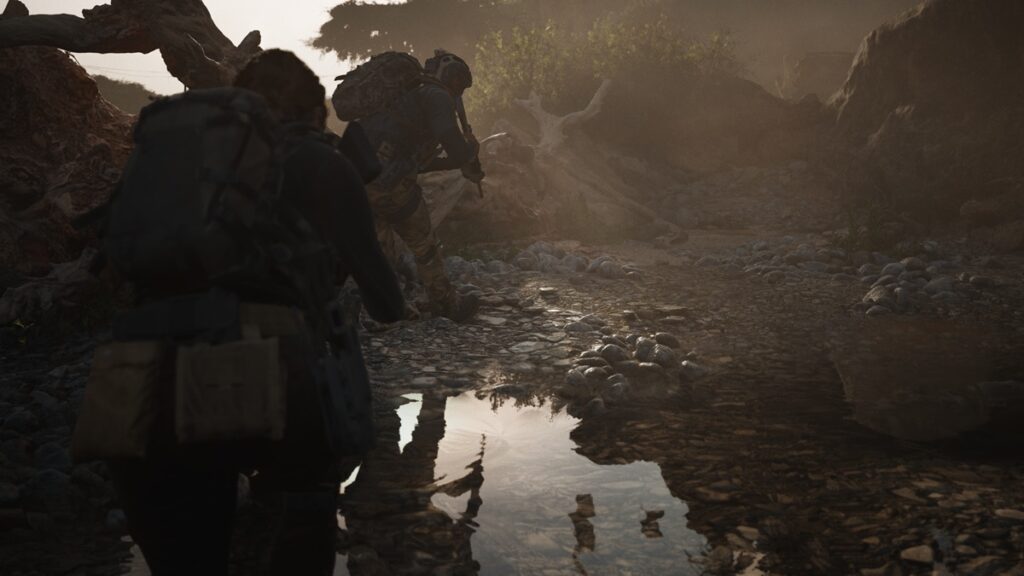
With adaptive cover and what Unreal Engine 5 allows us to do with Nanite and Lumen, basically having infinite geometry, infinitely complex organic geometry, we’re making something that I think–people look at that trailer and it stands out as different and unique, even if they can’t identify exactly what’s special about it. Taylor was talking earlier about how we didn’t know if people were going to get it. What I keep seeing is that people get this idea of–we are able to empower our designers and artists to make the most complex, most beautiful, most organic geometry ever seen in a third-person cover-based shooter because of the innovations we’ve been able to push with adaptive cover.
Kurosaki: The players see it and say it looks like nothing they’ve seen before. Or they say, “It looks like it plays like nothing I’ve seen before.” And they’re right.
Minkoff: I’ve seen a couple of comments–it’s a great opportunity to clarify. Sometimes people don’t realize that for the past 20 years, third-person cover-based shooters have been all about sticky cover. It’s all about, here’s my chest-high object and I’m going to stick to it. That makes my stance go down. Then I’m going to detach and it makes my stance go up.
Our system is all about–what we care about is the context of the environment around you and the line of sight of enemies. You can be any distance from the geometry and your character will take the correct stance, given what will block their line of sight from enemies so they’re protected. That’s how real human beings navigate the environment. Everyone has gotten so used to this idea of sticking to cover that I think sometimes people look at what we’re doing and there’s a risk they don’t recognize what’s happening. But most people are getting it.
GamesBeat: I wonder if it makes it harder for storytelling when you have such a flexible environment. I remember Glen Schofield talking about how when you walk down a hallway in a game, it’s different from a film. In the movies you know that the actors are going to turn right and see something horrifying. In a game they might turn left and see nothing, and your big cinematic moment doesn’t work.
Kurosaki: We find the opposite, sort of. The more realistic our environments, the more immersed the player is, and the more into the story they are. The fidelity actually–if I’m playing a very abstracted world, that abstraction adds a layer of gauze, sort of. It’s harder for me to say, “If I were in the real world, I would feel this way,” because it’s not the real world. It doesn’t look like the real world. With the very organic, complex terrain and the adaptive cover system, that’s how cover would work in the real world. It is perilous. Nothing is perfect. Nothing is totally safe. And so it creates pressure on the player. Then it makes the story ring more true.
When Layla says to Delroy, “We need to fight together or we’re going to die alone,” if we’re doing our jobs right, the player’s gonna say, “Yes, I feel that too.” I’m in emotional parity with Layla, and therefore I’m invested in her story. I think the fidelity–people ask us about why we don’t want to work with something lower fidelity, something simpler. For us it’s not just about bragging rights. Look, our graphics are better than anything else. It’s about immersing you, feeling like–oh, if I really were in an organic environment like this, I might duck down low here. I might sneak around this way. You’re using your real-world affordances of the world you live in to problem-solve, which is very powerful. We spatially relate in a certain way in the real world.
The fidelity also helps us with our storytelling. You’ve seen these games forever now. The level of sophistication in the storytelling goes up and up and up because–you might say something to me when we’re in a scene together, and I don’t say anything. Just the pause before I say something, or an eye dart–we’re so good, as humans, at picking that up. I can tell something’s wrong. You don’t have to say, “I am angry.” Again, all of this fidelity has allowed us to tell these more nuanced stories and to immerse the player more in the story, which is the goal in the first place.
GamesBeat: Did you have some interesting discussions about making Delroy invisible, or making him not playable? What were some of the winning arguments here, or the counter-arguments?
Minkoff: I have a very strongly held position on this one. I believe very strongly that if you make a character playable, or you make an ally have a menu that allows you to control them, they become a tool and not a person. We want you, the player, to build an emotional bond with Delroy, and for you to really buy into him being a different person with his own perspective–if you have a menu that allows you to control him, to tell him exactly what to do, he’s just going to feel like a gameplay mechanic. But if he autonomously navigates the environment, supports you, draws enemy fire, calls out enemy positions to you, he feels like a person.
On the previous projects we’ve made, we’ve always made our characters autonomous. In this case he is autonomous for the same reason, so that he feels like someone playing alongside you rather than a mechanic that you’re using.
GamesBeat: The invisibility part–that could make the game easier than it otherwise would be. What’s the argument for or against that?
Minkoff: Invisibility is a part of the original Crossfire IP. When we were looking into all of those pieces we had available to us, we were thinking about what would be really interesting. One thing that’s interesting is to have asymmetric abilities for your ally that allow them to be helpful to you. When an ally is helpful, autonomously helpful, you like them more. You build an emotional bond with them. This story is all about Layla, who is ideologically opposed to Delroy, building an emotional bond with him. You, the player, need to start out feeling the same way, to create emotional parity with the character you’re playing as.
You’re going to have to say, “This guy is annoying me to begin with. He’s on the opposite side. I’m fighting against him.” But then we build this temporary alliance. Now he should be helpful. One thing that’s going to be very helpful is to have your buddy become invisible, sneak past enemies, take them out, call out their positions. We realized we could leverage this thing that already exists in the IP as a way to further build an emotional bond with this character.
Kurosaki: When we did that deep dive into Crossfire, we really wanted to–it’s not very well-known over here. People know of it, but they don’t know it. Jake and I have gone to China before and played Crossfire at internet cafes. We’ve seen the esports championships. You mentioned before, the thing that the original IP is most known for is its ability to run on different hardware. That may be true, but there are a lot of really unique modes in that game that other competitive multiplayer shooters don’t have. Having those palettes on our easel, so to speak, was inspiring.
GamesBeat: Are you holding a lot of things about the game back for now?
Kurosaki: I almost told you something about the optical camouflage moving forward. We feel like the two–not the headline features, but the two things we want to really talk the most about right now are adaptive cover and why it exists. It exists because this is asymmetric combat where you are outnumbered. You must be stealthy. You must use guerrilla tactics if you are going to win, just like it would happen in the real world. That asymmetry puts pressure on Layla and Delroy, which is what necessitates them working together, which is what makes the narrative hold water.
Our two main things are these two disparate characters that have to learn how to trust each other and have to learn how to get along–I think it’s a good moral for the world. For the world we live in today, but it’s also a universal truth. Taking time to recognize the narrative of the other as valid, even if you don’t agree with that narrative, makes us better people. Layla and Delroy will be better people for their experience together, because of the pressure that’s put on them, that’s expressed through adaptive cover and our other science fiction that we’re not really talking about so much today.
Again, it’s not an accident that it’s Jacob and I talking with you, and it’s Jacob and I who’ve been working together for more than 18 years. We’re both directors on the game. We know that these kinds of deep storytelling single-player games–the north star is always that inseparable connection between the design and the narrative. They have to build on one another. To us, saying, “Hey, we’re going to tell a deep story, best in class, and you’re going to feel it based on the gameplay, and you’re going to notice this key innovation,” those are the things we’re talking about now. Moving forward we’ll get deeper into our science fiction elements and so on.

Minkoff: There’s a lot in the game that we’re going to hold back all the way. This is an authored story experience. We want you to have a very specific narrative experience as a player. Taylor always talks about how a good story should feel both surprising and inevitable. There are lots of surprises. We don’t want to spoil that for you. There’s a lot we’re going to hold back.
Kurosaki: We fully expect that when those surprises come along, the player is going to know–okay, something is coming here. I wonder which way it’s going to go? Is it going to be A or B? And then it’ll end up being C. Once you discover that it’s C, the player will say, “Of course. It couldn’t have been anything else. I didn’t see it coming, but now that I know how it turned out, it was inevitable. It had to be.”
GamesBeat: One of the things that’s motivated you to take this shot, it seems, is that you know how the thinking goes in some of the most powerful franchises. A lot of people might look at the shooter market and decide to shy away from it. It’s a monopoly, or near to it. Once every few years Battlefield shows up. I thought it was interesting that Arc Raiders took their shot and found a crack in the market. They pulled ahead of both Battlefield and Call of Duty for a time. It’s interesting that the way you’ve positioned yourselves–you’re taking your own shot at cracking that monopoly.
Minkoff: Absolutely. We built this studio on innovation. Taylor and I had stories we wanted to tell. We had mechanics we wanted to explore. We knew, from the moment we thought about these things, that they were different and special and could occupy their own space that no one else was filling.
The reality is that when you work for a big company, they have brand equity. They have 30 years of technology. You go to them and say, “I’d love to do this innovation. I’d love to tell this story. I’d love to change this mechanic.” They say, “That doesn’t make financial sense for us. We can keep leveraging the tech that we have and the brand equity we have. That’s going to be the best, most efficient way for us to make money.”
We had to get ourselves into a position where we were independent, where we were working with a company like Smilegate that’s looking for something innovative and new and different to make a name for them in this space. That’s the only way we could get the opportunity to build something new and different. Building your own tech stack from scratch is really hard. Building up a new studio is very hard. There’s a lot of risk involved. But you’re not going to innovate if you say, “Well, our system already does this, so why would we take the risk?” Our answer is, “Then we have to put ourselves in a position where the only option is to take the risk.” It’s been great to have partners to support and enable that.
Kurosaki: Jake and I, we’ve had a front-row seat. We’ve been on teams where big leaps in innovation happen. We were figuring out the right tenets of making these types of games. And we’re still at the beginning. We want to build on the work that’s come before us, and we want to extend it and elevate it. Then others will build on the work we’ve done. That’s how we push the industry forward. Frankly, we’d just be too bored making the same thing over and over again. We like to be inventive. It’s a very new industry.
GamesBeat: I think all the way back to Infinite Warfare. I remember someone at the highest levels of Activision saying that, “You know, in hindsight, we should have made that into its own brand. Because we had Call of Duty we made it Call of Duty, and Call of Duty fans didn’t like it, because it was too different.” Which was another way of saying it was too innovative.
Kurosaki: Exactly. We might have had opinions on that while we were there working on that. We’re very proud of that game. It’s very gratifying when fans reach out and say–I mean, I’ve heard people say that’s structurally the best Call of Duty campaign that there’s ever been. It was a very personal game for us, just like this game. Write what you know. Write about what you as a human are going through. Write something that feels personal to you.
There’s never been a more personal project that we’ve been more proud of than Crossfire. We’re so lucky to be able to have people employ us and say, “Just do your best, most inventive, most innovative work.”
GamesBeat: Take your swing.
Kurosaki: We talk about having at-bats. These games take multiple years. How many games can you do in a career? Not that many. Not only do we want to push the medium forward, but we want to say something. We want to have a point of view. Otherwise, what’s the point?
GamesBeat: I thought that of all the big projects that got started in the last five years or so, almost everything had been exhausted. And then you guys showed up.
Minkoff: We had our heads down. Just trying to make the thing.
Kurosaki: It is true. We kind of went into the reveal and–we believe very strongly in it. We think it’s really cool. We’re very excited about it. But you never know. Maybe what you want to say or how you want to push the medium forward, players won’t like it. You never know. But we’re really grateful. It’s blown away, exceeded all our expectations. We had a big celebration with the team last night. It was great. Everyone was blowing off a lot of steam. Five and a half years of not being able to say a peep.