
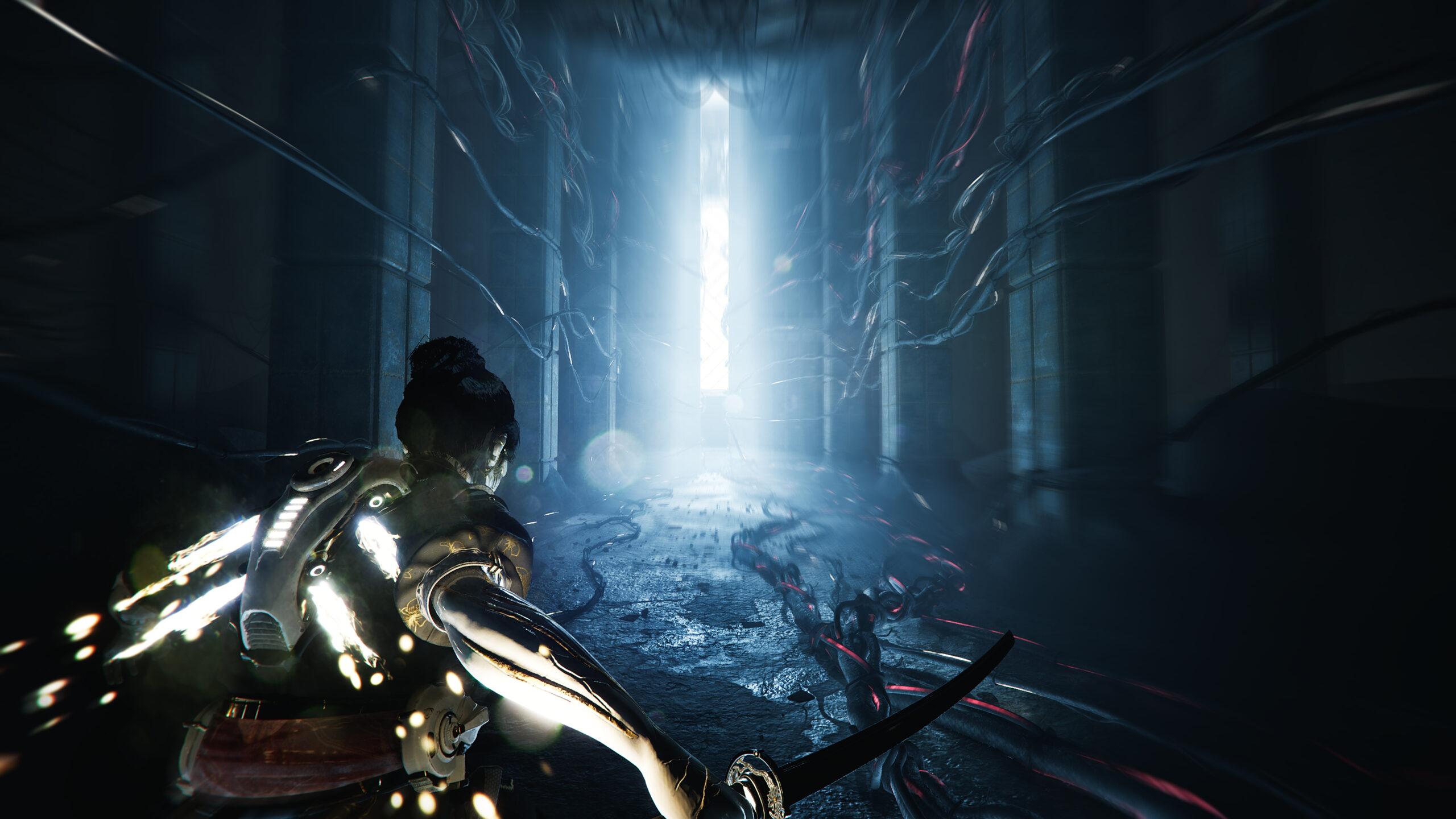
As the games industry continues to reckon with layoffs, studio closures, and ballooning production costs, a growing number of developers are questioning whether the traditional, centralized studio model still makes sense. For Chaos Manufacturing, the answer is a decisive no as they embrace a more fluid, remote work-centric model.
Founded by industry veteran Guy Costantini, Chaos Manufacturing was built from the ground up as a fully remote, highly autonomous studio designed not only to make games differently, but to support the people making them over the long term. That philosophy is deeply intertwined with the studio’s debut project, SOL Shogunate, but it starts well before game design ever enters the conversation.
The past several years have forced the games industry into a prolonged period of self-examination. After rapid expansion during the pandemic, studios of all sizes have faced layoffs, project cancellations, and a renewed focus on efficiency as rising development costs collide with a crowded, risk-averse market.
For many developers, the question is no longer how to grow faster, but how to survive longer—without burning out the people doing the work.
Costantini says the studio’s approach was heavily informed by lessons learned while shipping major projects during the pandemic era, when remote work stopped being an experiment and became a necessity.
Rather than treat that period as a temporary workaround, Chaos Manufacturing aims to lean into what worked and deliberately build a studio structured around it.
Remote work as a quality-of-life multiplier
For Costantini, remote work is not about convenience or cost savings alone. It is about acknowledging the realities of people’s lives and removing friction that has long been accepted as unavoidable in game development.
“I learned that some people’s lives became incredibly better by working remotely,” Costantini said. “And I was inspired by that. For example, we had an artist who basically went from having a four-hour-a-day commute to a zero-hour-a-day commute, and they’re an artist, so they don’t really always need to be in the office, right? And on top of that, they had a child with disabilities who they were taking care of.”
That experience forced Costantini to confront a long-standing assumption in studio management: that physical presence is a prerequisite for productivity or creativity.
“When I learned that story, it was something that really resonated with me,” Costantini said. “How many people like this person exist that we are, just managerial reasons, asking to come to the office?”
Chaos Manufacturing ultimately formalized that realization into a fully remote, asynchronous workflow built on trust, documentation, and autonomy rather than constant meetings or physical oversight.
Given that making games is a creative endeavor, not just a matter of completing tasks and checking off assignments, letting employees create their own space for mental clarity can be a huge boost. It also benefits employees who may be more productive at times when the office isn’t usually open.
That decision also expands the studio’s potential talent pool beyond traditional development hubs, allowing Chaos Manufacturing to recruit globally without requiring relocation, which is a move that aligns with both creative diversity and long-term cost control.
Autonomy by design, not just a perk
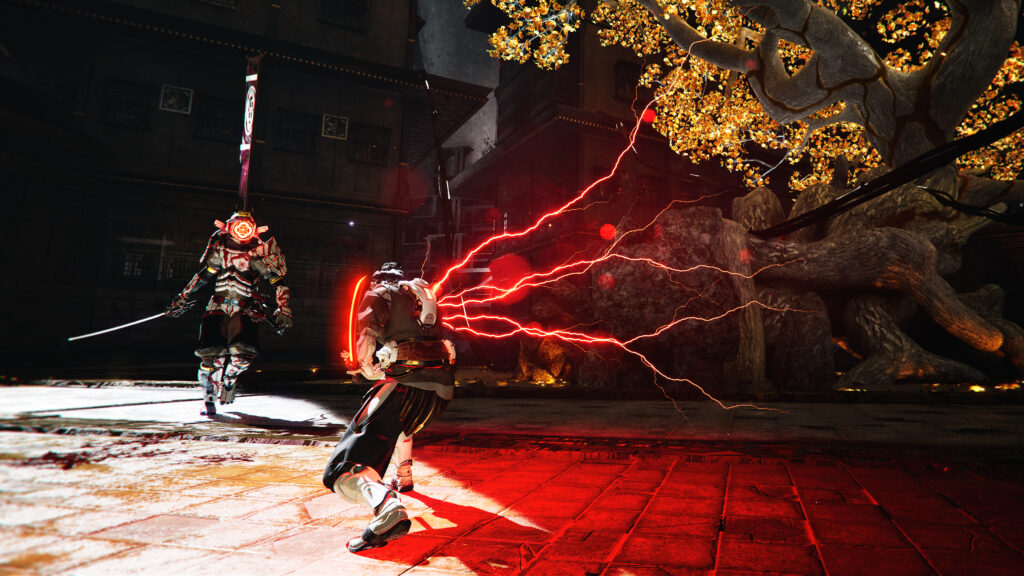
While remote work removes physical constraints, Costantini emphasizes that it also demands a different type of developer. Chaos Manufacturing does not attempt to micromanage productivity or enforce rigid schedules. Instead, it places responsibility squarely on the individual.
“The right kind of person I landed on is an autodidact with a passion for knowledge, so somebody who really has decided what they want to be when they grow up, and they pursue mastery on their own, outside of just their core competency,” Costantini said.
This approach intentionally filters for developers who are comfortable operating without constant oversight, which is a sharp contrast to production environments built around frequent check-ins, daily standups, and dense approval hierarchies.
“What we offer is a hyper-flexible work environment, which means you can work as much as you want, as long as it’s enough for the project to progress,” Costantini said. “You can work from wherever you want. We’re a very asynchronous culture. We record a lot of our meetings, and they are made available for people to consume on their own time. We also don’t have a lot of them.”
By minimizing synchronous meetings and emphasizing documentation, Chaos Manufacturing reduces the cognitive overhead that often slows down remote teams. Developers are free to engage deeply with their work rather than spending large portions of the day context-switching or waiting for approvals.
According to Costantini, that structure has allowed the studio to move faster with fewer people. That’s a critical advantage at a time when bloated team sizes and runaway budgets have become existential risks for many studios.
Redefining “sustainable” game development
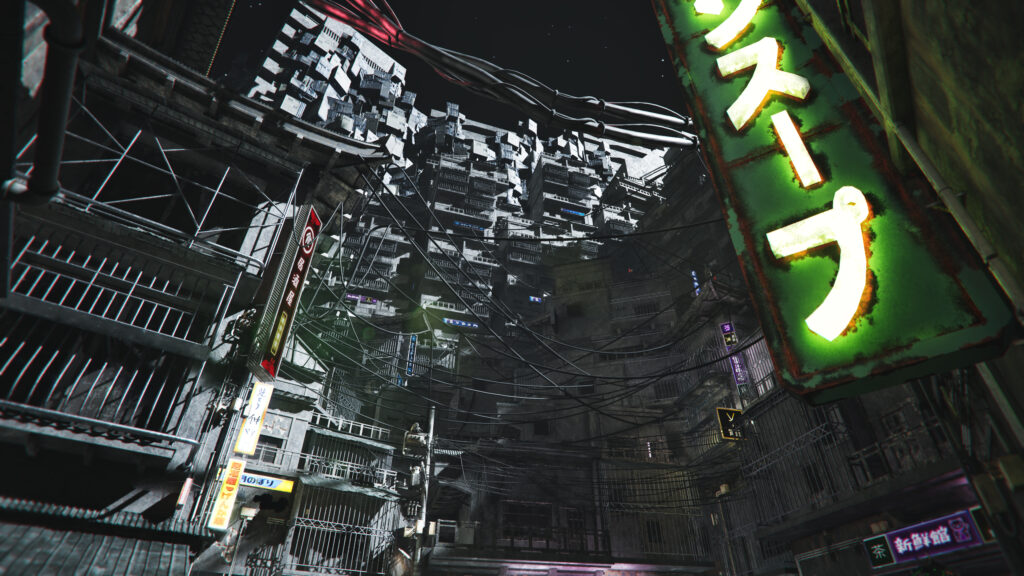
When Costantini talks about sustainability, he is not referring to environmental initiatives or purely financial efficiency. Instead, he frames it as a long-term human problem: whether people can realistically spend decades working in games without sacrificing their health, relationships, or sense of purpose.
“What I’ve been really interested in doing is creating what I call sustainable game development,” Costantini said. “And it’s less to do with a sort of carbon footprint…It’s more about building lives for people that one day, 20 years in, they’ll look back on and say, ‘You know what? That was a good life I built for my loved ones and myself.’”
That perspective has direct implications for how Chaos Manufacturing scopes its projects. Rather than scaling headcount aggressively, the studio operates with a small, focused core team, supplementing as needed with contractors and collaborators.
“We started really small with a core team of folks, and we used a constellation of contractors and collaborators to help us along the way so that we would only build what we absolutely needed,” Costantini said. “We prototyped very scrappily and went through a lot of iterations before we landed on the gameplay core.”
This modular approach allows the studio to remain flexible without committing to permanent overhead that could later force layoffs or cancellations. It also encourages rapid experimentation early in development, reducing the risk of expensive course corrections late in production.
Costantini believes this model reflects a broader shift in how creative industries operate that prioritizes adaptability over scale.
“I actually predict that this is how game companies will be in the future…we’re really entertainment and creative companies more than software companies,” Costantini said. “Software development is a creative endeavor, but…this is a passion, passion work at its core.”
Smaller games and clearer value
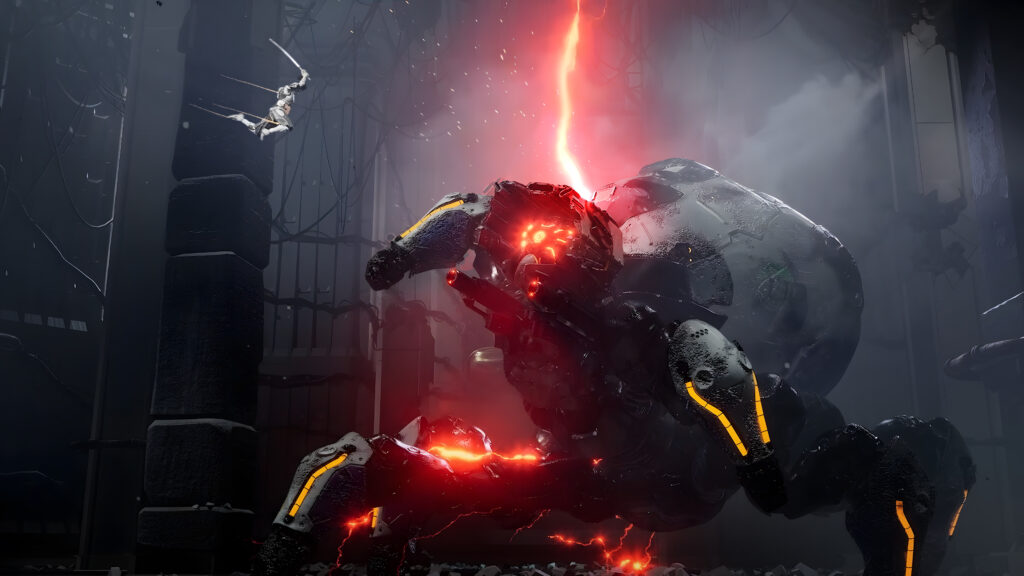
Chaos Manufacturing’s sustainability philosophy also shapes how it thinks about players. Costantini is openly critical of the industry’s fixation on infinite engagement and live-service retention metrics, which often come at the expense of both developers and audiences.
“I’m also a fan of finite experiences, like we’re not trying to make The Forever Machine that keeps you trapped in it,” Costantini said. “I just want you to have a great time and come back next time, because you had a great time.”
Rather than competing for endless attention, Chaos Manufacturing aims to deliver focused, high-quality experiences that respect players’ time. It’s an increasingly relevant consideration as the average age of premium game buyers continues to rise.
“If you look at data, the center of the bell curve is like 30 or 40 year olds…they have more money than time, and they all have a stack of, like, 100-hour games…and they’ll probably all play like 10% of them,” Costantini said.
By aligning creative scope with realistic player habits, the studio hopes to avoid the escalating demands that often trap teams in perpetual development cycles.
As SOL Shogunate moves closer to wider visibility, Chaos Manufacturing’s experiment in remote-first, sustainability-driven development will face its most public test yet. But in an industry searching for alternatives to boom-and-bust cycles, the studio’s philosophy offers a compelling case study, not just in how games can be made, but in how game development careers might endure.