
The game industry is going through a historically tumultuous period right now as studio closures and layoffs run rampant, leaving experienced developers jobless and thousands of junior developers, students, and career switchers suddenly locked out of a field they’d spent years trying to enter.
For many, it was a dead end. For Ayla Derrick, it was the beginning of something new.
A former educator who discovered her passion for games during the SAG-AFTRA strike of 2023, Derrick founded Cave Bear Games, a studio created by and for juniors. What started as a small group has since become an inspiring grassroots success story in indie development with its 15-person studio and strong Discord community.
The release of Plantasia in September, a cozy “background game” that quietly runs while players work, study, or relax, was their first title.
Building a studio out of necessity
Derrick’s transition from the classroom to the game studio wasn’t planned. Working in education through COVID had left her burnt out, and when she realized someone must be writing the stories in games, she decided to try it herself. What she didn’t anticipate was entering the industry during one of its harshest downturns.
“The industry is in rough shape,” Derrick said in an email interview. “Investment has dried up, AAA studios are falling just as quickly as indies, and the ones with the money are not willing to take ‘risks.’ Unfortunately, juniors are considered a risk since they don’t have extensive experience. With so many developers out of employment, juniors are constantly overlooked in favor of more senior workers who will accept lower wages during this time of instability.”
Her teaching experience, however, proved unexpectedly valuable. “I didn’t think education would be very transferable to games, and so I was really leaning on my writing background,” Derrick said. “But as I began to lead the team to create my vision, I realized that teaching was a huge boon to leadership. As a teacher, you have to juggle many students all at once, be able to track their progress, and understand how they learn. You have to adjust your teaching to be able to support each student and work with different learning styles, all while working towards a curriculum goal.”
Those skills helped her transform a passion project into a functioning studio. And when her LinkedIn post introducing Cave Bear went semi-viral, garnering thousands of likes and comments, her vision resonated across an industry desperate for new opportunities.
“The post succeeded because we were not alone in this sentiment,” Derrick said. “There are thousands of us – juniors, students, recent grads – with less than three years in the industry, or transfers from other industries, who just want a shot. I think seeing what appeared to be a legit studio state that they were focusing specifically on juniors, when no one else was, ignited some hope.
Within days, Cave Bear’s small team became the nucleus of a growing movement. The studio became a legal business, Plantasia’s scope expanded, and Derrick found herself not only directing a game but managing a fast-growing community.
Plantasia and the Partner Studio Program
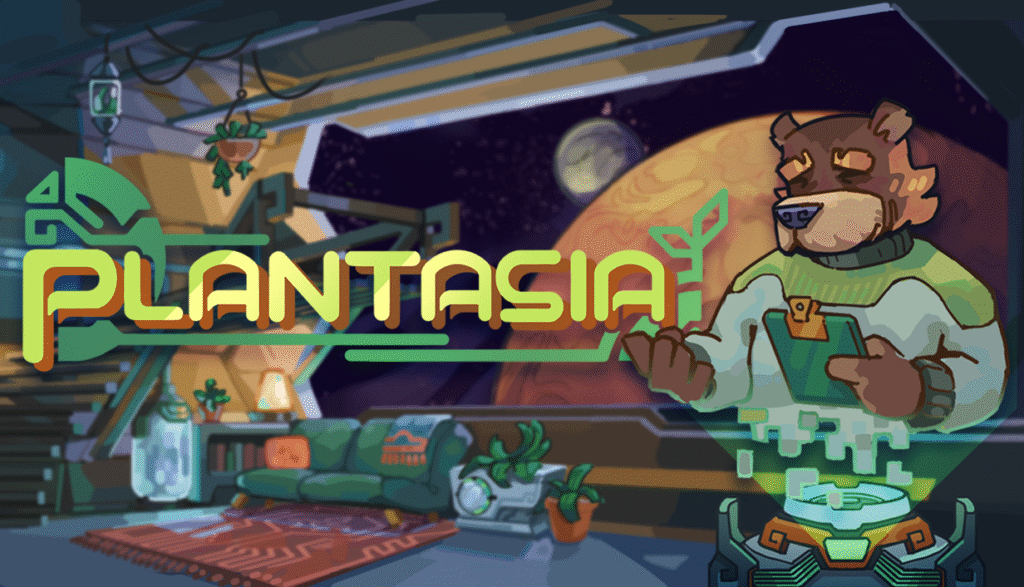
Plantasia, Cave Bear’s debut, blends the idle serenity of Plant Tycoon with the ambient presence of Rusty’s Retirement. Players tend their plants in real time while the game runs quietly at the bottom of the screen — no combat, no death, no stress.
“With those two games in mind, Plantasia was born: a cozy idle plant growing sim that would accompany the player as they use their computer throughout the day for a variety of tasks,” Derrick said. “Plantasia has no combat, no violence, no plant death, and no loss-state. The entire point of the game is to create a cozy environment for the player.”
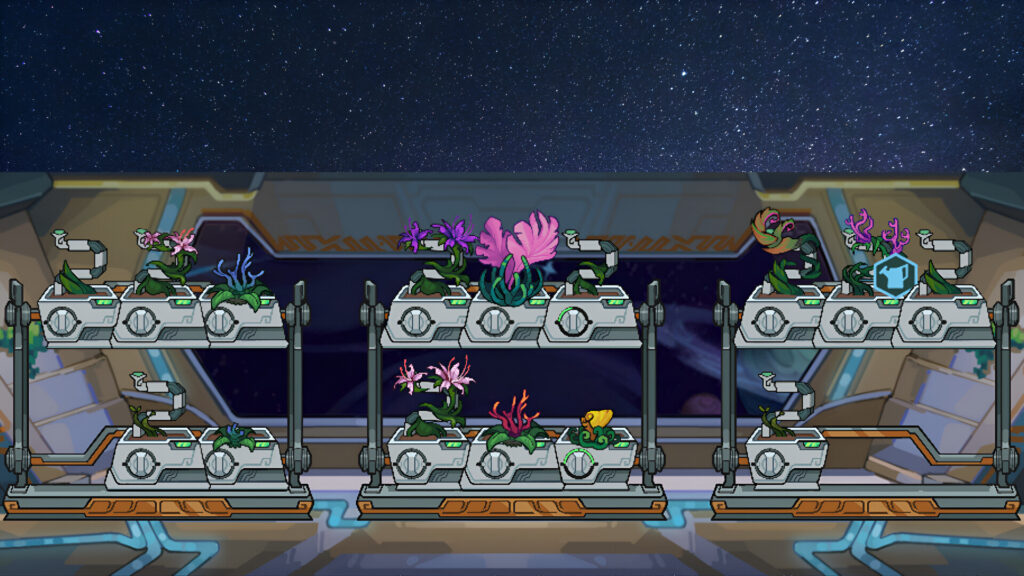
Derrick continued, “I think that as the world descends further into chaos and anxiety levels continue to rise, games that do not induce stress are going to grow in popularity. Players will always want a challenge, but you don’t need significant stress to accomplish that. In Plantasia, the challenge can simply be unlocking all available plants – of which there are thousands.”
Following Plantasia, Derrick launched the Partner Studio Program, a network of more than 150 small indie teams — most unfunded or self-funded — that share resources, knowledge, and community.
“I am so proud of the Partner Program, and we are only at the beginning of our journey,” Derrick said. “The mission of the program is to bring together indies to support each other rather than compete against each other. Currently, we are focusing on the studios that need the most support – unfunded or self-funded teams.”
The program’s most rewarding outcome so far, Derrick added, was helping a junior developer on a visa find a position that allowed him to stay in the U.S. Since then, he’s started his own studio that joined the Partner Studio Program.
Advice for aspiring developers
For young people trying to break into the industry, Derrick’s advice is pragmatic and goal-oriented.
“If the studios won’t let you make their games, then make your own games,” Derrick said. “Wanting to break into the industry right now is all about the long game. It’s highly unlikely that any junior is going to find a traditional paid position in the industry for at least a couple of years. But eventually, those junior-level jobs will pop up again. When they do, do you want to apply with a portfolio full of half-finished game jams and tiny solo projects? Or do you want to apply with a portfolio filled with finished and published games you have worked on with a team?”
Derrick added, “So my best advice is to make games. Make games with a team. You might have to do it for free, or for revenue share, but if you want to be in this industry in 5-10 years, then you have to start now. The reality is that the juniors of today are going to be the mids and seniors of tomorrow. Start working and networking with them now, and in a few years, you will have a ton of extremely talented and employed connections that can help you go wherever you want to go.”