
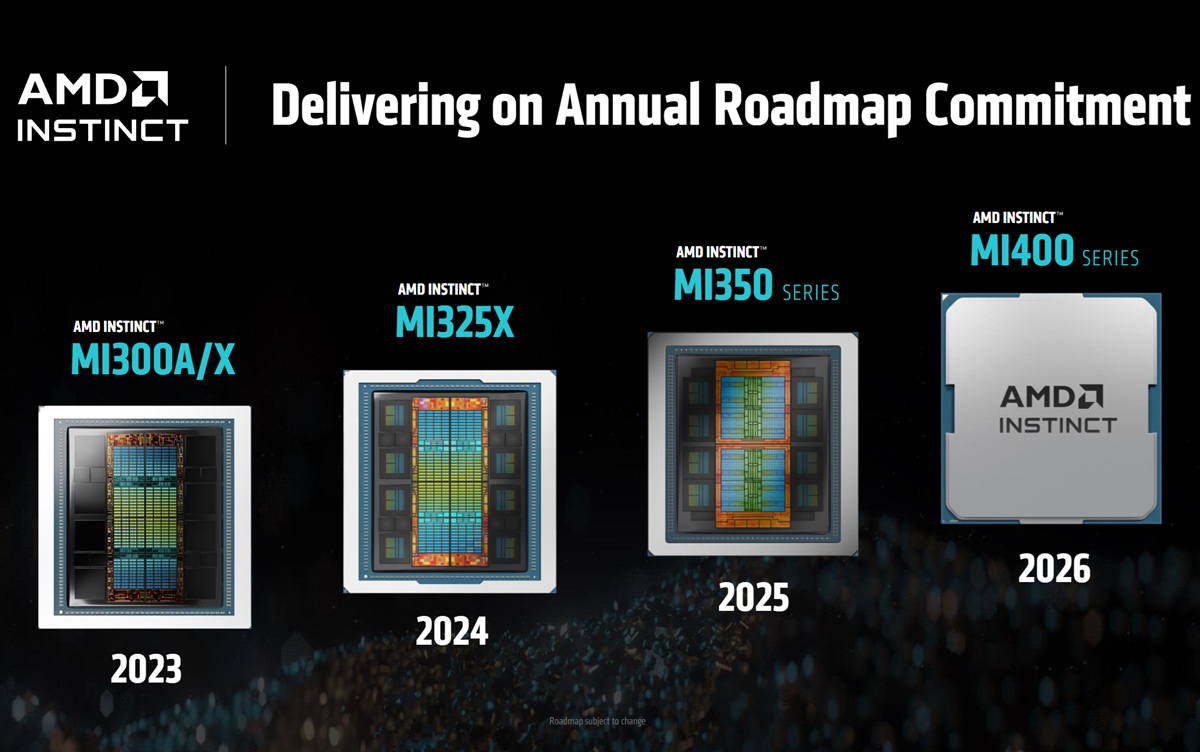
Advanced Micro Devices and OpenAI today announced a six-gigawatt agreement to power OpenAI’s next-generation AI infrastructure across multiple generations of AMD Instinct graphics processing units (GPUs).
The first 1 gigawatt deployment of AMD Instinct MI450 GPUs is set to begin in the second half of 2026. GPUs are the lifeblood of AI processing, and OpenAI continues to lead the market with its ChatGPT natural language processing.
Of course, it takes a huge amount of AI processing from both GPUs, CPUs and other infrastructure in data centers to accommodate the massive demand for large language models (LLMs). And OpenAI teamed up with Nvidia on a bigger nine-gigawatt deal two weeks ago. That similar deal paved the way for this one, as it makes sense for OpenAI to have more than one source of GPUs. And it’s striking that these deals are measured in gigawatts, as the industry hasn’t figured out yet how electrical usage can be sustainable given the growth in AI processing around the world.
AMD’s high-performance computing systems and OpenAI’s pioneering research and advancements in generative AI places the two companies at the forefront of this important and pivotal time for AI.
Under this definitive agreement, OpenAI will work with AMD as a core strategic compute partner to drive large-scale deployments of AMD technology starting with the AMD Instinct MI450 series and rack-scale AI solutions and extending to future generations.
By sharing technical expertise to optimize their product roadmaps, AMD and OpenAI are deepening their multi-generational hardware and software collaboration that began with the MI300X and continued with the MI350X series. This partnership creates a true win-win for both companies, enabling very large-scale AI deployments and advancing the entire ecosystem, the companies said.
As part of the agreement, to further align strategic interests, AMD has issued OpenAI a warrant for up to 160 million shares of AMD common stock, structured to vest as specific milestones are achieved. That adds up to about $33 billion worth of AMD stock — at a penny a share.
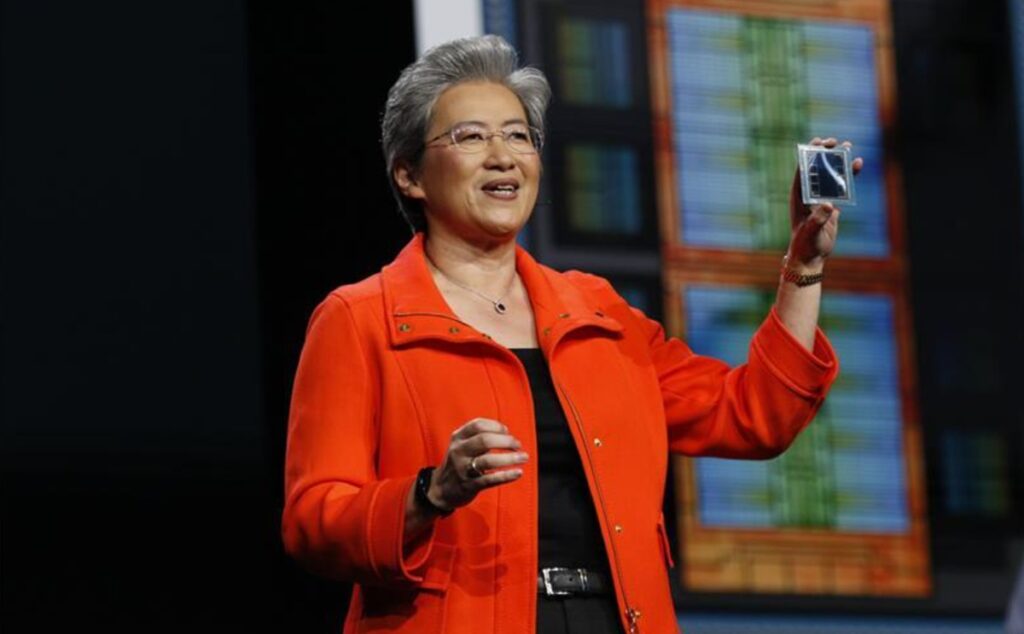
“We are thrilled to partner with OpenAI to deliver AI compute at massive scale,” said Dr. Lisa Su, chair and CEO, AMD, in a statement. “This partnership brings the best of AMD and OpenAI together to create a true win-win enabling the world’s most ambitious AI buildout and advancing the entire AI ecosystem.”
The first tranche vests with the initial one-gigawatt deployment, with additional tranches vesting as purchases scale up to six gigawatts. Vesting is further tied to AMD achieving certain share-price targets and to OpenAI achieving the technical and commercial milestones required to enable AMD deployments at scale.
Ian Cutress, chief analyst at More than Moore, said in a post that the value to AMD is about $90 billion. Cutress noted the shares vest progressively as OpenAI’s deployment scales from one to six gigawatts and as AMD’s share price crosses a series of performance thresholds up to $600 per share. The $600 per share at 160m shares would be $96 billion dollars, or roughly the same value as the hardware in the deal.
“AMD’s announcement of a strategic partnership with OpenAI represents not just another GPU supply agreement, but a structural reconfiguration of how AI infrastructure is financed and aligned,” Cutress said. “On the surface, this is a supply deal. Underneath it could be considered a financial instrument that transforms AI hardware sales into equity alignment, tying AMD’s long-term valuation directly to OpenAI’s infrastructure growth. AMD describes the partnership as “expected to deliver tens of billions of dollars in revenue,” and its stock surged more than thirty percent following the announcement. The market clearly sees this as a forward acceleration of AMD’s ambition to reach ten billion dollars in annual AI revenue earlier than expected.”

“This partnership is a major step in building the compute capacity needed to realize AI’s full potential,” said Sam Altman, CEO of OpenAI, in a statement. “AMD’s leadership in high-performance chips will enable us to accelerate progress and bring the benefits of advanced AI to everyone faster.”
“Building the future of AI requires deep collaboration across every layer of the stack,” said Greg Brockman, cofounder and president of OpenAI, in a statement. “Working alongside AMD will allow us to scale to deliver AI tools that benefit people everywhere.”
“Our partnership with OpenAI is expected to deliver tens of billions of dollars in revenue for AMD while accelerating OpenAI’s AI infrastructure buildout,” said Jean Hu, CFO at AMD, in a statement. “This agreement creates significant strategic alignment and shareholder value for both AMD and OpenAI and is expected to be highly accretive to AMD’s non-GAAP earnings-per-share.”
Through this partnership, AMD and OpenAI are building the infrastructure to meet the world’s growing AI demands, by combining world-class innovation and execution to accelerate the future of high-performance and AI computing.
Ryan Shrout, an analyst at Shrout Research, said in a message to GamesBeat, “This proves that OpenAI has confidence in AMD and its accelerators, software, and roadmap. They don’t make this kind of decision with a one-off engagement, the work they have been doing on MI300/MI350 has paid off.”
Shrout added, “OpenAI remains the kingmaker: Once again demonstrates OpenAI’s outsized influence in shaping AI infrastructure decisions and vendor roadmaps. They continue to be the dominant voice in large-scale AI compute consumption.
And he said, “The 160M share warrant structure tied to deployment milestones and price targets is clever financial engineering – creates true strategic partnership rather than just a vendor relationship, but moves some value away shareholders by diluting.
Shrout noted that “tens of billions” in expected revenue for AMD signals this is transformational for their datacenter business, not just incremental.
“There is something in my head around the idea that we are characterizing these investments based on power consumed rather than compute provided, but I haven’t settled on what that means yet,” Shrout said.
And Mario Morales, an analyst at IDC, said in a message to GamesBeat, “The deal catapults AMD as a strong platform provider for large AI infrastructure buildout and validates AMD’s technology and open ecosystem. The partnership not only cements financial terms that drive revenue growth and valuation targets, but also fosters strategic agility for both companies in an industry with tremendous change.”
Patrick Moorhead, CEO of Moor Insights & Strategy, said in a message to GamesBeat, “This seals AMD as a credible hyperscaler GPU provider. While AMD had been selling billions in the market, when their competitor is shipping 100s of billions, there were questions. Now there should be no questions. The company has to deliver for the 2H/26, but if they do, and I think they will, it’s all upside.”