
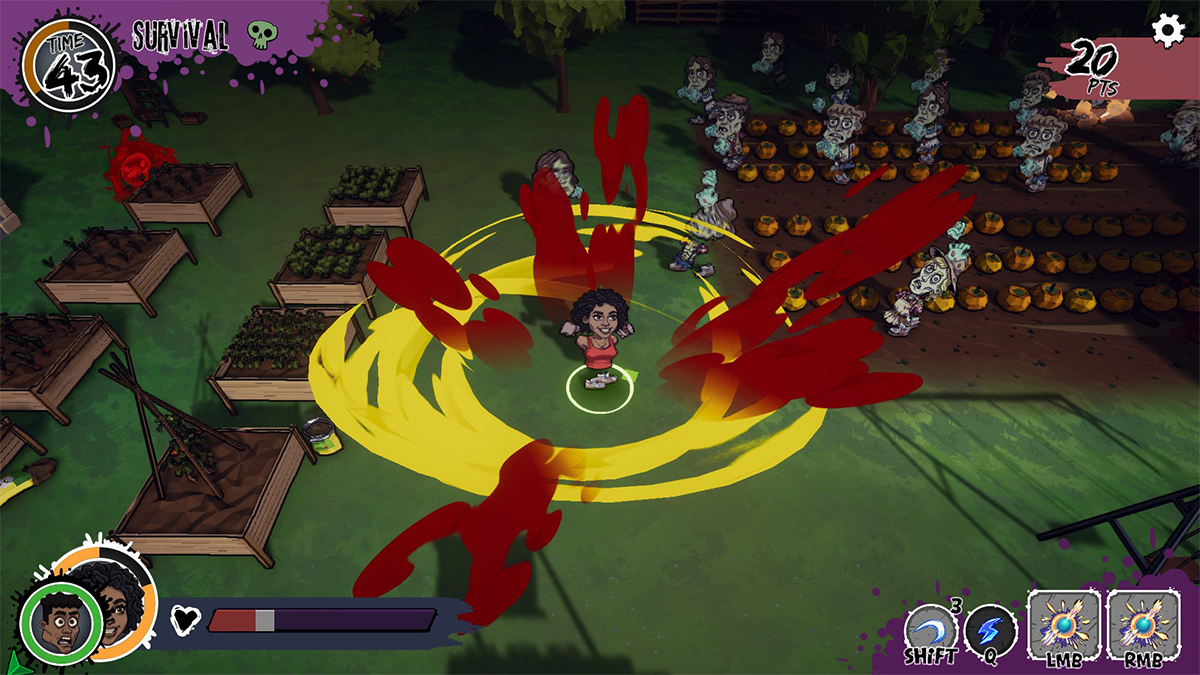
Indie Welsh game development studio 10six Games, led by industry veterans from Rockstar Games, Aardman, and the co-founder of 2K Games, announced You Vs Zombies, a high-intensity, sardonic, roguelite game coming later this year.
The game will launch into Early Access on Steam in August 2026. In it, players can use AI to create a hero who can possess anyone, rewrite history and save humanity.
In the game’s lore, the world has ended. Humanity has fallen. Only three wizards remain in the ruins: Ash, Morgan, and You. A desperate plan is formed: in order to save the world, you must abandon your body and become a time-traveling wizard ghost. Using The Ritual, you hurl yourself back through time to the start of the outbreak in search of someone – anyone – to possess who might survive long enough to change things.
Whether you become a fire-breathing ballerina, a spell-slinging grunge-rocker, or a tsunami-riding mai-tai surfer, you have one mission: travel back through time to rewrite the future and fix the apocalypse, armed with nothing but magic, bad decisions, and the faint hope you can fix humanity’s mess. (Or… y’know… make it worse.)
The developer story: 10six Games

10six Games was founded by creative game developers, artists and engineers. The cofounders — Susan and Lee Cummings — have been making video games together for nearly 30 years, including stints at Rockstar Games and Tiny Rebel Games. They cofounded 2K Games and 2K Sports. I did an interview with Susan Cummings.
The team is made up of senior multi-disciplined professionals across engineering, development, writing, game design, and art. They are all friends who have worked together for years and started this team with a shared passion and goal: to experiment and discover what new game experiences LLMs could make possible.
Their mission was to experiment and answer a question regarding LLM (and related) technologies: what sort of games could we make that would be otherwise impossible? What magic could we find?
The Cummings started 10six 15 months or so ago. Back then, Susan Cummings said they had “wild ideas” that they could potentially use large-language models (LLMs) to do AI interactions in runtime. They put together a rudimentary version of that idea in a few months, and then they started refining it.
“That was the jumping off point,” Susan Cummings said. They raised funding in October of 2024 and then a number of the same investors put more money in at a higher valuation to move into production. The company raised again in December, and now the team has a runway to last for a while and get the product out.
“What we’ve managed to prove is that you can generate something on the fly,” Susan Cummings said. “You can have a runtime experience where you can generate something on the fly.”
As for Lee Cummings, the game is based on his initial creative vision. The game consists of user-generated scenarios, where you create a game based on whatever you want to have happen. The game generates a scenario based on your prompts and it may take about 30 minutes to play through a scenario. A full playthrough of the roguelike game will take about 10 of those scenarios, or around five hours.
You can play as anyone you want to be, and the AI helps you generate that character based on the style of Beakes, the human artist.
“We’re saying the AI is what allows users to hyper-personalize a game. It’s not about making AI slop, and it’s not AI making the game” without human input, she said. “Players customize it. This is no different from any other UGC. We just allow them to do it in runtime.”
She added, “When we started this, it was taking a good minute at least to generate a scenario. Now we’re generating way more stuff, and it’s taking 13 seconds,” she said.
A new story-driven experience about time, trauma, and tactics
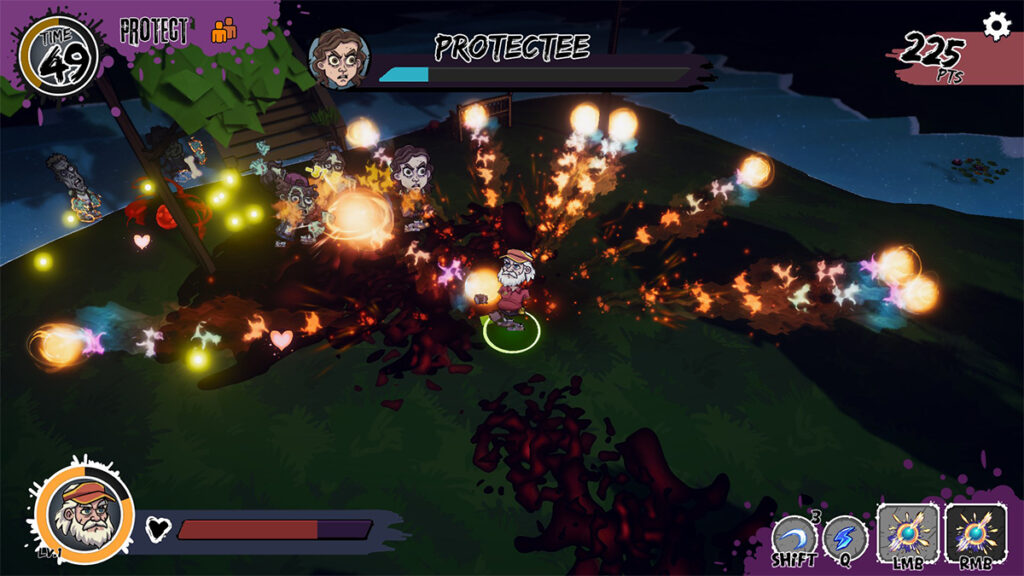
You sacrificed your body to save the world. Now you’re borrowing someone else’s. Again. And again. And again. And again… Possess the past. Master combat. Face your trauma. Or else bury it like normal people.
● Personalized Heroes – Describe who you want to be and let The Ritual do the rest. It pulls your host from across the timeline, generating personalised spells and abilities built just for you. Playable within seconds and fully rendered in the game’s art style.
● Your Story, Your Rules – This is an apocalypse built by you with personalized missions, objectives, spells, witty quips and war cries, backstory, and bosses based on how you performed The Ritual.
● Fast-Paced Shmup Combat – Dodge, weave, and hurl spells through hordes of undead in high-intensity, ARPG-inspired combat as you fight to survive overwhelming odds.
● Complex Boss Fights – Face bosses specifically designed to challenge your hero’s traits and your reflexes.
● The Trauma System – Killing zombies is traumatic. Dying repeatedly doesn’t help. Progressing means balancing skill trees against managing the psychological fallout of surviving the apocalypse again and again… and again.
● Difficulty Loops: Level up quickly in high-intensity loops, unlocking new skills and stats. Scale the challenge to match your mastery.
The vision of the future
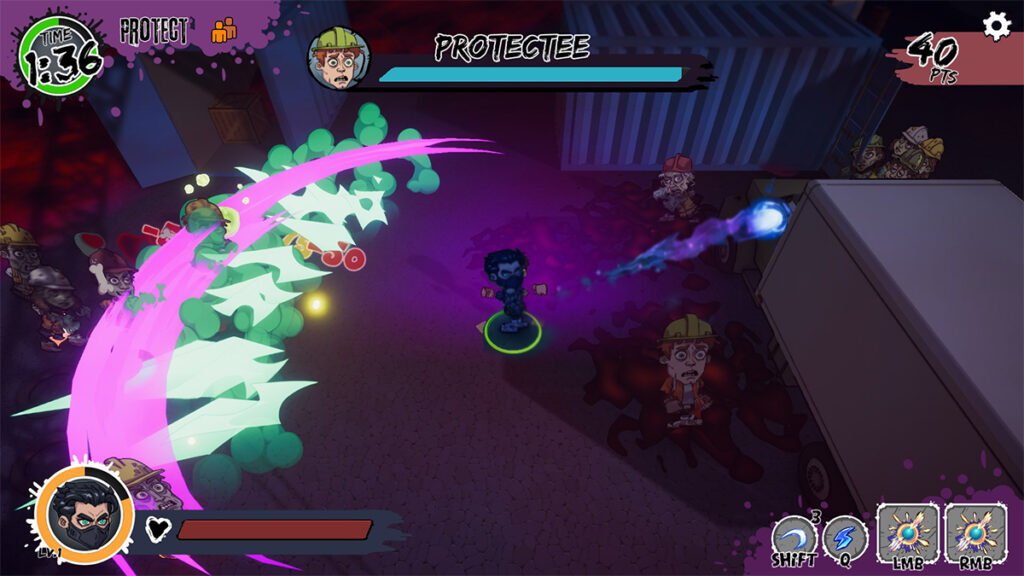
This is only the beginning. Over the coming months, the team will be rapidly expanding the gameplay features and experience. This is just a first taste of the chaos to come. For now, kill zombies. Fix time and stuff. Try not to lose your marbles. Suppose you should wishlist this now.
The founders say You vs Zombies represents a pivotal shift in how triple-I (for indie) games can be built. By leveraging their “Infinity Platform”, a proprietary Generative AI platform constrained by expert human design, 10six Games is building LLM-assisted personalized run-time game experiences that were, before recent advances, entirely impossible. Customisation in runtime, in seconds.
10six Games creative director Lee Cummings said in a statement, “10six Games was born out of the belief that we could harness exciting new technologies, like Google’s Gemini models, image generation models like Z-Image, and solutions from partners like FAL.ai. to unlock a new breed of gameplay experiences. We set out to create the rules AI would need
so that we could create a fun, balanced, beautiful experience, and let it be malleable for all
users.”
Susan Cummings added, “The story I really want to tell is the fact that we’ve made this with a team of eight people: artists, writers, and engineers. What AI has allowed us to do is to extend and build upon our expertise, and create something you couldn’t possibly do without AI.”
She added, “Our game, YOU vs Zombies, allows you, as the player, to play through your own customized horror comedy storylines. Whoever you are, whatever you look like, wherever you live. You are the star, in a way never before possible.”
Jack Buser, global director for games at Google Cloud, said in a statement, “AI is evolving from a back-end development tool into a core part of the player experience. 10six Games is proving this by weaving Gemini into the heart of their gameplay. It’s more than just a technical feat; it’s a fun, playable look at the future of the industry. They’re delivering the
kind of deep personalization that was simply impossible to build before now.”
Nick Button-Brown, founder of UK Game Angels, said in a statement, “I think 10six’s approach to hyper-personalized game development is a really exciting step for the games industry and that kind of real innovation can be very challenging. Susan, Lee and the team are an amazing group who work well together, and I’m looking forward to being part of their journey.”
The company’s approach and philosophy

● Player Centric and Customizable: The team uses LLMs to let a player be anyone they want to be. That this is the future of player personalisation and that this is the first real solution to representation and diversity in gaming.
● Ethical Innovation: The company uses AI to empower designers, not to replace them. Every line of generated text and every procedural encounter is filtered through its “Infinity Platform” to ensure it meets our high standards for fun and fairness.
● Team Credibility: The game is built by a team of experienced game industry
veterans.
● The Result: A game where AI responds to the player’s creativity with playable scenarios, rather than just generating static text.
10six Games is supported by: The UK Game Angels, Playcap (female game industry
angel network), British Business Bank, Andover Ventures, Untamed Ventures, and an
enviable roster of 26 game industry veterans, including John Wright, Dilpesh Parmar, Nick
Button-Brown, Tracey McGarrigan, Jon Gillard, Bruce Grove, Felix Wang, Steve Tinkler,
Bibbi Wikman, Bill Jackson, and an angel syndicate led by Huw Bisho,p supported by Angels Invest Wales.
How does it work? The human-led creative process
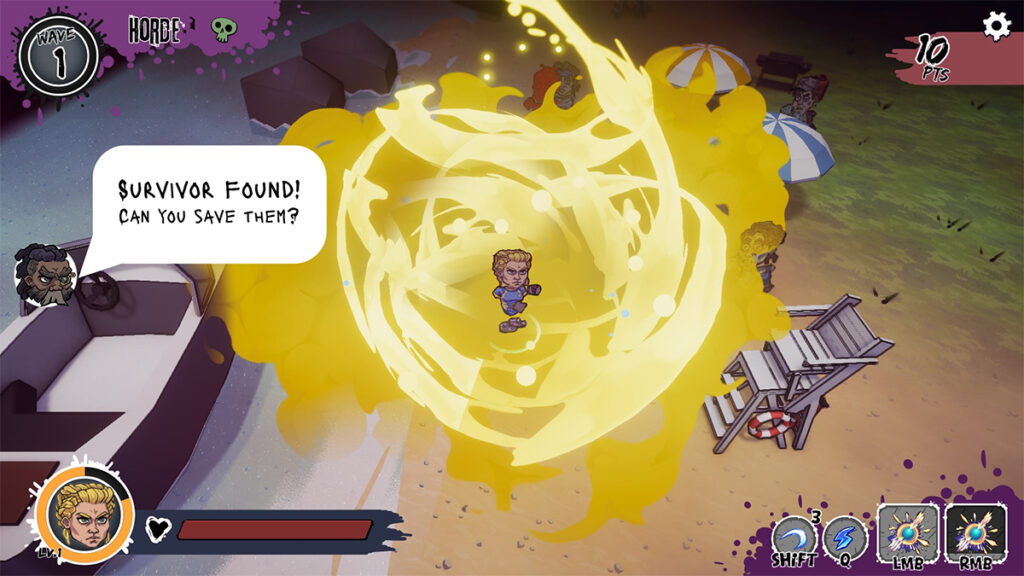
AI doesn’t write the story; it writes a story within a world that 10six’s creative team has
designed.
The creative team created the entire game universe outside of AI: continents, biomes, magic systems, enemy types, and the overarching lore. The settings database in Firestore contains carefully curated lists, including distinct visual identities for biomes and magic systems with specific rules. These aren’t AI suggestions; they are human-designed game mechanics and rules that AI must follow.
The company’s in-house artist Matt Beakes spent months hand-drawing and painting characters in a unique visual style. To ensure your character looks professional and consistent, the team trained specialized AI models on Matt’s artwork (called LoRAs).
This means when your character gets generated, it is not generic AI art; it is Beakes’ artistic DNA interpreting your imagination. The technology serves the artist’s vision, not the other
way around. Every visual element of the characters carries Matt’s art style, ensuring the
characters have a cohesive, professional look that doesn’t feel “AI-generated” in the generic sense.
Character abilities aren’t randomly generated; they follow strict mathematical systems. When Gemini generates a Unique Spell, for example, the damage, archetype, name, colours, and parameters come from the team itself.
When you describe your hero as “a punk rocker who fears spiders and loves the color red,” the platform triggers a process and system instructions that work hand-in-hand with Gemini AI. The team sends your input along with its own carefully crafted guidelines that tell Gemini exactly how to evaluate content appropriateness. All storytelling is orchestrated by logic, the engineering team designed. It’s AI deciding what happens next, alongside a story bible and character descriptions.
Dean Takahashi, zombie killer
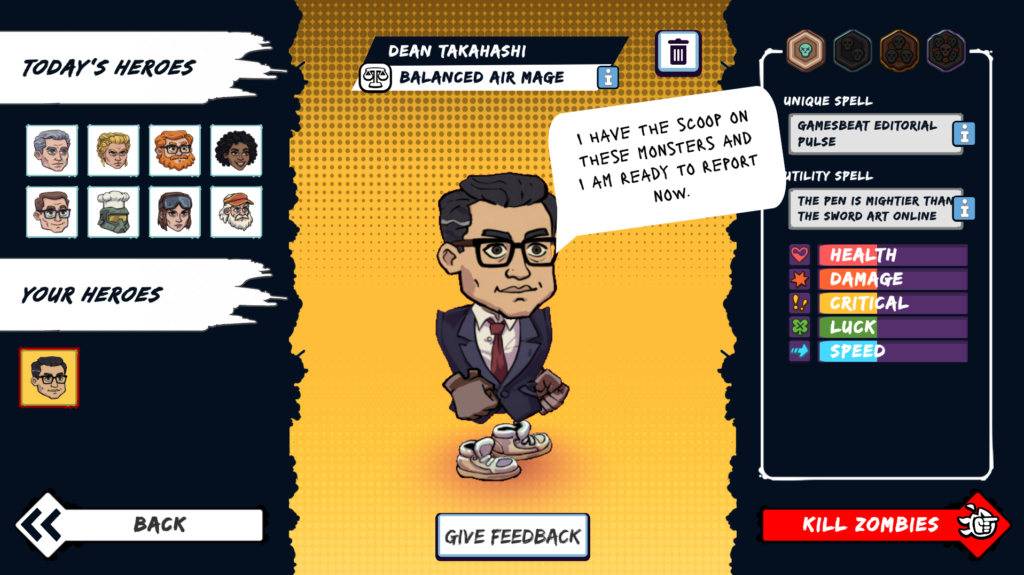
To illustrate the character creator, Susan Cummings created a version of me as a zombie killer. She created it in a matter of seconds based on an image of me. Like any other character creator, you can pick your diversity. You can select gender, or be non-binary, choose a deformity, or have a tattoo.
“All of this comes back to the fact that we want to see ourselves in our media,” Susan Cummings said. “What’s fascinating about LLMs, as controversial as they’ve been, is exactly what they’re really good at, which is being able to let you create yourself.”
But the interesting thing about this cartoon character generator is that it is based on the art style of a human artist. Gemini takes the art style and creates the individual characters in the style of the human artist.
“We have an artist on the team and this is his art style,” she said. “This is not in any way allowing the AI to figure out an art style. It’s his art, and then we had to learn how to get immediately usable assets. It basically just created my two-dimensional head and body, without real legs, with a kind of 3D-like three-quarter view of my face.
“It’s gotten even more accurate, like it’s amazing how well it works and even supports different ethnicities,” she said. “It took an effort to get different skin tones and to get a nose ring.”
Susan Cummings also needed a boss for me to fight so it created a zombie version of Bobby Kotick, the former CEO of Activision Blizzard. The game requires you to defeat zombies with your magical abilities and ultimately kill the boss to save the world. Kotick and I are not core characters in the game; she just used us to make a point.
She noted that AI itself is not really good at coming up with its own creative work. So 10six had to build many systems and then allow the AI to manipulate and change things based on those systems. My basic ability was “air,” and so I could cast spells that use air magic, like giving myself the ability to fly. One of my weapons was Dean Takahashi’s “analytical vector.” I had my own pluses and minuses for combat.
Stiching scenarios together
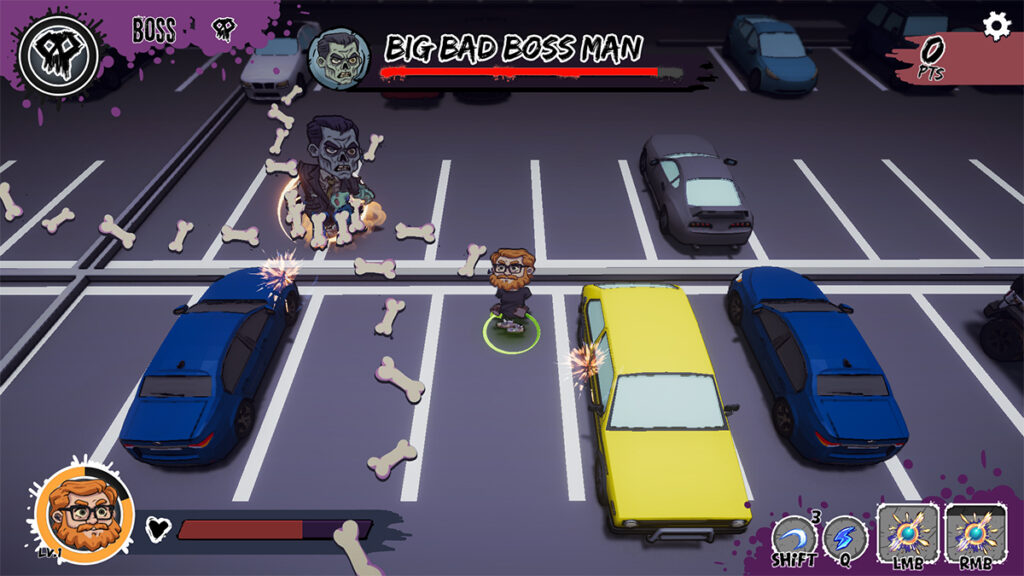
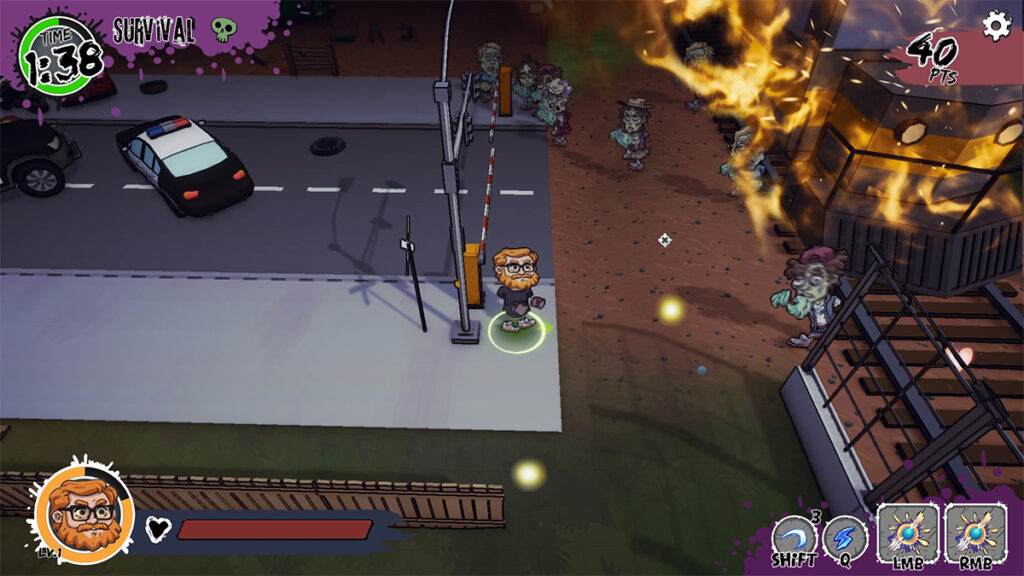
When Susan Cummings created the scenario, the first level was called “Deadline of the dead.” It created a voice narration, which was based on ElevenLabs technology. There are around eight different types of objectives in the fighting. Your object is to fight zombies and survive to the next battle.
“The narrative is all in our very sarcastic style,” Susan Cummings said. “Our writer, who’s an award-winning writer, trained the AI in his narrative work. None of this is letting AI do something new. It’s about giving it rails so that it can create something we know will be fun. And then the next story beat gets created.”
Each scene is stitched to the previous one. If you survive a battle in the woods, then the next scene starts as you stumble out of the woods, she said. None of the material is pre-canned, she said.
The team has started private testing on Steam and it is planning to show a demo at GDC Festival of Games. The team is also announcing it has a partnership with Google on using the Gemini AI technology, which is Google’s version of ChatGPT.
“We moved to Gemini because we found it cheaper and faster and more accurate,” said Susan Cummings.
The team is also using ElevenLabs for voice narration and Suno for music. The time to generate assets and game play has come down, as has the cost.
The Development Bank in Wales has matched all of the funding from angel money that 10six has raised, she said. The team has eight people now.
Addressing the ethical issues of using AI to make games
Of course, there is a lot of criticism about using AI, as some believe it is a threat to the jobs of human game developers. But Susan Cummings notes that this kind of game could not have been created with humans alone. And she doesn’t want low-quality AI slop either.
“I think the AI slop criticism is valid. I don’t want to play AI slop. I don’t think AI makes games today. Maybe someday. I am really hesitant to hear about tools that are about letting everyone make games. I think it’s more about providing the rails, which is what we’re doing,” she said. “We haven’t had criticism yet, though I’m sure it’s coming. But this is our art style. We’re not ripping off an artist. Our artist willingly and happily trained the AI model in his art style. And it’s a fact that this has been led by a creative game team in the industry.”
She noted, “There’s been too much of a willingness to steal other people’s stuff. We’ve taken a very conscientious approach and ethical approach to how we thought about AI.”
And she reiterated that the use of AI allows the team to create something that wasn’t possible before. Susan Cummings’ previous startup was a blockchain games company. That didn’t work out, but she still loves tech.
“Lee and I have always been excited by new technology. We love playing with these things and finding the use cases. And so my hope is that we can be a part of lifting that narrative this year, when we show that there actually are really valid use cases that aren’t about taking people’s jobs away, and instead are about diversity, representation, and more. It’s wonderful to see yourself represented in a game.”
She added, “I think it’s important that we embrace being part of this technology, which doesn’t mean blind acceptance. It just means let’s all be around the same table and figure it out. It’s here. AI is a part of our lives now, and it’s ridiculous how quickly that happened. I don’t think that there’s any possibility, really, that it’s going away. So wouldn’t it be better for the game industry to be taking the lead on what this looks in our industry? Let’s figure out the guard rails and so forth.”
The tech works at runtime.
“It’s partly because we’re this little scrappy team that’s been able to fly under the radar and experiment. We’ve had so much fun building this,” Susan Cummings said. “It’s just amazing what happens when you get a team of folks who all know each other, who all work together, who all know each other’s strengths and weaknesses, and just say, ‘Let’s make something great together.’ There’s no fighting. It’s like no ego. Everyone just wants to put their all into it and to have something beautiful come out the other side.”
After all that work, is Susan Cummings excited to launch the game?
“It’s exciting and terrifying. It’s the hardest part about our industry. You tinker quietly behind a magic curtain and then you show it to everyone. But I’m so proud of the team, and I’m a small part of this compared to what the rest of my team and Lee are doing,” she said.