

Wolfjaw Studios makes a living by offloading backend infrastructure work from game studios because no game developers want to do that work.
The business spawned from a dinner conversation at TwitchCon 2018, when founder Mitchell Patterson and eventual employee No. 2 Tom Carmona discussed over dinner the glaring need for a quality co-dev studio focused on backend game design and development.
Officially founded in 2019, Patterson said in an exclusive interview with GamesBeat that he built Wolfjaw from scratch to assemble the best team of games industry engineers and producers who shared his dream: to design, build, implement and support truly tailored backend solutions for big, complex multiplayer games. Patterson, CEO of Wolfjaw Studios, has been running the company for six years.
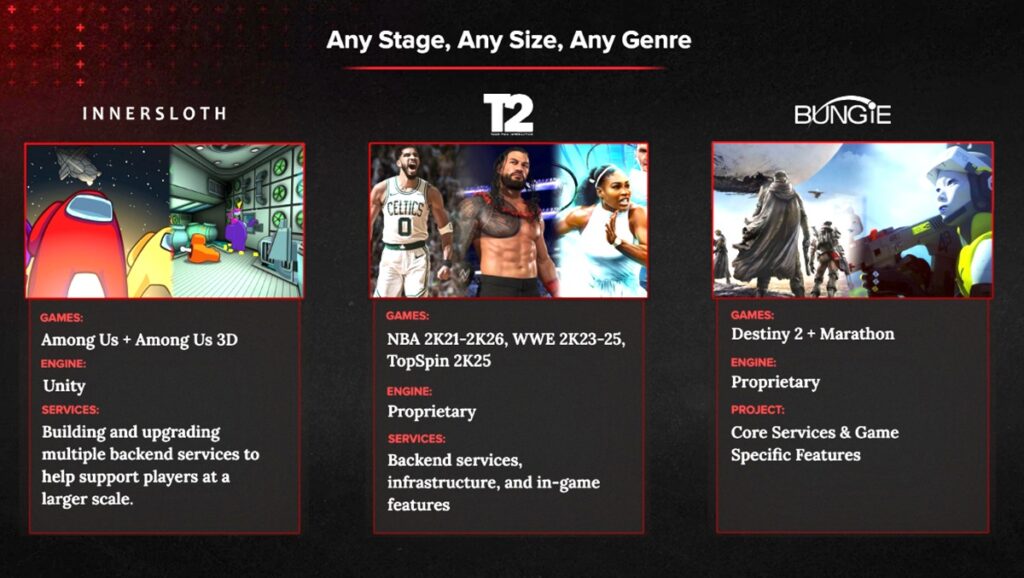
In other words, to establish backend work as a distinct, mission-critical discipline within game development. Wolfjaw has exceeded even those lofty expectations, securing sizable contracts with 2K and Unity in 2020, and, in 2021, the team was chosen by Innersloth when Among Us exploded in popularity and needed to quickly scale up its backend system.
A winning streak
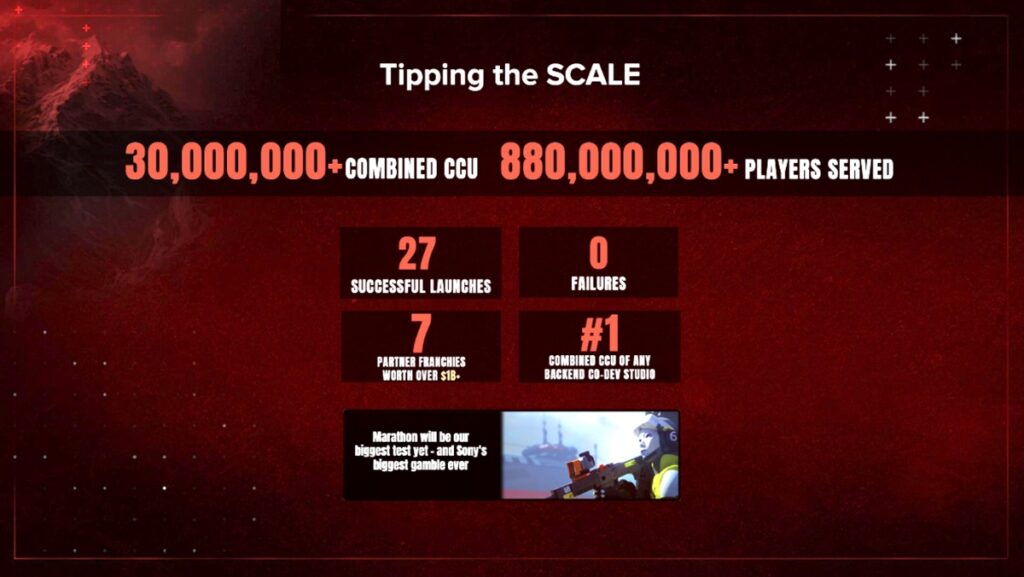
Since then, Wolfjaw said it has continued its unparalleled winning streak, compiling an undefeated 27-0 record (and counting) across a raft of high-profile titles from some of the biggest game studios in the world.
Over the course of the company’s six-year history, it has grown its revenues, headcount, and client roster every year, despite the global pandemic and an unprecedented stagnation of the video game industry’s nearly perpetual growth, even as Mitchell faced and eventually overcame a life-threatening medical issue.
Wolfjaw offers a comprehensive array of proprietary tech combined with best-in-class
development, production, and engineering expertise, and architectural innovation to deliver fully customized, mission critical backend systems and solutions for many of the most popular multiplayer game franchises in the world. The company’s unblemished track record of zero failed launches stands alone in the video game industry, across more than 600 million unique players and peak CCUs of >30 million (and growing).
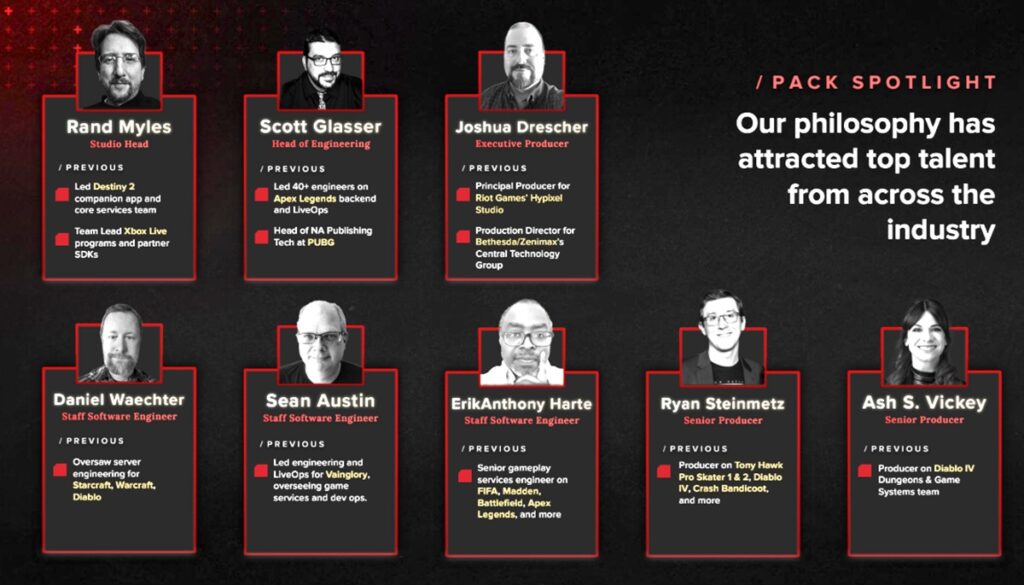
Wolfjaw’s 75-strong, diverse team of engineers and producers boasts more than half a millennium of collective experience across virtually every major studio on the planet. Together, they’ve helped ensure perfect online records for NBA2K (‘21-present), Among Us, Destiny 2, WWE2K, Apex Legends, and dozens of other hit games which have collectively generated billions of dollars in revenues.
Patterson has helped early stage startups raise more than $100 million and helped launch more than 30 games.
Patterson said he is opening to raising more money but may be seeking growth financing. But his company is profitable and so it doesn’t necessarily need funding.
“I’ll always entertain it and we’ve had some really good conversations with folks. And a lot of it is finding a partner that understands business and or games,” Patterson said.
Origins
In his early years, Patterson was a political science and history major and he went to work in government. He didn’t like it and ended up in finance. He loved games and started conslting with small game studios.
“One of the big things I found was they were great at engineering, good at marketing and really bad at running a business. I started helping them. One of them ended up getting acquired by PUBG and I helped negotiate the deal,” he said. “I kept hearing all of the people I talked to was that backend networking is something that no one at a game studio actually wants to do.”
While at TwitchCon in 2018, he called his attorney and said he would start a company. The aim was to offload a lot of coding for backend infrastructure from game developers and to do that work for them.
He said, “I’m just going to make a studio that does everything that people that game studios don’t want to do, and I’m going to be the best at that.”
Big wins
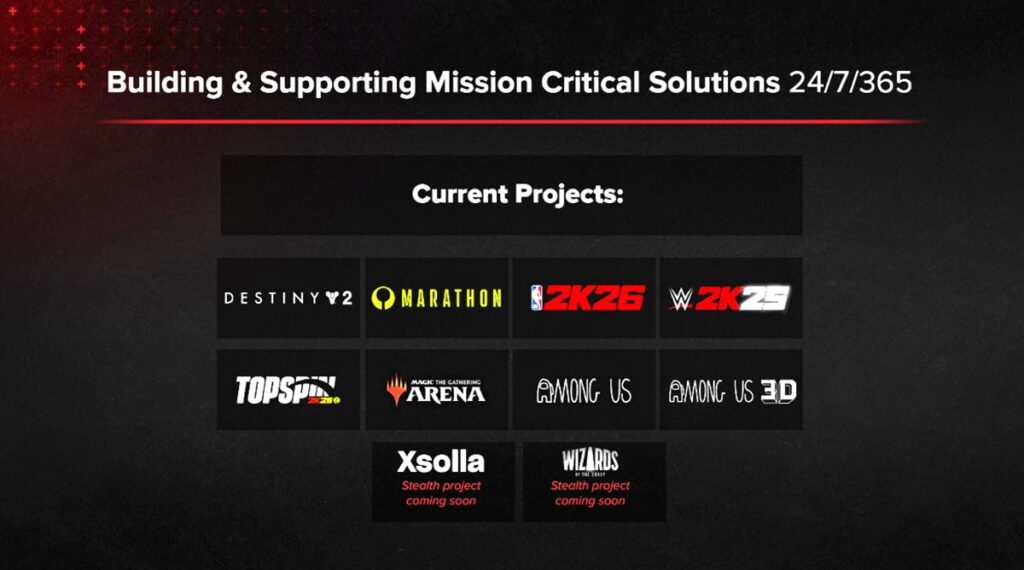
The first big wins included Unity and 2K. His firm has been working on NBA 2K for years now, and it hwas worked on WWE 2K for four years. It has worked with 31st & Union, and it has more than 70 people now with headcount growing.
“What we’ve been doing over the years is finding or training what we call the Backend Dream Team. That’s people who have built backends and are constantly building backends,” he said.
The business grew in part because, during COVID, many game studios wanted to launch live-service multiplayer or social games.
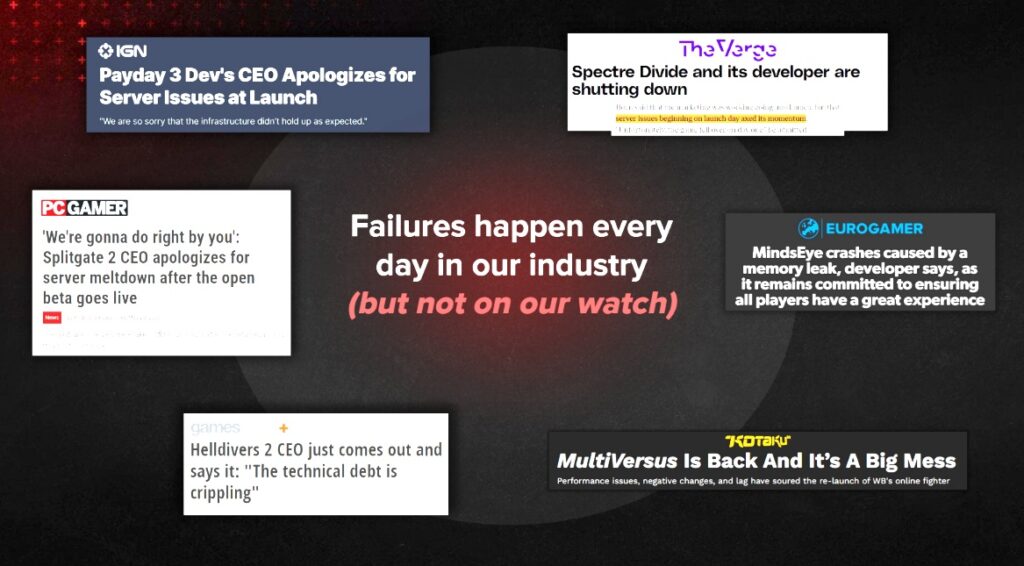
“Tons of money flooded the market, and I feel like it’s done a disservice to live services because there’s been a lot of failures, many of which have been because of weak infrastructure,” said Patterson.
He said, “One of the reasons people haven’t heard of Wolfjaw is because the games we work on don’t crash. They don’t flop.”
Four pillars
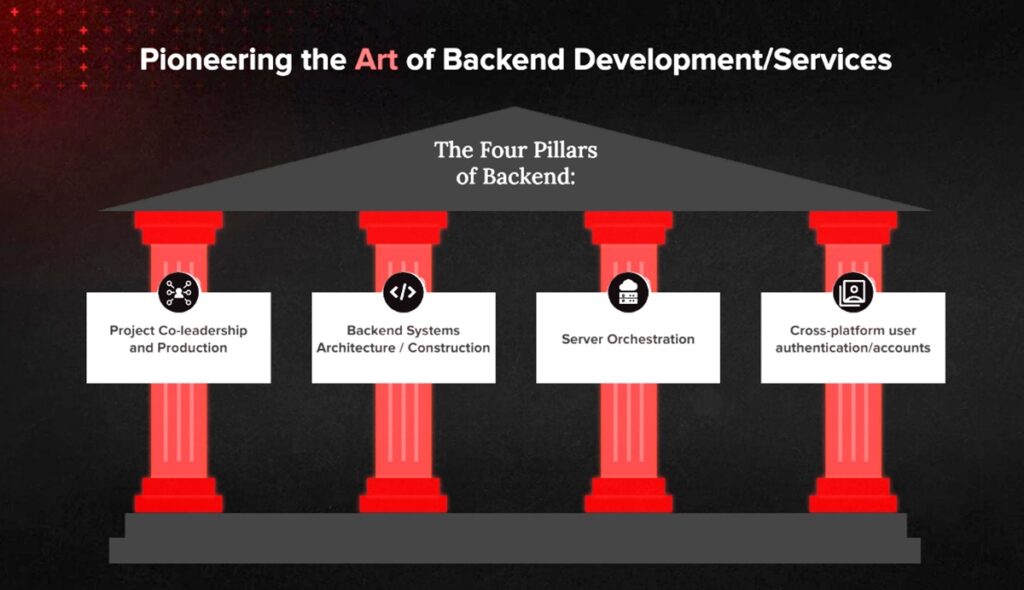
The company builds four pillars of backend infrastructure. You can see them listed above.
“We like to work basically from the bottom up. We’re working on a very big game. I can’t talk about it right now, but the” task at hand is server orchestration. He said lots of people are calling to do cross-platform game backends. After Unity announced it is shutting down Multiplay, a similar service, Patterson said his phone was ringing off the hook.
Patterson estimates that his company has worked on games with over 30 million combined concurrent users and over 880 million players altogether. The team has worked on seven billion-dollar game franchises.
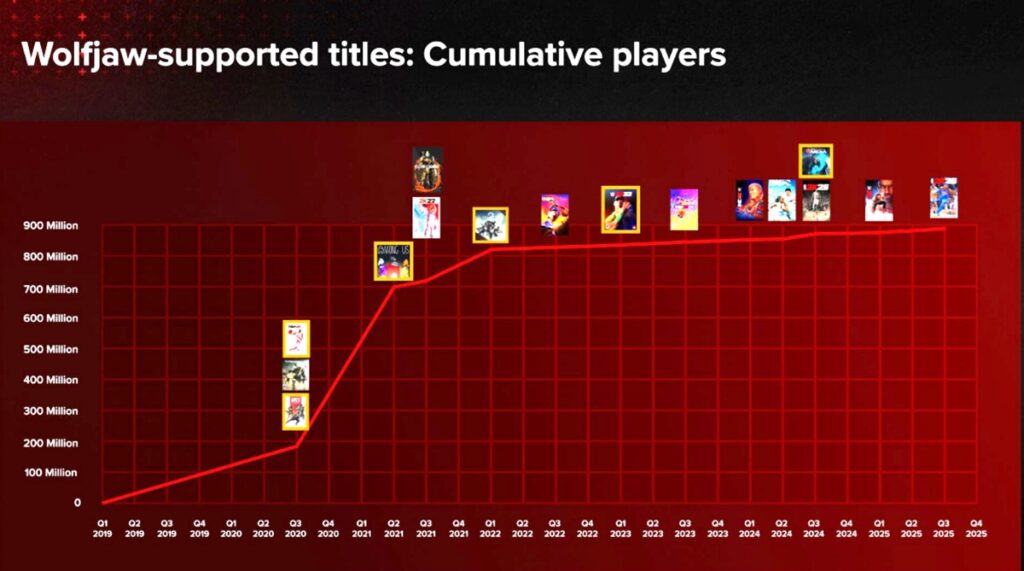
Patterson loves it when games like NBA 2K go live and you never hear about server issues.
“We say we’ve had zero failures,” Patterson said.
“Our secret sauce is being super transparent, super honest. I’ve said that we like to do backend network infrastructure. We will not take work that doesn’t fall within that skill set,” he said.
Making custom solutions
One of the odd things is that Wolfjaw doesn’t have a product it sells.
“We come in and build a custom [solution]. They own the code. They own everything. Our value really is the fact that we have built so many backends and built them recently, and we’re still building them,” said Patterson.
Patterson said his team will work with everyone in part because there are always different ways to build a backend depending on the game.
“I see 75 different versions, 75 different ways to build it. And it gives me knowledge,” he said.
“We like to be challenged. We like to find people who have crazy ideas and say, ‘You can get that crazy idea, and we’re going to help you get there.’ There’s a studio right down the street from us that had a game working on the Switch. And then their CTO comes to me, and he says, ‘Mitch, we want to rewrite the engine, because we think the physics would be better.'”
He added, “So we wrote a backend in C in parallel to them, writing the engine, and the game went live and did not crash. And that’s probably one of the more scary mornings I woke up,” he said. “There is no such thing as a turnkey backend in games. Even with things like Unreal, there are so many studios that are building or using custom proprietary engines.”
Keeping games up
Many game companies create their own backend infrastructure or use a one-size-fits-all solution. But Patterson thinks that’s a “fool’s errand.”
He added, “I say that our biggest competitor is always internal central tech teams.”
Some games like Call of Duty rarely go down, as Activision uses the same internal team every year. By contrast, Battlefield 6 had a difficult start when EA launched the new title for the franchise for the first time in four years. Other games like Palworld and Helldivers 2 saw difficult launches due to weaknesses in their backend infrastructure.
Every one of the backends should be customized, but, again, Patterson believes no game developers want to do that work, and in many cases they should not do the work, he said.
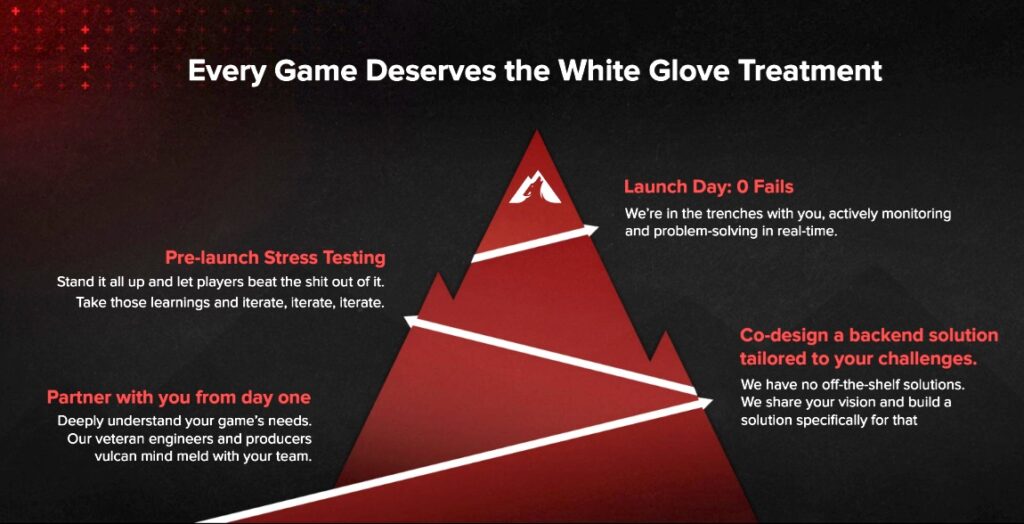
“We say, let’s spend two months together. Let’s sit down with some of my engineers, some of my producers, some of your engineers, some of your producers, and we’ll become partners, and we’ll figure out what this looks like,” Patterson said. “We’ll design it together. We’ll build it together. We’ll stress test this together. And then when this thing goes live, it’s built on what you need.”
He added, “We have a large team with them that partners with them to ensure and we’ve been stress testing it and everything.”
Reasons for failure
As for backend problems, Patterson said the causes are multifold.
“One of the problems we’ve had is, until recently, a lot of folks had worked on one game or one ecosystem, and that’s sort of how they knew how to do it,” Patterson said.
The problem is those people will build a similar backend for another game, and it turns out that game will need something completely different and the solution being proposed doesn’t really work.
Rather than hire engineers who are used to doing things a certain way, Patterson said he hires people who can solve problems and then turn them into good engineers. He also tends to rotate people from team to team, or game to game. Lastly, Patterson noted that he doesn’t want to own what is created for one client and then sell the solution to someone else. When his team goes into a company, he helps assuage fears.
“We always come in and say, ‘Hey, I’m not here to take your job. I’m here to make you look better for your boss. So you want to be able to get this done. Let’s work together,'” Patterson said. “So far, being Switzerland and offering the olive branch has been a much more effective tactic than trying to come in and say, ‘Here’s how you do it. You’re doing it wrong.'”
Gaming insights

Despite all the layoffs of the past few years, Patterson sees a lot of innovation in games and a lot of opportunity. He is excited to see the new AI tech, the new Steam Machine arriving in 2026, Samsung’s efforts in gaming, and other initiatives like new consoles that could bring growth.
“I’m excited for games right now,” he said.
As far as trends go, Patterson doesn’t see much happening blockchain games. But he does see a lot more interconnection between games and players and games and different platforms and between games and companion apps. He also expects to see a lot of gamification of non-gaming applications.