
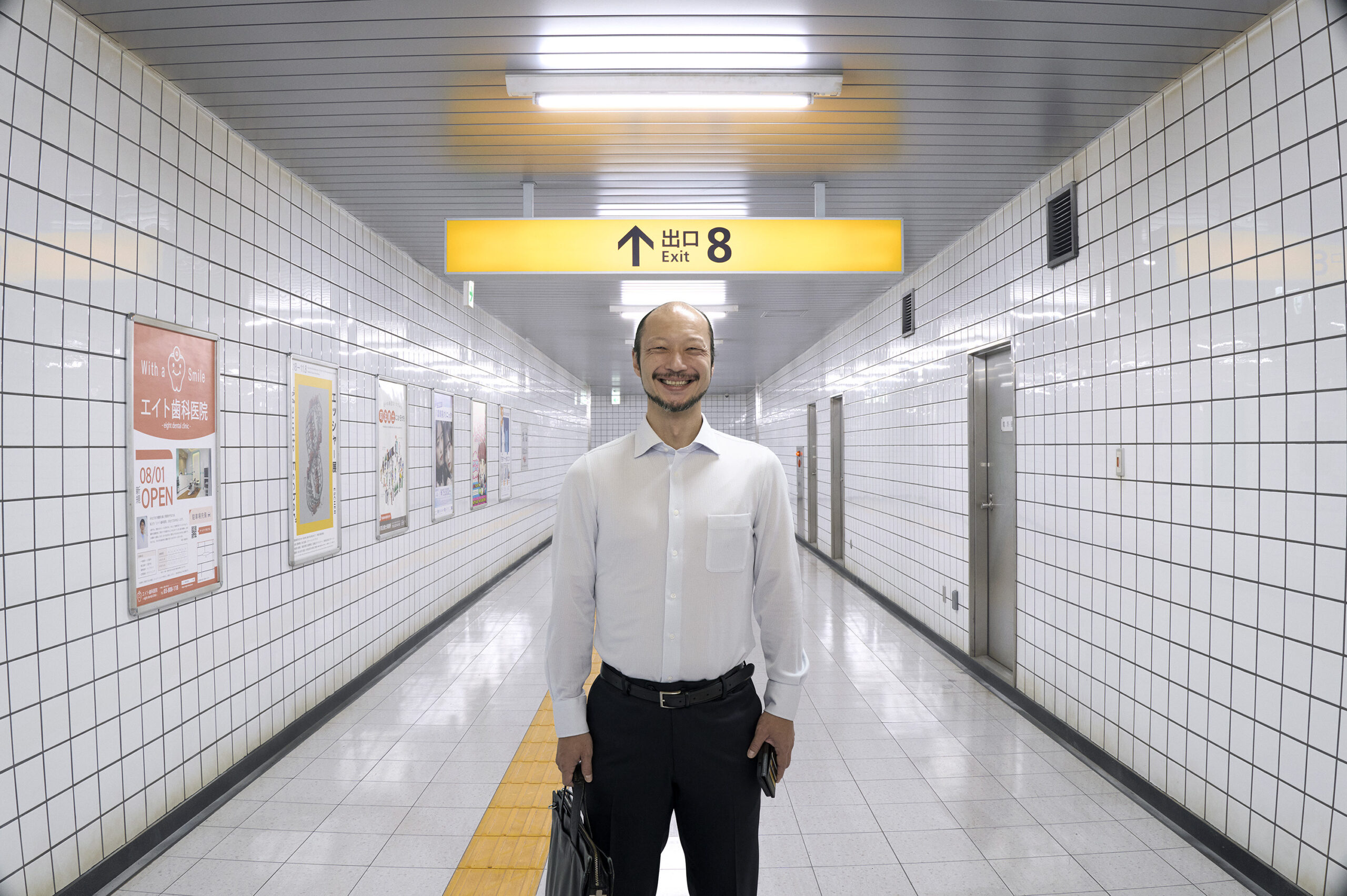
“Exit 8” puts a unique spin on the growing trend of video game film adaptations.
Released in Japan in August 2025, “Exit 8” is an adaptation of the 2023 indie adventure game The Exit 8, a psychological-horror-infused walking simulator that requires players to move around an endlessly looping Japanese metro station hallway, spotting so-called “anomalies” to advance closer to the exit. The film is scheduled to release on North American movie theater screens on April 10.
Ahead of the North American release of “Exit 8,” I attended a screening of the film in New York City, then spoke with “Exit 8” director and co-writer Genki Kawamura (with the help of a translator) about the process of adapting the film from a popular video game. Kawamura stressed that he had not taken significant inspiration from successful video game film adaptations in the past, blurring the lines between video games and movies to reflect the evolution of games as an entertainment medium.
“As Shigeru Miyamoto prophesied, it’s not just about the players — it’s about what the people watching the players and the screen are also feeling,” Kawamura said. “So, there’s been this evolution of the video game medium itself, and I wanted to capture some of that in the film, where we go from a first-person POV to almost someone watching a stream.”
This is an interview, not a review — but here’s my one-line take on the movie: it’s good. Kawamura successfully translated a walking simulator with almost no discernable story into a poignant and gripping narrative about a man grappling with the responsibilities of fatherhood, informed by Kawamura’s own experiences navigating on the Tokyo subway every day, which he said inspired him to make the Walking Man, a non-player character in The Exit 8, into a more fully fleshed-out character in the film.
“In my world, I’m the main character, but I’m sure from other people’s perspectives, I’m just an NPC in their world,” Kawamura said. “So, at certain times, I wanted to look at a different NPC and place them as the main character, to kind of see what their daily life might look like.”
“Exit 8” is a relatively short movie — only 95 minutes long from beginning to end — but Kawamura uses the time efficiently, dripping in just enough storytelling to keep viewers engaged without overexplaining the lore of the film’s fictional world. Notably, none of the main characters are given names, with Kawamura saying the true main character of the film is the corridor itself. To achieve an endless, looping effect in the film, Kawamura’s team constructed two identical corridor sets, naming one Hitchcock and the other Kubrick to avoid confusion while filming. Notably, the developers of The Exit 8 at Kotake Create used a similar technique while making the video game, creating two identical pathways within the same virtual structure to achieve a looping effect.

The pair of corridor sets used to film “Exit 8” were intentionally designed to feel like they were rendered out of a game engine, with Kawamura directing the film’s actors to mimic the movements of video game characters.
“Take the Walking Man, for example. The direction I gave him was ‘walk like you’re a character rendered in CG, and smile like it’s an AI-generated smile,’” Kawamura said. “By inputting that into your mind and acting it out with the human body alone, it gives off this very bizarre and creepy, eerie kind of feeling, which was exactly what I wanted.”
The ending of “Exit 8” has been a source of discussion among fans and viewers, leaving it up in the air whether the main character ultimately escapes the loop. When I asked Kawamura for his take on how the narrative ends, he gave a wry grin and pointed out that it’s intentionally open-ended.
“This is my own interpretation of what happens, but I’d like to believe that our protagonist notices the anomaly, chooses a different path and turns around,” Kawamura said.