
The Colossal Foundation, the nonprofit arm of Colossal Biosciences, the world’s first de-extinction company, has raised an additional $50 million in secured funding, bringing its total funds to $100 million since its launch just over a year ago.
The foundation was established to deploy Colossal’s breakthrough de-extinction technologies to the front lines of the biodiversity crisis, scaling and accelerating partner-led efforts to protect wildlife, restore ecosystems, and rebuild a resilient genetic safety net for species around the world.
In its first year, the Colossal Foundation has launched dozens of projects and partnerships around the world, supporting more than 40 species, collaborating with over 50 conservation, Indigenous and academic organizations, and piloting or deploying over 20 frontier technologies across six continents.
The new funding will enable the Foundation to expand its global conservation programs and accelerate on-the-ground, partner-led projects focused on critically endangered species, genetic rescue, wildlife monitoring, and rewilding. Building on its secured $100 million, the Colossal Foundation will continue raising additional reserves to launch new projects and scale its impact to more target species over the next decade.
The Colossal Foundation advances its mission to Make Extinction a Thing of the Past by applying breakthrough bioscience and frontier technologies directly into species recovery efforts.
Working alongside conservation organizations, researchers, and Indigenous communities, it supports partners through disruptive conservation programs that include locating and monitoring wildlife, preserving genetic diversity, engineering resilience against emerging threats, advancing genetic rescue for critically endangered species, and enabling rewilding projects that restore ecological function.
Across these programs, the Foundation deploys emerging tools such as AI-enabled passive monitoring systems, biobanking, genomics, and assisted reproductive technologies to accelerate conservation outcomes and restore a healthier, more resilient planet.
“In just 12 months, we’ve doubled the Colossal Foundation’s funding, allowing us to massively expand our partners and projects—and deliver immediate impact for conservation,” said Ben Lamm, Colossal CEO and co-founder. “As our technology advances, our role is clear: move these tools into the hands of those on the front lines of biodiversity loss, and scale conservation innovation fast enough to matter.”
Conventional conservation can no longer keep pace with the accelerating loss of nature. Global wildlife populations have fallen by nearly 70%, ecosystems are collapsing, and extinction rates now exceed natural background levels by more than 100-fold.
Addressing this crisis requires more than innovation,it demands significant funding, public support, and global coordination. With biodiversity protection underfunded by more than $700 billion annually, the need is urgent. The Colossal Foundation’s new $50 million in funding will help bridge this chasm by enabling smarter, faster, and more scalable conservation efforts powered by breakthrough biotechnology.
“Traditional conservation remains essential but is no longer sufficient on its own. With wildlife populations plummeting and ecosystems unraveling, relying solely on conventional methods is unsustainable. We at the Colossal Foundation have found emerging tools that expand the conservation toolkit, increasing resilience, restoring lost functions, and preventing future extinctions,” said Matt James, executive director of the Colossal Foundation, in a statement. “This new funding allows us to expand the conservation toolkit and embrace science and technology not as replacements for nature, but as instruments to help recover it. We are at a critical moment that demands seeing de-extinction and breakthrough biotechnologies not as fringe concepts, but as frontline strategies in the fight for biodiversity.”
The Foundation’s 2025 Impact Report, published today, showcases major advances across its global portfolio. Highlights include:
- Restoring the Red Wolf
Achieving a breakthrough in genetic rescue by cloning the world’s first “ghost” red wolves to strengthen the genetic diversity of Earth’s most endangered wolf species.
- Ending the elephant EEHV crisis
Accelerating the development of the world’s first mRNA vaccine targeting the virus responsible for most juvenile elephant deaths in human care.
- Decoding the secret language of wolves
Using AI-enabled bioacoustic sensors to decode wolf howls and develop next-generation wildlife monitoring systems in Yellowstone National Park.
- Species reintroduction fund
Accelerating global rewilding by investing in the recovery and reintroduction of culturally and ecologically significant species.
- Saving amphibians from the deadly chytrid fungus
Combating the world’s deadliest wildlife disease by engineering disease-resistant frogs capable of surviving in chytrid-positive environments.
- Engineering cane toad-resistant quolls
Pioneering genetic approaches to help save one of Australia’s most threatened marsupials from an invasive toxic species.
Restoring the Red Wolf
The American Red Wolf is the world’s most endangered canid. Very few exist in the wild, and the roughly 300 under managed care are descended from just 12 individuals. This lack of genetic diversity leaves the species highly vulnerable to disease, inbreeding and extinction.
The Colossal Foundation and its partners the Gulf Coast Canine Project, the Karankawa Tribe of Texas, and the American Wolf Foundation, are pioneering a new form of genetic rescue by identifying and cloning “ghost wolves” from the American Gulf Coast. These unique canids carry the precious genomic legacy of the pre-extinction red wolf, preserving vital diversity that was thought to be lost forever.
Early this year, Colossal cloned four Ghost wolves — Neka Kayda, Ash, Blaze, and Cinder — carrying 69–72% red wolf ancestry, the highest ghost lineage ever recovered. The Foundation also generated the first complete red wolf reference genome, a critical step toward restoring genetic diversity to the world’s most endangered canid.
Ending the elephant EEHV crisis
Elephant endotheliotropic herpesvirus (EEHV) is a lethal disease, responsible for the majority of deaths among young Asian elephants in human care and a growing threat to wild populations. To fight it, the Colossal Foundation, in partnership with Baylor College of Medicine, helped fund and accelerate the world’s first mRNA vaccine for EEHV in elephants and is already saving lives.
At the Cincinnati Zoo, two vaccinated young elephants, Sanjay and Kabir, were naturally exposed to the virus in spring 2025. Both showed no signs of illness and recovered fully, a highly unlikely outcome without the vaccine. This watershed moment was the first real-world evidence that this vaccine prevents severe disease and saves lives.
In 2025, an antigen test was developed to monitor immune response and viral exposure in elephants, five U.S. zoological institutions now administer the vaccine to their herds, and over ten elephants have been vaccinated.
“I have witnessed elephants battle EEHV and have even lost a juvenile elephant that was under my care. To be able to get a vaccine into the world that can stop this senseless loss means everything to me. This is why I joined Colossal,” said Matt James, Executive Director of the Colossal Foundation.
Decoding the secret language of wolves
In partnership with the Yellowstone Wolf Project, Grizzly Systems, and Yellowstone Forever, the Colossal Foundation has launched a groundbreaking new approach to wolf conservation through AI-powered bioacoustics, transforming Yellowstone National Park into a living, listening landscape. Using one of the world’s most advanced large-scale acoustic monitoring systems, this initiative deploys a network of always-on “digital ears” that listen day and night, capturing and decoding the complex language of wild wolves in real time.
With 48 autonomous recording units deployed across the park, researchers have already verified more than 7,000 unique wolf howling events to train advanced AI models. For the first time in history, four wolves have been fitted with pioneering audio-logger collars, combining sound, GPS, and motion data to unlock entirely new dimensions of behavioral insight. Together, this system is processing more than 200,000 hours of audio, delivering unprecedented understanding of wolf communication, pack dynamics, population trends, and real-time threat detection. This work is creating a powerful new blueprint for protecting wolves while supporting the human communities that share their ecosystem.
“This is the most detailed acoustic study of wild wolves ever conducted—and it’s only the beginning,” said Dan Stahler of the Yellowstone Wolf Project. By pairing cutting-edge artificial intelligence with conservation science at scale, the Colossal Foundation and its partners are opening an entirely new chapter in wildlife monitoring—one where sound becomes data, and listening becomes a tool for long-term survival.
The species reintroduction fund
Accelerating Rewilding Worldwide
The Colossal Foundation announced their Species Reintroduction Fund, the world’s first dedicated accelerator for global wildlife recovery. With Re:wild as lead partner, the inaugural cohort also includes partnerships with the Turner Endangered Species Fund, Instituto de Pesquisas Ecológicas, Nez Perce Tribe, Universidad Michoacana de San Nicolás de Hidalgo, Viet Nature, and Centro Jambatu.
The Fund commits more than $250,000 annually to advance every stage of rewilding—from genetic assessment and reintroduction planning to field release and long-term monitoring. Through a combination of direct funding and deep technical collaboration, the Fund is empowering partners around the world to restore ecosystems, strengthen genetic diversity, and give threatened species a renewed chance to thrive in the wild.
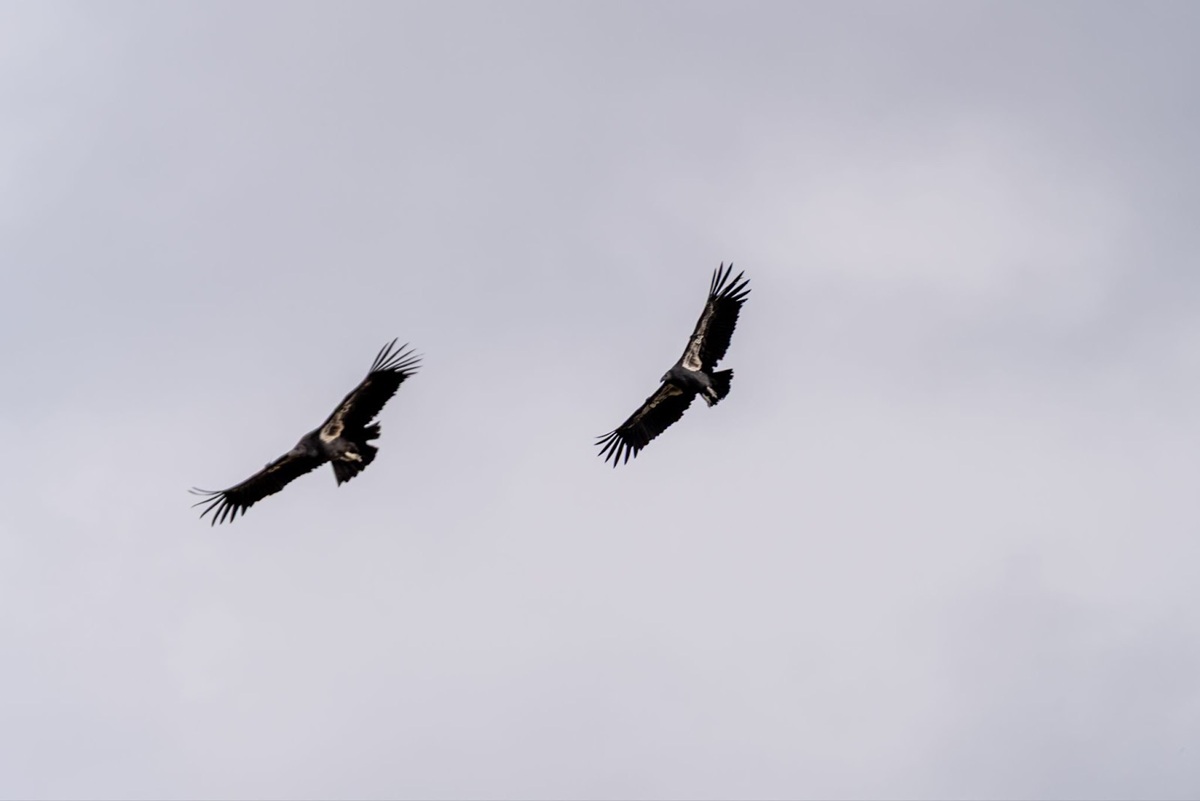
The Fund launched supporting six flagship species across six countries and ecosystems, including the Bolson tortoise, black lion tamarin, California condor, golden skiffia, Vietnam pheasant, and the harlequin toad. Early milestones include the planned breeding of more than 6,000 skiffia and related native fish for river restoration in Mexico, the rewilding of 40 juvenile Bolson tortoises in New Mexico, and the three-phase release of 800 Wampukrum harlequin toads in Ecuador.
“Ecosystems around the world need our support to remain vibrant and resilient. Species reintroductions are critical to return functional roles to natural environments—helping species, habitats, and human communities thrive,” said Wes Sechrest, CEO and Chief Scientist of Re:wild.
Saving amphibians from the deadly chytrid fungus
In partnership with the University of Melbourne, the Colossal Foundation is engineering immunity to the deadliest wildlife pandemic in history by committing $3 million to confront chytridiomycosis. The most devastating disease threat ever recorded in vertebrate history has already driven nearly 100 amphibian species to extinction and now threatens more than 500 additional species worldwide. To meet this crisis, the Colossal Foundation is advancing a radically new solution: engineering innate genetic immunity to chytrid infection.
By looking to nature for the answer—specifically the unique immune system of the alpaca—researchers are harnessing nanobody engineering, antimicrobial peptide screening, and transgene delivery in amphibian models to build the world’s first comprehensive strategy for conferring disease resistance in frogs and other vulnerable species. This work includes the creation of a novel cane toad cell line for amphibian-specific expression studies and the immunization of an alpaca to generate a powerful nanobody library. The goal: to produce disease-resistant amphibians capable of surviving and repopulating in chytrid-positive environments, transforming the future of global amphibian conservation.
“Helping to stop the spread of chytrid isn’t optional. We have to give frogs a fighting chance and ensure they remain a vital part of our planet’s biodiversity for generations to come. This will be a game-changer for amphibian conservation,” said Dr. Andrew Pask of the University of Melbourne.
Engineering toxin-resistant quolls
Traditional conservation efforts have been unable to keep pace with the rapid invasion of cane toads. In response, the Colossal Foundation, in partnership with the University of Melbourne, is pioneering a genetic solution: equipping northern quolls with natural resistance to the deadly toxin. These gene edits will soon protect Australia’s wildlife from invasive cane toads.
The northern quoll, a tiny marsupial native to Australia, is facing an ecological disaster due to cane toads. This invasive species was introduced to the ecosystem in 1935, and the lethal bufotoxin they secret is decimating native predators like the northern quoll. The invasion is spreading rapidly, pushing the quoll and countless other native marsupials toward extinction.
Traditional conservation cannot stop this spread, so the Colossal Foundation and its partners are engineering a genetic solution by equipping the quoll with natural resistance to the deadly toxin.
By changing a single nucleotide in the quoll’s genome, researchers have created a northern quoll induced pluripotent stem cell (iPSC) line—a major step toward producing toxin-resistant quolls. This milestone was achieved in just 12 days, marking the first successful generation of quoll iPSC colonies.
“Innovation such as this is just what’s needed to help turn around Australia’s dire conservation record and better protect threatened species,” said Euan G. Ritchie, Professor of Wildlife Ecology and Conservation at Deakin University.