
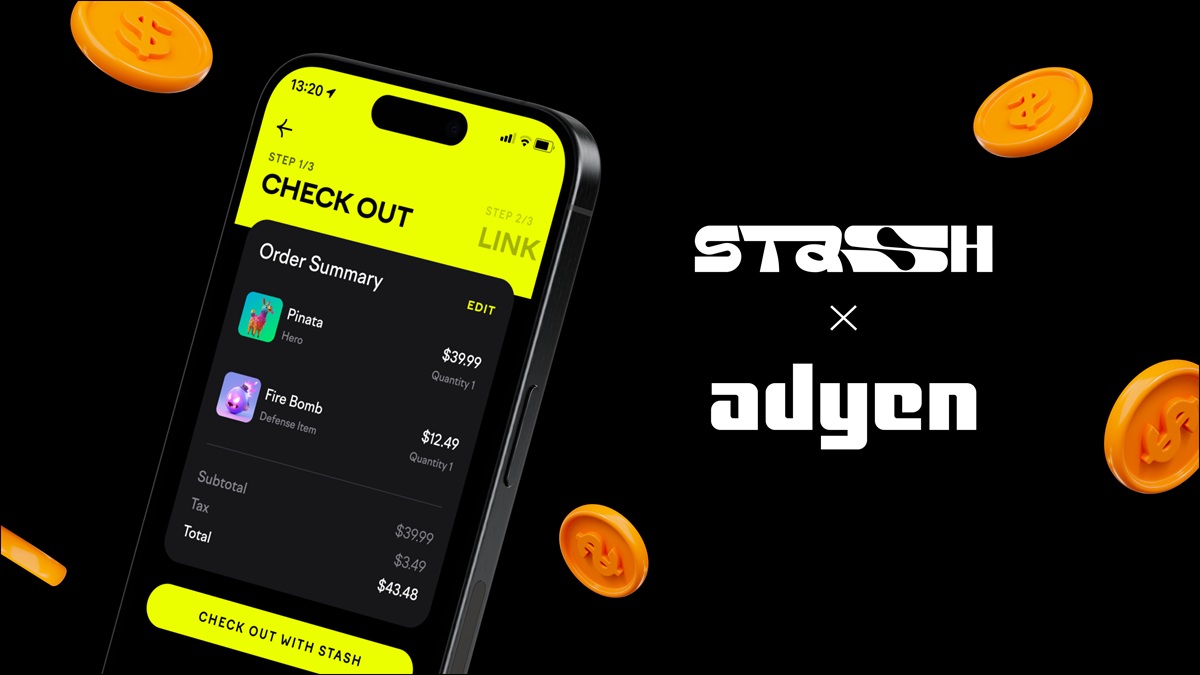
Twitch cofounder Justin Kan’s Stash, a platform for growing direct-to-consumer revenue in games, announced a strategic partnership with Adyen, a global payments firm.
Together, they’re delivering a payment stack designed for the scale, performance, and reliability that mobile game developers require. The launch comes as a growing number of studios and publishers double down on direct-to-consumer (D2C) strategies, building direct relationships with their players in light of Epic Games legal victory in establishing the right to promote web shops in litigation with Apple.
In doing so, Stash will take on bigger companies like Xsolla, which already provides tech to more than 500 mobile game web shops and handles more than 1,000 types of payments around the world.
“The Apple versus Epic ruling has really changed things for the U.S., and [the courts] have forced Apple to start allowing a lot more free competition in the market,” said Kan, in an interview with GamesBeat. “You can link out directly from games to web shops into a checkout page.”
That means mobile game developers no longer have to pay Apple a 30% royalty on every single transaction.

Kan said developers can “directly link to things like loyalty and rewards programs, which is the stuff that we’ve been providing with Stash. The downstream from that is a ton of the companies that we’ve been working with, or have been in the pipeline, have started rethinking their D2C strategies and are trying to optimize for costs, optimize for performance, and investing more. That’s super important for the margin of companies because games has been such a tight margin space, with every last dollar going back into user acquisition.”
Kan said that studios need to increase revenue to be competitive. And so Stash is teaming up with Adyen, a global payments company with more than 200 local payment methods. Stash provides all of the elements needed to set up a store for high-end game companies, Nies said.
“You can create new customer experiences,” said Trevor Nies, Adyen’s senior vice president and global head of digital, in an interview with GamesBeat. “We just make it simple, make it easy to connect into us. One integration gets you access to anything. This timing is just perfect. I mean, there’s so much opportunity. We’re talking directly to some merchants as well. We’re pretty excited about the opportunity.”
This partnership combines Adyen’s enterprise-grade, cost-optimizing payments infrastructure with Stash’s advanced D2C growth technology to offer game developers a high-performance webshop that maximizes player adoption, ultimately driving revenue and strong margins.
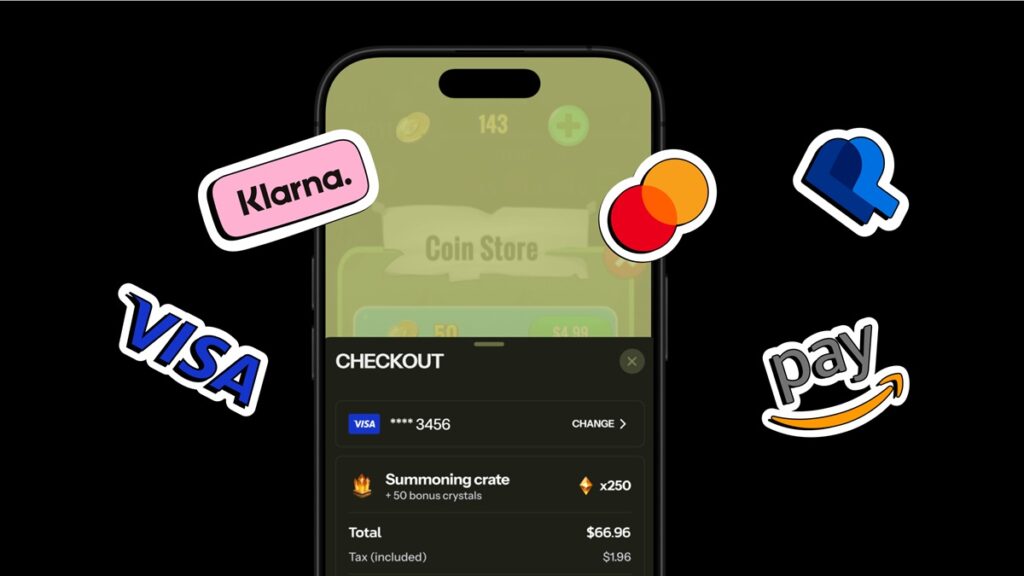
Adyen acts as a processor, gateway, and bank in one — eliminating the need for third-party resellers. This means lower fees, fewer points of failure, and more reliable payments. With high approval rates, global coverage, and exceptional uptime, Adyen delivers uninterrupted payment experiences that protect both revenue and player retention.
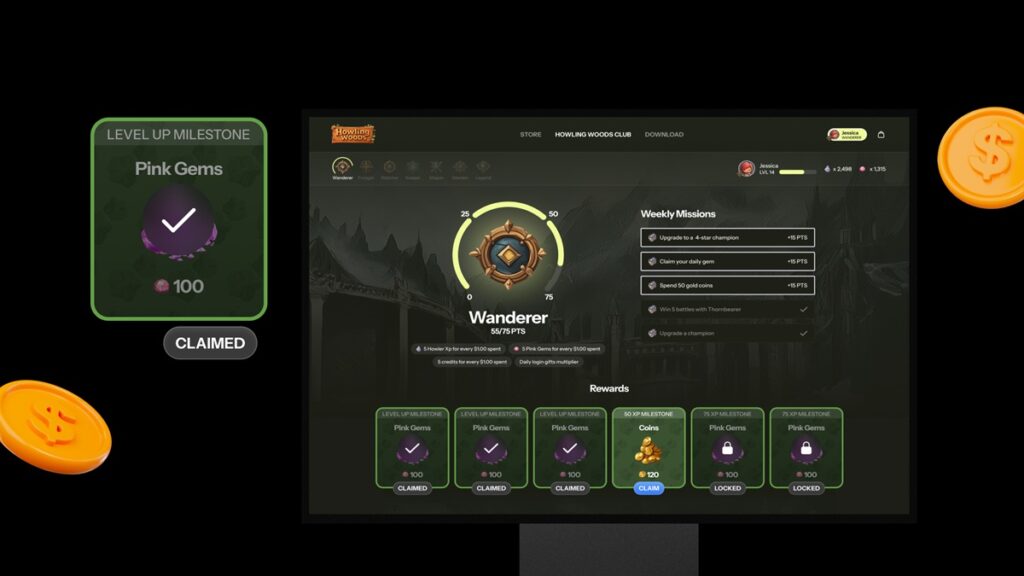
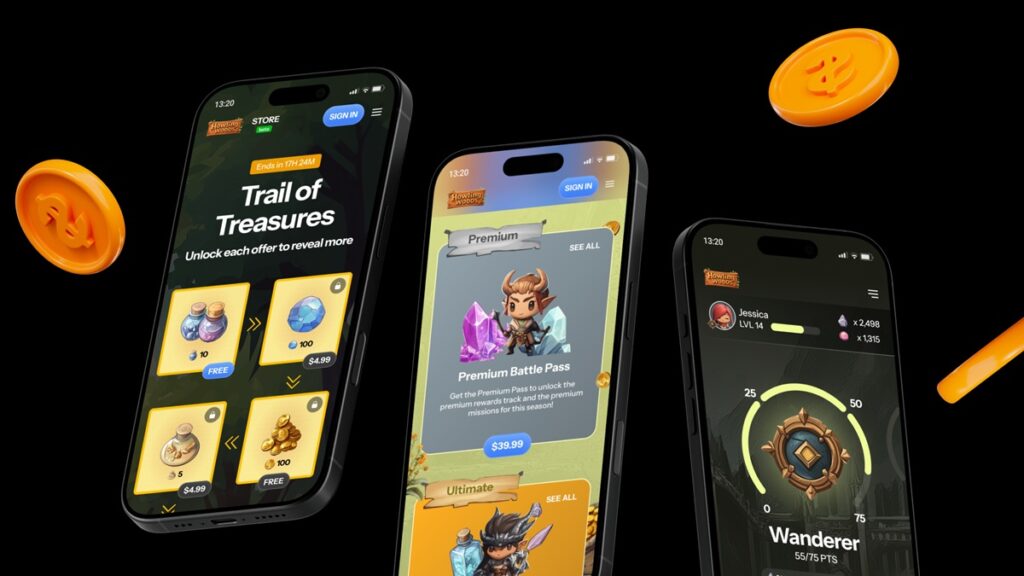
While Adyen reduces friction at checkout, Stash helps developers give players compelling reasons to spend on the webshop – with deeply connected loyalty programs, VIP stores, and mission systems. Stash is the only D2C provider on the market today with real-time syncing, so the webshop always matches in-game offers and content.
“At Stash, we’re always optimizing our product to drive webshop adoption, conversion, and retention for game developers,” said Kan. “Partnering with a company as exceptional and selective as Adyen strengthens every pillar of that mission.”
“Stash’s platform is purpose-built for the needs of top game developers,” said Nies at Adyen. “Their experience with the gaming industry, paired with a product that drives long-term growth, makes them a standout partner as we help game developers scale, build trust with players, and succeed in direct-to-consumer webshops and payments.”
Kan originally created his startup to focus on a store for Web3 games. But those games took off more slowly than expected, and Kan pivoted to Stash. Stash started changing its business about 15 months ago.
“I think there are two ways in which the Epic versus Apple ruling motivated changes in the market. The first is that it unlocked the opportunity for more casual games to do direct to consumer in particular, match-3 games. Match-3 games often rely on monetization, which requires you not to end the session in order to complete your purchase,” Stonehill said. “You can stay in the session and complete the purchase.”
Archie Stonehill, chief growth officer at Stash, said in an interview that 10 or 15 years ago, payments for games were a real challenge. There were many different types of users from different parts of the world where payment systems had a lot of variations.
“What we wanted to do was help developers with the biggest challenge they face, which is actually adoption,” Stonehill said. “Even if they can take payments off platform, developers still need to switch those users from third-party platforms, like the app stores, to their own first-party channels. At Stash, that’s the problem we wanted to help game developers with. We didn’t want to reinvent the wheel and do any kind of re-creation of payments infrastructure that the generalist payment service providers were already doing extremely well.”
“Adyen really likes that vision,” Stonehill said. “When we connected, it was 100% aligned, which is like we’re trying to actually get the player payment volumes from the third-party platforms into first-party channels, and that’s where our product edge is.”
Kan said, “Stash’s goal is to work with the largest, best game developers in the world. We have a very custom, bespoke approach, high touch with those who are serving the long tail with self-serve templatized solutions.”
There are examples of some game developers who are growing their web stores dramatically over the course of a few months, Stonehill said.
Stash has a small group of customers, both large and small. The processing fees that Stash and Adyen can offer customers are around 5% to 10% of the total, in contrast to the 30% the platforms keep. Kan said the company has a global reach.
Nies said that Adyen has its own checkout flow that customers can use, or they can use their own APIs and run the checkout in their own way. It can handle SMS activity, biometrics and stop fraudulent transactions. And it has plenty of uptime, Nies said.
“We have a trillion pieces of data within our own ecosystem,” Nies said.