
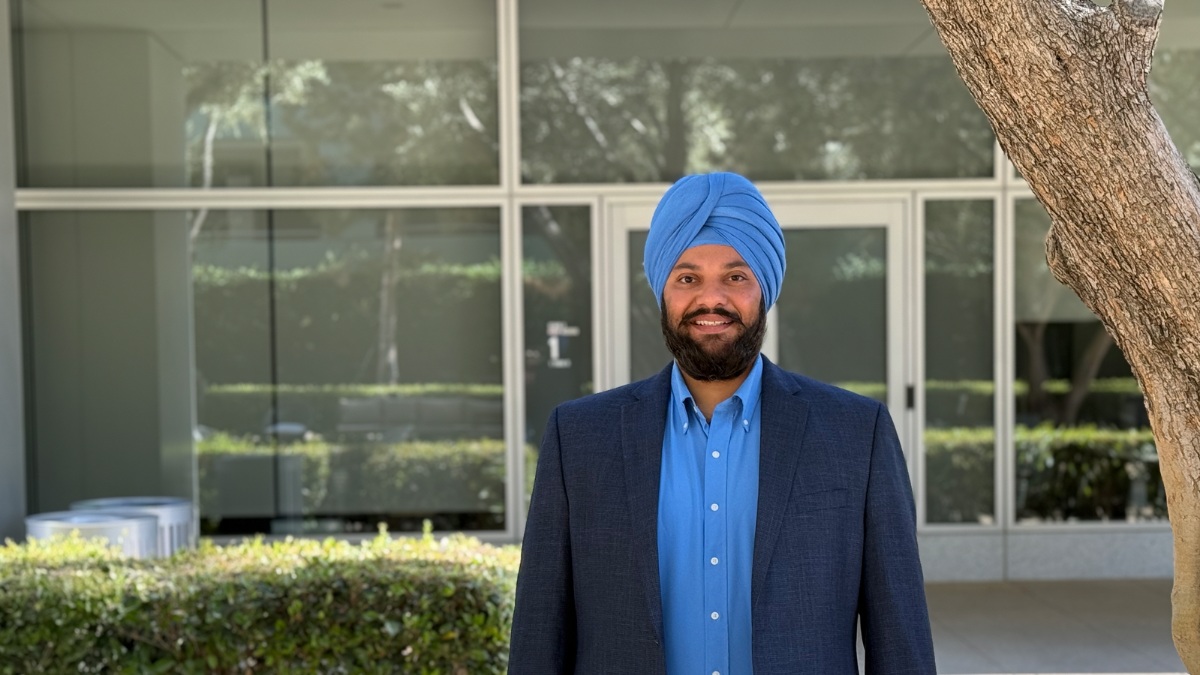
ProductNow, the first AI-native operating system for product teams, announced a $6 million seed round. That’s pretty remarkable, considering it’s the work so far of solo dev Tript Singh Lamba, plus an intern.
Sierra Ventures led the round, with participation from Parameter Ventures and senior operators from leading cloud, consumer, and AI companies. I had a good conversation with Singh Lamba about
Singh Lamba is the founder and CEO of Palo Alto, California-based ProductNow, an AI-native platform redefining how product teams work. Over two decades, he built flagship platforms at Microsoft, Google, and Expedia—helping launch Bing, the early core of Microsoft Messenger and Azure, and cofounding Google’s Ads AI personalization team.
“I’ve been in the trenches and the boardrooms presenting to stellar luminaries, having presented to big companies. And over time, I discovered two insights. I think insight one was there’s always a fun part to your job and a toil, drudgery, grungy part to the job,” Singh Lamba said. “And that story arc where I wanted to elevate the fun parts, reduce the toil contributed to ProductNow. The second is asking firsthand how all these big companies obsess over top-line growth and when the pressure switches to efficiency.”
Normally, he said the default question is, in the second case, “Who do we let go? I think it’s the wrong question. The right one is, ‘how do we make our best people better?’ I’m building ProductNow around those two beliefs. The first is, ‘elevate the craft, kill the drudgery.’ The second is, ‘AI should amplify your team.'”
He said the company is not bolting AI onto legacy workflows.
“We are redesigning the system,” he said.
He also led YouTube Ads through hypergrowth and drove an AI-first transformation of Expedia’s consumer product. ProductNow is the culmination of these experiences—a category-defining system for the autonomous product teams of the future.
Modern product orgs don’t struggle to ship code—they struggle to turn business strategy into coordinated execution. While AI has transformed engineering, product workflows remain stuck in docs, decks, and meetings. More than three million product, program, and strategy leaders influence over $1 trillion in software spend—yet they’re still waiting for their Copilot moment.
It’s the highest-leverage, least-augmented function in tech—one of the most powerful, yet underserved, layers in the enterprise. ProductNow unifies this chaos into a single AI-native system that helps teams move from idea to impact—fast, aligned, and at scale.
“With AI accelerating engineering, the real bottleneck is no longer code—it’s turning strategy into execution and results,” said Singh Lamba. “We’re building a system of leverage that augments teams across product, program, and beyond—amplifying judgment, reducing overhead, and bringing the kind of AI advantage developers have to the rest of the org.”
AI-accelerated code. ProductNow accelerates everything around it

ProductNow is an agentic platform that seamlessly integrates with the tools teams already use. Its AI copilots augment and amplify leaders across the organization, starting with product, program, and strategy. Welcome to the Neural Command Era—where human judgment is the command, and AI is the engine of execution that turns intent into coordinated action, freeing teams from the friction of docs, decks, and meetings.
“This isn’t an incremental upgrade—it rewires the core of how products get built,” said Tim Guleri, managing partner at Sierra Ventures. “ProductNow gives teams a real-time system of execution—something every product leader has wanted, but no one has delivered. It’s a rare kind of platform shift, and Tript has the depth and precision to see it through.”
How it works
Singh Lamba said many people can contribute to products that generate lots of revenues. But they’re often inundated in documents, decks and meetings.
“They’re spending half their time in orchestration and rewriting material,” he said. “We are building the first native AI operating system that transforms that messy product collaboration to go from vision to value. And I’m starting with a narrow edge, which is AI teammates for a product family.”
He said you can think of the product as a “cursor for a product rebuild from first principles.”
He said that tasks like authoring a product requirement document or a strategy document can be done with this AI teammate product. Then the AI can convert it into work items, automatically sending status reports and keeping roadmaps updated.
“The true test at the end of the day is, ‘Could we exceed the value prop envisioned?'” he said. “The great human product managers are the ones who exceed the value prop envisioned. When they deliver it, the value prop delivered has to be greater than value prop envisioned, and that is the guiding principle.”
ProductNow’s platform will link to other agentic technologies and sources of information, including a company’s productivity software, Wiki, Sharepoint, intranet, Confluence and other enterprise knowledge as needed.
“It enables, like an agentic layer on the top which reimagines the workflow around our humans and AI teammates for coworking,” Singh Lamba said.
But it’s not bolting on AI to old solutions and workflows. Rather, ProductNow is reimagining what happens, he said.
“You can fundamentally do new things where there’s new coworking data, which compounds your intelligence,” he said.
Augmenting people, not eliminating them
Singh Lamba said he has been thinking for a while about how to eliminate “confirmation bias” in the big companies for a while by talking to a lot of executives in those companies about the highest pain points they have. He asked where they need augmentation for their best people.
“And as we look to the data, the answer started clustering around certain themes. One theme was, ‘how do you strategize and define the why and the what? Let’s call it the product requirement document, or PRD. The second theme was around execution, which is, how do you break this into work items? How do you triage it every day? How do you run sprints and scrums? How do you set status, very high repetition, low cognition work.”
He noted that developers have had the assistance of AI vibe coding for some time. (Microsoft has said 30% of its code is generated by AI). The goal is to automate other things, not just to eliminate jobs, but to enhance jobs, he said. ProductNow’s job is to eliminate average workflows, but not the highest workflows.
“The role doesn’t go away. It evolves,” he said.
The AI can draft PRDs, synthesize feedback, trace decisions and free up humans to do higher level tasks like setting direction, aligning teams and making important decisions. These things allow organizations to be better at making tectonic decisions, Singh Lamba said.
Now that the company has funding, Singh Lamba anticipates he will be hiring fast. His priority is to bring aboard more engineers.
As for competition, Singh Lamba said it’s the Wild West of AI and many are over-promising and under-delivering.
“The difference is I understand enterprise requirements deeply in terms of scale, reliability, security and things that enterprises look for,” Singh Lamba said.
“Our AI agents respect your batting style. This is why it’s not a plug in. It’s not super glued. We are not just the tip of iceberg. We’re trying to build the iceberg,” Singh Lamba said.
Singh Lamba said you can think of these AI teammates as your digital twin.
“It’s a software system that can be manual or as autonomous as you want it to be,” he said. “It can perceive your environment. It can make decisions. It can take actions to achieve specific goals, and often with minimal human oversight.”