
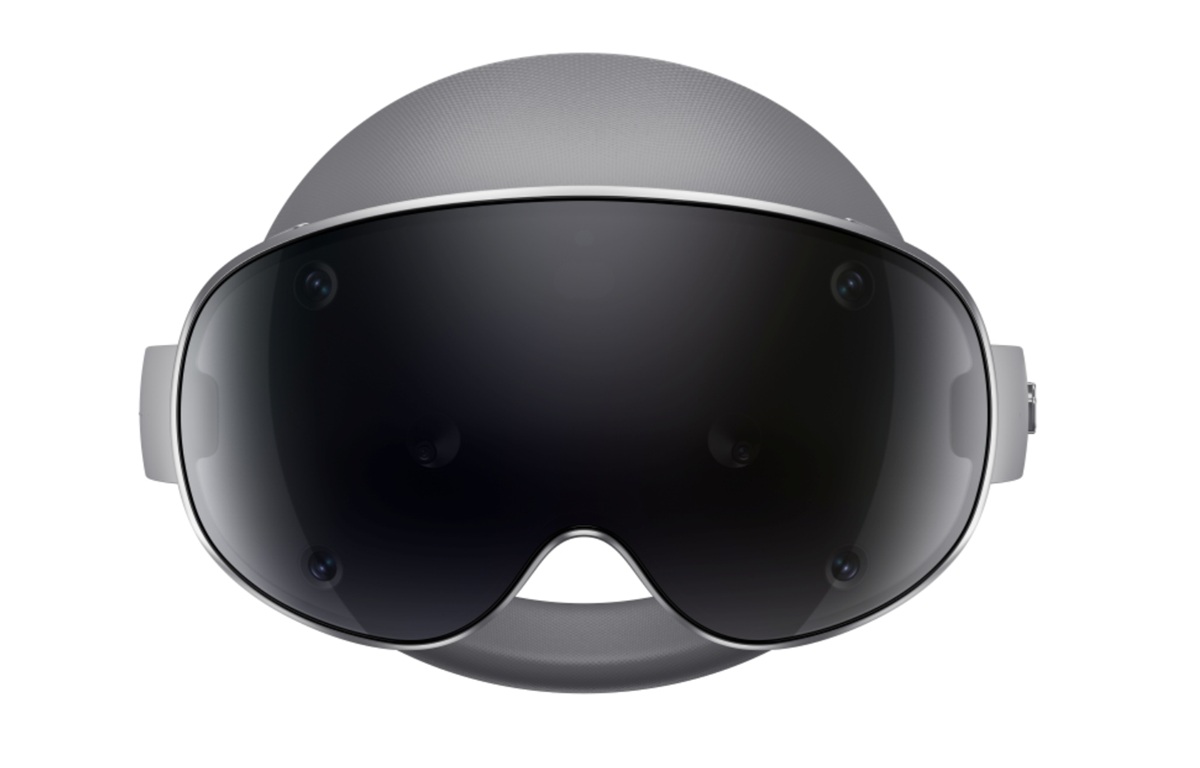
Samsung unveiled its Project Moohan, now called Galaxy XR, a mixed reality headset that it build with Google and Qualcomm.
As a leader in mobile AI, Samsung said it is ushering in a new era by introducing a new category of AI-native devices.
At the heart of this vision is Android XR, a powerful platform optimized with AI embedded right from the start. Co-developed with Google and Qualcomm, Android XR is designed to scale across form factors, bringing AI to the center of immersive, everyday experiences.
Samsung said Project Moohan is the groundbreaking first product built for the open and scalable Android XR platform, and it seamlessly blends everyday utility with immersive new experiences. This is where the true potential of XR comes alive, unlocking a whole new dimension of possibilities, the company said.
Jay Kim, head of customer experience at Samsung, said Samsung is taking the lead with in defining AI devices that understand your context and support you in the background.
“The AI experiences we use today are still running on devices that were originally conceived before the AI era. To truly unlock AI’s full potential, our devices must understand the user and their context in richer ways,” Kim said. “These devices use visual data, voice input and sensors in real time, making them truly multimodal. We believe XR devices offer this profound change for more natural AI experiences, transforming how we discover play and work.”
The new device will position Samsung in between the Meta Quest headset’s from Meta and the Apple Vision Pro. All of the machines now take advantage of mixed reality, offering both VR experiences as well as those that blend 3D imagery into the real world.
“Whether you are fully immersed or on the go, there will be a whole spectrum of XR devices, from headsets to all-day wearable, AI glasses that serve different purposes throughout your day,” Kim said. “Samsung and Google share this vision for AI to offer a new frontier of immersive and meaningful possibilities with an all-new operating system, Android XR, so we’re working hand in hand to co-develop the operating system user interface and hardware for this new category of devices, integrated with Gemini. Qualcomm is also instrumental in powering these AI and xr experiences. Today marks the beginning of the decade of our commitment to XR and AI, and I’m thrilled to announce the first truly multimodal AI headset, introducing Galaxy XR.”
“When we build our new XR operating system, Android XR, we made no compromises over technical maturity for an entirely new level of interaction and seamless integration with existing ecosystems such as Android and Open XR and today,” said Kihwan Kim, head of XR at Samsung.
He noted, “First, AI at the core, we brought Google Gemini to Android XR to enable interactions that are as simple as having a conversation in the real world. Gemini can act on your behalf with your permission, to answer questions, control apps and carry out actions.”
He added, “Second, the perception system on Galaxy XR reimagine an entirely new perception system that understands your screen environment, gestures, what you’re looking at and your expressions instantly and very precisely, so Gemini can understand you, your interactions and your intent in even more ntural ways.”
And he said, “Finally, hardware comfort we needed to design hardware that stays comfortable through extended wear without compromising the design quality of the display or natural interaction. None of it was easy. It required world class experts from Samsung, Google and Qualcomm to work together to co design, integrate and optimize the platform and device. This is a collaboration at a scale that the industry has never seen before.”
It has AI from Google’s Gemini and other AI as well, built into the system, and it has a bunch of sensors that feed data to its Qualcomm chipset.
“We laid the foundation for the ultimate multimodal AI experience,” said Jin Park of XR product planning at Samsung during the live event. She did some demos with Max Spear, product lead of XR at Google.
They noed how the headset lets you discover Google Maps in a 3D view or aerial view, and it answers your questions on the fly. You can ask it about pizza in New York and then it will proceed to tell you verbally about the place you are thinking about. You can explore inside a pizza parlor that has been scanned into an XR experience.
XR allows passthrough, where you can see things in the real world and bring them into your environment. In a demo, Park showed how you can learn more about glasses that you’re using.
Park played a game of Stardew Valley, and she noted she had never played it before. So she got advice for playing the game from Gemini.
Price and availability
Samsung said it is available now in South Korea, and it costs $1,800, with $250 extra for controllers. It’s a lot more than Meta’s Meta Quest VR headsets, but close to half the price of Apple’s.
The ecosystem
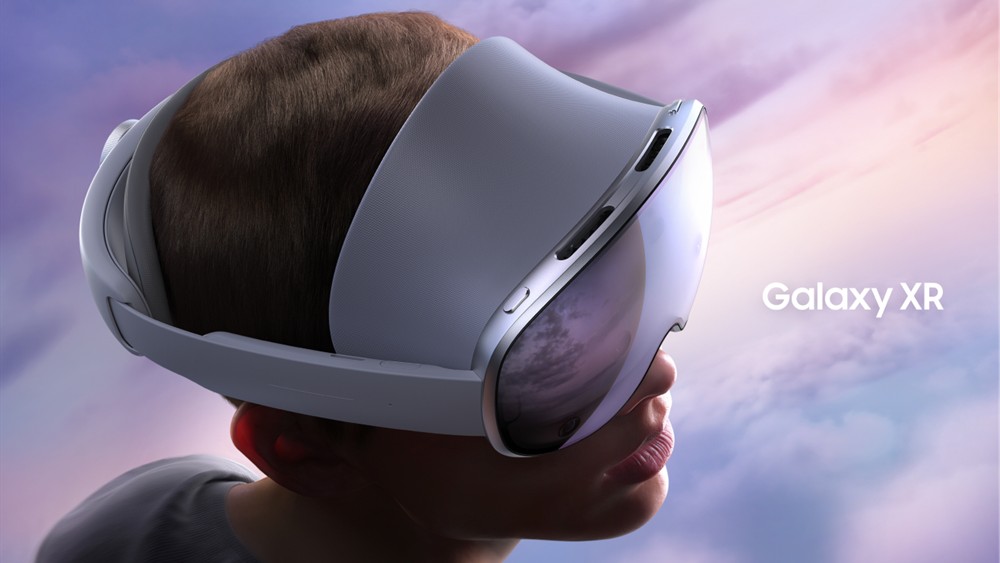
Built on an open, scalable platform with multimodal AI at its core, Galaxy XR marks the beginning of the Android XR ecosystem, unleashing a future of discovery, play and work
Samsung Electronics today unveiled Galaxy XR, introducing a new category of AI-native devices designed to deliver immersive experiences in a form factor optimized for multimodal AI.
As the first product built on the new Android XR platform developed together by Samsung, Google and Qualcomm Technologies, Galaxy XR showcases the future of discovery, play and work, enabling users to enjoy natural, deeply immersive experiences — from daily tasks to bold new frontiers. It’s the first step in Samsung’s long-term XR journey, with innovations to come across the full spectrum of XR form factors, including AI glasses.
“With Galaxy XR, Samsung is introducing a brand-new ecosystem of mobile devices,” said Won-Joon Choi, COO of Mobile eXperience (MX) Business at Samsung Electronics, in a statement. “Built on Android XR, Galaxy XR expands the vision for mobile AI into a new frontier of immersive and meaningful possibilities, allowing XR to move from concept to everyday reality, for both the industry and users.”
“Android XR is the first Android platform built entirely for the Gemini era, and we are incredibly excited to take a significant leap forward today with the launch of Galaxy XR,” said Sameer Samat, president of Android Ecosystem at Google, in a statement. “Through our partnership with Samsung, Android XR will unlock entirely new ways to explore, connect and create, building an open, unified platform for the next evolution of computing.”
“Galaxy XR embodies our vision for the future, where the synergy of AI and XR transforms the possibilities of personal computing,” said Alex Katouzian, Group GM of Mobile, Compute & XR at Qualcomm Technologies, Inc. “We’re thrilled to be collaborating on this initiative, as Galaxy XR will help to bring new use cases across various industries and pave the way for exciting multi-device experiences, all enabled by our work with Samsung and Google.
Designed to unlock the full power of multimodal AI
Galaxy XR is unlocking new possibilities with multimodal AI, transforming how people connect with the world through technology in their daily lives.
To bring Samsung, Google and Qualcomm’s vision for AI to life, Galaxy XR is the first product built on the new Android XR platform, which has Gemini embedded right from the start.
With Gemini integrated at the system level, Galaxy XR doesn’t feel like a tool following users’ commands but a new type of AI companion that helps them manage their tasks, delivering natural and intuitive interactions through voice, vision and gesture, the companies said.
In the form of a headset, it understands users’ surroundings by seeing what they see and hearing what they hear. This allows Galaxy XR to respond in conversational ways that feel natural and human, giving users entirely new ways of interacting with technology.
You can ask Gemini when a photo you’re looking at was taken, and it will take a guess like in the 1970s.
Shahram Izadi, VP of XR at Google, said at the even, “Google and Samsung have a long history of collaboration and innovation, and Android XR is the next step. Android XR was built to power emerging form factors that could let you experience Gemini in new ways, from immersive headsets to lightweight glasses and everything in between. And by building on the foundation of Android, all your favorite apps and experiences from Google Play are there to help.”
Izadi added, “We’re also reimagining your favorite Google apps for android XR entertainment comes to life with fully immersive YouTube and Google TV on headsets. Or you can navigate a new city as if you’re a local with Google Maps and translate on glasses. Beyond your favorite apps, what really differentiates Android XR from other platforms is Gemini. With Gemini on Android XR, your AI assistant understands your context and intent to help you even more, you can ask questions as simply as having a conversation, Gemini can pull up information about whatever you’re exploring, or even get things done for you with your permission.”
And he said, “Android XR will bring Gemini to the full spectrum of xr devices, and today we’ll show you the beginning of that journey where Gemini transforms how we discover play and work on Galaxy XR. Of course, all of this requires powerful computing.”
Ziad Asghar, SVP of XR computing at Qualcomm, “We have been investing in XR for over a decade. We have leveraged our expertise in the areas of connectivity, compute, software and on device AI to create industry leading XR solutions for both immersive headsets and AI glasses.”
Asghar added,”Galaxy XR is powered by the Snapdragon XR2+ Gen 2 chipset, which features 20% increased CPU and 15% increase GPU frequency, and it delivers 4K resolution per eye, unlocking crisp visual clarity for spatial computing experiences.”
And he said it has “XR2+ Gen 2 features best in class AI capabilities with the Qualcomm NPU, delivering outstanding performance per watt. Adreno graphics provides superior foveated rendering and a dedicated computer vision accelerator enables multi camera support for advanced perception and feature detection,”
All of these are integrated into a single chip platform architecture.
“Together with Samsung and Google, we brought our expertise in perception algorithms and new foliation and rendering pipelines to Android XR, allowing Galaxy XR to meld the virtual and physical worlds seamlessly by unlocking the full power of XR2+ Gen 2,” Asghar said. “Galaxy XR Not only renders at a new level of efficiency, but it also redefines how an operating system can leverage multimodal AI in real time. And this truly is just the beginning. We are also excited to see XR revolutionize not just entertainment, but also education, healthcare, productivity and collaboration.”
He said that with Snapdragon spaces, Qualcomm empowered leading enterprise ISVs to build immersive experiences using the Spaces SDK and now with one set of APIs and Spaces compatibility plugin for Android XR, developers can easily bring their apps to Galaxy XR and future Android XR devices.
“Galaxy XR marks the start of a strategic venture into an open, scalable and powerful ecosystem that redefines the future of personal computing, and we are very proud to deepen our partnership with Samsung and Google to make that future a reality,” Asghar said.
Open Collaboration Brings a Scalable Android XR Ecosystem
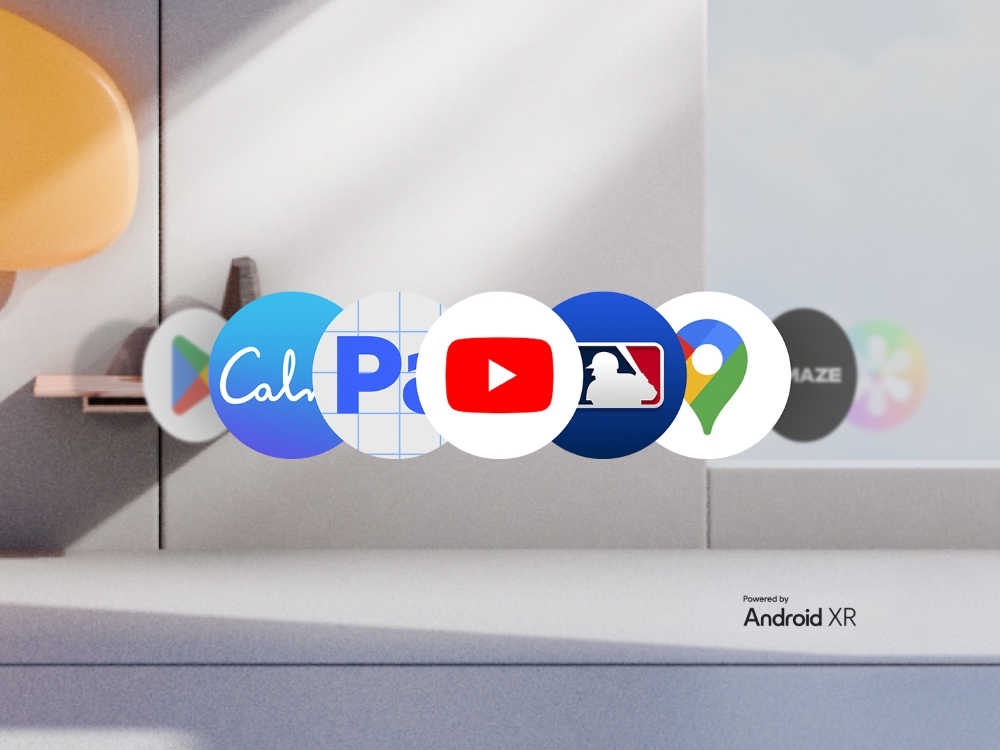
As part of a long-term vision for XR, Samsung has built a new XR ecosystem in partnership with Google and Qualcomm, opening new possibilities for the industry.
Co-developed with Google and Qualcomm, Android XR is a powerful platform that puts AI at the center of the experience. It is designed to scale across a variety of form factors, from headsets to AI glasses and beyond, and Galaxy XR benefits from the strength of its open, scalable ecosystem.
All apps built on the Android platform work out of the box on Galaxy XR, ensuring users can enjoy familiar mobile experiences they already love and making the device as useful day-to-day as it is groundbreaking. Since the platform is built on OpenXR standards, it’s easy for developers using OpenXR, WebXR or Unity to bring their experiences to Galaxy XR — offering them more ways to scale and giving consumers more choices.
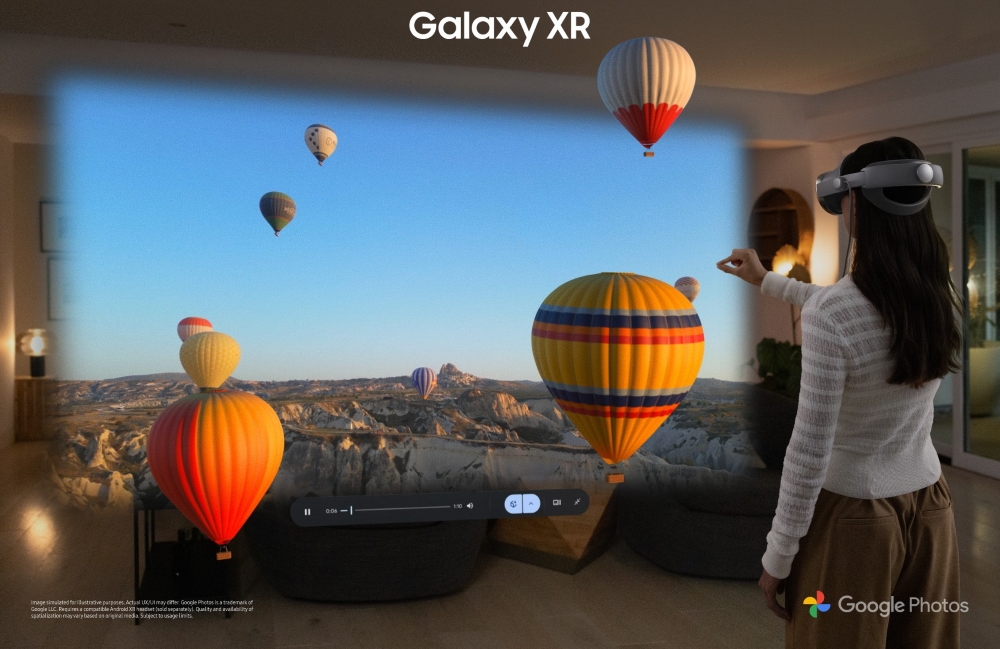
You can tell what’s been made for XR, like Adobe’s immersive video editing app, Pulsar, which is exclusive for Android XR. You can take a scene like this hot-air balloon picture from Turkey and add elements to it like a heart — and then it is integrated into things like playbacks of the image/video. Park showed off an image of animals in futuristic setting with XR gear on them, and Gemini made up a story about it on the spot in a live demo.
The device can run regular smartphone apps as well as XR apps. It has its own Netflix app.
Discover, work and play without boundaries
Galaxy XR has been carefully engineered with a human-centric design to deliver long-term comfort. Through a combination of its shape, advanced materials and the structural optimization of each component, Galaxy XR achieves an optimal balance between lightweight design and robustness for daily use.
The headset’s ergonomically balanced frame distributes pressure across the forehead and the back of the head, minimizing facial discomfort while providing steady support. The battery pack is separate from the headset, making the device more compact, light and comfortable to wear. Galaxy XR also features a detachable light shield, offering comfort when removed and deeper immersion by blocking external light when attached. These thoughtful innovations allow Galaxy XR users to fully engage in XR experiences with ease.
Galaxy XR opens entirely new dimensions of discovery, providing a wide array of experiences optimized for XR such as Google Maps, YouTube, Circle to Search and Google Photos.
- Travel and search with Google Maps: Users can use Gemini as a guide to navigate to any place on Google Maps and ask for personalized suggestions about nearby places while exploring the world in immersive 3D maps.
- Deep-dive into content with AI: Users can naturally ask Gemini to find content they want to see in YouTube and get more information about the video they are watching, unlocking richer learning and entertainment experiences.
- See more with video pass through and Circle to Search2: In pass through mode, users can see the physical world around them and draw a circle with their hand to instantly search for information about anything in front of them.
- Auto-spatialize videos and photos into 3D3: Bring photos and videos to life by converting 2D images into 3D, turning memories into immersive experiences or reimagining them in entirely new ways.
Thanks to its advanced sensors, cameras and powerful hardware, Galaxy XR can precisely track users’ head, hand and eye movement and make these experiences truly immersive. The device’s microphones are strategically placed and supported by software to filter out external noises and capture the wearer’s voice clearly. Through Galaxy XR, users can explore both virtual and real worlds in XR-specialized apps using natural physical interaction, with assistance from Gemini.
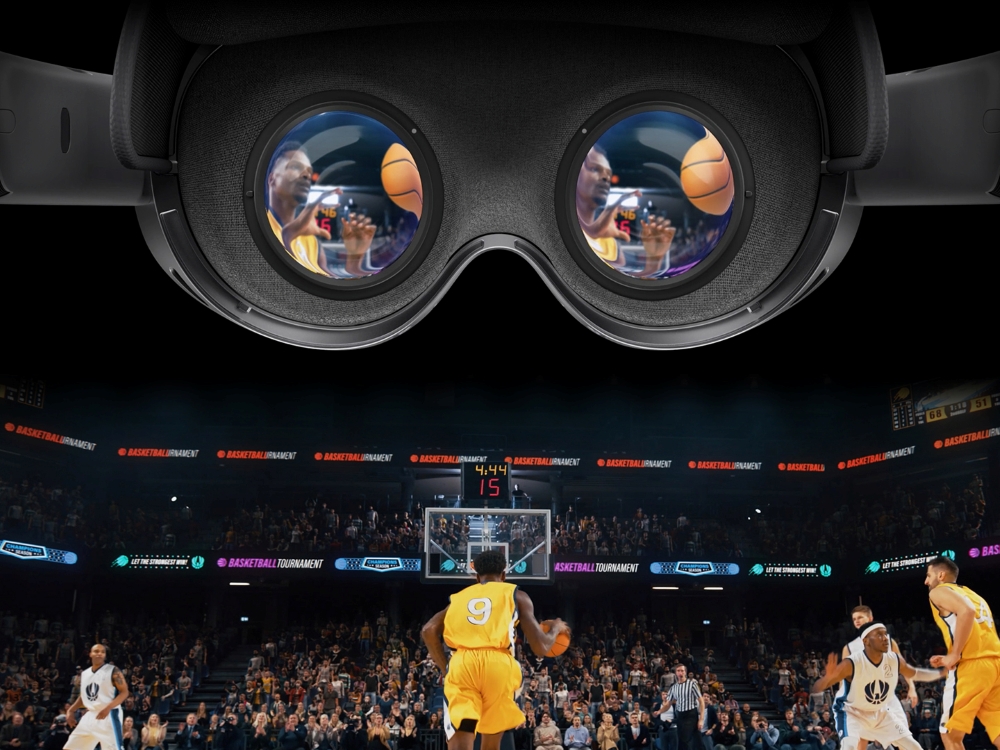
Galaxy XR also opens new levels of immersion in entertainment — including sports and gaming — with its powerful hardware and superior performance.
- Immersive viewing experiences: Users can stream their favorite shows on a 4K Micro-OLED screen that feels like a personal theater.
- Sports experiences: Sports fans can watch multiple games at the same time, feeling as if they are right in the stadium.
- AI-enhanced gaming experiences: While playing XR-specialized games, users can chat with Gemini for real-time coaching, tips and enhanced gameplay experiences.
- Create and edit in 3D: Project Pulsar from Adobe makes cinematic video edits easy—users can add 3D depth, and layer captions or icons behind subjects on a larger-than-life canvas.
Powered by Snapdragon XR2+ Gen 2, Galaxy XR delivers next generation immersive experiences with visual clarity and advanced AI through the Qualcomm Hexagon NPU. Plus, 2.5 hours of battery usage time enables users to enjoy their favorite content in total, uninterrupted immersion. Combined with its immersive sound and ultra-high-resolution displays, Galaxy XR places users at the center of extended worlds optimized for XR.
Samsung is also committed to meeting a wide range of use cases for enterprise needs such as virtual training in heavy industry and construction, including a partnership with Samsung Heavy Industries to utilize Galaxy XR for virtual shipbuilding training for work productivity and safety.
Samsung partnered with Qualcomm Technologies to utilize their efforts with Snapdragon Spaces technology to tap into an Enterprise ISV ecosystem, giving developers the tools to bring their applications to Galaxy XR and create new opportunities for the enterprise world to adopt business solutions optimized for Android XR. Together, these collaborations bring enterprise-ready XR capabilities that enable advanced training, co-design of solutions and secure remote collaboration.
As part of its broader XR roadmap, Samsung is developing multiple form factors, including AI glasses. In collaboration with Google, Samsung is working with pioneering lifestyle brand Warby Parker, known for leveraging technology to create beautifully-designed eyewear and deliver exceptional customer experiences.
At the same time, Samsung is also partnering with Gentle Monster to bring stylish, fashion-forward eyewear that blends cutting-edge AI-native technology with cultural influence and design leadership. Seamlessly connected to the Android XR ecosystem, these devices will pair advanced XR capabilities with style, comfort and practicality, bringing boundary-free discovery, work and play into daily life.
On stage, Park had a convo with football star DK Metcalf from an upcoming movie, Asteroid. And he spoke in both English and Korean, in real time.