
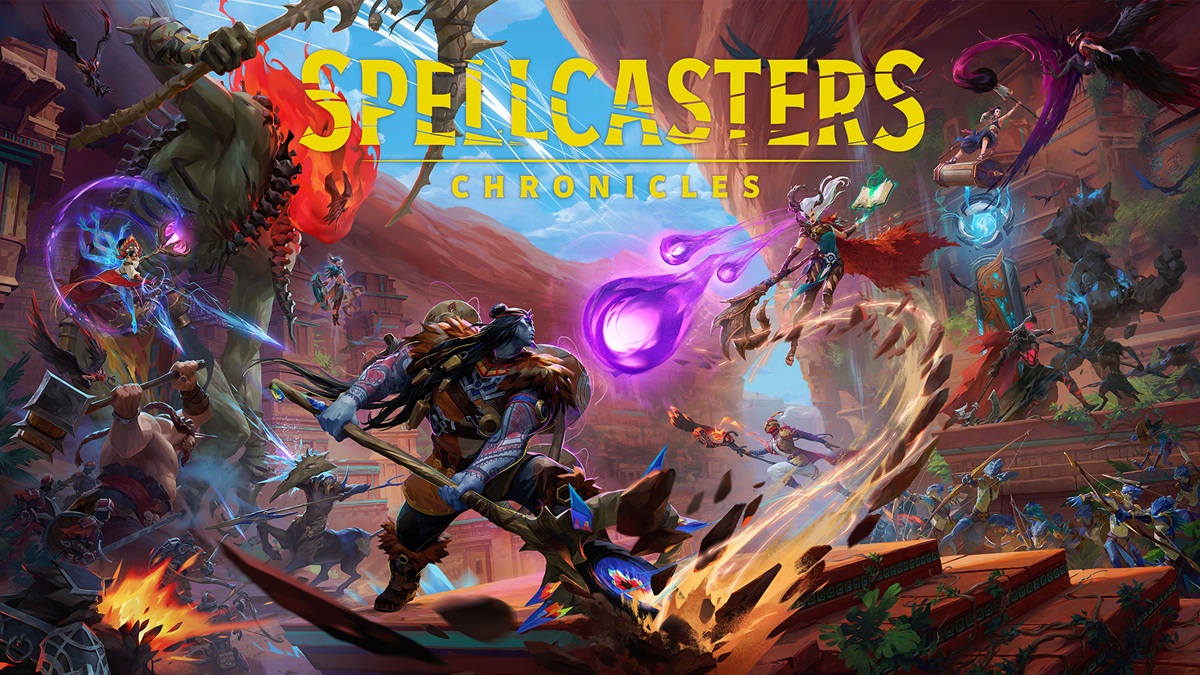
Quantic Dream, the studio behind Detroit: Become Human, unveiled Spellcasters Chronicles, its first-ever multiplayer game. It’s been seven years in the making.
Free-to-play and team-based, it uniquely blends action and strategy by inviting players to command magical chaos in spectacular 3v3 battles. The game will debut with a closed beta on PC (Steam) by the end of 2025.
“We are honored and excited to introduce Spellcasters Chronicles to players today, developed in our Paris and Montreal studios,” said David Cage, president of Quantic Dream, in a statement. “Stepping into a new genre with a fresh artistic approach has been both a challenge and a source of growth, allowing us to evolve as a team. We now look forward to shaping the game further with players’ feedback and to perfecting this journey together.”
Cage added, “This project reflects the creative spirit and technical ambitions guiding Quantic Dream for nearly three decades. With Spellcasters Chronicles, we sought to bring a new form of gaming experience blending action and strategy to life, while exploring community-driven narrative. It has been an exploration of bold ideas, a chance to expand into social and multiplayer experiences, and an adventure shared by a new talented team of experts within our studios in Paris and Montreal who brought this original universe to life and are continuing to develop new experiences including Star Wars Eclipse.”
With the first closed beta kicking off later this year, the studio is thrilled to invite players to take part in early testing, share their feedback, and help shape the game’s evolution. To support this journey, players can now join the official Spellcasters Chronicles Discord server, a dedicated space for community discussion, and register for the closed beta here.
Epic 3v3 combat, crafted with vision and passion
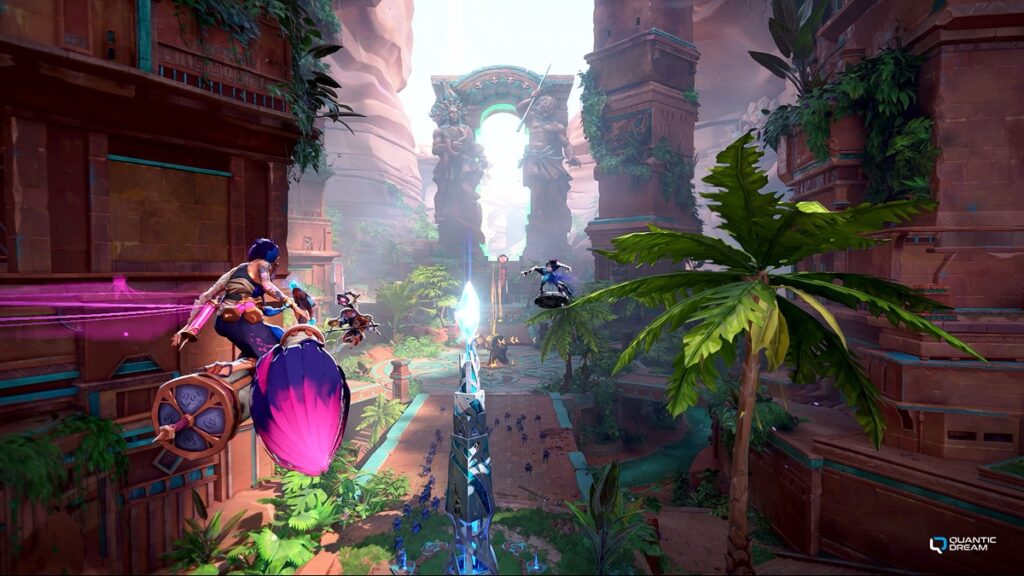
In a unique blend of third-person action and strategic decision making, Spellcasters
Chronicles challenges players to master both movement and magic to dictate the pace of the battle. Each match is played as a 3v3, fast paced 25-minutes showdown across mystical arenas of epic scale and verticality, where teams must capture altars to gain territory and destroy their opponents’ Lifestones to claim their victory.
Players will step into the fight as Spellcasters, archetype-driven mages with distinct
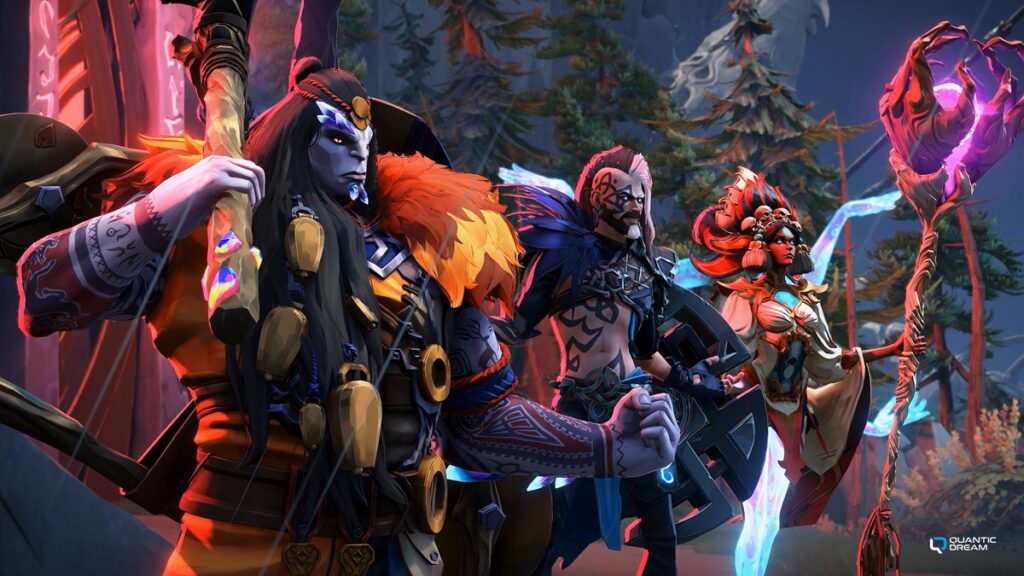
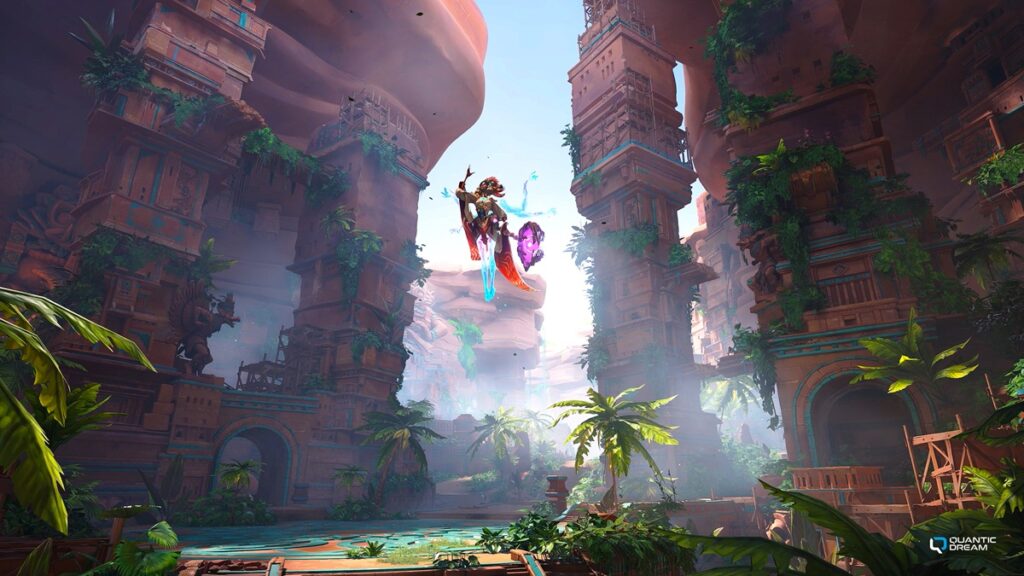
identities, defined roles, and signature abilities, capable of summoning hordes of creatures and casting powerful spells. Infused with magic, each Spellcaster can take to the skies and fly freely across the arena at any moment in battle to command the battlefield, unlocking a level of movement freedom rarely seen in the genre.
The game looks like a multiplayer online battle arena (MOBA), but it is not really a MOBA, he said. The team refers to the game as an action RTS, rather than a MOBA. It has lanes and arenas like a mobile, but you can alter the environment during battle.
Merging tactics and creativity through your spellbook
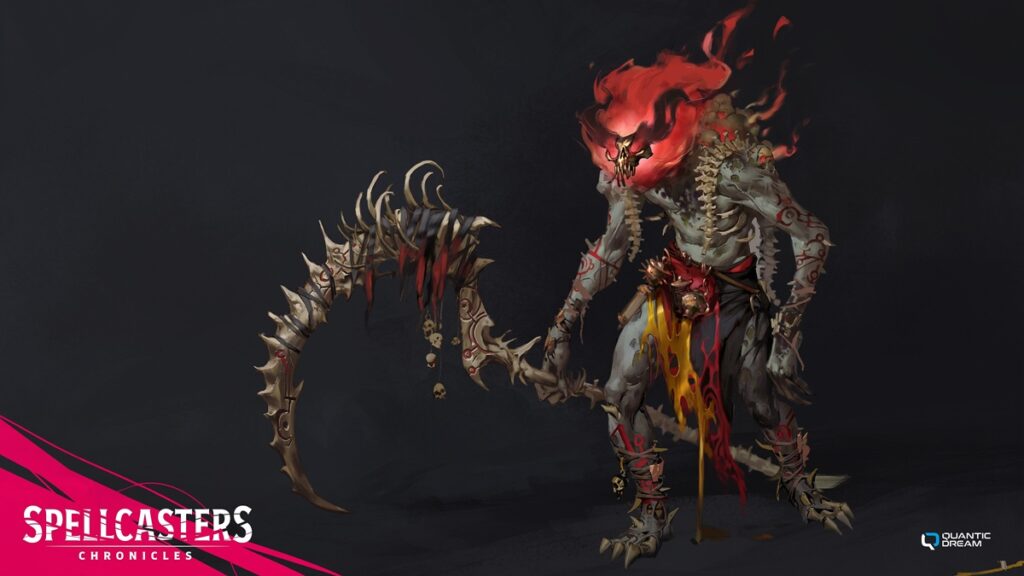
Spellcasters Chronicles sets itself apart thanks to its strategic deck-building system.
Whether players choose a support, tank, or damage dealer archetype, they will be able to
choose from a list of more than 50 spells and summons, bringing tactical adaptation and
creative expression into the arena. Additionally, players will also have to choose one of the
world-crushingly colossal ultimate summonses, The Titans, a high-sized and powerful
creature capable of shifting the tide of battle.
This hybrid of archetype-driven design and customizable decks makes every match in Spellcasters Chronicles a strategic battle, rewarding experimentation and team synergy.
Bringing narrative expertise into a new genre
In addition to its competitive core, the game will introduce a singular approach to how stories are shaped in multiplayer experiences. This community-narrative aspect of the game will be introduced in the coming months.
“Spellcasters Chronicles began as a creative experiment, an opportunity to channel our
passion for storytelling into a shared, living world,” says Gregorie Diaconu, Game Director on Spellcasters Chronicles at Quantic Dream, in a statement. “While very different from our previous titles, it builds on what has always driven us: giving players the power to shape stories – this time in a collective manner.”
He added, “After years of development, we can’t wait to finally share the world of Spellcasters Chronicles with players. We are starting our closed beta phase with our core-loop focused on arena battles and will introduce community narrative and other elements of our macro-loop in the following months. This is just the beginning of the journey, and we are eager to listen, to learn, and to grow alongside the community.”
And he said, “Your feedback will be invaluable in shaping and refining the experience, ensuring that the game evolves into something truly special, built hand-in-hand with those who play it.”
Hands-on at TwitchCon
Fans can expect to learn more tomorrow, October 17, during a special gameplay deep dive
and team presentation live from the LAN stage at TwitchCon San Diego, broadcast
globally on the official Twitch LAN channel from 11:30 a.m. to 6:30 p.m. Pacific time.
Attendees and viewers will get a first look of gameplay straight from the magical mayhem of the battlefield, along with exclusive details and a chance to earn a closed beta key.
The program will feature a variety of highlights, including:
● Gameplay Deep Dives – In-depth showcase of Spellcasters Chronicles’ core
mechanics.
● Team Introduction – Developers insights on the game’s vision and creative
approach.
● Developer Q&A – Exclusive session with the creative team answering questions
from the community and live audience.
● Showmatches – Live competitive matches featuring players and content creators.
● Cosplay Reveal – A special presentation of our official Cosplayer.
A departure for Quantic Dream

Quantic Dream is a video game development studio founded in 1997 by David Cage, based in Paris, France and Montreal, Canada. The company has more than 550 people, coming off the success of Detroit: Become Human.
It also published Heavy Rain and Beyond: Two Souls — titles that have touched millions of gamers around the world and won more than 250 international awards. They have greatly contributed to the recognition of interactive storytelling in video games.
Since 2019, Quantic Dream has been self-publishing, releasing its back-catalogue titles Fahrenheit (Indigo Prophecy), Heavy Rain, Beyond: Two Souls and Detroit: Become Human to PC. In 2022, Quantic Dream joined NetEase Games to develop its creative vision and accelerate the development of titles that redefine the interactive experience for gamers around the world.
“Quantic Dream has been innovating for 28 years,” said Guillaume de Fondaumière, co-CEO of Quantic Dream, in an interview with GamesBeat.
And now it’s moving into a brand new category.
“We created the first city in real time with OmiKron, the Nomad Soul, an open world released in 1999,” he said. “Then we decided to focus on interactive narration for quite a while, developing Fahrenheit, Indigo Prophecy, Heavy Rain, Beyond: Two Souls and Detroit: Become Human. And we certainly do want to continue on that path.”
However, he said the team decided after Detroit that it also wanted to innovate in other genres and spaces.
“We have at the core a true pioneering DNA. We create our own tools, our own technologies. And some people in the team wanted to open our horizons, and so we’ve been working since about seven years now on a project that is very, very different from everything we’ve done before,” de Fondaumière said.
“In a nutshell, we wanted to create an experience that you could enjoy and play with friends. We created a multiplayer experience. We also wanted to explore new ways in the narrative space, new ways to tell a story and tell a story in a multiplayer experience,” de Fondaumière said. “We’ve been focused very much in the past years on creating highly realistic characters and sets, and we wanted to see how we could apply our craft to stylized art direction.”
Although the game is a multiplayer title, it still has a lot of lore.
“Spellcasters Chronicles is Quantic Dream’s first competitive game featuring an original gameplay that mixes intense action and deep strategy combined with an innovative community narrative that will let players decide together the fate of their world,” de Fondaumière said. “It is an original IP set in a fantasy world full of epic conflicts, dark mysteries and heroic figures that we will be able to explore throughout the game and beyond in the world of Spellcasters Chronicles, every event, every life, every destiny, is a thread. These threads are bound together by an energy called the source to form the infinite work we call the tapestry.”
He added, “Left without their gods, some mortals discovered that they could manipulate the source and alter the tapestry themselves. They could make miracles. We call these exceptional beings, Spellcasters. You play as a Spellcaster, a powerful mage capable of casting magical spells, summoning armies of creatures and creating massive buildings in three versus three team play.”
How it works
He said players join the battlefield and use their magic to destroy their enemy’s life stone the core of their power. The game is played in the third-person view, putting players in the heart of battle. You assemble a deck to customize your character.
One of the things you’ll see quickly in a demo is that the Spellcasters can fly.
This gives them great mobility, the ability to have a strategic view of the arena, and it leads to intense aerial combat
Before entering the arena, you choose your Spellcaster from a range of diverse archetypes. Each is equipped with four creatures and spells that you select before battle. Spells can be cast everywhere in the arena, but creatures and buildings can only be summoned on a player’s territory.
As a Spellcaster, you will be able to decide whether to stand back and support your troops or jump yourself into the melee to clear a path for your armies. Wisps are dropped when you defeat creatures and your opponents, allowing you to level up and empower your Spellcaster as you play. The Titan gauge will fill itself as you deal and receive damage. When it’s full, you will be able to summon one of the Titans, the most powerful creature in the game.
This reminds me of Vainglory. While it has similarities to other games, de Fondaumière said that “we never do me toos. We don’t even beat ourselves with our IPs. We always try to cover new ground and redefine what we believe.”
If you summon the Titan at the right time, these creatures can be used by players to deliver either the decisive blow or successfully repel enemy attacks.
“Every victory and loss contributes to the evolving tapestry of fate,” de Fondaumière said. ” Each season, players will face a choice that impacts the gameplay and lore of the game. The more you play and win, the more influential you become.”
While it’s very different, de Fondaumière said you will see over time that it has the Quantic Dream DNA.
“The community narrative aspect is really something that is going to set this game apart from all other games in that space,” de Fondaumière said. “There’s a real lore, or Spellcasters background story, and we know where the world is going.”
But the community will influence the story of the world.
With each new season, the team will introduce new Spellcasters, new arenas, schools of magic and more.
Progression during matches
There is progression in the game and you will be able to level up during matches. The matches last between 20 and 30 minutes, and so the objective is clearly to destroy the three life stones of your opponents and the first who destroys the life stones is the winning team.
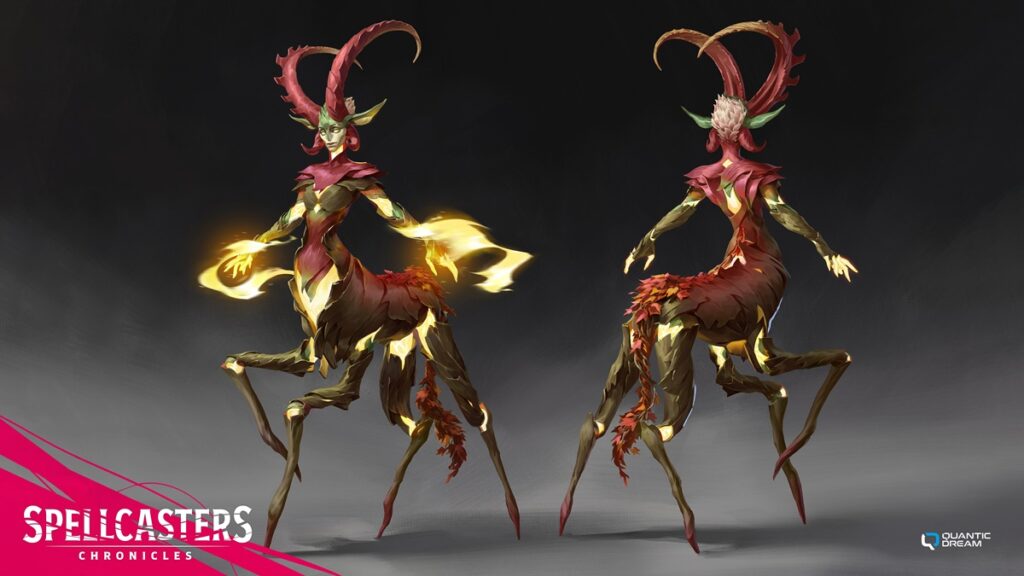
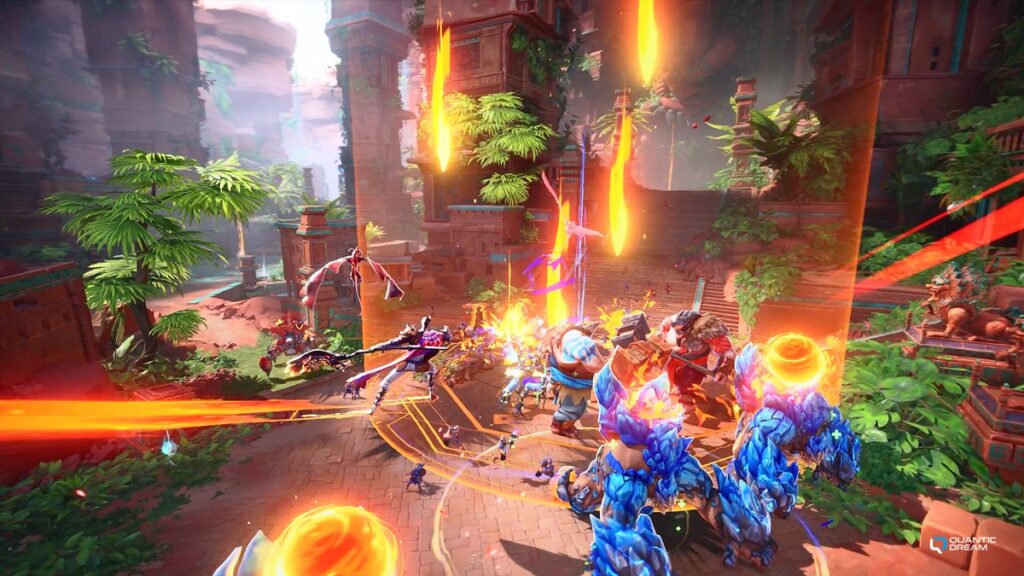
You can cast spells to support your creatures or deal damage to the enemy. So you can summon a skeleton, for instance, but infuse that skeleton with ice, with fire, with whatever magical spell you have yourself that you yourself can use during battle to damage enemies.
But also infuse your creatures with you the ability to summon buildings and defenses. So that entirely depends on the deck that you have. The deck is not random. The deck is what you choose. There are some autobattle features. When you summon creatures, they will automatically move toward enemy lines. As you move forward, you gain terrain.
You will capture altars of power. And so when you your armies move forward and capture new territory, you are only able to cast to summon creatures in territory that you’ve conquered. You can’t you can fly around the entire arena, but you can only cast in grounds that you’ve conquered. So you have to be very strategic. There are up to 100 creatures on the map. Each of the three human players on a team can be killed. If they are, they are disabled for a time of 10 seconds to 20 seconds.
Towards the end of the battle, all Spellcasters will have the possibility to summon the mightiest creature in the world of Spellcasters, which is the Titan. Titans are formidable fighting creatures that you can use both. Both to attack or defend, depending on you know how what, what your situation is. You want to summon that creature either close to your base, very close to your next to your life stone, or next to your opponent’s life stone.
If you’re attacking, you can fight other Spellcasters. Fighting Spellcasters is relatively complicated, because those creatures move very, very fast and can fly.
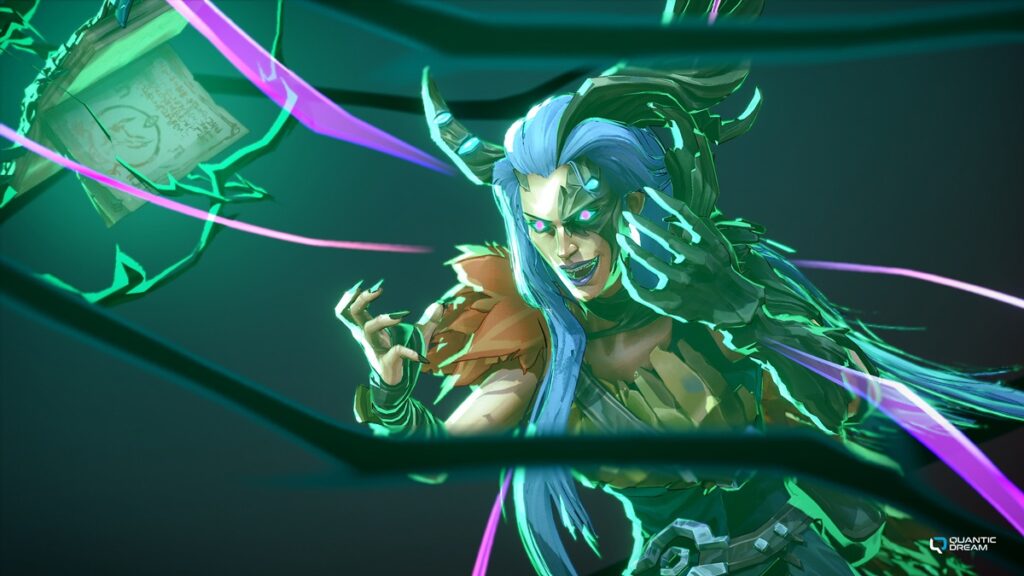
There’s one character, the Astronomical Assassin, who is extremely fast. She has a special skill of making herself invisible on the map. There are several maps in development, including lush forests, ice worlds and more.
A meta game?
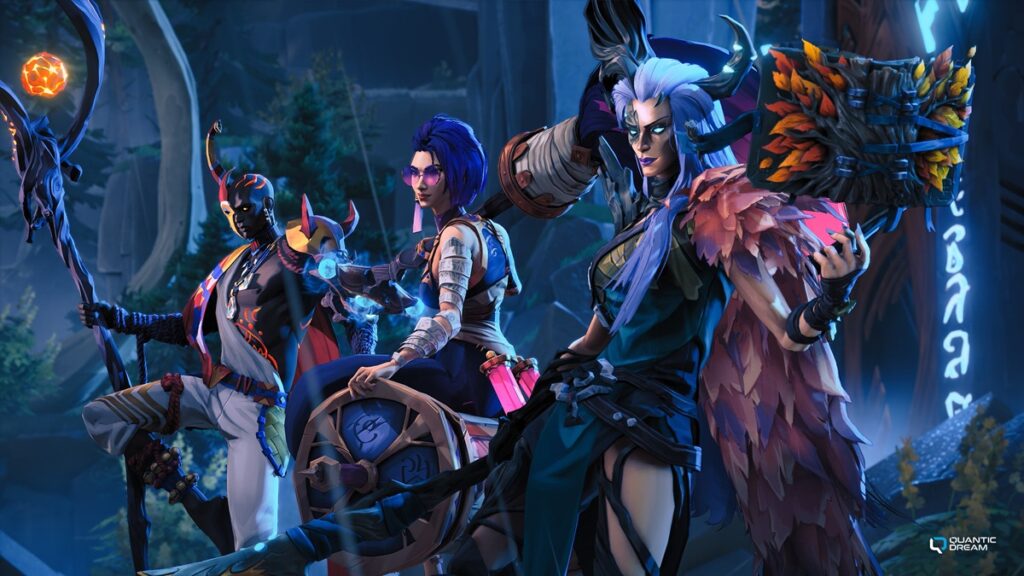
“You play as a spellcaster, and a spellcaster is capable of unleashing chaos on the battlefield by summoning hordes of creatures and casting powerful spells,” he said. “So the spellcaster is both a general leading an army, but also capable of getting himself into the action. Players will shape a living world together, and every victory and loss will contribute to what we call the tapestry of fate, and we’ll have seasonal events and decisions that will change the gameplay, the lore and the map.”
That means the community together is going to shape the world.
“The story unfolds in a quite unique way. We’re not going to talk too much at this stage about how this community narrative works, because we’re first introducing you to the world and players over the next few months until we’re ready to demonstrate community narrative,” de Fondaumière said. “For Spellcaster Chronicles, we set up an entirely new team. Our veterans have worked on multiplayer games, of course, but the game is developed on our core tech, so technologies and tools are the same for Spellcasters Chronicles as they are for Star Wars: Eclipse.”
However, the company uses very specific graphics tools and animation tools for Spellcasters, which was previously called Project T. The game engine can accommodate different graphics styles.
“One of the first objective with our new tech was to be able to create both stylized graphics and highly realistic rendering animation in Star Wars: Eclipse,” he said. “We are taking advantage of our performance capture stage.”
Staffing up for multiple projects
Detroit: Become Human had a team of 153 people. Almost all of them are contributing to the Star Wars game, he said.
The game is a “second lane” for the studio, as the core of the team has 350 of the 550 people working on Star Wars: Eclipse. There are less than 100 people working on Spellcasters Chronicles. And if we do our math correctly, that means there are other things going on in Montreal and Paris.
The original concept and tech work began seven years ago. Cage came up with the original concpet and then the company set up the team. Gregory Dean became the game director on this title. The pre-production period lasted over three years.
“We started with a first prototype, then a vertical slice. That’s the reason why it took so long to get to fruition,” de Fondaumière said.
As for Star Wars: Eclipse, the company unveiled the title in 2021 and it started preproduction in 2022. As for the company’s funding status, de Fondaumière said, “We are well funded, and we continue to develop our games like before. We were certainly the most mature studio acquired. And, yeah, we’re very sad to see some of the folks being let go [by NetEase] but that’s the decision.”
Details still to come
There could be a meta game here, but de Fondaumière declined to talk about it until there was more to say.
“The idea is to allow the community to alter the world, to decide where the story is going and their decisions are going to impact also how the game plays,” he said.
The game has no blockchain elements, and the free-to-play economy is for cosmetics only. Of course, by unveiling the game at TwitchCon San Diego, the company has a strategy to focus on creators.
The games’s closed beta starts in November on the PC only, and it will go to open beta when ready. The team will go through step by step through the testing process. There is no launch date yet.