
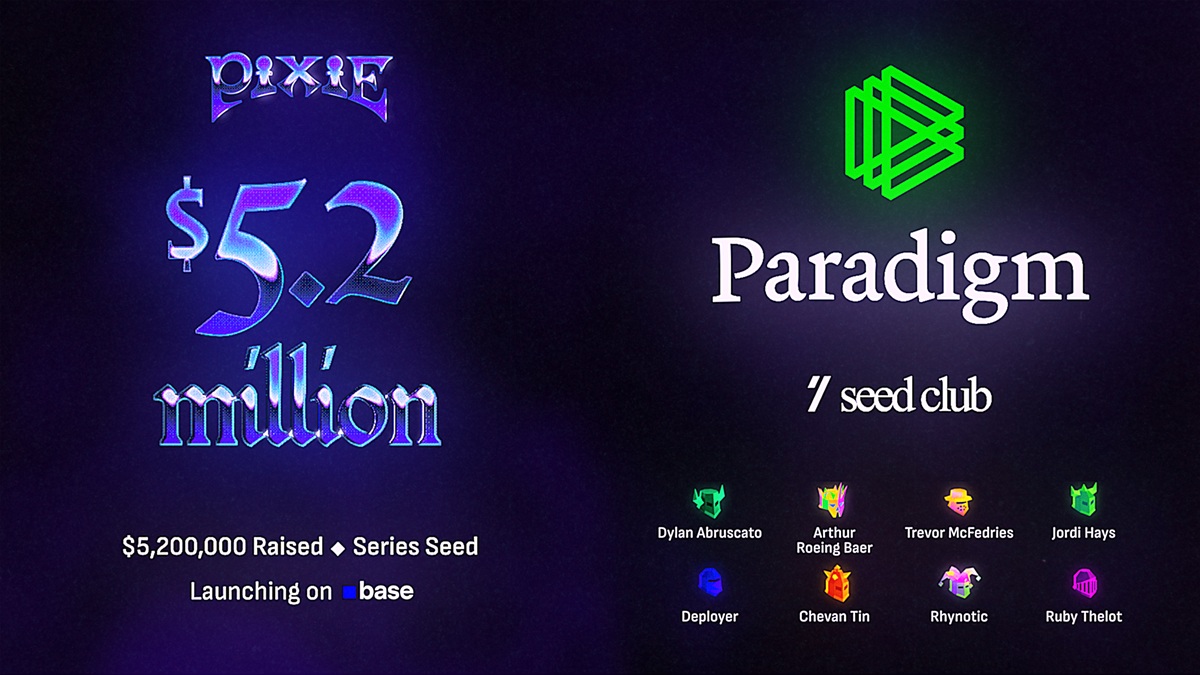
Pixie Chess, a new onchain game that reimagines chess with collectible pieces and player-funded tournaments, launched today. The company also disclosed it raised $5.2 million in a seed funding round.
Pixie Chess reimagines chess by introducing collectible pieces with unique abilities, daily piece sales that fund massive tournaments, and a meta that evolves as pieces burn after each tournament. Think Pokemon/Magic: The Gathering meets chess.
Most crypto gaming projects prioritize token mechanics over actual fun. Pixie Chess is a game first, built by people who care about chess and competition, that happens to use crypto rails for its economy, the company said.
The game’s economics work in players’ favor. Revenue from daily piece sales goes directly into tournament prize pools. And because pieces burn after each tournament, the game stays fresh and there’s always demand for new ones.
Pixie Chess has already built a following in beta, with players spending real money to compete before the game even officially launches. In one beta game, 300 players put up $25,000 of their own money, five times more than expected for the prize pool.
Online chess has a growing AI-cheating problem. Pixie Chess said it doesn’t have that problem because the custom piece mechanics make engines useless.
Paradigm led the seed round, which closed roughly two years ago and was kept in stealth while building, with notable angels.
Angels include Deployer.eth (Bankr), Chevan Tin (Anichess), Trevor McFedries (Brud/Lil Miquela), Jordi Hays (TBPN), Arthur Roeing Baer (Moving Castles/Other Internet), and Seed Club Ventures, among others.
How It Works
Pixie Chess takes the classic game of chess and adds new pieces with unique abilities on top of it. A knight that can jump off the board entirely. A pawn that wins the game the moment it reaches the other side. Think Pokemon or Magic: The Gathering applied to chess.
Each day, new pieces go on sale through a Variable Rate Gradual Dutch Auction (VRGDA), a pricing mechanism that adjusts based on demand so pieces are priced fairly in real time. Players build collections and enter tournaments where the prize pools are funded directly by piece sales. After each tournament, pieces burn, so the meta is always changing and players need to adapt with new pieces. No two tournaments play the same way because the available pieces are always different.
The game is built on Base using USDC and BaseETH. All revenue from piece sales flows back to players through tournament prizes. Unlike meme coins or other crypto products where money flows in and people dump out, the money in Pixie Chess is locked into the system and comes back to players over time through high-stakes tournaments.
Because pieces are destroyed in tournaments, holding onto a rare piece over time becomes valuable since fewer exist and they can still be used to win future prize pools.
Building the game took roughly two years because the team had to rebuild chess from scratch. For context, Stockfish, the best chess engine in the world, completely breaks if you just add a ninth pawn to the board.