
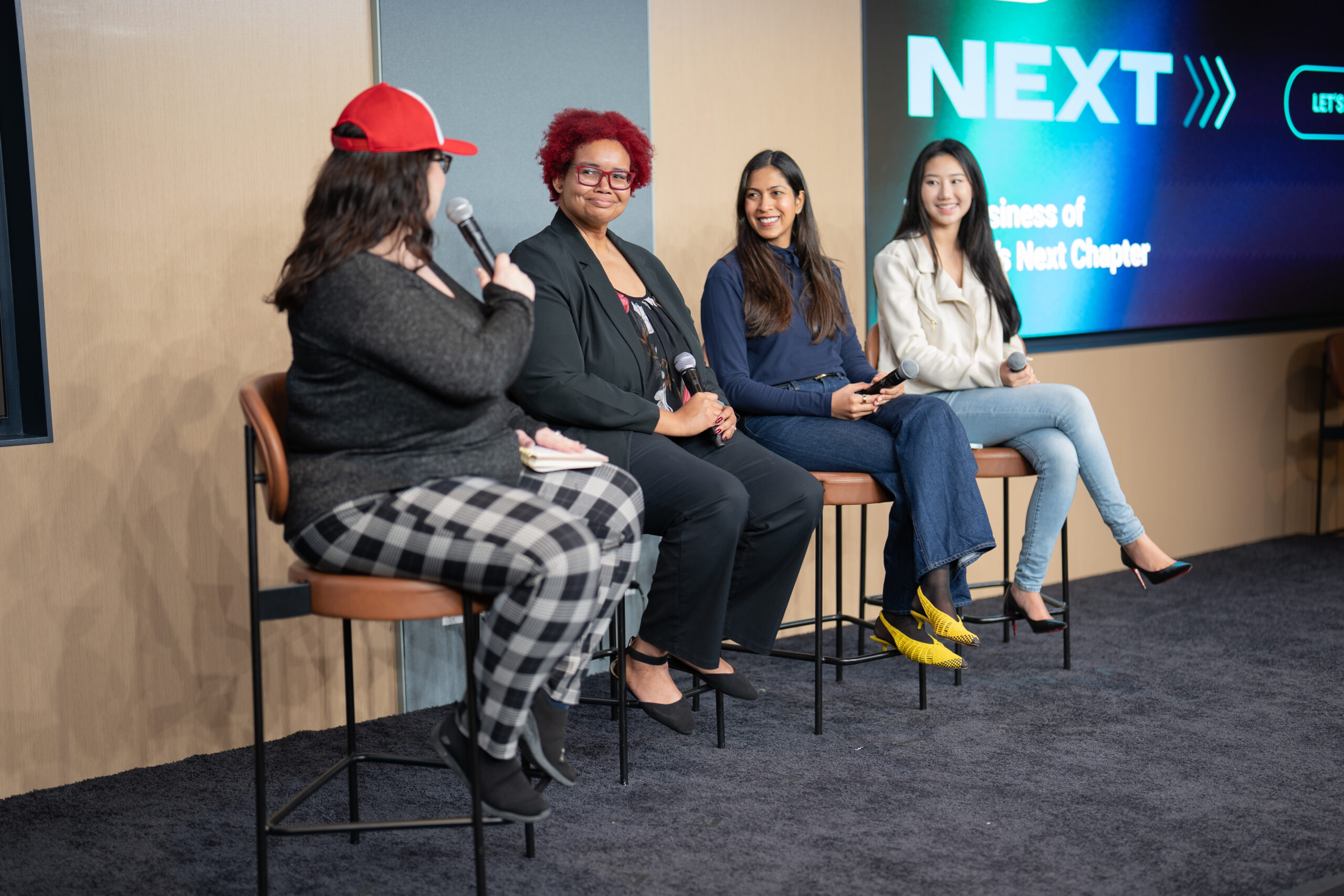
How do you behave as a leader, no matter the size of your team or the job title you hold? At this year’s GamesBeat Next event, I had the privilege of moderating yet another breakfast discussion — this year, the Women in Gaming & Tech Executive Breakfast panel, which was sponsored by Amazon Web Services. These talks are always the highlight of my week, as they offer a fresh perspectives to begin the day, and I have the chance to speak with some truly extraordinary people.
The panelists for this event were Olivia Liddell, solutions architect at Amazon Web Services; Raashi Sikka, chief diversity, inclusion, accessibility and social impact officer at Ubisoft; and Sharon Lee, co-founder of Moonlake AI. The breakfast panel’s theme was “Leading with Impact,” and how to take the lessons you’ve learned in your own career and turn them into skills and values to carry forward into a leadership position.
When I noted that we’ve spoken before, at past Women in Gaming Breakfasts, about the journey to leadership rather than its destination, Sikka said, “Leadership isn’t a destination, necessarily. It’s really a journey. Even when you become a leader, you’re always perfecting what leadership means — how you can lead different, how you can lead better… it’s about how you lead with influence regardless of where you are. If you wait for that moment in time to come, you may not be the best leader when that time actually arises.”
Leading, no matter the position
This lesson, that leading is a skill one can hone no matter the title or official position, was one that all three panelists echoed during the discussion. They discussed the topic of leading teams and the responsibility that comes with helping team members grow. Lee said, “As long as [my team members] grow, and they feel like they’re learning something and they’re pushing themselves, ultimately the company will grow. Having that high-level motivation is very important and I try to hold myself accountable to it, every single day.”
The panelists agreed that part of the imperative behind the responsibility is not just helping the company through its employees, but also to help employees maintain positive mental states within supportive spaces. Leadership can take on many forms, and requires flexibility and transparency, they told me — and also self-reflection and finding your own “Why?”
Liddell added that leading is about setting an example with confidence, noting how helping those under you can help offset imposter syndrome. “What all of us here can do, regardless of your title — you can help to squash that imposter syndrome with other women especially by telling them what you’re seeing in them so they understand that they deserve their opportunities… I cannot control what other people think of me. What I can control is how I show up with confidence and energy.”