
To develop and market its new mouse line, Logitech G leveraged a secret weapon: pro gamers.
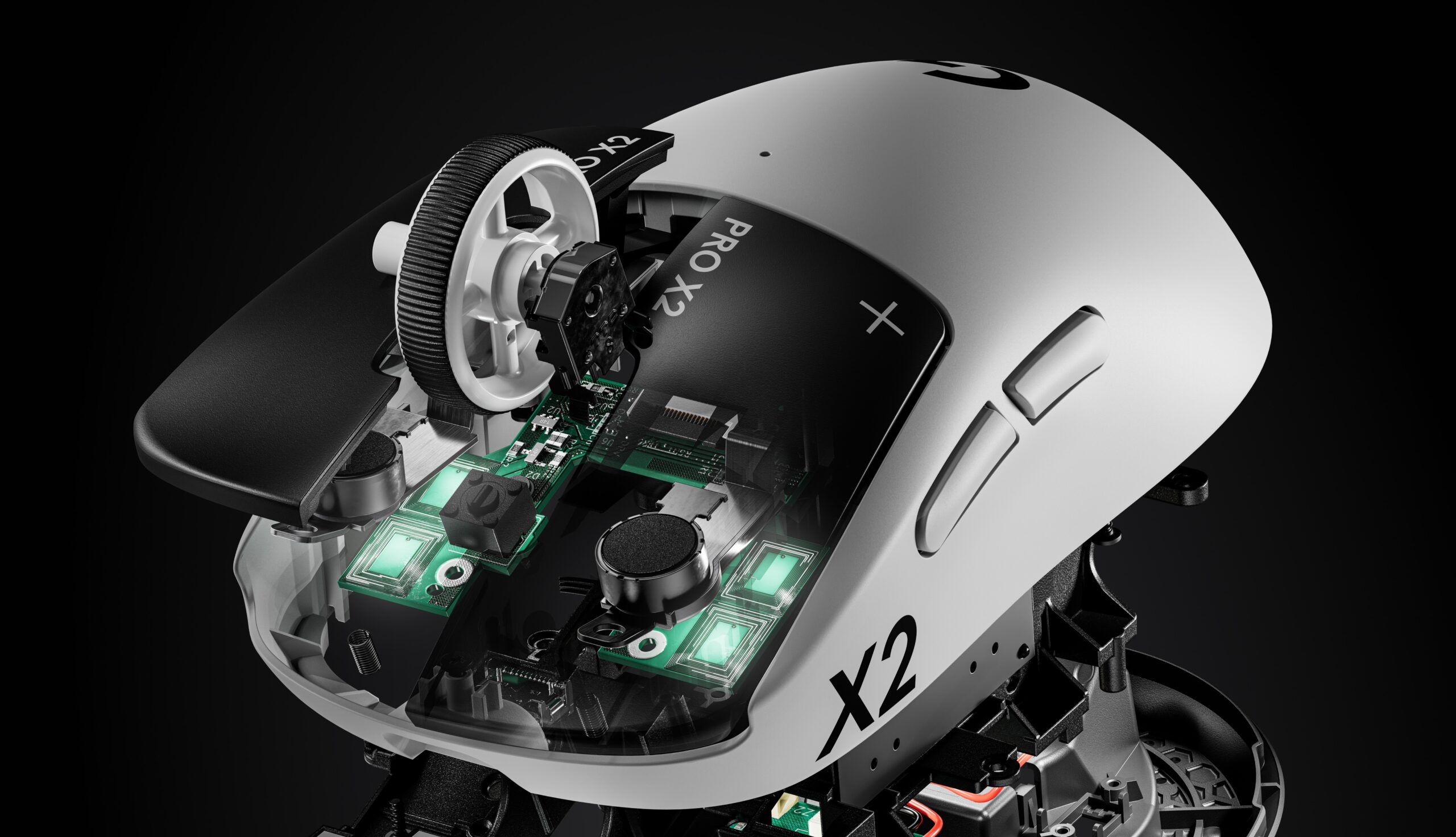
Logitech G describes its new Pro X2 Superstrike mouse, released today, February 10, as “the next evolution of competitive gaming.” The new mouse uses haptic technology to reduce click latency by up to 30 milliseconds, according to Logitech G’s marketing. Users can adjust the travel distance required for their mouse to register a click for both of its main keys, choosing from a selection of different actuation and rapid-trigger reset points to customize how it feels and plays.
“The hypothesis our innovation engineering team started with was, ‘what if we took the technology in a rapid-trigger keyboard with magnetic switches and put that into a mouse?’” said Logitech G global marketing lead for esports Cary Lambert in an interview with GamesBeat.
Logitech G’s Pro X2 Superstrike mouse is a result of the company’s “Designed with Pros” program, a collaborative process through which Logitech G sends prototype devices to a select group of top-level professional esports players for feedback, in addition to meeting players at tournaments and flying them out for in-lab testing. Referred to internally as the “design by collaboration” program, this process is intended to both help Logitech G fine-tune its high-level mouse offerings and act as an extra marketing channel for the company’s Pro Series devices. The program involves both Logitech-G-sponsored teams and non-sponsored players who apply to join Logitech G’s “Pro Alliance” player support program.
“We work really closely with our Ireland-based research partner, LERO, Europe’s first esports science research lab. Together, we try to understand the physical aspects of esports athletes: Is there an optimal arm length? How fast does an esports athlete swing their mouse?” Lambert said. “It’s my job to tell that story, and to work with the athletes and make sure that they understand the science coming out of the research that we’re doing and its impact.”
Logitech G’s Designed with Pros initiative has three primary pillars, per Lambert: innovation, validation of researched insights and education. Education means informing both players and the public about how pro gamers’ feedback is incorporated into new products — in other words, marketing.
“We worked with hundreds of pro players on SUPERSTRIKE, across our sponsored teams and beyond, and there’s definitely been a handful that really gravitated towards it.” Lambert said. “Nothing is as good as a pro saying, ‘I love this, and I want to use it.’”
So far, pro players are responding positively to Logitech G’s new mouse line. G2 Esports “Rainbow Six” player Jack “Doki” Robertson, for example, told GamesBeat that the reduced click latency allowed him to get more kills while holding a “pixel angle” — ”Rainbow Six” slang for aiming through a tiny opening to maximize safety while scoping out enemies.
“It felt like they were very interested in the pro player viewpoint, and build this mouse for the pro player,” Robertson said in a written interview with GamesBeat.
Austrian professional “Fortnite” player Taylor-Petrik “Vic0” Gatschelhofer flagged the Superstrike mouse’s light weight as one area in which Logitech G factored in his and other pro players’ feedback during the product’s development process, describing the experience as “way different” from other hardware feedback processes he had participated in in the past.
“Logitech really listened to the players; they asked for help and tried their best to make it the perfect gaming mouse,” Gatschelhofer said in a written interview with GamesBeat. “It is also cool that they give us a deeper look into all the production and everything else they do there.”