
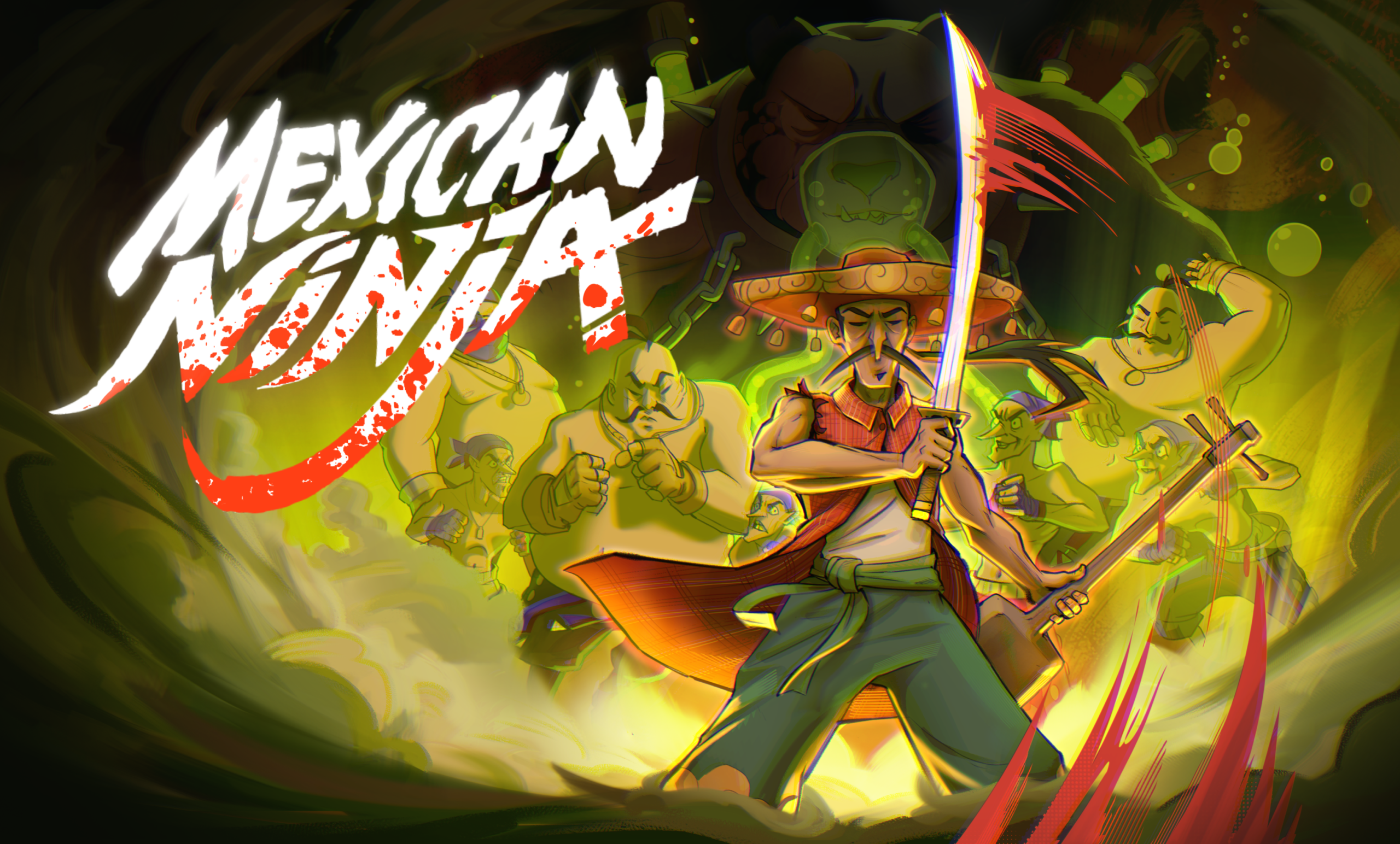
As Latin culture rises, Amber Studio is looking to tap into the phenomenon with its upcoming title “Mexican Ninja.”
“Mexican Ninja” is slated for a release later this year, with a playable demo already available on Steam and a new trailer that dropped last week. The beat ‘em up rogue-lite game is the brainchild of Madbricks, a Bogotá-based subsidiary of Amber Studio, which acquired Madbricks in 2024 in a bid to expand its network in emerging markets.
“We always liked that feeling in arcades when you’re losing your lives and you’re like, ‘damn, I don’t have any more quarters,’” said Madbricks studio co-head Gabriel Vasco in an interview with GamesBeat. “We wanted to bring back that feeling, so beat ‘em up was the idea that we were thinking about, and the rogue-lite system is the best thing that converts to that feeling.”
Although “Mexican Ninja” has been in development for years, its release is coming at an opportune moment. Latin American culture is currently having its moment in the spotlight, with interest in Bad Bunny’s Latin-infused Super Bowl halftime show driving record-breaking engagement on the National Football League’s social channels, Netflix pouring billions of dollars into Mexican productions and Mexican authors like Fernanda Melchor and Cristina Rivera Garza garnering international acclaim. With its unapologetically Mexican themes and aesthetics, “Mexican Ninja” provides gamers with an opportunity to engage with Latin culture using their preferred medium.
“It’s not like we wanted to make a ‘Mexican game’ — but just because of our personalities, we’re Latin, and the game ended up having that feeling, “ said Madbricks creative director Darío Hoyo, who is based in Guadalajara, Mexico, in an interview with GamesBeat. “We’re not trying to show our culture and say, ‘here’s some data about our culture,’ but more the feeling it has.”
The spirit and energy of Mexican culture are prevalent throughout “Mexican Ninja,” which takes place in a fictional, futuristic Mexican city named Nuevo Tokyo. The game’s designers used the Latin cultural concept of desmadre — chaotic, no-regrets energy — as the north star for both the tone and mechanics of the game. “Mexican Ninja” also includes in-game locations inspired by Latin culture, such as the tianguis, an open-air market that is common in Mexico and Central America.
“People are playing music in the street, and frying crickets, and then there’s cinemas,” Vasco said. “And then, everyone is screaming, and you’re fighting with the Mexican Ninja again.”
Discovery and user acquisition have been increasingly difficult for game makers of all shapes and sizes over the past year, and leveraging cultural moments offers developers and publishers a particularly strong option to build hype around their new releases. The comments underneath “Mexican Ninja’s” latest trailer reflect some of this energy, with dozens of commenters sharing their excitement in Spanish. Instead of setting out with the explicit goal of developing a Latin-infused game, the team at Madbricks simply allowed their natural grasp of Latin culture to come through in the game’s aesthetic and gameplay — and audiences appear to be responding positively.
“We kind of had that approval that said, ‘this shit is fun,’” Hoyo said. “When that happened, we started not being shy at all — no joke was too stupid, or too much. That was the vibe of the game from the very beginning.”