
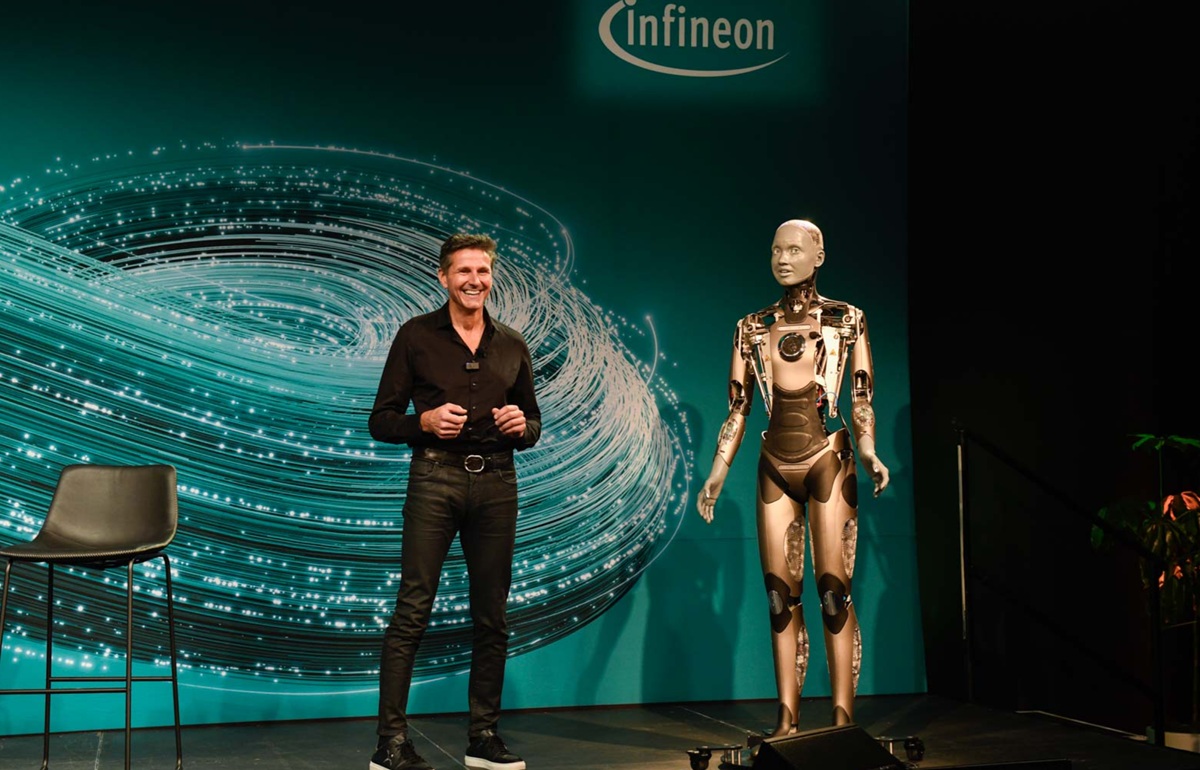
Infineon Technologies‘ Oktobertech event was a good place to assess the state of Silicon Valley and how it compares to the rest of the world.
Gordon Moore, former CEO of Intel, once referred to foreign research labs in Silicon Valley as “listening posts.” It was a Cold Warrior’s mentality born in the chip wars of the 1960, ’70s and ’80s. But the technology world has become flat, meaning the ability to make software has spread around the world.
In games, the same thing has happened. Technologies that were born in hubs like Japan and Silicon Valley have spread around the world. Game engines have made it easy to learn how to make games no matter where you live.
And yet there’s a contradiction. Silicon Valley is a special place. NTT Research, a division of Japanese telecom giant NTT, has its own research division in Santa Clara, California. So do many other multinational companies. Among them is Infineon, the German technology giant that makes everything from low-power semiconductor chips (it bought Cypress Semiconductor in San Jose, California) to transformers in data centers.
And it turns out that there are still many companies doing hardcore R&D in Silicon Valley, whatever people think about how the rest of the world is cathing up.
I attended Infineon Technologies’ recent OktoberTech event at the Computer History Museum. And I spoke with Adrian Mikolajczak, vice president of the Silicon Valley Innovation Center & Applied System Research at Infineon Technologies.
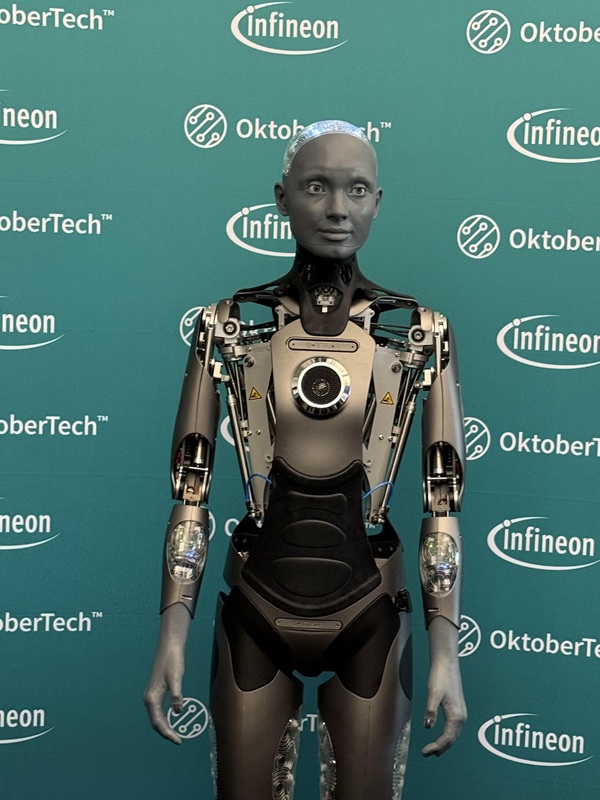
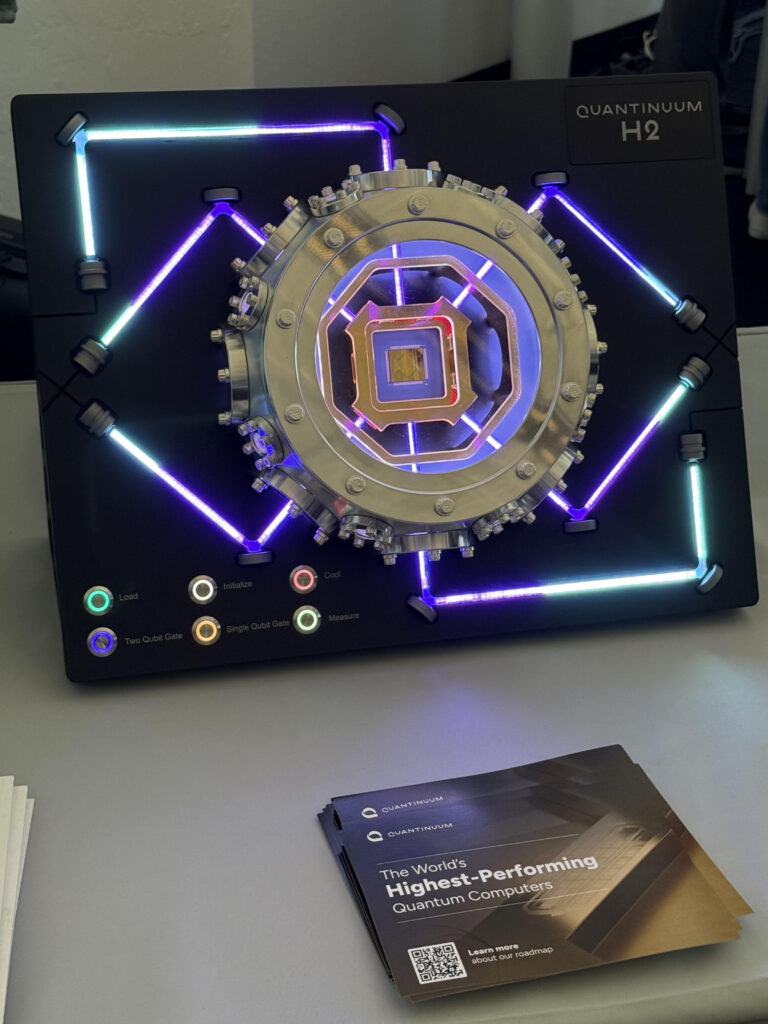
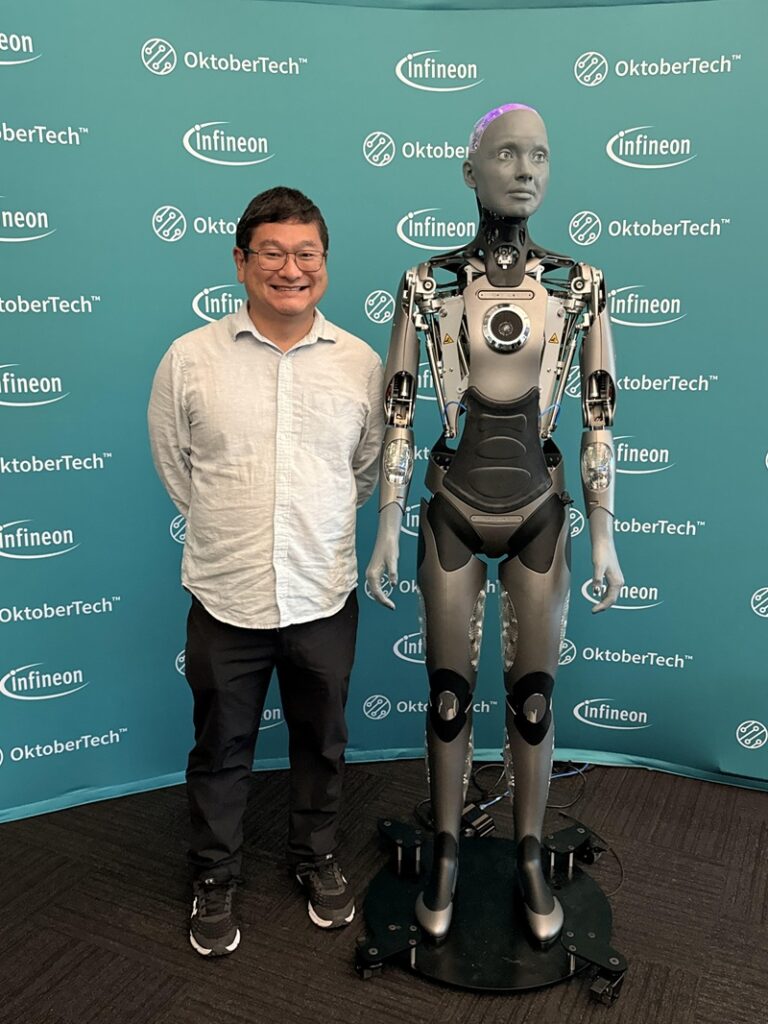
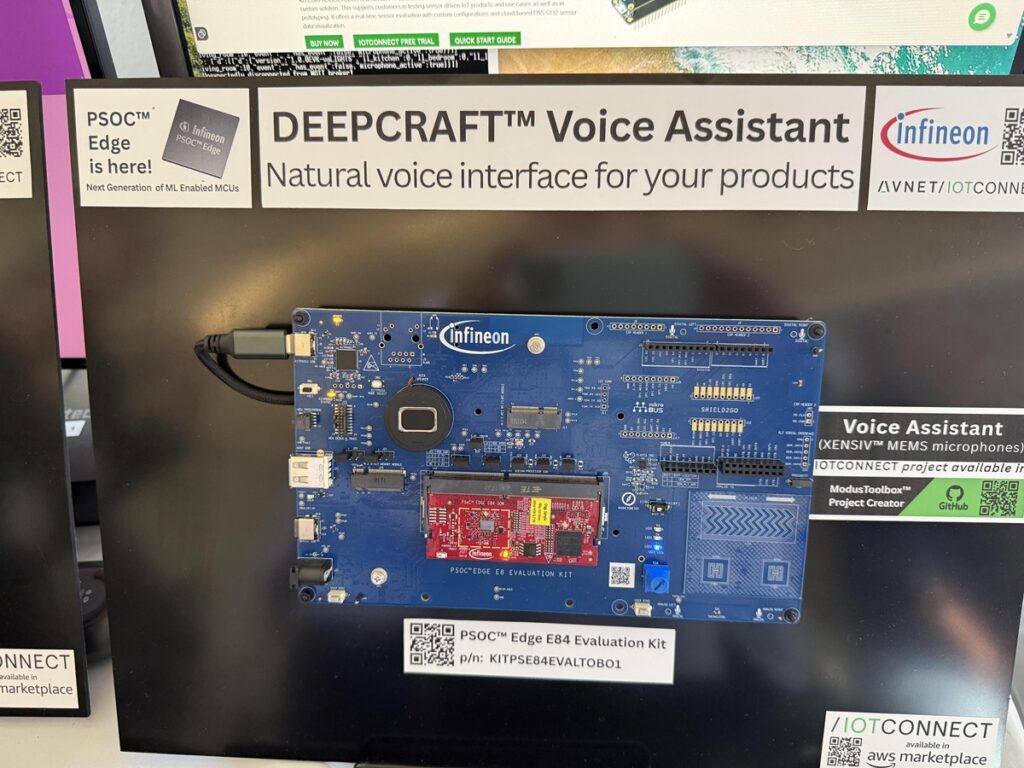
At the event, Infineon showed off a talking humanoid robot, which uses Infineon microcontrollers to provide multi-core real-time processing capabilities essential for safe, responsive, and adaptive robotic systems. There were also demos of quantum computing tech, internet of things, wireless networking, sensors and AI.
Andreas Urschitz, CMO of Infineon Technologies, noted how the German company started the Oktobertech event in the valley nine years ago. But now it has expanded the showcase to places like South Korea, Japan, Shanghai and Singapore.
Maher Matta, president of the Americas division of Infineon, said the firm started out with a focus on chips for sensors, power devices and automotive. And now it has expanded into areas like AI, data centers, connectivity, motor control, ethernet, quantum tech, and humanoid robotics. He noted the company is No. 1 in microcontrollers for automotive, industrial, consumer and power semiconductors.
On the power front, Infineon showed off a digital transformer that could reduce the size of power-generation and distribution equipment. And it showed off gallium nitride chips that could increase power density inside data centers in an attempt to make them more power efficient.
Mikolajczak noted how Silicon Valley has many companies at the forefront of AI, which has had profound impacts on many subsectors in the region, from cars to semiconductor chip manufacturing. And, of course, Waymos are appearing here more than anywhere.
We talked about what makes Silicon Valley special and the benefits of spreading that talent around the world. Here’s an edited transcript of our interview.
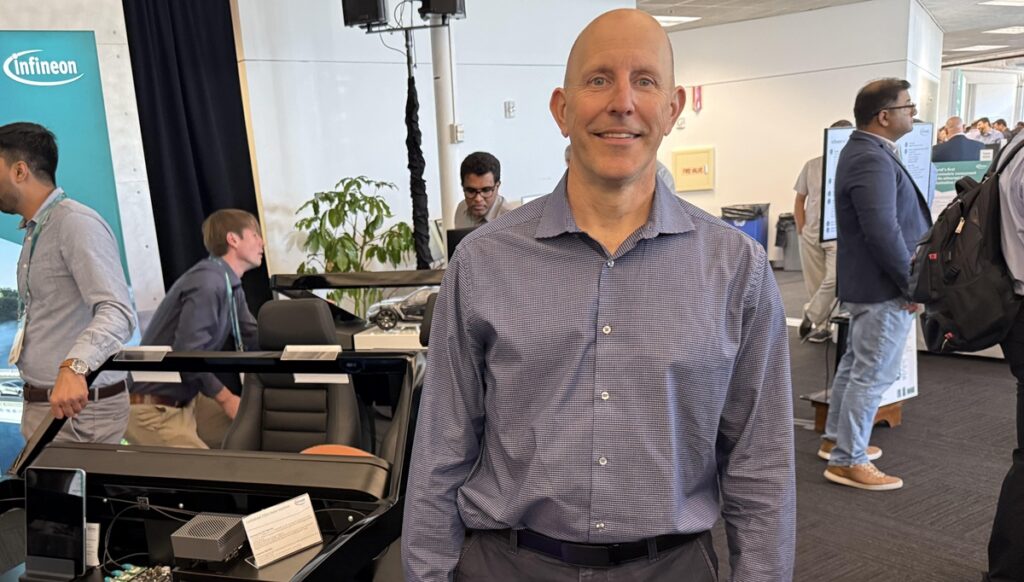
GamesBeat: Silicon Valley still seems to have the attraction for big companies coming here to take advantage of talent.
Adrian Mikolajczak: There’s a lot going on here. This show itself, it’s at capacity, in a sense. We try to keep it fairly small. We’ve targeted CTOs, senior executives, senior architects, and chief engineers. It’s about collaboration. That’s the goal. We try to show new technology. We try to bring in folks that want to go explore that with us. That’s the general theme.
GamesBeat: How much R&D takes place here as opposed to other places inside Infineon?
Mikolajczak: It’s a global company. It depends on what products. Some of the ones out of the Cypress acquisition–a lot of those people, a lot of those R&D facilities, they’re still here. If you look at the very traditional core power, a lot of that’s done out of Germany, where we have a lot of our fabs. A lot of that is really process-intensive. You saw the quantum guy up there today. That’s an amazing technology. Quantum by itself–a lot of these things, you can do it in the lab on one level. You can build a few qubits and so forth. But scaling it is really hard. That’s what he was talking about in his presentation. The process technology you need to scale that is significant.
If you look at Infineon’s core business in power specifically–when people think of process technology they might think of TSMC’s new X-nanometer technology, or Intel’s new X-nanometer technology. But when you get into power devices, it’s a different business. You can be in 130-nanometer, but you’re pushing the envelope in depths of trenches you can cut and the sidewall roughness and so on. A lot of details and a lot of expertise. The ability to make those kinds of things parlays into our MEMS, which gets us into microphones, and then parlays into things like quantum. You’re trying to shuttle ions. It doesn’t mean you’re using a power device or a MEMS microphone, but you’re taking all the learnings on how to make structures and putting it into something new. Anyway, that R&D typically happens out in Germany and Austria, because that’s where our fabs are.
GamesBeat: On power for data centers and all that, are people in a state of panic? As opposed to working on technology to make it better. It seems like it’s going so fast and growing so big. Those rates of increase in power usage seem to be getting out of control. They’re exceeding what we can produce, or exceeding what the planet can handle. If you approach it from that perspective, the small gains everyone is talking about year by year don’t seem to be able to solve this problem. We have talk of putting nuclear power plants next to data centers, which seems insane.
Mikolajczak: On that one, there’s pluses and minuses. These things do take a lot of power, and very measurable, constant power. A power source next to you that’s able to put out measured, constant power is a very nice thing. But going back to power in general, a lot of the stuff we do, the grid to core, those efficiency gains keep getting pushed. In a lot of cases we’re at 97%, 98% depending on conditions. But it still matters because of the amount of power getting consumed.
If you listened to the keynote today, Peter Wawer, that’s a fascinating area. If we’re talking about just powering a chip, that’s one of our core businesses. We’re working on it. We’re pushing it. We’re already very far along. The efficiency of getting from, say, your nuclear power plant, or something else that puts out maybe 35KV AC–it’s going to be doing that for longer-range transmission than right next door. But that area of still using very traditional transformers and very traditional technology, there’s actually huge gains going on. Peter didn’t touch on it in his keynote, but they’re talking about going to solid state transformer models where they can gain five percent. Now they’re moving gigawatts. Five percent of gigawatts–I was talking to one of the guys working on it up there. He says, “I can power a whole neighborhood on just that five percent.” There’s still a lot of gain to be had.
GamesBeat: That was the image going through the big boxes to very small–
Mikolajczak: Yeah, upstairs? That’s the image. Although the unfortunate part about the graphic you saw is it’s a graphic. The panel you saw is a panel. What they fit into that graphic is actually the transformer itself, the traditional one, the old-style one–they’ve told me it’s about the size of half a bus. And then those boxes that they show in that graphic, they turn into a small conversion yard. They actually call it a yard, like a playground. It’s not trivial. We’re talking big power. And then the box you saw they put it down to, that’s one stage. So it’s still a pretty sizable box when it’s done. It’s big. But it is massively smaller.
What’s interesting about that technology, too–some of those old transformers, that old approach, those are big chunks of copper windings and all these kinds of things. Those can take two to three years to order. This ability to move is not just about efficiency. It’s also about getting those power plants up and running in a fast amount of time.
GamesBeat: These are not the transformers on the telephone poles, then.
Mikolajczak: These are in big power distribution centers. You’re going to bring in power from a long haul at 35 KV. Now you have to transfer it down. What we’re doing with our partners, we’re talking about how you come off that long-haul power and immediately transfer it down to the 48 volts you need for a data center, instead of going through all these stages, through all these boxes and everything else. That’s a very interesting piece. How do you power a data center quickly off an existing grid?
GamesBeat: Do you have thoughts on Silicon Valley itself and whether it’s resilient, whether it’s being surpassed by other places around the world? I think about China, about lots of other concentrations of tech people. It seems like there’s a negative perception of the area now.
It’s more applied to San Francisco – it’s too expensive, there’s too many problems, housing prices are high, lots of homeless – and so ever since the pandemic people are still spreading out away from the center. I don’t know whether it means that this concept of Silicon Valley is getting weaker as everything else around the world levels up.
Mikolajczak: The need to always be close has gotten less. That’s true. But I also think there are very cultural differences that make Silicon Valley–it’s not to say that there’s no competition springing up. But that’s hard to replicate. One thing Silicon Valley has, and you can even see it in the show, is people are very passionate about what they do. They’re very driven and very focused.
When I say you can see it in the show–I see it from the planning side. We have a lot of customers who come to the show and say, “I have two hours. What are you going to show me? I have one hour. What are you going to show me?” We do a similar event – not this exact style, but similar – in Livonia, Michigan. It’s very different. “We’ll come for the afternoon. We’ll spend some time.” There’s an intensity here that I think is fairly unique. You go visit someplace else and you feel like you’re on vacation. Some of that is there.
What’s cool–granted, I work for Infineon, but even prior to my engagement with Infineon–an interesting thing about Infineon is it has that with our culture here, but then it has something different in Germany. You hear about German engineering. You look at the culture there. It’s very focused on the details and deep understanding. And then if you go to someplace like China it’s very focused on fast iteration. I would agree that things are spreading in general. But there is a unique aspect here that’s hard to replicate. Just like Germany has unique aspects.
I’ll give you a perfect example. We’re really good at microphones. I mentioned our process engineering. You don’t find, in Silicon Valley, this kind of conversation. Not often. The conversation I’m describing, I was at one of our company events. An engineer had a poster. He’s telling me about our silicon microphone. I don’t know if you’ve seen our microphones. They’re very small. These MEMS structures have a very thin membrane that sit on top of–well, basically a MEMS structure sits inside a structure and measures the vibration of the membrane. The engineer is telling me about how the gas underneath that membrane is specifically designed for optimal microphone performance. He’s been in this business 20 years. He’s super proud about the minor process change he made – I call it minor, he would not – where he has figured out how to optimize the outgassing of not the structure, but of the plug he’s using to plug after they create the gas installation underneath that membrane.
The dude is passionate. He’s super excited about it. He’s been working on it for years. That is a culture that you can’t just replicate. You see what I’m saying? I say that our strength–one reason we’re so good at power is we have this really strong process engineering organization. That’s not going to be easy to replicate. That’s Germany, not Silicon Valley. But here in Silicon Valley that intensity, in China that fast revolution–different thought processes, different ways of doing it. That’s hard to copy. So I’m optimistic, I guess. I think a lot of the features that made Silicon Valley Silicon Valley are still here.
GamesBeat: There was a different view, that it’s so intense here that becomes hard to hire the right people. I think of the engineer that Zuckerberg hired for $100 million. But even more normal cases–you have million-dollar salaries for AI engineers. That kind of disparity helps the platform companies pull in all these engineers, but startups in the area, especially game companies, can’t get AI people. If they go to a bigger company instead their stock options are so much more valuable. The salaries are so much higher. You have an effect where if something is hot in the Valley, forget about it. For those people it’s hard to match what the Valley can pay.
Mikolajczak: There’s no doubt about it. It’s expensive here. The nice thing Infineon has going for it when we’re competing against some of these things, we’re looking for a slightly different group. We’re looking for people who are doing silicon or GaN or systems tied to those. But the competition is there. We have a bunch of robotics demos out here. I bumped into some of our old colleagues who are now at robotics startups.
But to your question, your initial premise, is Silicon Valley going to stay vibrant? We seem to keep finding these new hot spots that keep drawing people in. If you look at robotics startups, you have a lot of them around here.
GamesBeat: You could say with AI that it’s never been hotter. It’s never been more vibrant.
Mikolajczak: AI continues to boom. It’s pulling in people as well. So we’ll see. I don’t think it’s going to get any cheaper.
GamesBeat: Is there anything interesting that comes along as far as what you choose to do here, as opposed to what you choose to do in Germany or other places that have different concentrations of talent?
Mikolajczak: From an innovation center aspect, what we focus on here when we’re looking for new opportunities–part of the reason we’re in this region is we’ll focus on–you pick the topic that’s hot and getting funded in the bay area. That’s what we’ll pick to go look at where we can do developments. So yes, from our perspective. Inside Infineon we’re part of something called the venture accelerator organization. Similarly, if you look at different industries–hopefully I won’t get busted by my colleagues, but I’ll call it old power. The big power systems. That’s not going to be a Silicon Valley topic so much. That’s definitely going to be more of a Germany topic, or more traditional companies in the United States.
But to your question, do we pick and choose what we do in R&D? Absolutely. Especially when we’re talking about engaging with customers and what topics we focus on.
GamesBeat: I don’t know how closely you follow something like gallium nitride, but where was the talent for that? It’s not that old. EPC was the starting company there. They were 2006, something like that. It’s barely 20 years in from where it started innovating, or started becoming real. It feels like it has become the subject of a lot of different companies focusing on that technology now. I remember things before it, like silicon germanium. Sometimes they took wrong turns. But if you watch that, would there be some concentration of talent here for that, where it just made sense for it to develop here first? Alex Lidow, I think he was in Los Angeles for a long time.
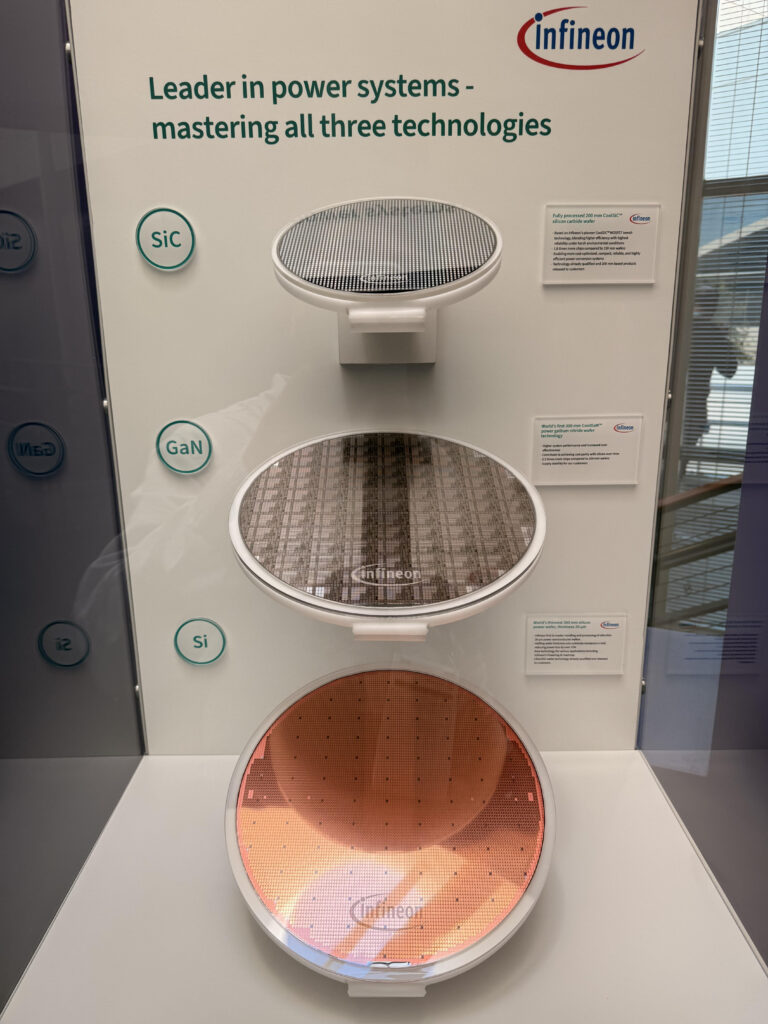
Mikolajczak: Yeah, I think he was ex-International Rectifier. International Rectifier had quite an investment in it. GaN is an interesting beast, and silicon carbide as well. You have two or three critical aspects that make it work. You have to have device modelers. You have to have process engineers. Then you have to develop new fundamental processes. From an Infineon perspective, we definitely, years back, had those two, and similarly from an IR perspective. Both of us had good programs in that area for quite a while. Then it becomes a question of actually adapting to–I’ll call it the quirkiness or the specialties of GaN. But those two sets of expertise were already in Infineon, or IR as well, which we then bought. In that purchase we picked up a lot of GaN experts. Most of the people that I know who are in those industries, who have done startups in GaN, came out of folks like us or people we compete with.
GamesBeat: With Cypress getting picked up, it gives you bigger roots here. I’ve covered the chip industry for decades now. There are more multinational chip companies than–maybe Nvidia and Intel are the last big ones grown in Silicon Valley. Things like Broadcom are kind of mind-boggling now, how much of the world they span. It must feel different to compete in this environment than back a couple of decades ago, where people were competing with someone down the street.
Mikolajczak: One of the key differences, and it does impact–let’s call it the silicon industry. The shift, for example, down to small nodes. The cost of that got huge. You have a lot of companies now that are fabless. They’re using someone’s basic process and nodes and their fab. That’s consolidated down to a few. That’s created more of a shift, where people can go off and almost work from anywhere.
In power specifically, this is where that process engineering becomes different. This is why, for example, we run our own fabs. It’s a fundamental differentiator, especially on the high end. If you’re using something you built 20 years ago, a lot of places can build that. But if you’re talking about the newest–we talked about quantum computing today. Doing that, you need your own fab that you can then adjust and modify. Bringing up GaN, you need your own fab you can adjust and modify. You can hire out fabs too, for sure, but there’s still quite a bit there to be done. That’s part of why we run our own fabs. That will lock you into an area.
GamesBeat: Do you think that localization pressure is ever going to get strong enough to where somebody might build a factory in Silicon Valley again?
Mikolajczak: It’s a bit out of my area, but what I will say is I understand that there are a lot of complexities from a legal and environmental regulation point of view, those kinds of things. That would block someone from building a fab here in Silicon Valley. I do know that my first job–I worked very close to here. Actually it wasn’t my first job, but it was early on, down here in Mountain View. Mountain View, it turns out, was a Superfund site. A lot of that was from historic Silicon Valley.
GamesBeat: The Silicon Valley Toxics Coalition was headquartered here. It was a high-volume business for them.
Mikolajczak: Exactly. I think things have gotten way cleaner. It’s a totally different world now. But if you’re going to build from scratch, my understanding is that it’s a pretty hard place to build.
GamesBeat: The last place I remember somebody building one was MicroUnity, way back when. They were doing a moon shot, “let’s beat Intel” kind of strategy. Changing the processor design, changing packaging, and creating their own fab to try to make a run at Intel. They might have been the last ones to build a factory here.
Mikolajczak: To be competitive in this business you need a ton of expertise. It’s not a small operation. An R&D fab, you can build that. But a mass production fab, highly scalable, with that expertise I was talking about, with people who are passionate about improving a process–you need some critical mass. That’s hard to start up now.
GamesBeat: Things like digital twins are very interesting to me. They can move a virtuous cycle along. Jensen Huang gave the keynote at CES this year where he talked about how they’re making so much progress with synthetic data run through sensors in factories. That then goes to the digital twin, and they improve each other.
Mikolajczak: From our point of view it definitely has the potential to change industries. Our ability to model things makes them more efficient. A lot of things that historically have relied on trial and error, now you can take a single sensor and model off of that. You can create a much more accurate digital twin, but then you can optimize your system around that. There is a virtuous loop going around. I definitely see it in industrial, in heavy machinery and those kinds of things.
GamesBeat: Did you ever contemplate moving out of Silicon Valley yourself?
Mikolajczak: Probably when I retire. [laughs]