
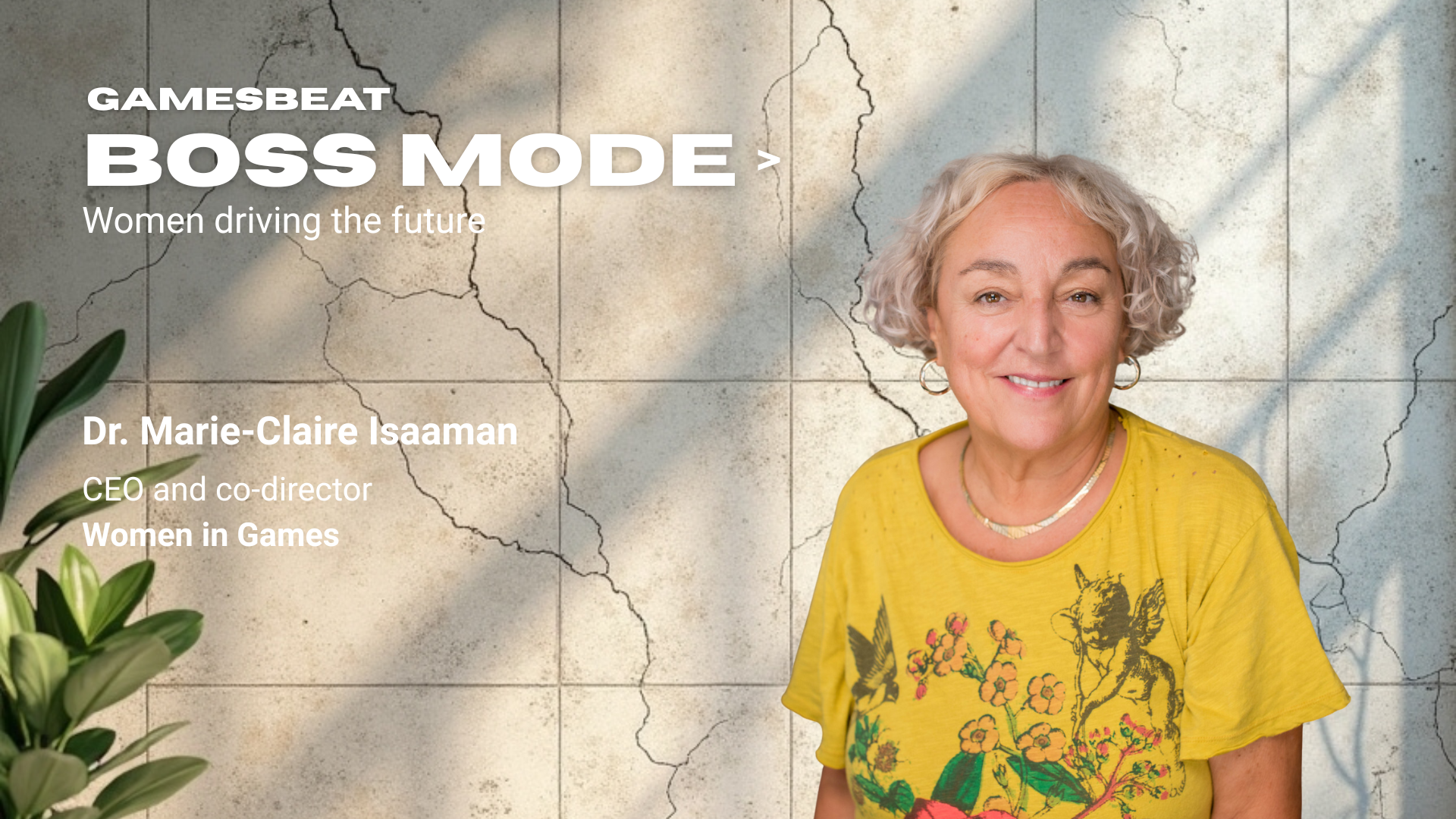
BOSS Mode is a series of articles on GamesBeat putting the spotlight on women in the video games industry. These women are pioneers, leaders and visionaries shaping the future of gaming, entertainment, technology and everything in between.
The topic of gender in video games — specifically, women in games — has a thorny history and years’ worth of discourse behind it. Women in Games, the not-for-profit organization, is dedicated to building a fair and equitable space for women and girls in the gaming industry.
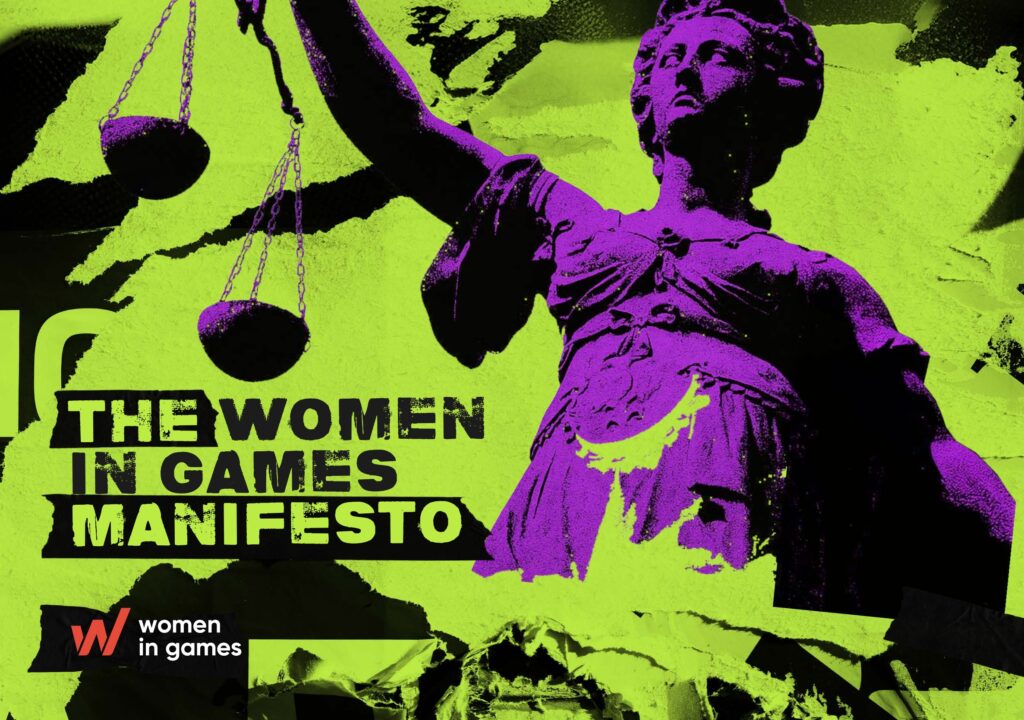
Recently, Women in Games published a new Manifesto, in which it gave its statement of intent, along with “Fourteen Reasons to Empower Women in Games.” GamesBeat got the chance to speak with Women in Games’ CEO, Dr. Marie-Claire Isaaman, about the new manifesto and how she came to be part of the organization. Below is an edited transcript of our interview.
GamesBeat: Can you tell me a bit more about your journey and how you got where you are today?
Dr. Isaaman: I’ve had a very nonlinear working life. I’ve worked in factories, offices, shops. I’ve been a swimming pool lifeguard, a bartender, waited tables. I rented out TVs, videos, washing machines. I’ve cleaned holiday villas. I’ve taught English as a foreign language. I’ve worked with archaeologists in Greece. I even had my own English-language radio show on a local Cretan station. Very nonlinear!
Alongside all that, I spent many years in art and design education. I started right at the bottom in small part-time roles and then I worked my way up to program director for bachelor’s and masters games art and design program. I’ve also founded and run my own businesses.
What is quite important is that running alongside all of those jobs was a sort of quieter but equally important process. While I was earning a living, I was also learning how the world works, particularly what it means to move through it as a woman in a deeply patriarchal system. I was lucky early on through my best friend and her mother, a brilliant academic and writer, to be exposed to feminist thinkers and practices.
“Once you realize that what you’re experiencing isn’t individual failure, but the effect of a system, something shifts.”
That didn’t just influence me — it gave me the language to make sense of my own experiences, to recognize patterns rather than internalize blame and to imagine different possibilities. The thing is, once you realize that what you’re experiencing isn’t individual failure, but the effect of a system, something shifts. That way of thinking has stayed with me throughout my career, and it continues to shape how I work today. That enabled me to find a way of communicating and meeting very influential feminists who were important to me.
GamesBeat: Sounds like you’ve had a lot of jobs! How did you go from there into the games industry?
Dr. Isaaman: It started in education. My background is in art and design. I have a strong interest in popular culture, and my specialism was in drawing. It would have been in the early 1990s when I became really fascinated by how video games were make, particularly the role that drawing plays in shaping ideas, solving problems and communicating creative vision before anything is built.
I think it was in 2012, the Smithsonian put on an exhibition called The Art of Video Games. That really crystallized something for me, because it framed games as a legitimate cultural medium, combining traditional art forms like writing and music, storytelling and visual arts brought together by technology and interactivity for the purposes of play. That’s really where my art and design background merged with my interest in video games.
Also, my son was born in 1992, and that also took me into a journey because, from really, really early on, we were playing video games together.
We spoke here about the history of play as a cultural medium. This section of the interview has been cut for time, but will be included in the outtakes in our Inside the Industry newsletter.
Dr. Isaaman: I’m getting sidetracked because you asked me how I got into games! What actually happened was I was running a masters in drawing in a university that had just started one of the early courses in games. A lot of universities were kind of getting on a bandwagon of opening courses because they felt it would be attractive to students — and they were right. But they’d opened this program and they were having a lot of problems with it.
I was known as a sort of troubleshooter. The university that I was working with said to me, “We know you’re running the masters in drawing, but we’ve got this program, and we’d really like you to go in and sort it out for us, just for a year, because you’re good at that. And I was there for 10 years! So not only did I got and sort it out, but I also got really inspired by video games. I learned so much, and that coincided with my son growing up and getting into various games.
The thing about that program was that there were no female staff or students. So when I went in, I was literally on my own. That felt wrong, and I didn’t think that had to be the norm. So I set about changing that. When I left that program, which would have been when I started Women in Games in 2016, I’d brought it up to 50% female and male staff, and the student cohort to 40% female, 60% male. I got recognized from that, because that was early on and there weren’t many other university programs that had managed to achieve that, particularly in the UK.
It was partly that which got the industry interested in what I was doing and how I was doing it. What I realized after 10 years of doing that was I was doing that for one university. I thought, “Well no, I could do this for the industry. I could really make some changes, both to educational providers and to the industry itself.”
By chance, I was offered this opportunity for the role of CEO of Women in Games. At that time, it was a tiny, grassroots volunteer organization. I was leaving a very secure job in academia that’d been in most of that part of my career — it was quite a risk for me. When I first started on, I was on four days a month and on a very low rate but that was all the organization could afford.
I think the first thing I did was create a strategy, build a strategic road map that clarified what Women in Games existed to do, who we were for, the impact we wanted to have and how we could realistically get there. I think, without that, it would have stated well-intentioned-but-fragile.
We now have a global network and community of over 70,000, and we have 2,600 Women in Games individual ambassadors in 90 countries. We have corporate ambassadors and industry partners. So that’s come quite a long way from where we started! I’m proud of that, but I couldn’t have done that on my own.
My team is small, but we’re very close. We sometimes bring in freelancers or consultants. We’re very adaptable, and we’ve had to be. We had to pivot to adapt during COVID. We can move very fast because we’re so small in many ways. That adaptability has kept us going.
I suppose that takes us to the Manifesto, in a way. We published the first Manifesto in 2023. Going back to my arts background, I’d always been really interested in artist manifestos — a public declaration of what you believe in, what you’re committing to, what you’re not willing to compromise on and all of those things.
We did the first one, and it was very much inspired by the suffragette manifesto, the UK suffragettes and their 14 Reasons. We published it, and that was all good. But then, last year, we were thinking about the rapid changes to the world and the industry: The studio closures, the introduction of AI, all of these different things that were impacting the sector.
Some things were changing, and somethings were not changing, like gender equality. It’s hardly moving, and it hasn’t moved for a long time. We said, “Okay, we need to do this again, and we need to say something about our beliefs around what’s happening right now.” We wanted to say that the scales are still uneven. It’s not working. We’ve worked really hard all of these years, but it’s still hardly moving.
I think it’s important that people understand who you are as an organization and what drives you. We do a lot of things: We run events, we partner with people, we do research. But what’s at the heart of our organization and inspiring us to keep fighting for something? Connecting it to the UK suffragettes was also tied to the idea that history matters because it reminds us that progress isn’t passive. We wanted to be very clear about that.
Personally, it feels for me that the manifesto is an articulation of decades of my lived experience: What I’ve seen, what I’ve navigated, what I’ve learned. Professionally, it’s accountability. It’s us, women in games, saying this is what we stand for. This is the standard we expect the industry to meet. It’s not symbolic. It’s practical, directional and intentional, and we can always refer back to it until we get our point across and make change happen.
GamesBeat: What would you consider your “boss move?” The decision or career move that defined your journey?
Dr. Isaaman: We sort of covered it, but very clearly it’s leaving the education sector and taking a real bet on Women in Games, stepping away from that institutional security to build something that didn’t yet exist. It was a risk, but it aligned completely with my values and that’s what made it possible to commit fully to it.
GamesBeat: Bonus question, what would your boss music be?
Dr. Isaaman: I had to think quite hard about this, and I hemmed and hawed. But then I decided that it would be TLC’s “No Scrubs” — the Kacey Musgraves version which she performed at the Royal Albert Hall. I like it a lot because it’s about self-respect, rejecting mediocrity without apology.
For bonus BOSS Mode content, check out the Inside the Industry newsletter where I transcribe parts of the interview that didn’t make it into this main article!