
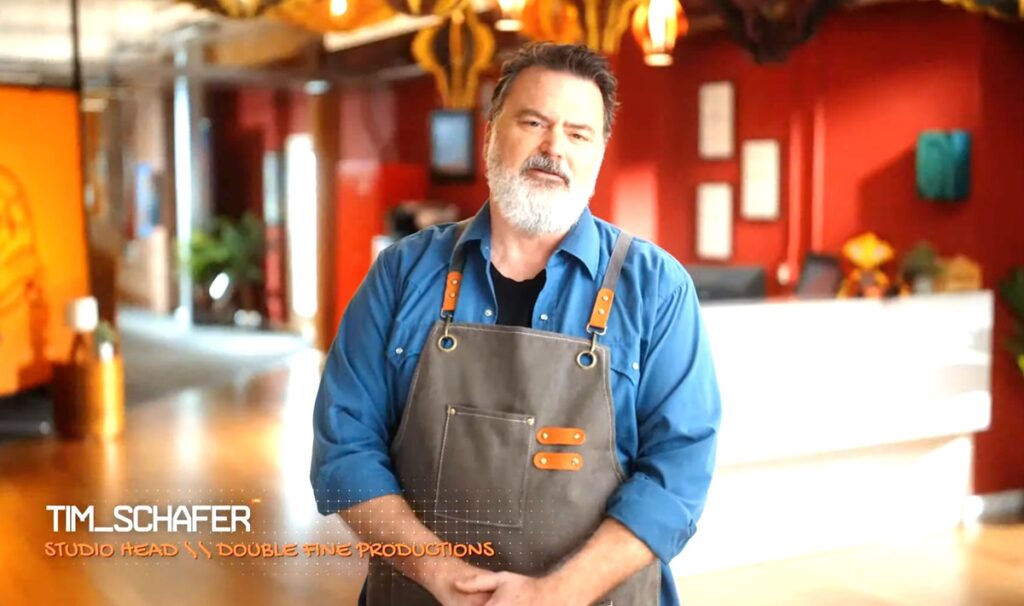
Tim Schafer, CEO of Double Fine Productions, has been busy dealing with a lot of change in the past couple of months, but he has successfully extracted his studio from Microsoft and he is once again running it as an independent game studio. During the process, he didn’t lose his sense of humor, as I learned in an interview with him.
And now Schafer’s team has hit its target in its Amnesia Fortnight Kickstarter campaign (raising more than $400,000) to raise funding for its future games, including internally developed titles made with small budgets and small teams. Schafer founded the 26-year-old award-winning studio and sold it to Microsoft in 2019.
The studio shipped Keeper and Kiln since that time, but the Xbox division has seen its profits sink. Under new leadership of Asha Sharma, the division is laying off 3,200 people and it’s spinning out five studios, including Double Fine. Schafer said the company has some runway to get under way, but it will use the Kickstarter funds to help extend that runway.
Schafer has kicked off game jams, documentaries and crowdfunding and the Kickstarter campaign hit its $400,000 target in just 72 hours and it still has 28 days to go. In fact, if the number hits $100 million, Schafer has said the team will make Brutal Legend 2.
While the outcome is good now, there has been some pain. The team laid off about 23 people and it has around 55 left, Schafer said.
This is a much softer landing than what might have happened, as Double Fine faced potential closure under Xbox. The studio will continue to make its quirky and creative games. I spoke with Schafer about his plans, including backing small titles proposed by the Double Fine staff. So far, the team has crafted 26 pitches for fans to vote for to greenlight its next title.
The winning game will be published under Double Fine’s new label for weird little games, Double Fine Action Labs. This process has already yielded one game that was made in just six weeks, Schafer said.
The Amnesia Fortnight timeline follows below:
- Aug. 31: The Kickstarter campaign launched, revealing all 26 game pitches and opening the campaign to backers.
- Sept. 1: The first round of voting began, giving backers the opportunity to help narrow the 26 pitches down to four finalists.
- Sept. 3-7: Double Fine heads to PAX, where attendees can meet the team and play a mysterious little game.
- Sept. 6: The first round of voting closes, with the four finalists to be announced shortly afterward.
- Sept. 9: Amnesia Fortnight officially begins, kicking off two weeks of prototype development.
- Sept. 23: Development concludes. The four playable prototypes will be distributed to eligible backers shortly afterward, and the final round of voting will begin.
- Sept. 30: The Kickstarter campaign comes to an end.The winning game will be announced shortly afterward.
Here’s an edited transcript of our interview.
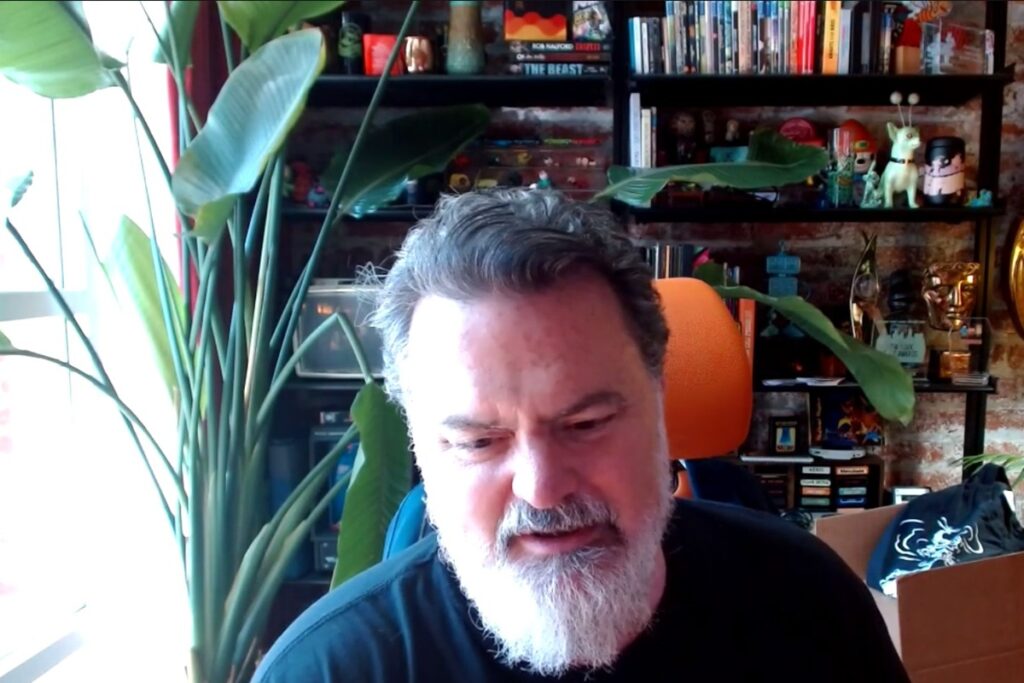
GamesBeat: What’s the strategy now that you’re out? What are you focused on?
Schafer: As you know, we managed to escape with our IP. It feels like at one point they were going to squish us like a bug, but instead we shot out like a watermelon seed. It was very mutually beneficial. It was a much better news day for them, that none of those studios were closing. They had bad layoffs, but no studio closures announced, which was nice for the studios and nice for Xbox. That was a win-win.
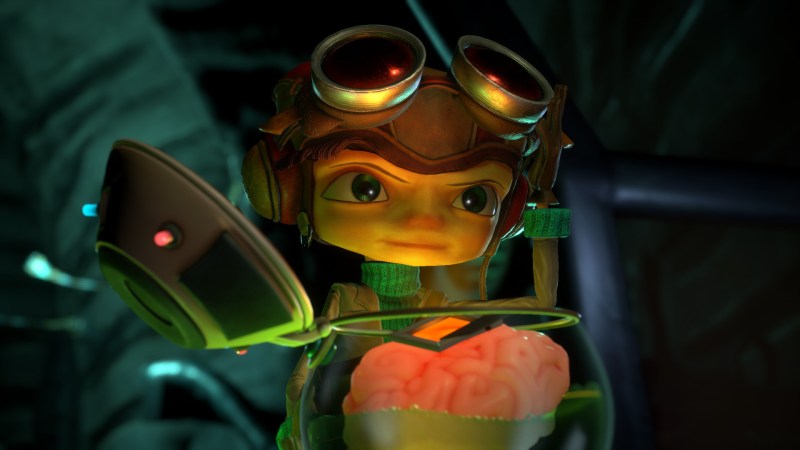
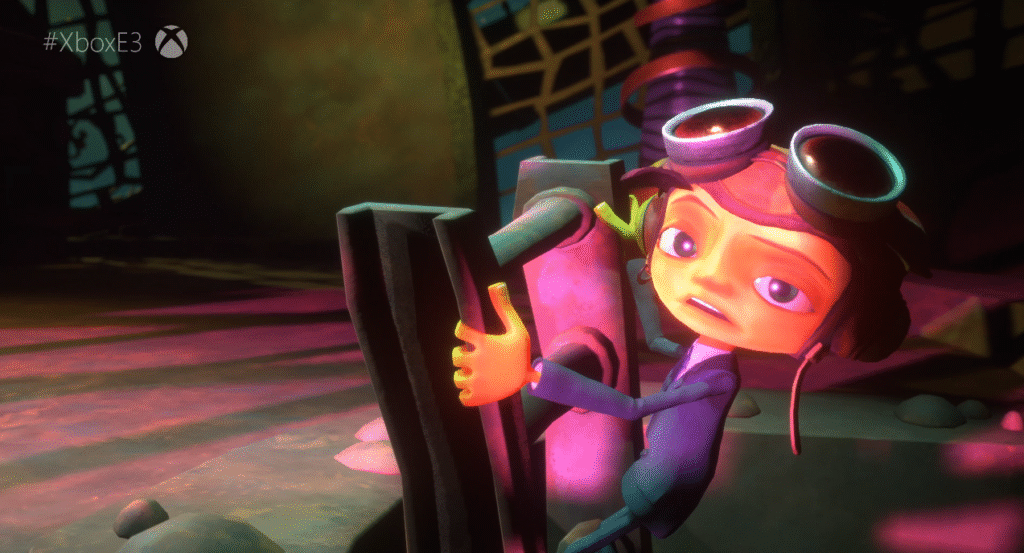
Those IP, a lot of them we made before we got acquired. There was 19 years of history of making things like Brutal Legend and Psychonauts. We felt like not only did we deserve to get them back, but we’re the only ones who could make money with them. Microsoft without Double Fine can’t go make another Psychonauts game. Maybe that sounds egotistical, but I feel like no one would accept it. Why would they want some random person making a Psychonauts game?
GamesBeat: I do think EA still thinks it could make a better American McGee’s Alice game than American McGee can.
Schafer: [laughs] A lot of these people think all they need is an IP and AI and they can make a game, and that’s not the case either. Anyway, they let me have these properties so they can live. We got out of there. We got our IP. We have a runway. We have a little time to–I say it’s a runway, not a freeway. It doesn’t take us all the way to the destination. It doesn’t last forever. It’s just a finite strip of land, and you gotta take off under your own power. That’s what a runway is.
We’re trying to extend that runway right now, in the short term, by trying to boost some short-term revenue things, like doing a Kickstarter, which is doing well. People are backing it. It has many different benefits. One is that it’s a very immediate revenue source. But it’s also a sign of life. Hey, remember us, the creative company that did wacky things? It’s a way for us to do that again. It’s also a celebration of our independence. We can do whatever we want.
GamesBeat: This direct connection to your biggest fans.
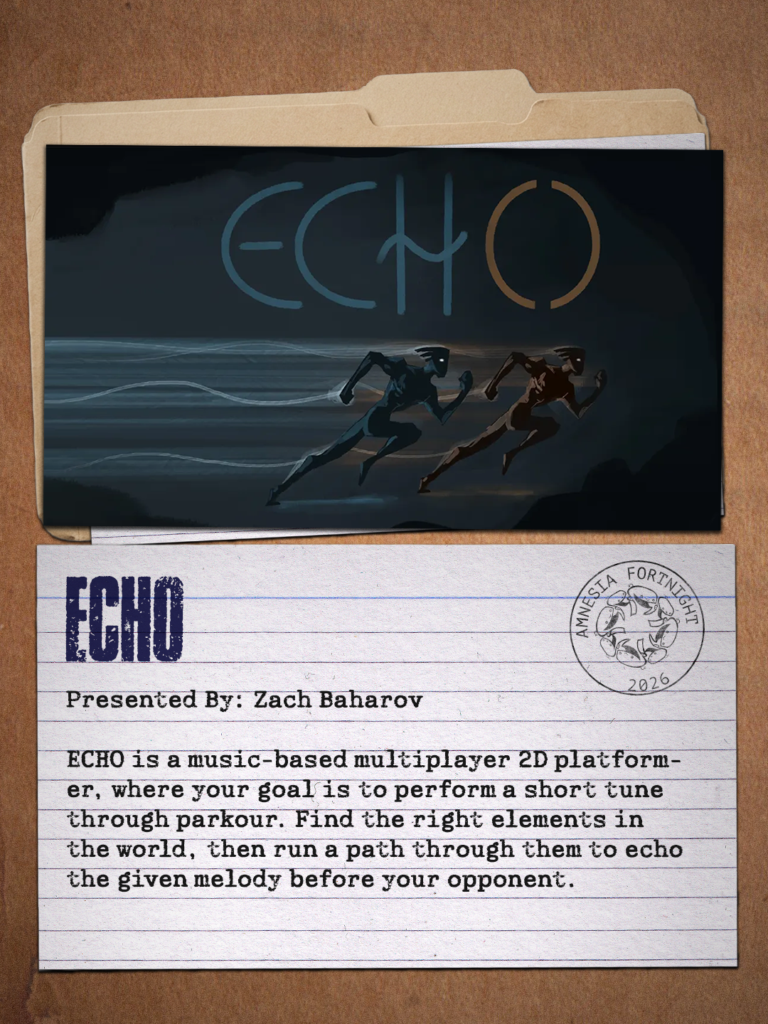
Schafer: Yeah. We have to generate our own money, but we can rely on our number one resource, which has always been the creativity of the team. Our team has a million ideas. We support them and we try to engender that feeling of taking risks and having playful ideas and putting them out there. Putting their face on it. It’s scary to pitch a game, but we try to make the team feel comfortable sharing their ideas and pitching their games.
It’s saved us before. When Brutal Legend 2 got cancelled, we didn’t know what we were going to do, but we had done two rounds of Amnesia Fortnight back then. We had eight game demos. We picked the best ones and signed Stacking, Costume Quest, Once Upon a Monster, and Iron Brigade. That was all thanks to the creativity of the team.
GamesBeat: When was the last time you did Amnesia Fortnight?
Schafer: I’d have to look that up. But we did a documentary about it. It’s the one where Lauren (Scott) did The Way Down. 2019?
GamesBeat: Just before the transition.
Schafer: We try to do it regularly, but sometimes we’re just so busy. There were always questions about how it worked under Microsoft. Now that we’re free of those worries, we can be more flexible with it.
GamesBeat: Do you have your favorite projects that you want to push forward in mind already, or do you want to digest the feedback from the fans first?
Schafer: It’s kind of a market test in a way. It’s valuable information to have the fans respond to it. That’s a great sign for the future sales of a game. It’s not 100% guaranteed, but it’s a great sign if people really react to a pitch.
I did a live stream today and yesterday with all the people pitching game ideas. I asked them all about their games. I’m just taking in all this information. I’ve heard about some of them before, but now I finally understand them all. There are some great ones in there. But I’m excited to hear what the fans pick. That matters a lot to us.
GamesBeat: I saw one comment that was kind of like, “I don’t want to give you another idea. I want you to focus and tell me, ‘This is the best thing.’ I want to trust Tim Schafer to tell me what the best thing is.”
Schafer: That’s interesting. I don’t want to influence them, in a way. I want to know what they’re thinking.
GamesBeat: You still believe in this process, then?
Schafer: Something I learned at LucasArts is you don’t place your bets on ideas. You place your bets on people. Amnesia Fortnight is a test of ideas, but also a test of people. It started when I said, “I’m not going to be around forever. We need other creative people to run games here.” But we didn’t want to risk a huge project, so here, Lee Petty, you have $2 million. Make a Russian nesting doll game. Of course now we know he turned out to be a great project leader, but he’d never done it at Double Fine before. It’s a great test. Amnesia Fortnight is about testing ideas, but it’s also about testing people’s capacity for leadership.
GamesBeat: You have this idea for smaller games as well.
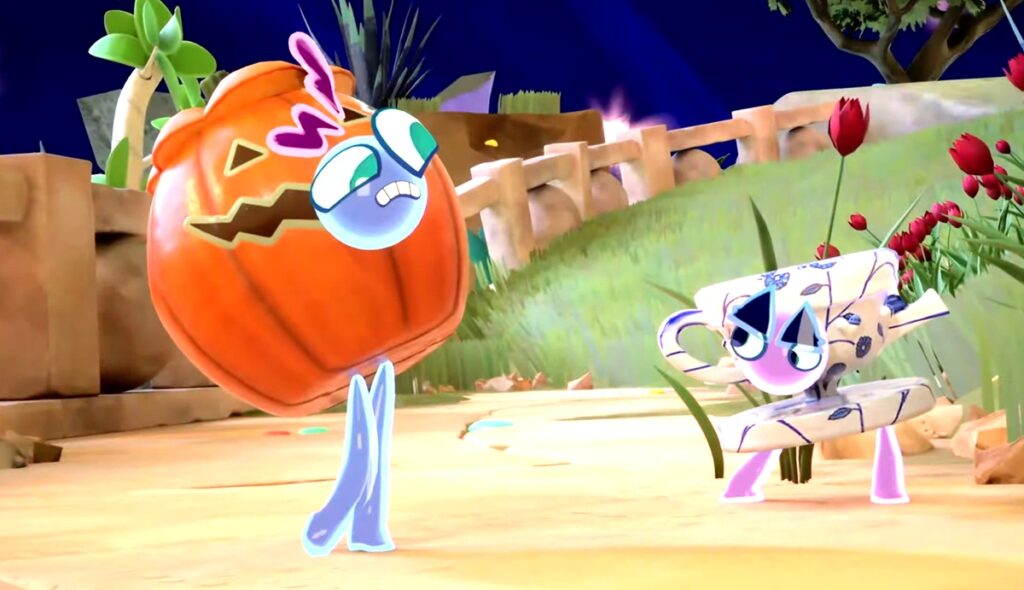
Schafer: Amnesia Fortnight fits a lot with what’s going on with what’s popular on Steam right now, which is kind of janky, unpolished games that are a lot of fun. They’ve become huge hits and they don’t cost a lot of money. They’re just trying different creative ideas. Games you play with your friends and laugh, a lot of people are playing them these days. That fits with Amnesia Fortnight, which is about really quickly–don’t worry, don’t censor yourself, just have a creative idea and make it happen in two weeks and put it out there.
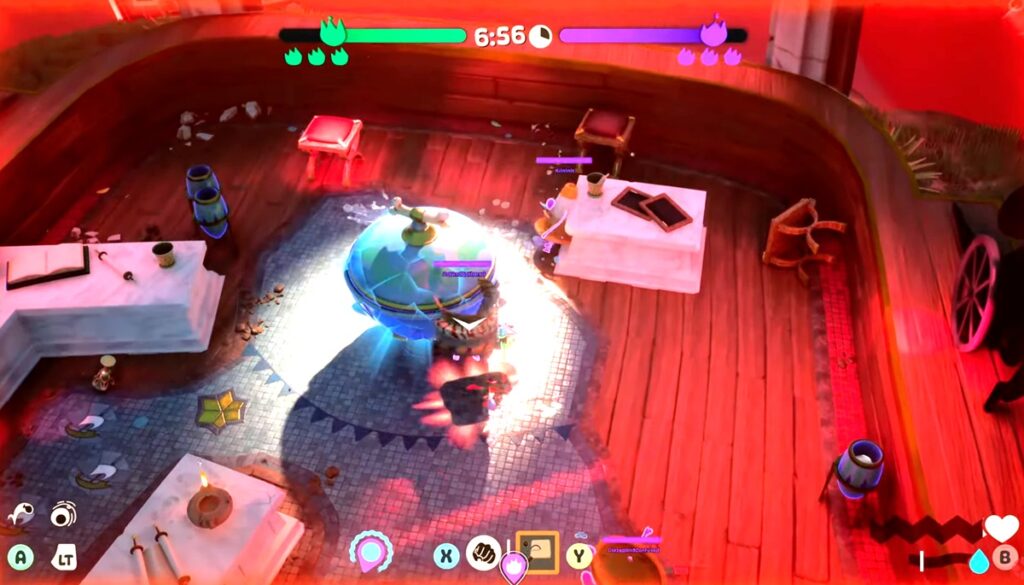
We created a label for those that we’ll probably keep doing in the future, which is Double Fine Action Labs. Like Double Fine Action News, we have Double Fine Action Labs, which is our label we’re going to release the results of Amnesia Fortnight under. They’re experiments. They’re complete games. They’re not incomplete. But they’re rough and scrappy and small. They’re meant to be cheap and played for shorter amounts of time. We’re going to be putting one out later this week that we made in just six weeks. We’re doing it under this label to set that expectation. This is not Psychonauts 3. This is an experimental thing. We had a lot of fun with it, and we thought it was fun enough to share with people.
GamesBeat: Have you figured out some things that you can do now as an independent company, and things you won’t do anymore because you were part of a big company?
Schafer: We have room to talk to anybody and work with anybody, talk to them directly. When we were with the big company, they want–we could put games on another platform, but there was one person at the company we had to go through. Now we can just talk to any platform directly. Which we did before. Spaff has connections at all these different platforms and we talk to all these companies directly. It lets us be a bit more nimble and take opportunities that might have been too small potatoes for a big company, but that are really interesting to us. We can take those kinds of deals.
Things we don’t have to do–we don’t have to go to a lot of meetings. We don’t have to use Teams anymore. Microsoft was really good to us, though. We had a great seven years there. They invested a lot in our studio that will benefit us in the future. They treated us well. They lived up to their promise of letting us survive if they wanted to stop working with us. We have no hard feelings there.
GamesBeat: I know that there was this emphasis on creativity with Double Fine.
Schafer: It’s our number one pillar.
GamesBeat: Is there some kind of twin pillar that goes with this about standing on your own as a business?
Schafer: Creativity is the number one thing for the company. Companies are often influenced by who founded them. If a programmer founded them, they’re gonna have the best engine. I’m about writing and creativity, so I always want our games to be surprising to people. We always learn about–if you want to take risks, in some ways you have to spend less money. You can’t be really expensive and take a bunch of risks. You have to be a little cheaper. If you take more risks, you spend less money in general. That’s a bit of what Double Fine Action Labs is about. It’s about being able to take more risks and not blow the bankroll on them.
There’s a lot of stories in the games industry lately about studios spending $300 million and going out of business or not releasing their game. It’s great to learn how to take small risks. Every big franchise out there started small. I’m trying to think of new IP that started with a $300 million investment. That’s not how Minecraft got started.
GamesBeat: Did you feel business pressure in some way? “That’s a creative title, but it’s not a potential hit franchise.” Someone with a more business-minded point of view might say, “Those guys are too creative.”
Schafer: That’s always been our–we’ve been pitching games since Psychonauts, the very beginning. We always knew a pitch was over if we did our pitch and the first thing the publisher said was, “Well, that’s very creative.” Okay, pack up the box, we gotta go. They don’t like it. It’s creative, but it doesn’t sound like money to them.
The thing is, people do want to see games they haven’t seen before. People don’t just want another shooter that looks like the last shooter they saw. What’s different about this game? The trick is to spend less money when you take those risks.
GamesBeat: When you look at what is succeeding in the market now, there’s a pretty good case for that. Meccha Chameleon, Helldivers 2, Palworld, Clair Obscur. These are all cases where someone took a shot with their idea. The market has rewarded them for being bold.
Schafer: But there’s a lot of games like that on the bottom of the charts that haven’t done well. You have to get away from the idea that you can buy a hit. “We’ll spend tons more money and have a guaranteed hit.” No. You have to spend enough money that you can survive if it’s not a hit. You save your money so you can make 10 games and have one of them be a hit.
Double Fine has always gotten by on a business plan that’s not hit-based. It’s about having a sustainable back catalog. We make money from our back catalog. We have many games now that are just passively earning money. You want to break even on your game. You want to not lose money. But you can survive for years off the profits of a game with a long tail, or a game that takes a while to find its audience, like Psychonauts. People are still discovering Psychonauts. We’ve always tried to have a more sustainable business plan than spending $300 million on something that had better be the game of the year.
GamesBeat: Did you ever figure out the accounting for things like Game Pass?
Schafer: That’s been a huge question for a lot of people. What’s a fair way to account for that? And I don’t know. I think they’ll always try new systems. Hopefully they’ll find one that works for everyone. I still like the mission of Game Pass. I like taking down the barriers for entry to games. You don’t have to risk $70 every time you try a Double Fine game.
GamesBeat: I know you had some layoffs. Have you figured out what’s a more appropriate staffing level to get your games out the door, but not have the Microsoft luxury level of employment?
Schafer: We had some perks during the Microsoft days that we don’t have anymore. We’re going back to the way we acted, and also the employee count that we had, before the acquisition. That’s something we’ve sustained for years at the company. We’re back to that size again, and that spending level.
GamesBeat: For many in the industry the staffing levels just seem to go up and up. The time it takes to get a game done also gets longer and longer. When you think about that and, at the same time, the pressure to be frugal, what becomes a more ideal number for Double Fine to be at?
Schafer: We’re at the size now that we were when we made Brutal Legend, basically. I feel like that’s a good size for us. We’re currently trying to sign games to support all those people. We’ll find out. It’s going to be tested by the marketplace. If we can’t fund all these people, we’ll know. But I feel good about the pitches we’re sharing. I feel like we have enough interest that I’m optimistic about being able to stay at this size and have it be a more sustainable scope for us.
GamesBeat: Were you in mid-project when this happened? Or were you just finished with something?
Schafer: We’d just finished Keeper. Some of the team were just–we’re still working on Kiln. A lot of the team was still noodling around. But there are other things. I often have ideas in the back of my head for 15 years before I make something. There are always these things I’m tinkering with until I bring them before. There was nothing ready to ship or anything like that. There were some ideas that were floating around, I would say. Who knows if one of those will get picked?
We’re still doing updates on Kiln. Tomorrow they’re going to drop the price to $7.99. We have control of that now. What’s the right price for a game like Kiln? We’re doing new maps and modes later in the year.
You asked about what we can do now that we’re not part of Xbox. We’re doing things differently. The way we handle servers, that was a different set of economics under Microsoft. Now that we’re taking it over ourselves, we’re doing more with peer-to-peer and stuff like that. We don’t have as many regulations on the login, how you have to log in to certain services.
GamesBeat: If you had to predict what gamers want now, what does that look like?
Schafer: If I knew what gamers wanted–that’s always been the big thing. I’m always surprised. Someone will say, “Hey, have you heard of this?” “No.” “It makes $8 million a day in China.” “What?” Gaming is so big. There’s not one thing gamers want. Some people want to be online and doing some grindy thing. Some people want to have an amazing narrative experience. Some people want to just goof off with their friends and hang out. Games are this thing now where they’re bigger than any one genre. What do gamers want? They want a ton of different things.
I feel like we’ve always been an inspiration-led studio. If it’s something that excites us, at least we know it will excite somebody. We’ve stuck to what inspires us more than we’re guessing people will like.
GamesBeat: I haven’t played with physical discs in 10 years, but I know I want it.
Schafer: I do. I’m a retro game fan. I have my old Atari and Vectrex set up in my office. I play Atari games and Vectrex games. I know I have all the ROMs downloaded onto a card, but I never like to play those. I like to put the cartridge in the machine. There’s something about the original media. I don’t know if it’s nostalgia or just a feeling of, “Yes, I’m actually playing an old game.” I get the appeal of physical media, for sure. But again, I haven’t bought a disc in a long time.
GamesBeat: Do you have any wish for which way we go as an overall industry? Do you want more new game consoles?
Schafer: It’s a hard question. What is a game console now? That’s my biggest question. Speaking of the Atari, when my dad brought the Atari home, it was a machine that had chips in it that no other machine in the house had. It did things to the TV that no other device could do. That’s not the case anymore. Now my phone does all that stuff. How do you differentiate yourself now as a machine that people want to buy and have in their house? It has to do something else. You can see Nintendo wrestling with that, doing all their cool motion control stuff, all the things that make the Switch a different device from something else in the house. That’s the challenge.
What I would want–I just want more cool games. When you ask what players want, I think in the end, people want great games. In movies and TV, people are always looking for patterns. I remember getting told once that “space is dead.” The concept of a movie set in space–you couldn’t sell a screenplay for a space movie. It’s so dumb. Then a space movie is a hit and everyone says, “We gotta go back to space!” Then the derivative stuff in space doesn’t work. “Wait, I thought space was popular!” No. It was never the genre or the setting. It was the quality of that initial brilliant thing that got made that made it popular. That’s what people like. They want quality. They want originality. They want fun.
GamesBeat: If you knew this day was going to come with Microsoft, do you think you would have done some things differently? Would you have made a different game than Keeper?
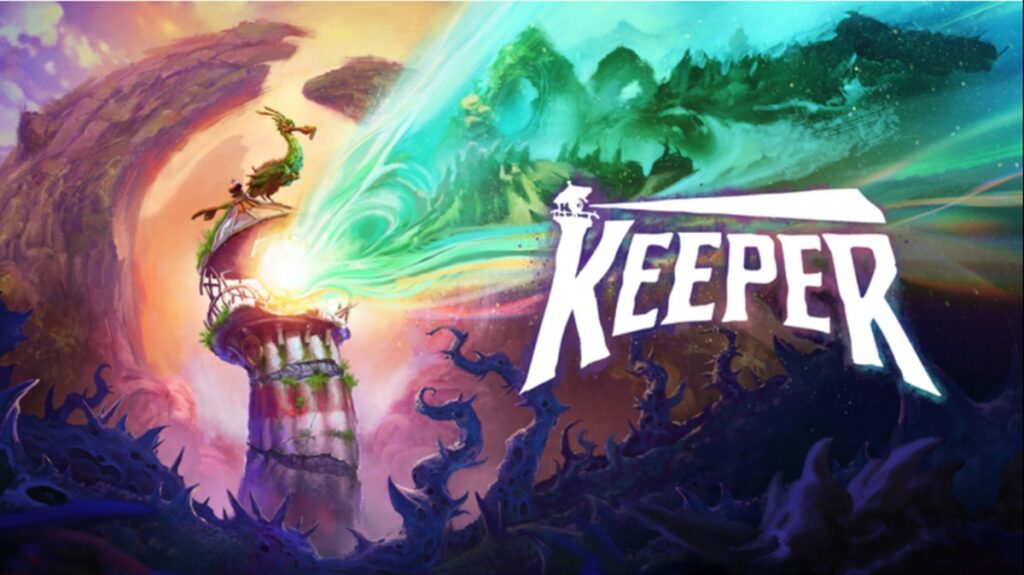
Schafer: I don’t know. Keeper is definitely–you asked us what game we could make now that we couldn’t have made before. There was no way that, as an indie company, we could have made Keeper. In the end I’m glad that we made it. It served its mission, to put something cool on Game Pass. That was our whole mission. Put cool things on Game Pass was the challenge, to fill that channel with interesting, creative stuff.
GamesBeat: I remember Phil Spencer made it sound like your job with Keeper was to inspire the ranks of all the game developers at Microsoft.
Schafer: [laughs] I feel like everyone has their place. Even when we were at Microsoft, when I looked at the other companies and what they were doing, our job was to make the weird stuff. Our job was to make the creative stuff. That’s what we do better than anyone else. It’s not weird for the sake of being weird, but weird that feels emotionally compelling, that really grabs you and inspires you. I feel like that’s always been our mission, whether we’re part of a big company or on our own.
GamesBeat: Is it true that you’ll make Brutal Legend 2 for $100 million?
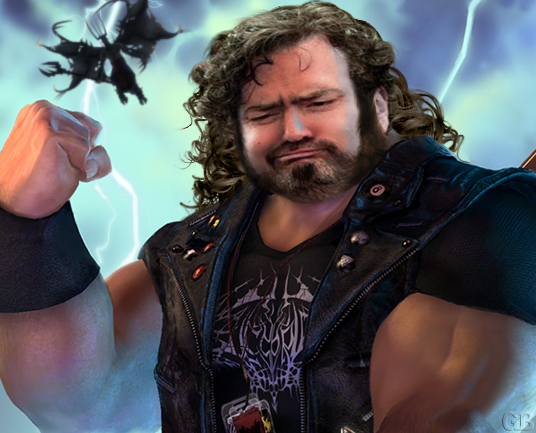
Schafer: I think we could get it done for that. At least a first draft. It’s both a joke and not a joke. We put it in there to be funny. Yeah, sure, if we could spend $100 million, if someone gave us $100 million, I’d be happy taking it and making Brutal Legend 2.
GamesBeat: You might have some left over.
Schafer: Oh, I could spend it. I’d put it all in one big Megadeth song. Those people can ask for a lot with their licensing.
GamesBeat: Back to the Action Lab, at what pace do you think you’re going to be doing some of these small, experimental games?
Schafer: That’s the test. We’ll see what happens. We’ll see if it’s a sustainable model. We’ve always wanted that outlet. We’ve always done these game jams and made tiny games that we didn’t know what to do with, because they’re just fun experiments. Now we have a platform for them.
GamesBeat: Would you get your audience to vote on these ideas, or just do that internally?
Schafer: In the case of Amnesia Fortnight, gamers are voting. We’re not voting internally. We’ve had ones where we voted internally too. This time the backers are paying for the right to vote. We’re going to let them pick. But there’s no set rules for how we have to behave in the future. It’s a very experimental and nimble thing, which we’ve always been good at as a company. Being nimble, trying things, pivoting, trying something else. We’re going to do it this way and see how it goes, see which parts get the most attention. Maybe we’ll get distracted by the big deals we’ll sign for these big games. Or maybe we’ll keep Action Lab going and always have Amnesia Fortnight going on. Who knows?
GamesBeat: If they vote for something, do you have to make that thing?
Schafer: Well, we’re not going to put anything up there that we don’t want to make. I would make Brutal Legend 2 if we got $100 million. That’s the problem. We need a lot of money to make those games. Brutal Legend is not a cheap game. Music licensing alone, celebrities like Jack Black.
GamesBeat: How much of your appeal do you think is in the retro realm? People wanting games in the style they grew up with.
Schafer: The first time I saw Psychonauts in a “retro games” retrospective, I thought, “A retro games channel? A Double Fine game? Holy cow.” There is a lot of nostalgia for that. We’d love to remaster that game someday. Now that we’re an independent company, though, all these things cost money. I gotta find someone who wants to fund that. If you’re out there and you want to fund a Psychonauts remaster, let me know.
GamesBeat: You’ve talked to investor types out there. What do you hear back from them? What do you think they want to invest in?
Schafer: We’re not through the process yet. I haven’t seen what they’re actually willing to put their money up for. But they’re talking about–some of them are still trying to make very strategic investments in known genres. They’re doing research into genres and only investing in those genres. Other people are just–they all have different goals. Companies from Asia that want to get involved in the western market or with a western-sounding IP. I don’t want to speak for all of them.
The more I meet people who invest, the more I find that they’re people who–they have this money and they can’t just leave it in the bank. So how do they make smart bets? Spreading some of it around. I like the idea of it getting spread around more so everyone gets a chance, instead of $300 million going to one company that’s doomed. When I see these companies with that kind of money not releasing a game, it makes me so mad. We could make a bunch of games for that money.
GamesBeat: I like the idea from some of the Middle Eastern companies. They know they’ll run out of oil someday. They have to create jobs to replace the jobs they’re going to lose. They’re in a rush to adapt to a changing world and become digital nations.
Schafer: I have Norwegian friends who feel the same way. They’ve lived for years off the North Sea oil rigs. What do you do when that’s gone?
GamesBeat: It’s interesting that they’ve wound up in the game industry. This is where money is coming from now.
Schafer: [laughs] Anyone who wants a sure bet financially, go to the games industry. Guaranteed money in the bank.
GamesBeat: You would think more money would come in. I heard the one stat not long ago about how games are only five percent of the world’s advertising budgets, and yet it’s the biggest entertainment industry. People don’t believe in it enough to advertise into it.
Schafer: It’s always weird. It’s a mix and match of its finances and its cultural position. Financially it’s huge, but culturally it’s thought of as a niche thing. People’s cultural views about games are a little out of date. People think they’re played by a certain type of person. That was the case 20 years ago, but it’s not the case now. Everyone plays games.
GamesBeat: What do you think about carrying the flag for California? “There’s still a game studio here!”
Schafer: And in San Francisco. We used to have game studios up and down the block. They’re all gone. It’s us and Supergiant and Shiny Shoe. Just a couple left. The rest moved away or died.
GamesBeat: Electronic Arts pretends to be there, but nobody goes into those buildings, I think.
Schafer: They’re trying to get people back in the office, but it’s always–it’s changed forever. I like working with people. I like seeing their faces. I like being together in the room when we’re brainstorming. We’re still standing up for games made in San Francisco.
GamesBeat: Next to all the AI bros.
Schafer: That’s the hardest thing about being in San Francisco. Competing with tech companies. They steal your junior programmer and give them three times what you could pay them. It’s hard to live under all these AI billboards. They’re just gibberish. Are they trying to upset us by having these creepy-looking ads?
GamesBeat: Do you see anything coming along that will help game development, including AI? Will it help you somehow, or do you think there are other things that will improve game development?
Schafer: I’ve never looked for technological solutions. It always seems like games are a creative problem. People ask, “What new tech gets you excited?” I don’t know. We could have done Tetris in ASCII on a dumb terminal. That’s an old example. But we weren’t waiting for the technology to make that game. We were waiting for the idea. I still think it’s creativity and imagination. Those are the things we’re always waiting for. Technology might be a tool that helps us do it, but I don’t think it’s going to save us.
Technology has made games a lot more complicated, which has been a trap for people. We can make games where every character takes three months to model! The budgets of games have followed that. So I don’t think it’s technology in the end. I think it’s the innovation and creativity of the human mind that will bring the next big hits.
GamesBeat: You’re saying this in the middle of Silicon Valley.
Schafer: San Francisco in the ‘90s was a creative hub. The bands, the arts scene. I won’t give up on that version of San Francisco, where we still have a bunch of weird people who like to do creative stuff. That shows in our games, I think. Even though most of my employees live in Oakland.
GamesBeat: What do you think about something like the Godot game engine, an open source game engine?
Schafer: That’s something I don’t have much experience with. I think the idea is interesting. We’re free to explore anything now. But in some ways–the distribution systems have made it more possible for people to self-publish small indie games. Steam made it possible. Anyone can publish a game on Steam. But it also hurts, because so many games are getting published. How do you get attention for your game? There are ups and downs. No single technology is going to guarantee an easier road. It’s all in how you use it.
GamesBeat: Did you see anything that looked familiar in Asha Sharma’s notes, the 14 layers of management at Microsoft and so on?
Schafer: Are you talking about something recently, or are you talking about her original notes?
GamesBeat: When she put out the layoff announcement, she had said a couple of things like, “We’re putting most of our investment into parts of the games industry that are not growing. We sometimes have 14 layers of management. We have to get more efficient at all of these things.” She was raising an alarm about how this can’t continue, this can’t go on.
Schafer: I don’t know what I can say about that. I don’t know enough about the inner workings of Microsoft. Even though I was there, we were a limited integration studio. They’re definitely a big company. They have big company ways of doing things. I wish them well. They’re going in a different direction than we are. Good luck.
GamesBeat: Do you think they’re going to do well?
Schafer: They have a lot of great IP still left. They have a lot of money. They have a lot of attention. I’m curious to see how they do. Like I said, it’s a weird time to be selling consoles. But they have a lot of great, smart people up there still. I hope, for all their sakes, that they’re successful.
GamesBeat: And if you were in charge?
Schafer: [laughs] Oh my God. That’s crazy.
GamesBeat: You have decades more experience than some of those people.
Schafer: I would definitely start a new version of Blast Corps. That’s one of the first things we would do.
GamesBeat: If there’s still a major effort that you would do, would it be the only game the studio worked on? Or do you think that you’d try to do two games at a time, or anything like that?
Schafer: We’ve always seen it as–we have roughly four teams. When we made Costume Quest, Stacking, Iron Brigade, and Once Upon a Monster, we had four teams working in different places in development. When we made a Psychonauts game, we’d pull two teams together to make that, and then by the end of it we’d pull the other teams into it. But then we’d split back up into multiple teams again. It’s basically four teams, but sometimes two or three or four of them join together for a brief period of time.
Games are like a snake eating an elephant. They have this middle portion where tons of people are on it. You have to have flexible divisions between different teams so people can move on to the one that needs the most people at the right time, but also lets you have few people when it’s the right time to do that.
GamesBeat: Are you the kind of studio that needs external development, or have you stayed away from that?
Schafer: We’ve worked with great outsourcers for animation. Sometimes we’ve been short a programmer. It’s hard to hire programmers with all the tech companies around. We don’t want to grow, because we don’t want to have layoffs. We want to stay small. We’ve often, for years, used outsource companies who can do visual effects or animation. And we’ve always outsourced testing to companies that do that. It’s a good way for us to have flexibility in our team sizes.
GamesBeat: Are you going to be giving time off to your employees to play Grand Theft Auto?
Schafer: Sometimes I think, “Oh, this thing is so overhyped.” But am I going to play it on launch day? Yeah, probably. GTA IV is still my favorite. But I do like being in a big city and just walking around.
GamesBeat: You have a criminal nature.
Schafer: I do like running over people, because they make such a fun sound. But I eventually get over that. Once I get it out of my system. Or if I’m really in a hurry.
We’ll see. There’s still a lot of work ahead of us, but it’s good work. It’s making ideas, sharing fun ideas with the rest of the world, talking about how excited we are about our games. It’s all very positive, fulfilling work to do.
GamesBeat: Have you said where you’ve wound up in terms of headcount?
Schafer: It’s roughly the size we were when we made Brutal Legend. Between 50 and 60, depending on how you count contractors. I’d say roughly 55.