
If you’re going to a Disney theme park anytime soon, stop and take a look at the attention to detail in the props. They’re meant to immerse you in an imaginative story.
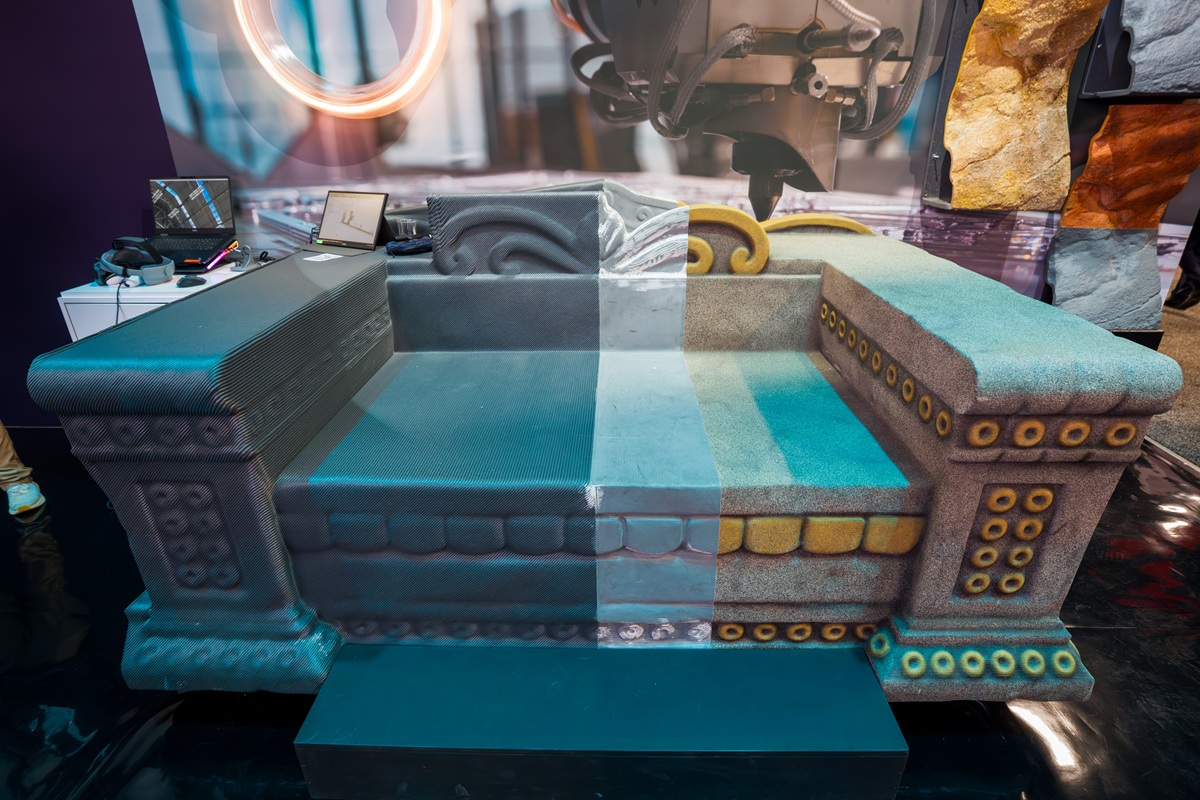
Disney has begun to reinvest about $60 billion in its theme parks, cruise ships and other experiences, and it has begun the work, one prop at a time. Disney Experiences and a 3D-printer production company, Haddy, have started making one-off items to replace aging props in the parks, using modern AI technology and more.
Once they perfect this process, they are going to launch such efforts on a large scale to manufacture low-cost 3D-printed items with recyclable materials that could improve the immersion in the parks while saving money.
Disney is known for building worlds of imagination through artistry and innovative technology. It’s also collaborating with the Lego Group to build worlds through imaginative play with its new chip-based Lego Smart Play bricks, unveiled at CES 2026. Part two of our story on Disney’s world-building will focus on the Lego partnership.
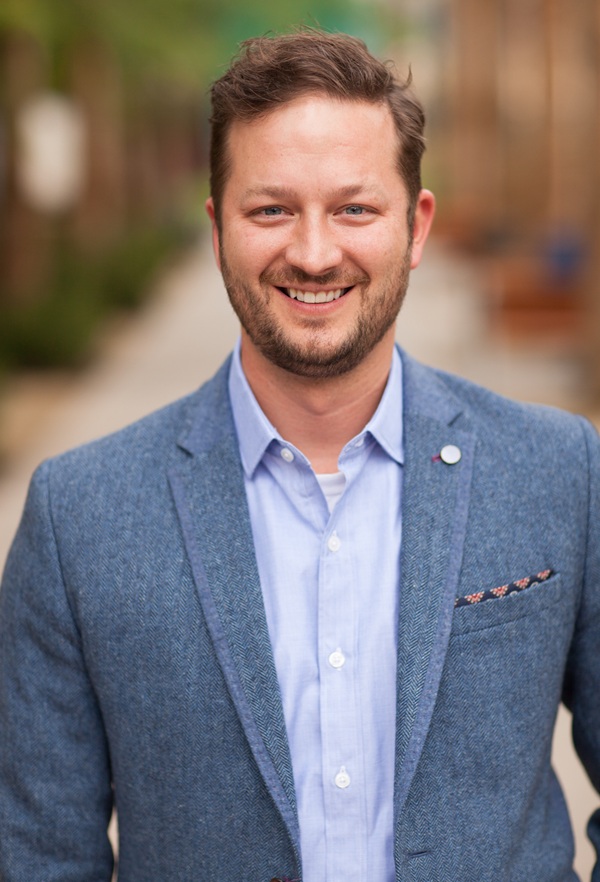
I spoke with Kyle Laughlin, senior vice president of R&D, technology and engineering at Disney Imagineering, about the task of creating the props and other gear at Disney’s theme parks. Laughlin is based in the creative campus in Glendale, California, home to Imagineering for more than seven decades.
Laughlin noted that the company has commissioned over $60 billion worth of investment into Disney Experiences — an unprecedented amount of investment.
The origin of craftsmanship
The 70-year-old Walt Disney Imagineering organization is responsible for creating theme parks, cruise ships, hotels and food and beverage experiences around the world, he said. It was started by Walt Disney himself, as noted in a new film.
A documentary, Disneyland Handcrafted, came out this year from director Leslie Iwerks. It tells the story of how Walt Disney and hundreds of craftspeople built Disneyland in the year leading up to its 1955 opening. It was the start of the care and attention to detail in creating the parks.
“Disney has always been really about turning that imagination into real, tangible experiences, taking those stories and bringing them to life,” Laughlin said.
The company has been “incredibly insular” in talking about Imagineering’s work, which in the past has been done in secret. But now it’s opening up a bit more.
“A lot of invention has happened in order to bring these experiences to life. But what’s really changed is how we do that. Now, increasingly, some of the most meaningful breakthroughs that we have are coming from our collaborations,” Laughlin said.
He noted that Disney is bringing together both internally and externally, artists, engineers and partners who push it to see the problems differently.
“And when you blend these digital and physical items together or the tools together in the right way, we unlock all of these incredibly new possibilities,” Laughlin said.
Working with Haddy on massive 3D printing
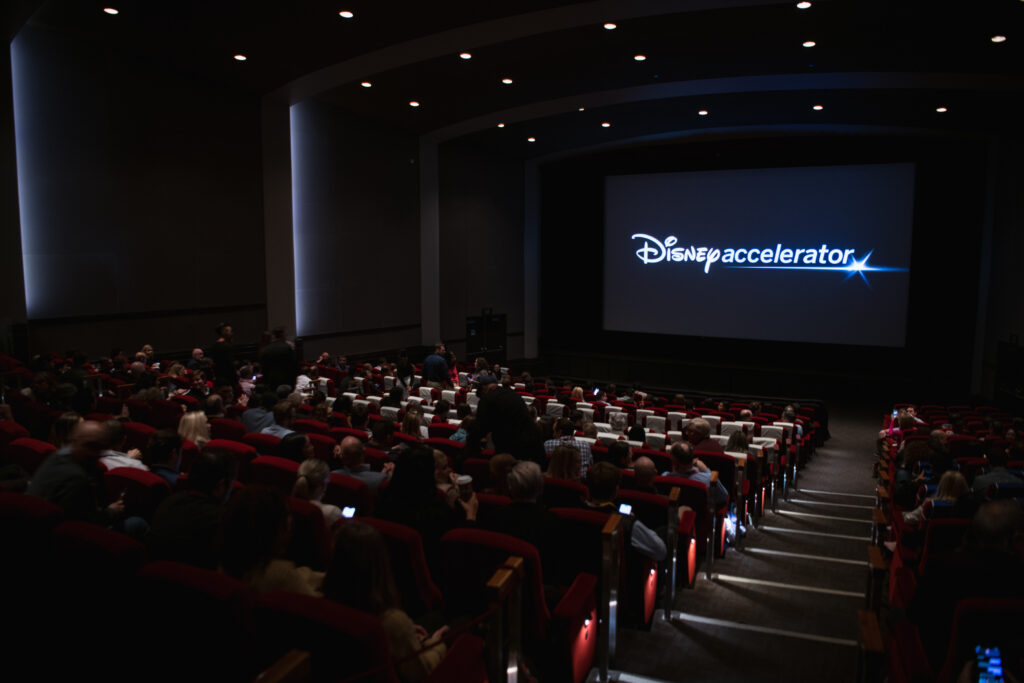
Haddy is focused on printing really big 3D objects, not just little things. Imagineering connected with Haddy through the Disney Accelerator. The work with Haddy began last summer as Haddy was part of the Disney Accelerator class.
“Haddy’s innovative fabrication approach gives Disney creators a faster, more flexible method for building imaginative new worlds from the ground up,” said Bonnie Rosen, general manager of Disney Accelerator, in a statement. “Haddy’s 3D printing factory pairs advanced manufacturing methods with bespoke human-powered design, helping us build, reconfigure, and reuse materials so that ideas can be refined and brought to life again and again. The production pieces showcased at CES demonstrate the beginning of our long-term collaboration with Haddy.”
As an example of the new era of world-building, Laughlin pointed to the work with Haddy, a 3D-printing company that uses AI, sustainable materials and additive manufacturing to make props for theme parks and other decorations that immerse park goers in Disney’s entertainment experiences. Disney made an investment in Haddy through its Disney Accelerator program.
“Haddy has been a great example of how we’ve been rethinking how we build moving forward, and their approach to large-scale 3D printing has been the big unlock for us, allowing us to move faster, more flexibly, and to be able to prototype and actually build faster than ever before,” Laughlin said.
The teams can now build, iterate, reconfigure, and reuse materials in ways that Disney hasn’t done before.
“In this rapidly expanding age of AI, creators have even more tools at their fingertips to ideate, design, refine, and review. However, up until now, industrial robots which embody core engineering principles and commercial production attributes have been unattached to this Ai revolution,” said John B. Rogers, Haddy CEO, in a statement.
Rogers added, “Haddy is here to attach the digital and the physical. It’s finally time for a new age of digital manufacturing as ours are the industrial arms that AI has been waiting for. In the last three years, Haddy has been on a steady march to create the platform, the MicroFactory, which can print the world. We have now arrived.”
And he said, “Our collaboration with Walt Disney Imagineering and Disney Experiences is taking that AI-powered robot dream to scale. And we are doing it on behalf of creatives. Already, we are seeing creatives and artists speed their cycles of iteration and refinement to be able to bring Disney dreams to life on behalf of partners, cast members, and guests.”
Remaking an outrigger canoe
One example of the partnership is the Jungle Cruise outrigger canoe at Disneyland. That boat had been around since the 1960s.
The team used an old photo and worked with Haddy to create a replica of it using Haddy’s 3D printers. It was the first time that Disney created a 3D-printed prop for a Disney Park attraction.
“We were able to maintain that incredible level of authenticity while continuing to push forward to bring it to life in a whole new way,” said Laughlin.
In the past, the work would have required molding with a fiber-reinforced plastic, which is a more imprecise tool and doesn’t use sustainable materials.
“It’s just a huge unlock for us in terms of what we’ve been able to produce using Haddy’s 3D printing,” he said.
While the work has started on a one-off basis, Laughlin believes that Disney can work on these experiences for theme parks and cruise ships worldwide. Making a decoration or prop that is lightweight is big challenge on the new cruise ships, he said. With Haddy, it’s sometimes possible to make an object at half the weight, and that saves fuel.
“It allows us to bring on more props and create more immersive environments. Even on our cruise ships, there are a lot of implications from the one technology,” he said. “Sometimes the only thing stopping our imagination is the size of the build that we can build to put our 3D printers into them. There’s no shortage of work.”
Getting ready for more work
Laughlin also said Disney recently held an event at its Downtown Disney place in Anaheim, California. The event was for the Lorcana entertainment brand and Disney needed props to be part of that experience. Disney had to design the prop and 3D print it in a short time in order to get it ready for the show.
“It really comes down to having the right material, the budget, the timeframe and [the design] that we’re building to bring the experience to life,” Laughlin said. “This allows us to ship it at a lower cost.”
The Disney Accelerator cooperation allowed Imagineering and Haddy to move from prototyping to live deployments. The milling work is automated. The team uses a special mill head to sand down the surface of an object so it can become smooth enough to paint so it looks more realistic. It’s like putting a texture on a digital 3D object.
“Our Imagineers can come in and finish the work by hand,” he said.
Imagining the future
He said this is just one small piece of a bigger picture that Disney is excited about to unite its technology and creative crafts. Disney also has partnerships with big companies like Nvidia, Google DeepMind, Meta, Adobe and more. The work is coordinated by teams at Disney Research, which works on AI and robotics in Glendale and Zurich, Switzerland; Disney Imagineering in Glendale; and a software tech studio.
With this combination of partners, Disney is capable of taking a robot from inception to deployment in the parks within three months, Laughlin said.
“In 90 days, at a fraction of what we spent in the past, we were able to bring to life Herbie, a cute personal robot from the Fantastic Four.
“It was a ball balancing robot that was sampling over 250 times a second to ensure that it was staying upright,” Laughlin said. “In the past, we would have taken years to train a robot and now it takes us mere days with the hardware we now have at our disposal. So it’s an exciting time, unlike anything I’ve seen in my career.”
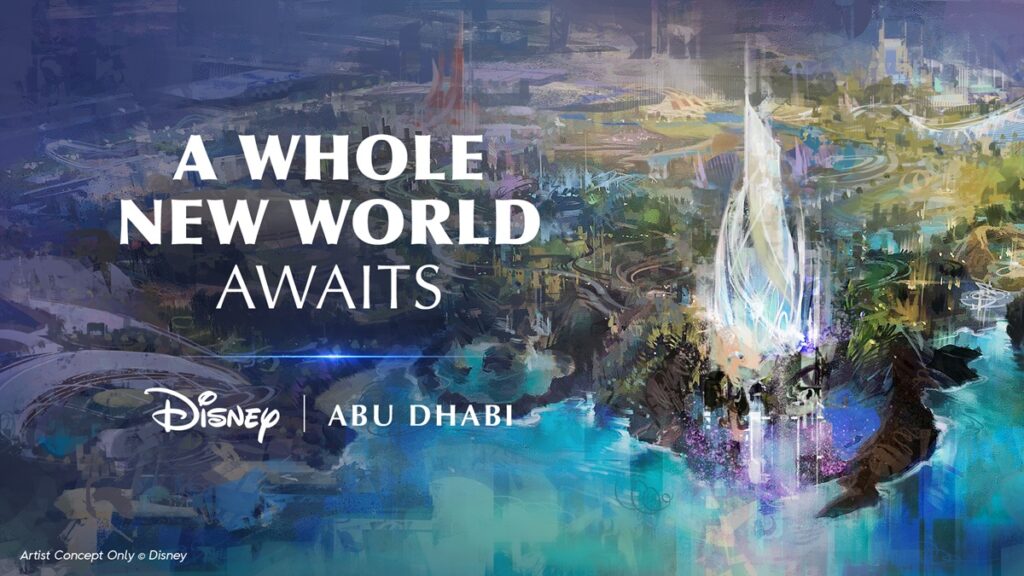
Now Disney and Haddy are working on things for the newest upcoming theme park in Abu Dhabi in the United Arab Emirates.
“This is one of our most advanced technologies from an Experience persective, and we’re working backwards from there to build for that future and also spin off these innovations we have, like with Haddy for our parks along the way,” Laughlin said. “We want to deliver the kind of future world where we can put more of the investment in front of the guests.”