
Hidden Door, a tech studio at the intersection of machine learning and immersive entertainment, announced a first-of-its-kind social role-playing platform that puts a twist on co-creative storytelling.
On Hidden Door, anyone can become a main character within the lore, story and setting of iconic fictional universes, starting with Pride and Prejudice, The Wizard of Oz and The Crow from Pressman Film. This is possible because of Hidden Door’s unique way of enabling players/fans to interact with their favorite intellectual properties.
I think of the fan’s interaction with canon and the AI to be like a “choose your own adventure” story that pushes back at you in the name of creating a better story.
More worlds are coming soon, including a collection of romantic fiction from 831 Stories, science fiction from authors Alan Dean Foster and Ramez Naam and additional stories from Pressman Film.
Powered by groundbreaking narrative systems technology, Hidden Door is building the future of immersive storytelling, with unlimited ways for fans to explore, expand, and remix their favorite worlds together. Hidden Door is available now on any desktop or mobile web browser at hiddendoor.co.
“Hidden Door is the place for our fans to play within the realms of their favorite fictional worlds,” said Hilary Mason, CEO of Hidden Door. “Just as fans bond over new book releases and gather together for movie opening weekend and TV season premieres, we are building a home for fans of books, films and shows to socialize, obsess over and remix their favorite storylines.” “
Mason added, “Hidden Door isn’t just about watching and reading stories – it’s about living them. Our platform gives fans the power to let their imagination and creativity design the story, adventure through the world and even grow the storyverse together – a true home for fans to immerse themselves in their favorite stories.”
Inspired by the improvisational storytelling of tabletop role-playing games, Hidden Door helps players to create new stories that expand on the original creator’s vision. Guided by an omniscient narrator, players make characters that they then take on a variety of adventures, responding to prompts to guide the action in any direction.
How it works
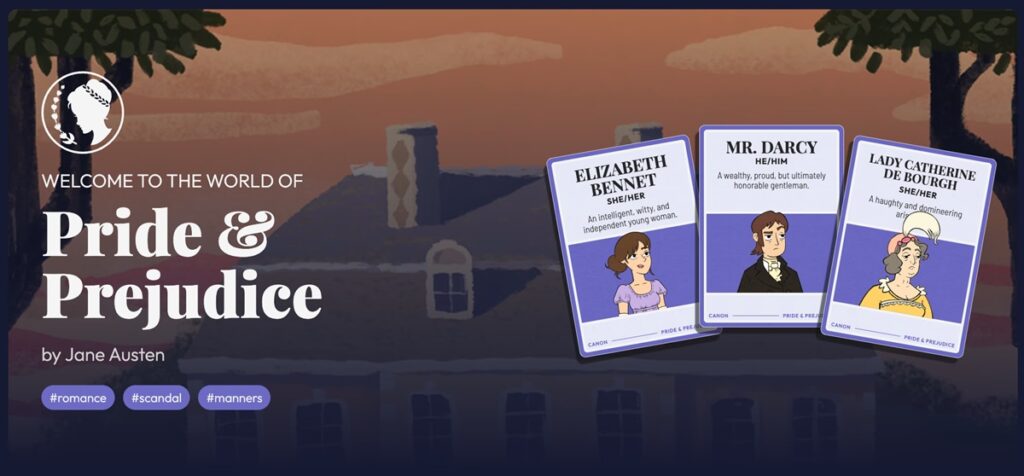
With that, Mason showed me how this works with Jane Austen’s Pride and Prejudice, a tale of the drama of manners and etiquette which was written so long ago the copyrights have expired. But Hidden Door also has new works from friendly authors like Ramez Naam, who wrote some of my favorite sci-fi books.
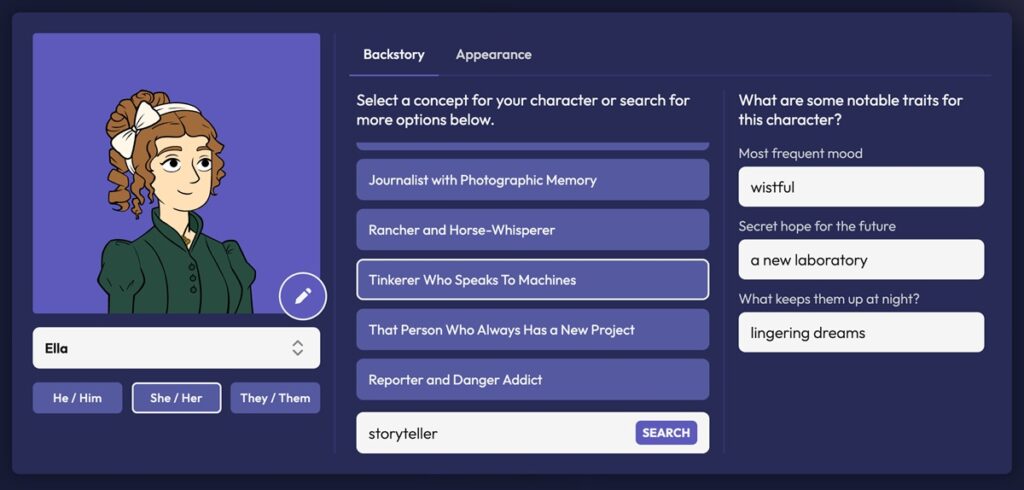
The first thing you do is pick a concept for your character that you want to play as. This is intended to be like a short handle for role playing. Mason chose a “gossip columnist.”
You can’t pick just anything.
“We don’t let people type these in plain text, but there are thousands and thousands of them that are appropriate for the genre. You get to decide what you want to look like. There’s a dapper suit, but I feel like a gossip columnist should be a little more roguelike. You get to choose how you want to be referred to.”
We worked on the character description together. Her most frequent mood was “excited for the future.” And what kept Tyler, the gossip columinist up at night? I answered, “Boring news.”
Mason said you can start a scene in a townhouse, with characters sipping tea and reviewing the latest social gossip. If you get writer’s block as a fan-writer, you can get help from the platform, which can give you examples of things you might do in the form of cards. Each character, item, location in the world is a card and you collect them. You build up a deck, and then you can play with that deck, choosing which chracter to play as.
“You can see all the information about them, their current energy, their attributes, their location, anything about the location,” Mason said.
It’s a game of world building, and that world building happens by accumulating, collecting, earning and manipulating these cards, which can be the things of your world, the characters, items, locations, but also stories, said Matt Brandwein, chief product officer and cofounder of Hidden Door, in an interview with GamesBeat.
“Every time you play, you might get a completely different deck and all the things will change through play,” Mason said.
Brandwein said that, like in The Sims game, you can set up the doll house as you want and play the story forever in the direction you want to go.
He said the art is all drawn by hand. You can choose to direct the game, or you can let the AI help you generate the story. You can play a plot card, and that will lead to some kind of plot progression. It’s like playing a tarot card. You could say you want to sit at the beach and do nothing, he said. And it will pull you into some causal adventure as things happen around you, Brandwein said.
You can succeed or fail, based on the quality of the narrative that emerges. But Mason believes that you will feel like a participant in the story, as well as its author. In the case of Pride and Prejudice, the story revolves around a scandal for the gossip writer.
Completing stories unlock cards that players can copy between stories, adding a new spin to well-known fictional worlds. As players build up their collection of stories, characters and locations, they collectively shape a larger extended universe unique to them. Players can even pull cards or storylines from others’ shared worlds, building lore together within the broader fan community.
Hidden Door’s creator partnership model represents a new approach to fan engagement and IP monetization. Rather than training AI models on authors’ work, the company collaborates directly with content creators through revenue-sharing agreements that require minimal time investment—typically just a few hours.
Authors and publishers maintain creative control while gaining insights into how fans interact with their worlds, creating an additional revenue stream from existing IP. The platform serves multiple creator types, from established authors like Alan Dean Foster to romance publishers like 831 Publishing to film studios like Pressman Films, each bringing their unique worlds to life through carefully crafted adaptations that respect the original work’s integrity.
“Hidden Door transforms how fans experience their favorite stories by giving them unprecedented creative agency within beloved fictional worlds,” said Matt Brandwein, chief product officer and cofounder of Hidden Door. “Our platform deepens the relationship between creators and their audiences—authors and publishers gain a direct revenue stream while discovering exactly how fans want to engage with their worlds, all while maintaining complete creative control over their IP. We’re building a collaborative space where every player interaction generates valuable insights for creators and every story choice deepens the connection between fans and the worlds they love.”
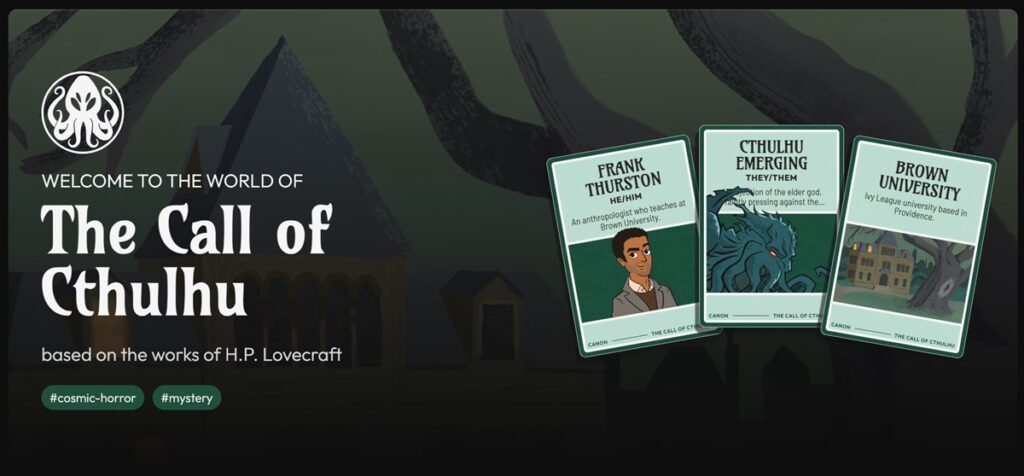
As part of the limited time early access, players can play within the worlds of Pride and Prejudice, The Wizard of Oz, The Call of Cthulhu, The Crow and other beloved story worlds. New stories and game features, including the ability to remix and share stories with friends, will be added in the coming months.
“When we worked on The Crow, we always knew it had this devoted, passionate fanbase that wanted to live inside that world,” said Sam Pressman, CEO of Pressman Films, in a statement. “What Hidden Door has done is build a way for those fans not just to revisit it, but to shape it—while still keeping the creative DNA intact. It’s a new way to expand a story without diluting it, and it creates a lasting dialogue between the original vision and the audience’s imagination.”
“Our readers are some of the most creative people we know,” said Erica Cerulo, cofounder of 831 Stories, in a statement. “They write their own scenes in the margins, dream up alternate timelines, and imagine whole new storylines for the characters they love. Hidden Door gives them a safe, beautifully designed playground to do that, while ensuring that we, as publishers, remain the stewards of our worlds. It’s exciting to see technology that empowers that kind of connection without taking away authors’ voices.”
Starting today, select worlds are available to play for free at hiddendoor.co, with more to come at a later date. Follow along for the latest updates on Discord, BlueSky and Instagram. Here’s the FAQ.
How Hidden Door explored the wilderness of AI gaming
Hilary Mason, CEO of Hidden Door, said the company has been experimenting and learning about AI-enhanced storytelling games for a while.
“We’ve been living in this space for a long time, but a bunch of the stuff we’ve done has evolved as we’ve learned what our players really want. I’m hoping we can share with you today what that little gem of excitement really is, and where we’re going with it.”
Mason said the person that Hidden Door is building for are the fans who want more of their favorite worlds — so much so that they want to create more stories for themselves and other fans. The platform is not so much for hardcore gamers as it is for people who really like reading books and talking to their friends about books.
So far, Hidden Door’s are 50-50 male and female. A lot of people like “romantasy” while others like plots about social status and politics.
“Even the action is sort of tempered through relationships and build up in drama. And so that’s a big change for us,” Mason said. “Another big change, which we’re pretty excited about is that we are now partnering with a romance publisher and a couple of other authors who are offering sort of like R-rated content plots.”
She added, “We’re, bringing some worlds that are a little more sophisticated and a little more — not like adult content — but a little more mature and more epic in its scale. That’s all new for us.”
Coming up with the author-friendly platform
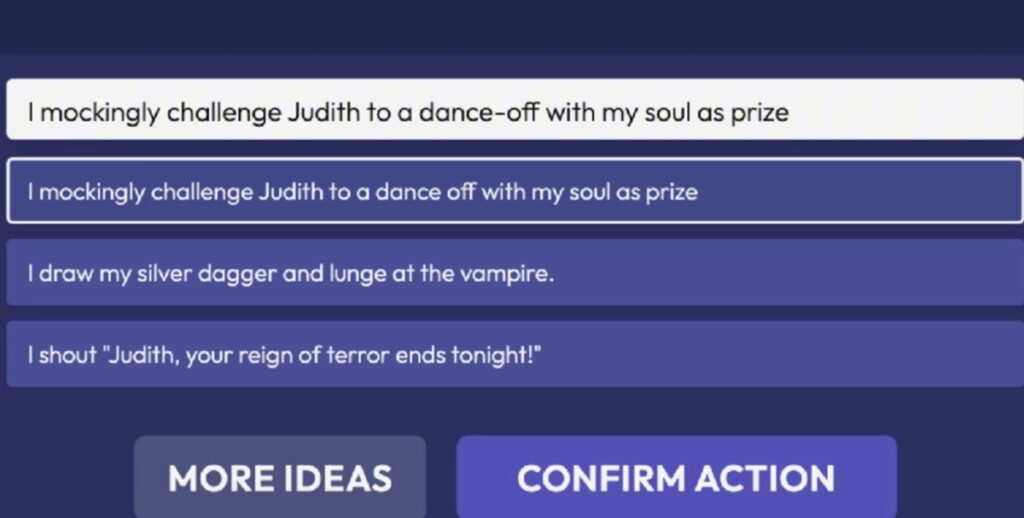
The platform runs on the web in a browser of your choosing. You get to choose among the worlds to start in. You could choose a world of vampires with supernatural vibes and plots.
The partners are full of possibility. Hidden Door chooses to work with authors who have a lot of novels, or a TV show, or a movie or event a video game. The company is signing agreements and Mason says Hidden Door will share any eventual revenue back with those creators. And the authors set the boundaries.
“They get to see how many people come and play and what people do with their stuff. We are really trying to create a place for fans to fanfic and roleplay in those worlds in a way that has the seal of approval from the person who made the world in the first place and also builds on their vision,” Mason said.
Mason said the company believes very strongly that there is a right way to create an AI-enabled fan experience through storytelling.
“It is by doing it with the permission and collaboration of the original creators in a way that also respects the fans’ ideas of where they want to go and the constraint that the creators put on those worlds and how they end up making the game more fun to play,” Mason said.
Inspirations for the latest storytelling engine
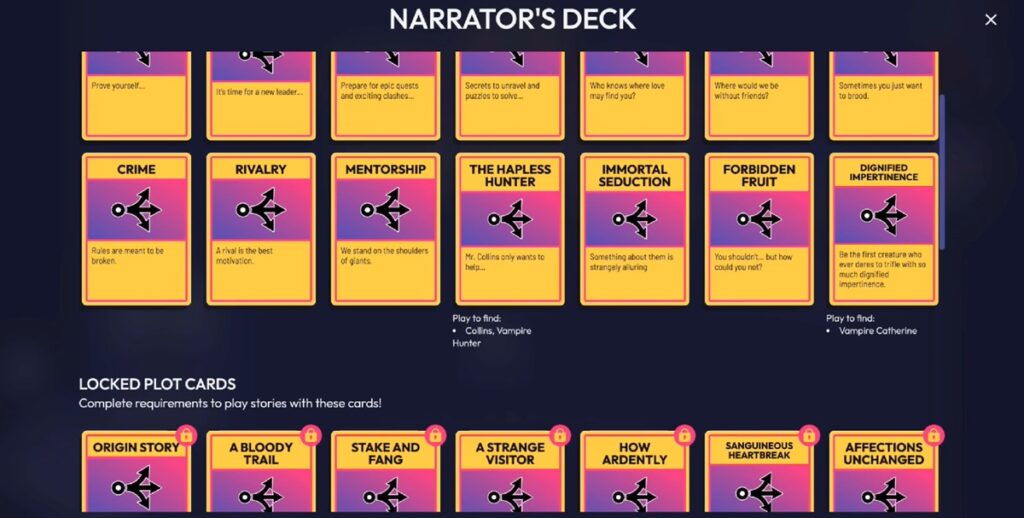
Mason said the inspiration for this came from improv, in the sense that there are lots of handles or hooks to play with, and it’s this energy of “yes and.” And so while there’s success or failure, it’s not analyzing failure, Brandwein said. You set in motion consequences and that creates new opportunities for storytelling.
“You can think of this as the launch of the live service experience. We will be adding more IP, bring new twists and cards, new adventures to players. But we’re gonna be building this up, and this is just the beginning. This is just the initial set of content, the initial set of players, but we’re adding a lot more,” Brandwein said.
With the AI, it’s designed to invite the player to bring their creativity by presenting lots of options, making sure they never feel stuck, Brandwein said. They always feel like something interesting is just about to happen, Mason said. It works the way a dungeon master, or game master, works in Dungeons & Dragons.
Among three major plot options, a fan-writer could use a journey, a mystery, or a love interest, Mason said.
“This is a game where, in partnership with these creators, we’re coming up with the rules, but some rules are meant to be broken. We let players take rule twists from different worlds and remix them together to create something entirely different. And it’s also an encouragement to explore different IP, different worlds,” Brandwein said.
You may start with Pride and Prejudice, and then explore The Crow. Each world also offers cards you can unlock, and that’s how you can meet different characters from the canon.
Mason said this path for blending AI and games is what Hidden Door is focused on now. And she notes theer are plenty of AI companies that have no respect for IP or creators’ rights, and that her company made this different choice because it’s the best way to build business in this creative space.
“Our authors or showrunners are actually involved and it doesn’t take a lot of their time,” she said. “We combine all the pieces so you’re basically getting the satisfaction of the thing he wants, but the fun and subversiveness of playing it in a world you wouldn’t normally expect it.”
Where it goes next
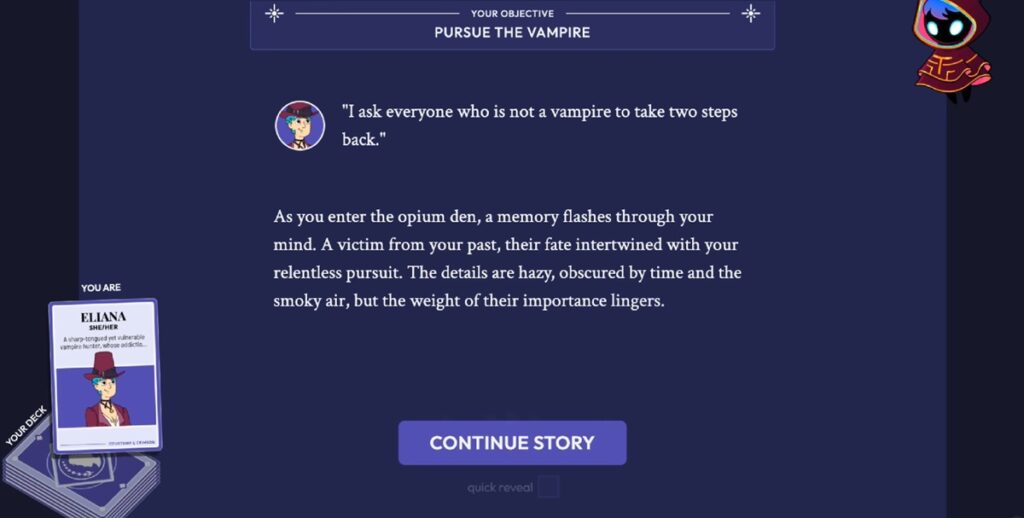
It will be exciting to see who really likes this kind of create-your-own adventure that pushes back at you.
“Somebody who writes fanfic does not need Hidden Door, but they might enjoy it, and they might bring friends along who might read their fanfic but would not otherwise have creatively engaged with it,” Mason said. “We’re not trying to replace that experience for the people who will open up their word processor and write a story, or who would sort of play their own story with a general purpose LLM or a specialized one. It’s not a writing tool. It’s a role-playing tool in those fantasy worlds. And to make it a role-playing experience, it has to push back.”
Cards are an excellent metaphor. They serve the purpose of character sheet, but they also serve the purpose of a tarot card.
“This is one where it satisfies the goal achievement impulse to, like, unlock the characters and meet them, but it also is a creative impulse,” she said. “I would say we have wandered in the woods of this space a little bit technically, with a lot of game design, and settled on something that is working. And so this is it.”