
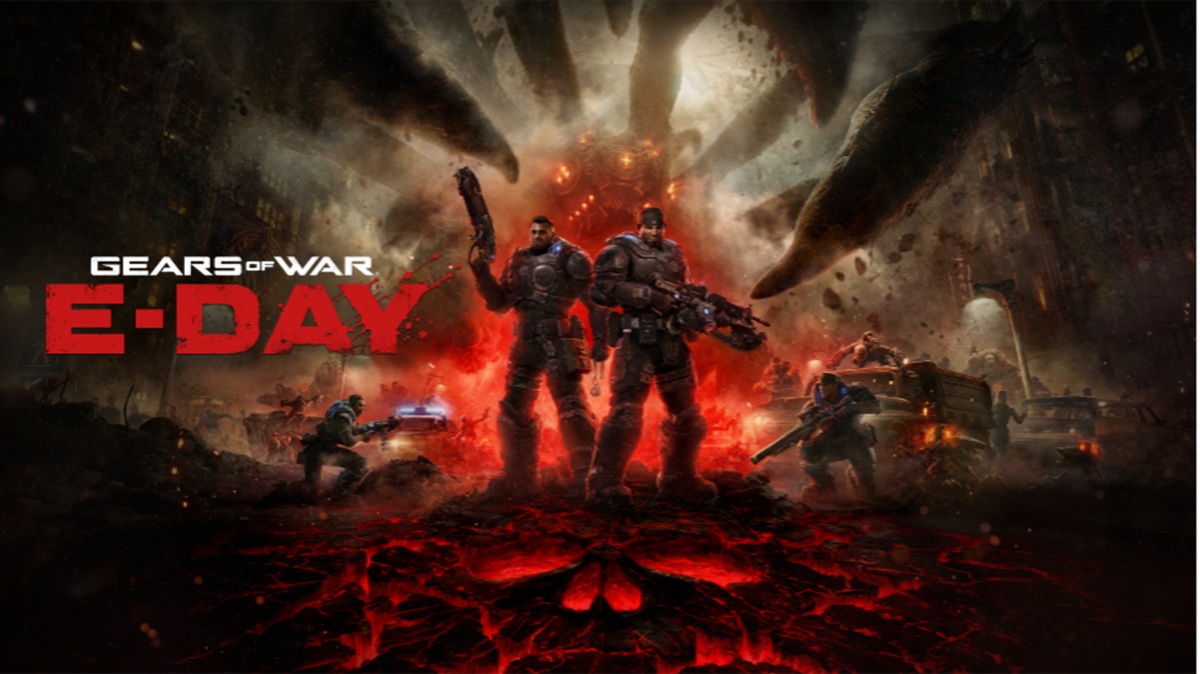
We’re in the midst of an unprecedented launch of so many games, each of them racing to get out the door before the November 19 debut of Grand Theft Auto VI. But I’m pleased to say I managed to finish Gears of War: E-Day before the crazy season got any crazier.
I go way back with Gears, having interviewed the Epic Games team well ahead of the original game’s launch on November 7, 2006 on the Xbox 360. I’ve also played every main Gears title that came out, including Gears 5 that came out seven years ago in 2019.
And I’m pleased to say that this game lives up to the reputation for triple-A quality for the series over time. If you’re tempted to skip this one because there are so many games out on the market now, I think you’re missing out. I suggest you find the time to play it, even if you just come back to it once the busy season is over or you’ve gotten your fill of GTA VI.
This game is the sixth main installment and it almost feels like a remake because it takes us back to the day of the Locust Horde invasion, or Emergence Day. This E-Day was a tragic because it was the beginning of the war for the planet of Sera, the fictional human world in the Gears universe. E-Day was when the horde emerged from underground and launched its surprise attack on human civilization on the surface of the planet. The original Gears of War took place 14 years after E-Day, and barely scratched the surface on the history of E-Day.
And while the attack was massive and global, this game mostly focuses on the Locust surprise attack on Kalona and the overwhelming devastation that results. It introduces the young characters Marcus Fenix and Dom Santiago, who are the heroes of Gears of War. And it’s like they’ve walked right into a horror movie.
They’re drinking in a bar called the Armored Prayer Bar, celebrating peace. The Pendulum Wars had ended just six weeks earlier, and it left humanity vulnerable because it lasted 79 years. Fenix fought alongside Dom’s brother, Carlos Santiago, who died in the Pendulum Wars. The two veterans bond in their mourning, and then a rumbling starts.
The Locust attack begins. While the civilians flee, Marcus and Dom team up with fellow Gears soldiers Mags Carter and Lucas Reyes, and they run toward the trouble. They find weapons and fight back against the monstrous horde, which features many types of enemies. They have a particularly fierce battle defending a supermarket, which I suppose was important since the Locust horde was hungry.
A fellow Gear, Tai Kaliso, a character from Gears 2, saves Marcus as he’s about to get skewered by a Locust. Kaliso’s weapon? A chainsaw. We later witness the origin of the Lancer assault rifle with its Chainsaw Bayonet attachment. I had to use that Chainsaw Bayonet untold numbers of times before the game was over. It’s these kinds of close combat scenes that make the Gears games so memorable.

As we play through the many hours of the campaign, we learn a lot about the humans on Sera and in the city of Kalona. They’re fierce survivors, but were totally unprepared for the horrors coming out of the sinkholes. The plan of Marcus and Dom is simple: Save everyone we can.
Much like the game Halo: Reach, we’re essentially witness the massive tragedy of the fall of a human planet on a micro scale. Dom spends much of the story worried about his wife and two sons in another city. Marcus becomes like a brother to Dom and tries to contain Dom’s almost suicidal rage. Mags finds family in the ruins, and even the inexperienced Lucas finds his bravery and proves himself useful as a comms specialist.
Together, they’re Bravo Team, pulled together out of necessity. They fight relentlessly. And though the events of the game take place across just three days, it feels like you’re fighting all day and night, nonstop, except for the big story moments.
The art of the world is pretty amazing. We see the beauty of Kalona and then the sadness of the wrecked city. It’s always in the background of the fighting, whether in the air, at sea, or on the ground. Heck, even underground, where Bravo Team discovers the horrors of the Locust den. There are occasional witty moments, and Marcus has a quip — like “rest in pieces” — for just about every big Locust that he kills.
For gameplay, I became a creature of habit. I leveled up and used almost exclusively the Lancer assault rifle, fitted with the Chainsaw Bayonet. And as a secondary weapon, I used the Breechshot Locust sniper rifle. I favored this over the Gears’ Longshot rifle because it had more bullets in the chamber and was easier to aim. I also used my drone, armor and frag grenades a lot. While the shotgun was useful at close quarters, I preferred to get my hands dirty with the bayonet.
Gears of War: E-Day is full of story cinematics and set piece battles, and it has landscape that are full of blocks for hiding in cover. It has some flaws, like a boss that didn’t really fight. And the Chainsaw Bayonet is quite finicky about when it decides to work as you’re grappling with an enemy. I also find it harder to shoot running figures because they’re so fast and because it takes so much ammo to bring down one enemy. Still, this game was tuned for gameplay better than most of its predecessor games, with better movement fluidity.
Multiplayer action
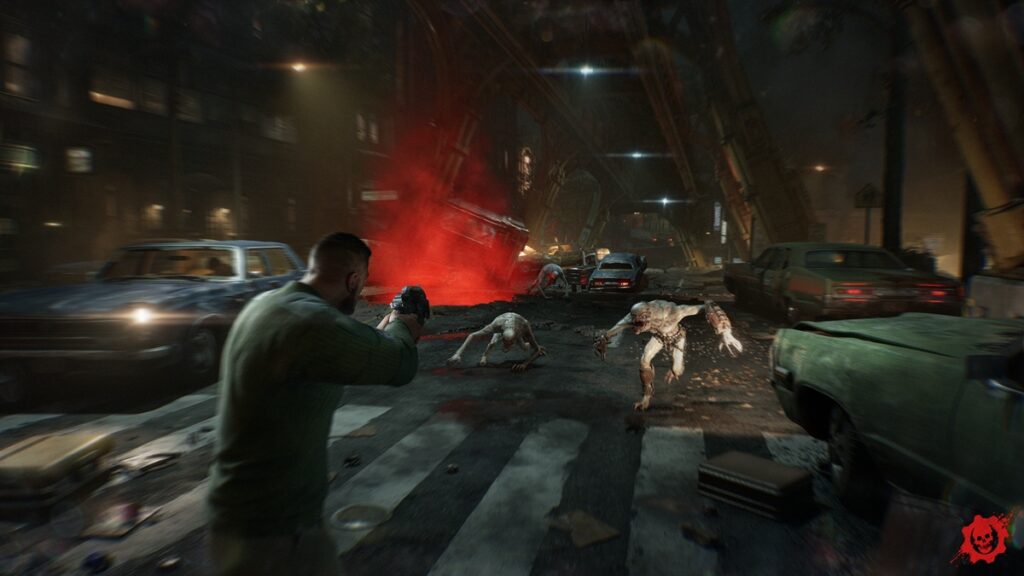
The game also has multiplayer that keeps the signature combat experience of shotgun close-range battles with assault rifle and sniper fire. The 4v4 matches leave no room for inexperienced players, as you have to pull your weight and anticipate what the moves your rivals will make. The Horde Siege mode is a new addition for co-op players and it’s very intense, evoking some of the most difficult parts of the campaign.
I don’t consider multiplayer to be the highlight of the game; rather, the single-player experience is really what I play it for.
Conclusion

The campaign lasted around 14 hours and I enjoyed its variety. Some of the boss battles with the flying bee-like monsters that shot acid out of their butts were very difficult. So were the boss battles toward the end. I had a very hard time getting through those firefights, but I’m glad to put them behind me and see how the developers chose to wrap up this part of the story.
This game is a return to form for Gears as it goes back to the beginning of its timeline, reminding us of the emotional and sad atmosphere that permeated the series at its best. It’s about the heroes of a doomed civilization, nobly fighting back against impossible odds.
The new game from The Coalition and People Can Fly is available on the Xbox Series X|S, Windows PC (Steam and Xbox App), and Cloud Gaming. I played it on the Xbox Series X, and the Unreal Engine 5 graphics were stellar.
I’m reviewing this late, but I feel like we need to remember how important exclusive titles like Gears of War: E-Day are to the console business. It’s not easy to take the emotional weight and brutality of a world in despair, especially at a time of war in reality.
An estimated 1.7 million Xbox Game Pass subscribers played the game early on, and E-Day separately sold around 230,000 copies during launch week, according to Alinea Analytics.
And TrueAchievements estimated that E-Day had the second-biggest Xbox launch audience for 2026, only behind Forza Horizon 6 and ahead of Halo: Campaign Evolved, a remake which I liked but evidently disappointed many modern fans.
Many devs on the team worry that they are on the chopping block, now that the game has shipped. Xbox’s new leadership has already laid off much of the Halo team and transferred the franchise to Activision. It would be a shame if this happens, as it really is a great game.
I give the game 4.5 stars out of 5. We should remember and celebrate this game as a big moment for Xbox, even as it struggles to find its way. It’s a game where Gears and its developers got in touch with its identity again, and that’s a good thing for players.
Disclosure: Microsoft provided me a copy of the game on the Xbox Series X. The opinions in this review are my own.