
In my ongoing quest to learn more about how studios have avoided large-scale layoffs or closures, I spoke with reps from several studios about how they have managed their business and people. If the causes of layoffs are myriad, than the reasons why a studio can retain staff should be just as varied, right?
With that in mind, I wanted to speak with studios who have a diverse range of game types and histories, in order to best understand if there are common themes to their answers. What they all have in common is that they have continued to develop or publish games regularly in the post-pandemic period while maintaining consistent staff numbers.
In this article, I’ll cover the answers from two studios who fit that profile, even if their catalogues are fairly different: Fireshine Games and DreadXP.
Finding what works, no matter how scary
One of the first studios with which I spoke was DreadXP, an indie publisher that operates with a fairly niche focus on horror games. It has published games like The Mortuary Assistant, Dread Delusion and Entropy in the years since it debuted in 2019, with a relatively small staff.
Speaking with Hunter Bond, DreadXP’s director, I asked how the company had managed to make that approach work. The answer? Understanding of how to scale the company.
Bond said, “A question every company needs to reckon with: Do they desire infinite growth? Along that path lies increasing amounts of compromise. There are compromises that can reasonably be made without sacrificing the care of what you do. But you have to be really aware of it, because it’s a slippery slope.”
“Growth” is a major buzzword in the games industry, with the whole medium scaling upward. A recent report from Newzoo forecasts that the industry will hit $213.9 billion this year, a 6.1% growth year-over-year. Certain markets are growing quickly, with the report alleging that mobile is one of the most notable.
But Bond says that growth could be tricky for a studio the size of DreadXP. “You think, ‘We’ll just hire a few more people. We’ll bring on a couple more games. We’ll scale up just a little bit.’ Then one day you realized that the thing that made you you isn’t there anymore. We can’t grow beyond a certain point, as far as I’m concerned. My desire is to be in indie games, and I don’t desire infinite growth.”
Henry Hoare, DreadXP’s head of production and operations, told me that the company seeks to be both flexible in what they offer to developers, and also to have staff members with multiple talents. “We can tailor-fit what we do to each dev and project. I think it makes us operate with care for sustainability.”
They added, “Hunter and I talked a lot, when we started this push to the new era of DreadXP, about other publishers as references or frameworks. We saw quite often that a lot will have one big, successful game out of a bundle of ten, let’s say. The rest do okay or are not that successful.”
Bond and Hoare noted that having experience working on their own development projects gave them a common language with their clients. When I asked what the drawbacks are to their approach, Bond said, “From us, it takes a lot of genuinely concerted giving-a-shit.”
Growth vs niche: The ongoing quest for balance
This sentiment, that a company must reckon with the desire for growth and genuine care for every project’s reach, would echo in all of the other interviews I did. Many of the companies with which I spoke are not fledglings — several have been around for years, albeit not always under the same name.
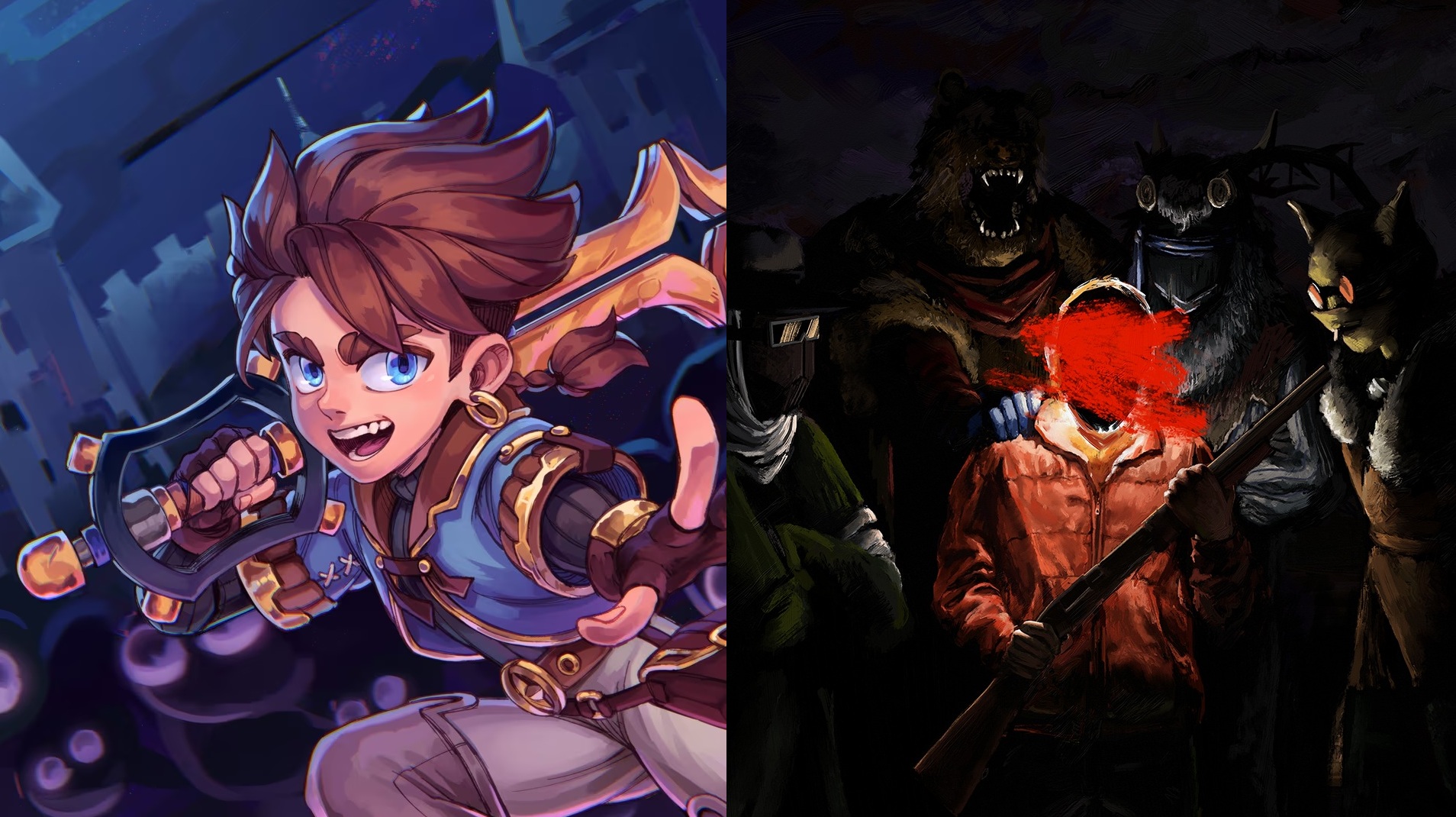
For example, I spoke with Jasper Tanner-Barnes, the Chief Profile Officer of Fireshine Games. Under that name, the indie publisher has produced Far Far West, Shadows of Doubt and the recently released Denshattack!, but existed previously as Sold Out Sales and Marketing. The company has, at present, around 40 employees.
Tanner-Barnes told me, “We are ambitious as a publisher, but not to the point of wanting to take risks that we don’t believe we can handle. We make sure there’s a good balance to what’s coming through, and also ensure we’re never overaligning just one single market, one single type of audience. We’ve got a good range to our catalog.”
This approach is different to DreadXP’s, which focuses on a specific genre. But they were similar in one other way, as Tanner-Barnes revealed, “We don’t overextend ourselves. We don’t stretch ourselves. We’ve never taken on debt as a publisher. We don’t spend money we don’t have. We’ve existed within our means… If a game falls a little bit short, it should always be recoverable by something else.”
Risk management came up more than once during my interviews, and it makes sense that this has become a major focus for studios: Multiple indie studios have faced financial hardship, if not outright closure because certain projects fail to live up to expectations, if they ever get published at all. On the other hand, overextending themselves or their budgets can result in just as much hardship for the studio.
When I asked Tanner-Barnes how Fireshine manages with each game, he said that it can be tough given the amount of care that must go into each game selection, and added that there’s a financial element as well. “There are devs who have to go six or twelve or eighteen months on a project before they’re able to get that contract secured with the publisher. That doesn’t come from an expectation. That comes from the competitiveness in the landscape.”
He added, “It’s really difficult to be on this side of the table and say, ‘I’ve got two great teams making great games. But one launches in six months, it’s got 100,000 wishlists and is three-quarters funded, with a demo that people loved.’ It’s the pragmatic choice and it’s not me saying you have to have those things, but when I have many options and a finite budget, these things make the difference. I think the role of an indie developer has got so much busier in the last few years.”
Keep an eye out for the next installment, in which I’ll cover two game studios who have been around for a long time and managed to refine their particular style and niche with the help of a longtime, consistent audience.