
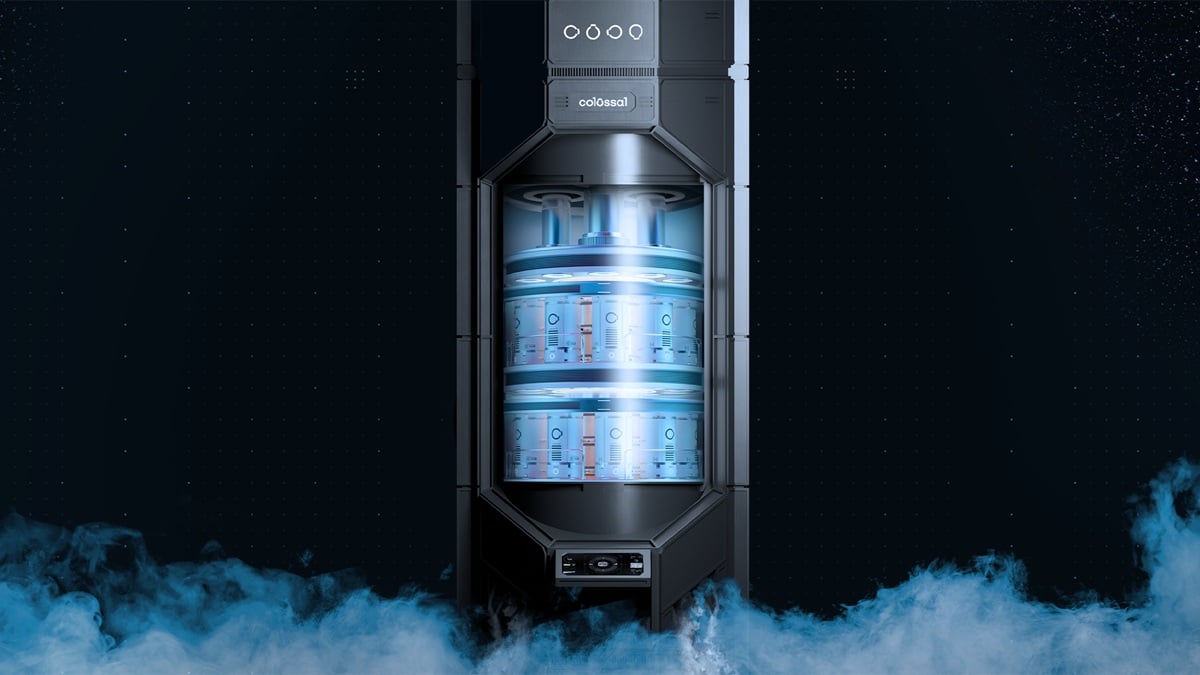
Colossal Biosciences and the Department of Interior today announced a landmark partnership with the U.S. Fish and Wildlife Service to preserve endangered species.
They will create one of the most ambitious biodiversity preservation initiatives ever undertaken in the United States: the creation of a genomic and biobanking archive for every species protected under the Endangered Species Act (ESA). They will do so as Colossal, which focuses on de-extinction of species, creates a BioVault for endangered species.
Dallas, Texas-based Colossal is trying to bring back the extinct Wooly Mammoth, but it’s also trying to make sure more species survive. It’s an extension of a plan to create a BioVault — preserving the DNA of an endangered species — that Colossal started in February with the Dubai Future Foundation.
As part of Colossal’s distributed BioVault network, the initiative aims to collect, sequence, and preserve living cells, reproductive tissues, and genomic material from more than 2,300 threatened and endangered plant and animal species — an ambitious target that, if realized, would represent one of the most comprehensive biodiversity preservation resources ever assembled.
Colossal intends to make conservation genomics data generated through the effort available to the global scientific and conservation communities where feasible, while safeguarding the biological building blocks of biodiversity for future conservation, recovery, and restoration efforts.
“America leads the world when we embrace innovation and put our best minds to work solving big challenges,” said Secretary of the Interior Doug Burgum, in a statement. “This collaboration brings together the scientific expertise of the U.S. Fish and Wildlife Service and the ingenuity of the private sector to develop new tools that can help recover species, preserve critical genetic resources, and strengthen the future of wildlife conservation.”
The agreement establishes a framework for collaboration focused on preserving genetic diversity among threatened and endangered species, expanding scientific understanding of genomic applications in conservation, and exploring emerging technologies that may strengthen recovery efforts for species at risk.
“Just as the Svalbard Global Seed Vault was created to preserve the genetic diversity of our food supply, this partnership aims to preserve the genetic diversity of life itself,” said Ben Lamm, CEO of Colossal Biosciences, in a statement. “Every species is a library of evolutionary innovation millions of years in the making. Once lost, that knowledge disappears forever.
Lamm added, “By preserving the genetic blueprint of every endangered species in America, we’re creating a living archive of Earth’s biodiversity—a modern-day Noah’s Ark built from DNA and a permanent genetic backup of our nation’s most imperiled species. This partnership is about ensuring that future generations inherit not just records of the natural world, but the opportunity to protect, study, and restore it. The ability to safeguard biodiversity at this scale may prove to be one of the most important responsibilities of our generation.”
Colossal operates the most advanced conservation biobanking and genomics infrastructure anywhere in the world. Its BioVault facilities cryopreserve living cell lines, reproductive tissues, and high-quality genomic DNA from endangered species — biological materials that enable assisted reproduction, population genetic management, and, where species are lost, the possibility of future restoration.
All genomic data generated through this partnership will be deposited into open-access repositories, and provided at no cost, providing the global scientific and conservation community with the reference genomes, population-level sequence data, and bioinformatic tools needed to accelerate recovery efforts far beyond what any single agency or institution could accomplish alone.
The partnership’s long-term goal is full biobanking and sequencing coverage of all 2,300-plus ESA-listed species, with priority sampling and sequencing already underway. The U.S. federal agency and Colossal are actively deploying field collection capabilities, integrating whole-genome sequence data into federal recovery plans, and building a free availability genomic data platform that any researcher, wildlife manager, or conservation organization in the world can use.
This shared infrastructure is designed to be a permanent public resource — reducing duplication across institutions, accelerating recovery timelines, and ensuring that the genetic data needed to save species is never locked behind proprietary walls.
“As biodiversity faces increasing pressures worldwide, we must continue to evaluate and apply the best available science to conserve America’s natural heritage,” said U.S. Fish and Wildlife Service Director Brian Nesvik, in a statement. “This collaboration will help advance our understanding of how biobanking and genomics can complement existing conservation tools and contribute to the recovery and long-term resilience of imperiled species.”
“This initiative will redefine conservation in the United States. For the first time, we’re creating a permanent genetic record of America’s most vulnerable species before they’re lost,” said Matt James, Chief Animal Officer at Colossal Biosciences and Executive Director of the Colossal Foundation, in a statement. “Future conservationists won’t just inherit field notes and photographs—they’ll inherit the genomic tools needed to understand, protect, and restore biodiversity at an unprecedented scale. This is the conservation equivalent of building the national parks system for the genomic age.”
Together the partnership aims to establish a permanent genomic resource for America’s most imperiled species, ensuring that future conservation efforts are supported by the most comprehensive genetic library ever assembled for wildlife recovery.
The Memorandum of Understanding reflects a shared commitment to conservation science and does not obligate the expenditure of federal funds. Any future projects involving funding, services, or property transfers would be subject to separate agreements and applicable legal requirements.