
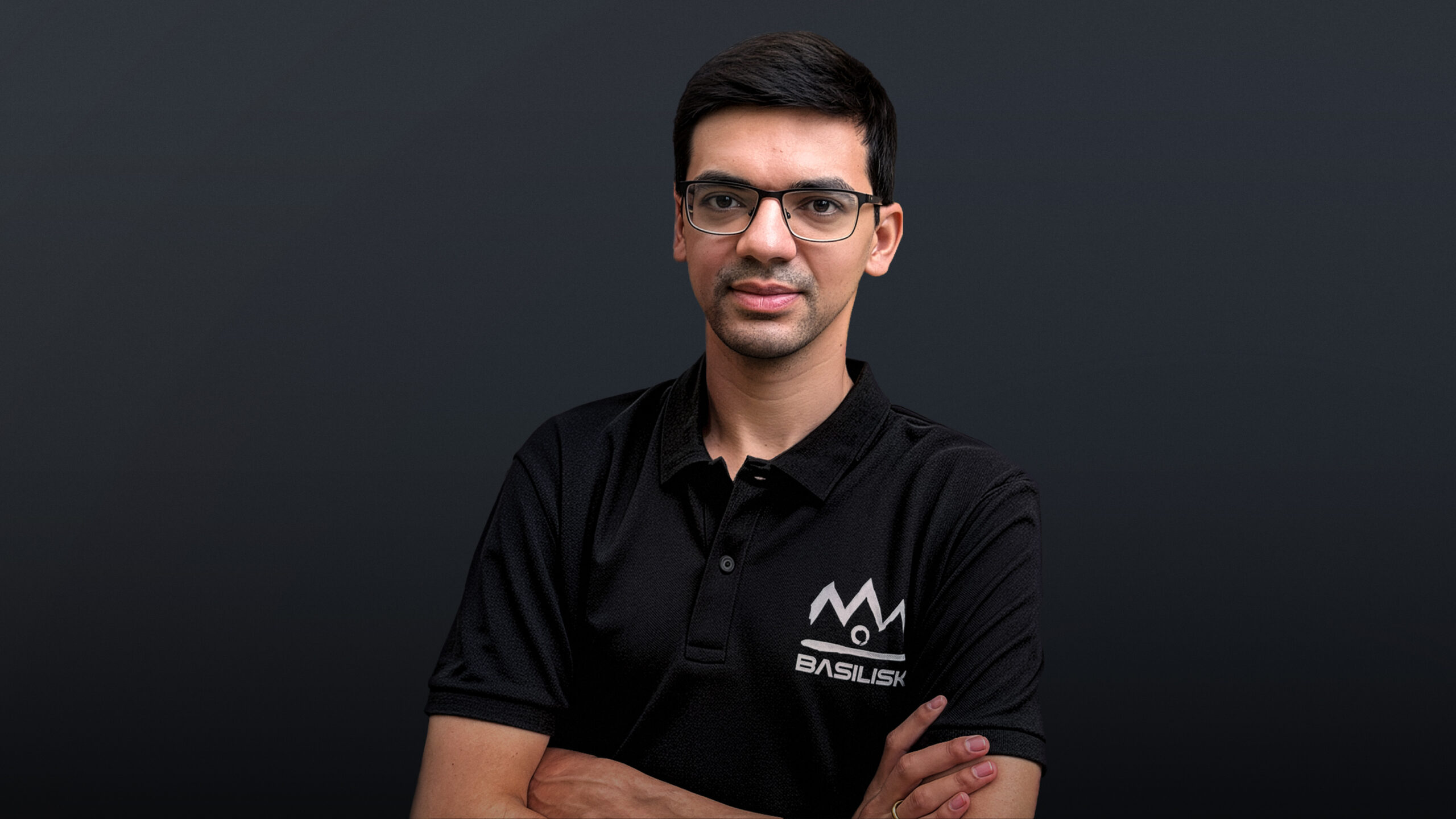
Basilisk, the esports organization built around science and competitive gaming, announced Thursday it has signed grandmaster Anish Giri, currently ranked No. 8 in the world by FIDE. Giri joins fellow grandmaster Vincent Keymer, ranked No. 5, giving the organization two of the world’s top ten chess players on a single roster.
Giri brings a substantial resume to the signing: he’s a five-time Dutch national champion, a winner of the Tata Steel Chess Tournament, and the runner-up at the 2026 Candidates Tournament, the event that determines the next challenger for the world championship. BASILISK said he carries a following of more than 700,000 fans, with coverage that regularly crosses over into mainstream news outside chess circles.
“The idea of taking chess seriously, of it being more than just a game, of it being a science, is an idea that is very dear to me,” Giri said in a statement, describing his own preparation process as often resembling scientific work.
Basilisk Chief Executive Officer and co-founder Christopher Bothur framed the signing as central to the organization’s identity.
“The overlap between chess and science is obvious,” Bothur said, pointing to the game’s history of inspiring scientific and computational milestones, from Alan Turing’s early chess-playing program Turochamp to IBM’s Deep Blue and Google’s AlphaZero.
Founded in 2020 by Bothur and Hans Kassier, Basilisk positions itself as an esports home specifically for fans of science — students, engineers, researchers, and enthusiasts who follow difficult, systems-driven games the way traditional sports fans follow football. The organization says its community has grown to more than five million fans. Beyond chess, Basilisk’s roster includes StarCraft II players Serral and Reynor, both former world champions, and nine-time Evo fighting game champion Justin Wong. The organization has also built out a media arm featuring science communicator Kyle Hill and Magic: The Gathering creator Rhystic Studies, along with partnerships with The Planetary Society and Caltech’s Institute for Quantum Information and Matter.
Giri’s arrival gives Basilisk’s chess division a full-year competitive footprint, spanning classical over-the-board tournaments, online bullet and rapid formats, and community-facing events. One such event, Bulldogs vs. Basilisk is a simultaneous exhibition featuring Keymer at Yale University, illustrating the organization’s efforts to connect its professional roster directly with academic and student communities.
The Giri signing also builds directly on Basilisk’s existing chess presence: Keymer has competed for the organization across the Grand Chess Tour and other top-tier events, and pairing him with a fellow top-ten player gives the org’s fanbase two marquee names to follow across the same circuit for the rest of the year.
For an organization explicitly positioning itself at the intersection of competitive gaming and scientific culture, landing back-to-back top-ten grandmasters is as much a statement of ambition as it is a roster move, a bet that chess, more than any other esport in Basilisk’s stable, is where its science-first branding lands most naturally with fans.