Join independent journalists and industry decision-makers at GamesBeat NEXT, returning to San Francisco November 2–3. The event brings together 500 executives, founders, investors and tech leaders shaping the $200 billion interactive economy for candid discussions on gaming, entertainment, technology and AI, plus executive networking and opportunities to build partnerships and close major deals.
Autodesk is unveiling Neural CAD as a way for AI to reason directly in design and engineering.
It answers the question: What would it take for AI to reason directly in 3D design, not just describe it? Autodesk believes neural CAD represents the first major step-function change in CAD technology in more than four decades. More on that later.
Artificial intelligence has transformed how we work with text, images, and code. But professional design and engineering present a fundamentally different challenge. To be useful in these domains, AI must understand geometry, constraints, relationships between parts, manufacturability, and design intent—not simply generate descriptions or visual representations.
A new paper by Mike Haley, senior vice president of research at Autodesk, introduces Neural CAD, a new class of AI foundation model designed to generate and reason over precise 2D and 3D CAD geometry and objects.
Neural CAD represents a significant step toward AI systems that can work within professional design workflows, producing editable geometry while preserving the precision required for engineering, architecture, manufacturing, and product development.
Key points:
Neural CAD is designed to reason in geometry, not just text or images
Neural CAD can generate editable CAD geometry that fits in professional workflows
Neural CAD is designed to preserve design intent, constraints, and engineering requirements.
Neural CAD makes design software more intuitive, allowing professionals to focus on design and engineering expertise and less on software complexity
Autodesk Research has spent more than 15 years developing the technologies, datasets, and research foundations that make this work possible.
What is neural CAD?
Neural CAD is a new class of AI foundation model built specifically for computer-aided design.
Unlike traditional AI systems that operate primarily on language, images, or code, neural CAD is designed to work directly with the geometric representations used in professional design and engineering workflows. The goal is not simply to generate concepts or automate tasks, but to create AI systems that understand and operate within the structure of design itself.
This distinction is important because professional design requires more than visual appearance. It requires understanding how objects are shaped, how components fit together, how designs can be modified, and how they perform in real-world conditions.
Why language and image models are not enough for design
Recent advances in generative AI have demonstrated remarkable capabilities in creating text, images, and software code. These systems are changing how people communicate, create, and solve problems.
However, professional design introduces challenges that differ fundamentally from language or image generation.
A large language model can describe a product. An image model can generate a picture of one. But neither inherently understands the geometric structure of a CAD model, the constraints that govern its behavior, or the design intent embedded within it.
To participate meaningfully in professional workflows, AI systems must be able to reason about geometry itself. They must understand how shapes relate to one another, how assemblies function, and how modifications affect downstream outcomes.
Neural CAD is designed to address this challenge by operating directly on CAD geometry rather than treating design as text prompts or images alone.
Why AI for CAD is harder than AI for language or images
Building AI systems for CAD requires solving a different class of problem than building AI systems for language or visual media.
Language models learn relationships between words. Image models learn relationships between pixels. CAD systems must understand relationships between geometric entities, design constraints, physical behavior, manufacturing requirements, and engineering intent. To be useful in professional workflows, AI-generated outputs must be editable, adaptable, and compatible with existing design processes. They must support iteration rather than merely producing static results.
This complexity is one reason why AI for design and engineering has progressed differently from AI for language and image generation. It is also why Autodesk Research has invested more than fifteen years in developing the technology, datasets, and expertise necessary to advance this field.
Why neural CAD matters
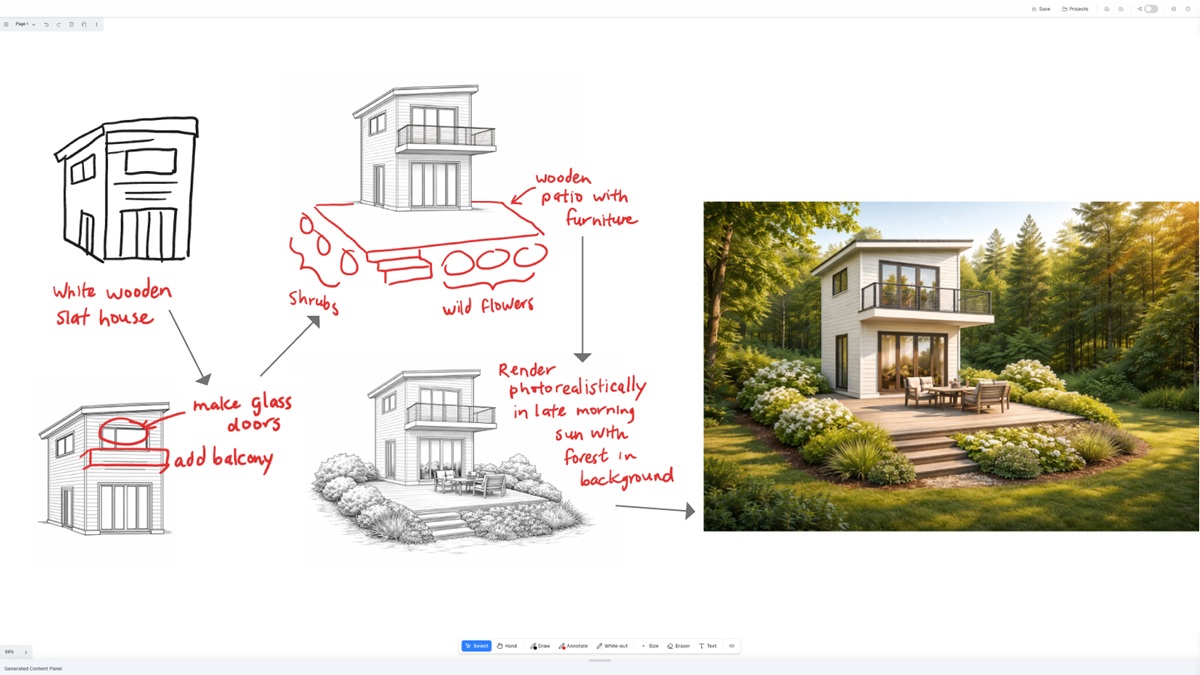
For decades, CAD tools have become increasingly powerful, and increasingly complex. Designers, engineers, architects, and digital creators often spend as much time navigating software interfaces, workflows, and commands as they do exploring ideas. The promise behind neural CAD is to fundamentally reduce the friction between idea and execution. Neural CAD points toward a future in which professionals can interact with design systems more naturally through sketches, text, voice, images, and geometry itself.
Rather than requiring users to translate every intention into software operations, AI systems could increasingly help translate design intent into editable geometry. This could reduce friction throughout the design process while preserving the precision required for professional work.
A new relationship between professionals and design software
The broader implication is not simply faster design, but a new relationship between humans and design software. Neural CAD suggests a different future where expertise in engineering, architecture, manufacturing, product design, or creative problem-solving becomes more important than mastering software workflows.
In that future, design software becomes a more natural collaborator, helping professionals focus on decisions, innovation, and domain expertise rather than navigating complexity.
The next major transition in CAD
Autodesk believes neural CAD represents the first major step-function change in CAD technology in more than four decades.
Earlier transitions digitized drafting and introduced parametric modeling. Neural CAD introduces a new capability: AI systems that can reason directly within design geometry itself.
The significance of this shift extends across industries that depend on CAD—from architecture, engineering, and construction to manufacturing, product development, and media and entertainment.
While the technology is still evolving, the direction is becoming increasingly clear. The future of AI in design is not simply about systems that can talk about design. It is about systems that can understand and reason within it.
Read the full paper to explore the technical foundations, research challenges, and longterm implications of neural CAD.