
GamesBeat: It’s a little like what happened when we first had the Sony Walkman. Suddenly the world had a soundtrack.
Sennheiser: It’s interesting you mention that. You may not know, but at the time, when Sony launched their first Walkman–Sennheiser invented the first headphones in 1968. We had 100 percent market share at the time with the HD414. We also had a patent that would last for almost 20 years on the open-design headphone. Sony and Sennheiser collaborated on that, because Sony needed our technology for the Walkman to become a success.
I don’t know if it’s comparable, but it feels a bit like Magic Leap is trying to do something really new, giving something to people on the move that so far wasn’t available. We’re adding the sound. It’s similar to Sony back in the ‘70s.
GamesBeat: Do you imagine any particular scenario where somebody interacts with something and you want to bring in sound from the real world, but then shut that off and segue into virtual sounds? Going back and forth like that?
Sennheiser: The closest thing in our world is live performances, music performances. With our technology and Magic Leap’s technology, it’s easy to resurrect bands that no longer exist. You could have the three remaining members of Queen playing live and Freddy Mercury blended in. For you it could just feel like you’re at a Queen concert in 2018.
That’s close to our business. Also, a lot of our customers and creators, they’re looking in this direction. But I could also envision this being perfectly suited to things like virtual teleconferencing applications. If I just want to chat with a friend who’s somewhere else in the world, and at the same time I want to have people in the room with me joining that chat, I need to hear both them and that virtual person, blended together in the right positions at the table. We could be playing cards with four people, two of them in the room and two virtual. There are endless possibilities.
We’ve seen a little bit of this already. I think it was 2013 when Coachella had Tupac on stage with Dr. Dre. It was a pretty sketchy hologram. It wasn’t perfect. I think it was a 3D projector on some kind of surface. But with the Magic Leap goggles something like that could become like a real person. I don’t know if you’ve had a chance see Michael, their avatar?
GamesBeat: Yeah, I have.
Sennheiser: So you know how real it can feel.
GamesBeat: They didn’t have any sound to that yet.
Sennheiser: Sure. But now she speaks. With that, she’ll speak as if she’s right there with you.
GamesBeat: How much effort do you plan to put into this in the long term? Will you be helping developers execute on their ideas?
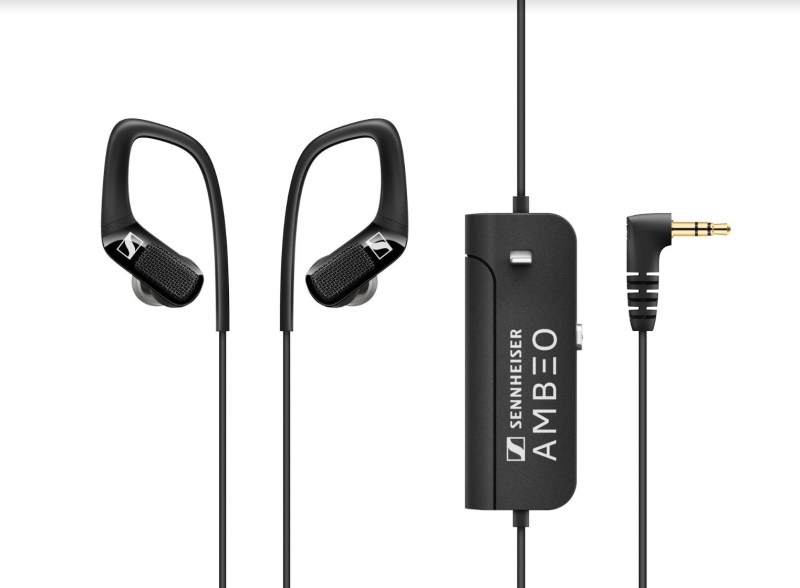
Sennheiser: We’re providing a tool, a platform, an app, and a piece of hardware which should allow developers to let their creativity go wild. We’re at the beginning of something great. It’s difficult to imagine what happens from here.
Sennheiser has always been in the background behind the real stars. Our parts have always been tools, the means to connect an audience to the artist. This, again, is a tool, a means to connect the creative person and let them make something that they want someone else to consume.
GamesBeat: How much time do you expect this to take before you see people really start running with it?
Sennheiser: I think it’s down to two things. One is the form factor of the products. Of course we’re all working on making things smaller, Magic Leap and us and everyone else. Eventually this will reach a form factor where it’s like a pair of glasses, almost invisible. That’s one step that will take a couple of years. But the other thing is the acceptance of using these products. That will also take some years. You always have the early adopters for things like VR goggles in gaming, the people who love it and rave about it, but it’s not yet a social and interactive thing. You’re just sitting there with your goggles on.
It’ll take another two, three, four years until it becomes a mass phenomenon. But in the meantime we need to create the content for people to consume. In the end it’s a chicken and egg problem. If there’s no content, people have no desire for the product. That’s why we’re joining forces and working with big content producers to get them into the field. We can make something to build for the future.