
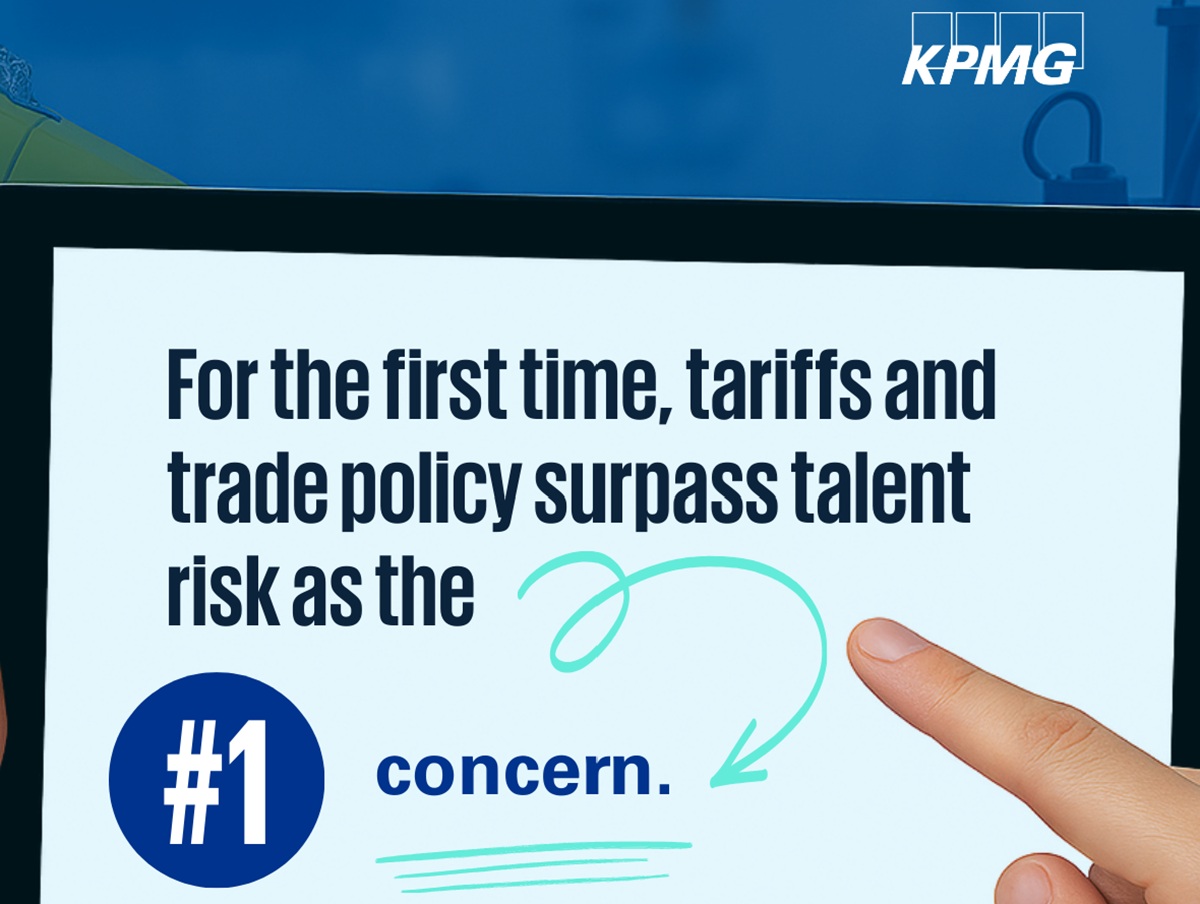
Semiconductor executives have almost never been more confident about the year ahead, but this record optimism is running directly into mounting concerns over supply chain stability, energy security and talent shortages, according to a new KPMG report.
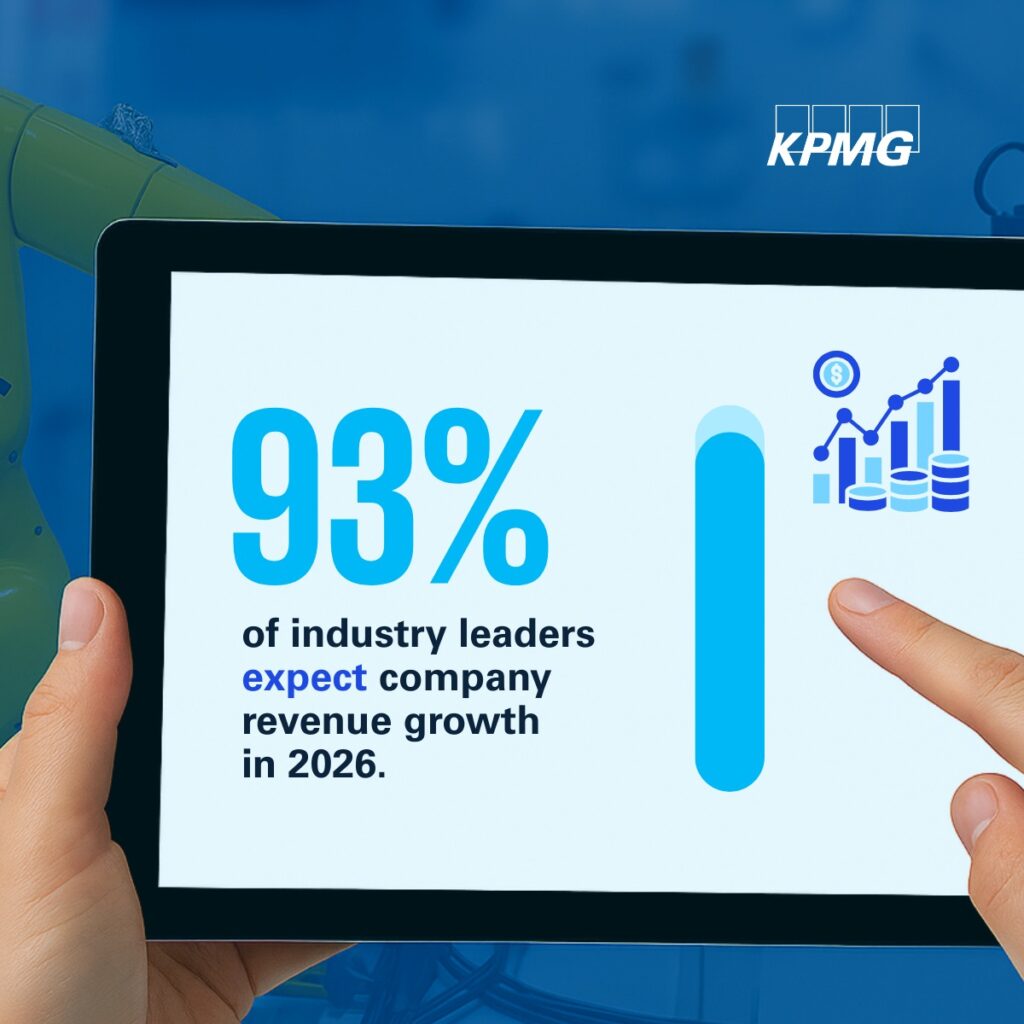
Fueled by the AI boom, 93% of industry leaders expect revenue growth in 2026, according to the the 21st annual Global Semiconductor Outlook by KPMG LLP, the U.S. audit, tax and advisory firm, and the Global Semiconductor Alliance (GSA).
This confidence has pushed the KPMG Semiconductor Industry Confidence Index to 63, the third-highest score in two decades (a value above 50 indicates a more positive outlook than negative).
However, this bullish outlook is tempered by significant operational and geopolitical risks. For the first time, leaders now rank tariffs and trade policy as their top concern, and some fear they may not be able to procure enough energy to power their advanced chip manufacturing facilities. One of the challenges, in my own opinion: demand for AI chips means that game hardware makers can’t get their hands on enough main memory chips.
“We’re seeing a fundamental surge in semiconductor demand that spans the entire economy—from AI and data centers to electric vehicles,” said Chad Seiler, Line of Business Leader, Technology, Media and Telecom at KPMG U.S., in a statement. “This broad-based demand creates a more resilient growth trajectory, but it also creates intense pressure. Leaders are now faced with the challenge of capitalizing on this historic opportunity while simultaneously navigating supply chain, energy and talent challenges.”
In the fourth quarter of 2025, KPMG U.S. and the GSA conducted the 21st annual global semiconductor industry survey, capturing insights from 151 executives. Over half of the global respondents are from companies with more than $1 billion in annual revenue.
The impact of AI is extensive, from revenue generation to operational efficiency.
· AI (73%) extended its lead as the top application driving revenue, followed by Cloud/Data centers (61%), Wireless communications (57%), and Automotive (56%).
· Memory (including High Bandwidth Memory) has surged 18 points year-over-year to become the industry’s top product growth opportunity, tying with long-time leader microprocessors (67% and 66%, respectively).
· Over the next 12 months, two-thirds of leaders (66%) plan to use AI to augment productivity and free employees for higher-skilled work (with no headcount reduction). When asked how they are ensuring they have the talent they need to achieve their growth goals, the majority (54%) said they are leveraging technology, AI and automation to optimize workforce productivity.
· While Gen AI adoption is most prevalent in IT (44%), the adoption strategy for Agentic AI is far less concentrated, with adoption spread across IT (21%), Marketing/Sales (21%), Customer Support (19%) and R&D/engineering (19%).
· While concrete plans are still emerging, future Gen AI deployments are focused on procurement and supply chain, whereas IT and Customer Support are the leading areas for planned Agentic AI implementation.
“Semiconductor leaders are focused on where AI can deliver immediate and measurable impact,” said Cecil Mak, U.S. sector leader, technology at KPMG, in a statement. “It’s not just about designing the next generation of chips—it’s about making complex operations smarter, more resilient, and more efficient while freeing talent to focus on innovation.”
Despite economic uncertainty, the industry is investing in growth.
· More than half of semiconductor leaders (54%) expect their company’s revenue to grow by 11% or more in the coming year.
· In response to the current economic environment, leaders are most likely to increase employee headcount and undertake/accelerate internal IT/systems upgrades & transformation.
· Nearly two-thirds of executives (65%) expect their company’s global workforce to increase in the next year. However, as non-traditional companies develop their own chips, competition for talent remains the primary expected impact.
· Over the next three years, 34% are concerned about the semiconductor industry being able to procure enough energy to power their fabrication/manufacturing facilities. When asked about hyperscalers being able to procure enough energy to power their data centers, that concern nearly doubles to 58%.
Geopolitics has reshaped the industry’s top priorities.
· Making the supply chain more flexible and adaptable to geopolitical changes and other disruptions (45%) has risen to become the no. 1 strategic priority for companies in the semiconductor industry over the next 3 years. The top action to achieve this is increasing the geographical diversity of the supply chain (54%).
· Leaders are caught in a strategic paradox regarding government funding: 54% agree it is now necessary to build advanced fabs in domestic territories; 54% also believe that accepting government funding will limit their company’s market agility and ability to innovate.
“The strategic imperative for every semiconductor leader continues to intensify over a three-part balancing act: build a resilient global supply chain, secure world-class talent and accelerate the pace of innovation,” said Chris Gentle, global semiconductor leader at KPMG, in a statement. “The defining challenge ahead is achieving this without sacrificing the innovation speed that’s always been this industry’s competitive advantage.”
The full Global Semiconductor Industry Outlook report will be released in early 2026. Click here for more information on KPMG’s Global Semiconductor practice.