
Action and shooter games are a good fit for brand integrations, according to a recent study by the global sports marketing agency rEvolution.
Between November and December 2025, REVXP, rEvolution’s gaming division, polled 1,000 U.S.-based gamers about their gaming habits, genre preferences and perceptions of brands and advertising in games. The results of the study challenge some long-standing assumptions about brand safety in gaming and highlight the continued emergence of gaming as a major pillar of modern audiences’ media consumption habits — and GamesBeat has the exclusive. Take a look below for some of the key takeaways.
Action, shooter and fighting games are an opportunity for the right brands
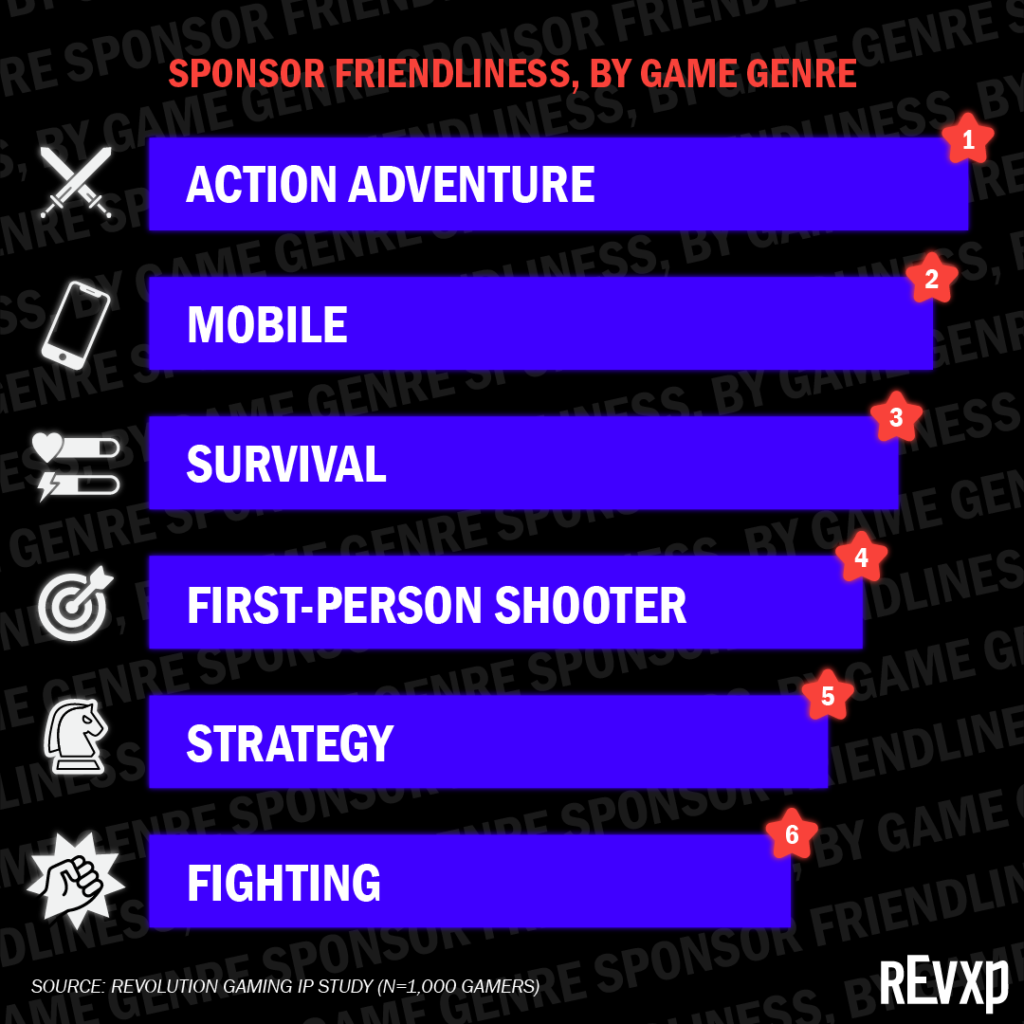
REVXP’s study tracked the “sponsor-friendliness” of different game genres — a metric that the company defines as the efficiency of a sponsorship, or the impact of a sponsorship on consumers’ brand opinion and purchase intent. Among the top six genres identified by the study were several that include violent elements, including action adventure titles, fighting games and, notably, first-person shooter games. The presence of FPS titles on this list challenges the longstanding advertising industry assumption that showing up alongside depictions of violence inside games could be damaging to a brand, although it’s worth noting that REVXP’s sponsor-friendliness metric differs from the traditional concept of brand safety.
“Action-adventure is a broad category that includes some of the most exciting IPs in gaming, so seeing it at the top wasn’t surprising,” said rEvolution senior vice president Chris Mann in an interview with GamesBeat. “What stood out was fighting games at No. 6, which speaks to the growth of FGC through EVO and standout titles like ‘Street Fighter 6,’ ‘TEKKEN 8,’ Riot’s ‘2XKO’ and the upcoming games such as ‘Marvel Tokon,’ ‘Invincible VS,’ and ‘Virtua Fighter.’”
Gamers spend 35 hours per week consuming gaming content
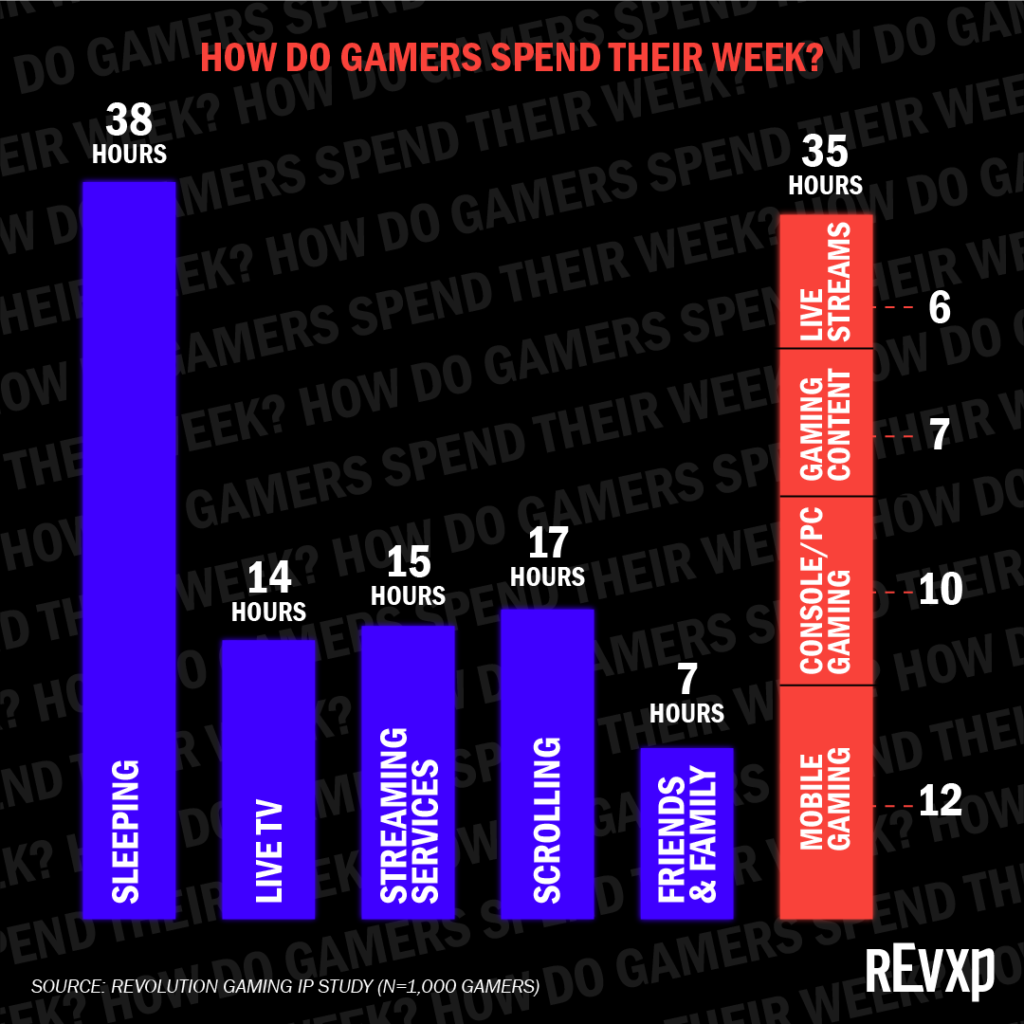
REVXP’s study asked gamers how many hours they spent on different activities per week, finding that the average respondent dedicated a total of 35 hours per week to consuming gaming in the form of gaming content, livestreams, and mobile and console/PC games themselves. That’s almost as much as the 38 hours gamers spend sleeping during a typical week, and much more time than the average gamer spends on both live and streaming television combined.
The aggregation of different forms of gaming content into a single category in REVXP’s study reflects how advertisers are increasingly activating across all forms of gaming inventory in a bid to reach the growing gaming audience. These days, it’s typical for brands to show up simultaneously in livestreams, gaming video content and in-game ads.
“Combining gaming activities into a singular score makes sense because as they engage, their mindset is still focused on gaming,” said rEvolution vice president and research director Dave Kuhn in an interview with GamesBeat. “Advertisers have multiple opportunities to connect throughout the week, not just when someone is actively playing.”
Gaming fandom and sports fandom are aligned
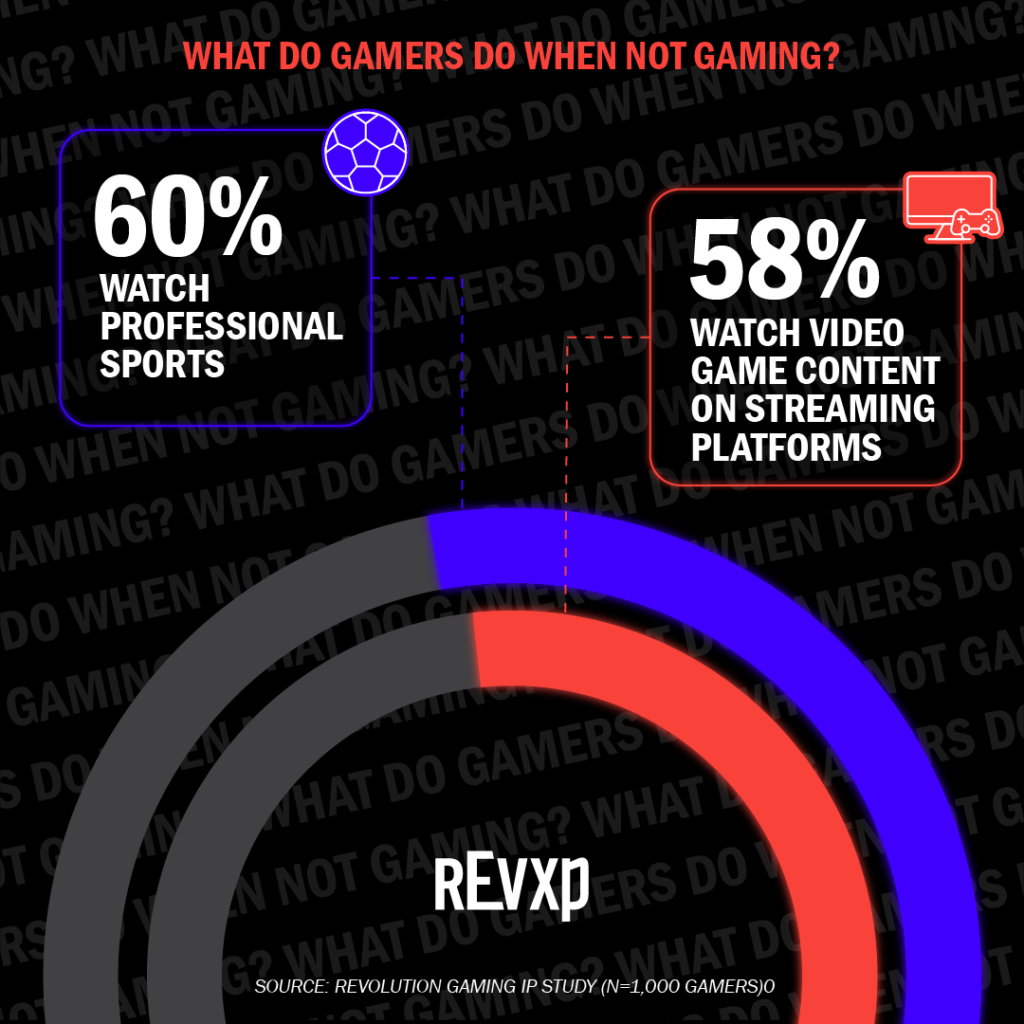
60 percent of gamers enjoy watching professional sports when not actively gaming. That’s actually more than the 58 percent of gamers who watch video game content during their non-playing hours, according to REVXP’s study. Brands can take advantage of gamers’ interest in sports by reaching them inside sports games — and by tapping into other obvious alignments between gaming and sports fandom.
“Brands can also go deeper by tapping into shared competitive mindset and adjacencies, like UFC fans overlapping with fighting games, sportstalk listeners engaging with gaming
creators, or fantasy football fans connecting with stats-based sims and RPGs,” said rEvolution group creative director Geo Stewart in an interview with GamesBeat.
Gamers are tapped into the broader culture
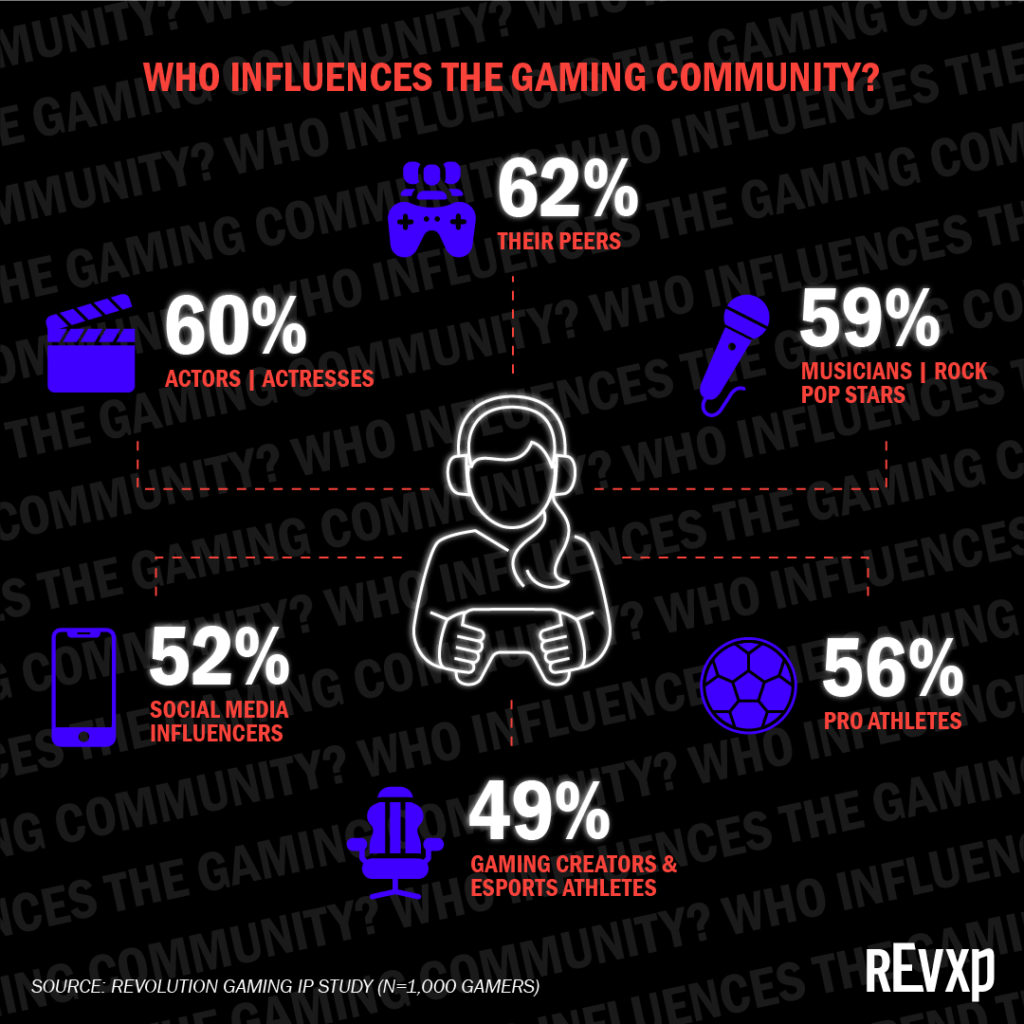
Although roughly half of gamers who responded to REVXP’s survey said that they were regularly influenced by social media influencers and gaming creators, a higher proportion of respondents said they were influenced by traditional celebrities, like film/TV actors or musicians. In other words, actors and musicians can help brands bridge gaming audiences with a broader mainstream audience.
“We’re also seeing the reverse, with more actors, musicians and other celebrities openly identifying as longtime fans of specific games and IP,” said rEvolution strategy director Esther Yoon in an interview with GamesBeat. “As gaming becomes fully mainstream, brands should feel confident expanding their talent consideration set.”