
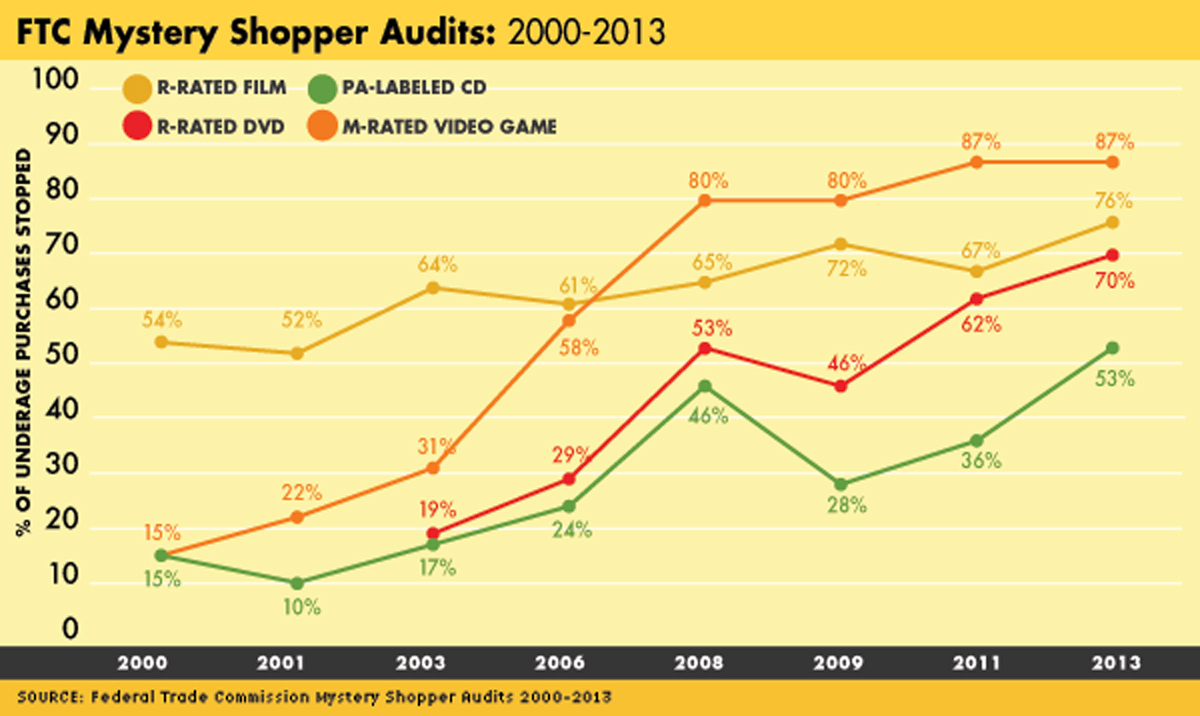
The biggest impact of the Entertainment Software Ratings Board’s two decades is a single statistic: how often someone underage can buy a game with mature content from a store without being stopped by a clerk.
Twenty years ago today, when the ESRB issued its first game ratings, there were no accepted descriptions of video game content. If a parent wanted to buy a game, they had to judge the content based on the pictures and text on the box. Children could buy pretty much whatever they could pay for.
Just 14 years ago, in random “mystery shopper” trials by the Federal Trade Commission, clerks stopped only 15 percent of children who attempted to buy M-rated games.
Last year, that number was 87 percent.
“I’m very proud of where we’ve come in a very short period of time,” said Patricia Vance, ESRB president. Most of that change has been under her watch, as she’s been with the agency for a dozen years now. “We’re proud of the public service we provide to consumers and also to the industry.”
I was covering video games when the ESRB was first created, and it was truly a Hail Mary pass by the industry: Beset by criticism over violent content from public figures and public officials alike, game developers were a Mario jump away from being regulated by the government. At the heart of the controversy was the assumption that video games were entertainment for children, so some critics called all content not meant for younger ages inappropriate.
The ESRB, a voluntary organization designed to allow the industry to regulate itself, made two dramatic changes possible. First, it allowed developers to specifically create content for mature audiences, lending credence to the idea that adults were a legitimate market for games. Second, it gave parents and stores the tools they needed to both select games appropriately and regulate access by younger audiences.
It’s no wonder stores have overwhelmingly adopted register birthday checks and other policies. ESRB ratings, and their enforcement, are part of why stores can sell a variety of content without constant criticism.
Consider the FTC’s statistics, which also include mystery shopper trials at movie theaters, movie stores, and music stores. Clerks stop children 76 percent of the time when they attempt to get into an R-rated movie; 70 percent of the time when they attempt to buy an R-rated DVD; and 53 percent of the time when they attempt to buy a CD with a parental advisory label.
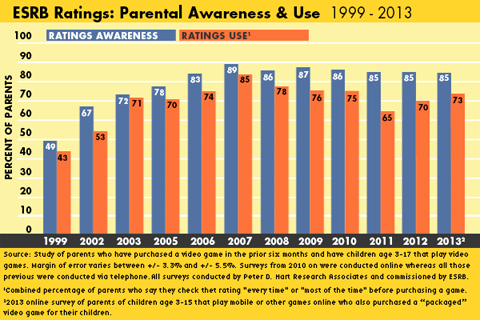
Vance says the ESRB conducts its own anonymous shopper tests, and the results are the same. It’s not just store clerks using the ratings, she says. In their surveys, 85 percent of parents know about the ratings, and 73 percent say they actively use them to decide what their children can buy.
“I think we’ve come a very long way,” Vance said. “It’s always challenging to raise awareness, particularly among busy parents. Another challenge was what happened at a store. Could a kid walk in and buy an M-rated game without a parent? When I started 12 years ago, absolutely. Now, they get stopped.”