
When Alex Xu launched the English edition of his AlphaBuild podcast, he wanted to turn the tables and interview me.
I had chatted with him at Devcom in Cologne, Germany, back in 2017. I wrote an article that stuck in Xu’s head because it told the crazy story of how a Hong Kong chicken-meat company, Leyou Technologies, transformed itself into a gaming company and acquired Warframe developer Digital Extremes. By 2020, LeYou also owned Splash Damage, Athlon Games and had stakes in Certain Affinity as well as multiple Chinese development studios.
In 2020, Xu sold the firm to Tencent for $1.4 billion. At the time we met back in 2017, this outcome seemed so unlikely. And now those memories from nine years ago feel like a preview of the larger trends that have reshaped the global games business. It’s no longer crazy to think that emerging regions of the world can be the source of great game development.
Our conversation became a sweeping discussion about game journalism, artificial intelligence, the future of game development, and how Asia and the West increasingly diverge in their attitudes toward technological change. (You can read the interview below but also view it on YouTube here).
A decade of shifting power
Looking back on the period since that first interview, I said the story wasn’t really about a chicken company buying a game studio. It was about countries and industries moving up the value chain.
“What seemed unusual then has become much more normal now,” I said. “China’s role in semiconductors, technology, entertainment and gaming has grown enormously. We’re seeing companies move up the food chain, and that’s a global trend.”
That shift is particularly visible in games, where Asia has repeatedly pioneered business models that Western companies initially resisted before eventually embracing.
From free to play to live service

Xu argued that China’s biggest exports to Western gaming have nothing to do with hardware or capital. It was more about exporting its philosophy of game design
Years ago, Chinese and South Korean studios pioneered free-to-play economies, persistent worlds and rapid content updates. Western developers often viewed those models skeptically. Today, those systems define much of modern gaming.
I said that this pattern of innovation has now repeated itself many times.
Free-to-play gaming emerged first in Asia partly in response to piracy challenges, I noted. What initially seemed foreign to Western audiences eventually expanded gaming from a niche pastime into a global industry with billions of players. Live-service gaming followed a similar trajectory.
But unlike free-to-play, many Western publishers overestimated how easily success could be replicated. The lesson, I said, is that business models alone don’t guarantee success.
AI becomes gaming’s next culture war

The discussion naturally turned toward AI, where Xu sees striking parallels with previous battles over free-to-play and live-service design. He’s an AI advocate and an investor in MagicFind Ventures, which is a China-based VC fund putting money into AI and games.
In both cases free-to-play and live-service games, investors and executives tended to embrace new technologies before creators and players accepted them. Today, many game developers remain skeptical of AI-generated content, while investors increasingly demand AI strategies from the companies they back.
“It feels like a new fight with the same sides,” he said.
I pointed to previous hype cycles surrounding the metaverse and blockchain, both of which attracted massive investment before falling short of expectations. Yet I argued AI is fundamentally different. Unlike blockchain or virtual worlds, AI is already demonstrating utility throughout the economy.
“No industry is going to escape AI,” I said, noting that gaming would eventually have to adopt AI just like medicine, manufacturing, government and education are. The bigger question is whether regions that embrace AI more aggressively will gain a competitive advantage. That depends on the rate of change and whether early movers will win or pay the price of going too early. Xu and I discussed the reasons why the East and the West see things so different.
Our common hope is that indies will gain the biggest advantage from the AI era, like the mammals survived when the dinosaurs perish.
Journalism, technology and following the fun

The conversation also became unexpectedly personal as Xu asked why I shifted from covering technology to focusing on games.
The answer was simple.
“Games were more fun,” Takahashi said.
While many colleagues suggested I would have had a bigger career covering enterprise technology or AI, I said games always represented the reason I cared about technology in the first place.
For me, innovations in processors, graphics cards and software ultimately matter because they enable meaningful experiences. That philosophy extends to AI as well. I believe that AI itself isn’t the ultimate goal. What matters is what humanity uses it to create. This is why I think that that entertainment and gaming companies — not chip makers or AI model companies — could someday become the world’s most valuable businesses.
Here’s an edited transcript of our interview.
Alex Xu: Hello, Dean. It’s my great honor to invite you to my podcast. This is my very early English podcast. I’m doing my new AlphaBuild English version of my podcast. You’re the very early person I want to interview because you are the very first person who interviewed me in English and wrote an article. It’s very easy for you because you interview so many people every year and write so many articles every day.
But for me, I always remember that was the 2017 at Devcom. That was nine years ago. We talked about how I turned a chicken meat company in Hong Kong into a gaming company, Leyou, to buy Digital Extremes. That was a very interesting story. You wrote that article and a lot of people read that. At that time, that sounds a joke, right? Everybody saw that title and seems a very interesting story. But now, it seems after nine years, everything changed. People are looking at news about Chinese companies acquiring US companies more often. It’s not a joke anymore, right?
Dean Takahashi: I’m happy to join you on your podcast here. I’m Dean Takahashi. I’m the editorial director at GamesBeat. When I was writing for VentureBeat, I guess it was nine years ago. We met and I felt like it was a very interesting time for gaming. It was a growth phase really for China and for China’s entry into the global game business.
It reminded me about an interview I did with the CEO of Intel a long time ago. I got him Craig Barrett and he was also very amused when it turned out some pig farmers in Asia were so excited about the investment opportunity in semiconductors that they wanted to build a memory chip factory and use all the profits from the pig business really to go into manufacturing memory chips for Intel processors.
He was amused at that time, but if you fast forward to now, it’s the same story. China’s role in the worldwide semiconductor business is a big one. I think the notion of companies moving up the food chain I think is really something that is really the trend for not only electronics globally now, but also for the game industry and for entertainment. It is no surprise I think that nine years later we’re taking this far more seriously.
Alex Xu: More and more is happening in the East and that’s one of the key topics my AlphaBuild podcast is focusing on. In the very first episode with Fangda (Wan of MagicFind Ventures), we are the co-host of this podcast. She got very busy because MagicFind Ventures.

I introduced you to interview Shao Yun recently, the other founding partner of MagicFind. I really loved your article and a lot of people read that article and came to MagicFind. I’m just a venture partner just from time to time. I like to talk with Shao Yun because Shao Yun and Fangda, they need a lot of AI, welcoming AI entrepreneurs here in the gaming industry here in China. They got super, super busy. We all live in Shanghai.
I had a very hard time finding them to be able to have a two-hour talk. Too many game developers are using AI and after your article. Western companies using AI in games came to MagicFind. In ChinaJoy, we have this competition. Everybody, big companies, entrepreneur companies are sharing. Tencent is sharing publicly about how to use AI. Small companies are sharing with each other and competing with each other, who are using AI better and faster.
Dean Takahashi: It’s really different.
Alex Xu: In the early years when I was trying to acquire Western development studios, the biggest difference was free-to-play. I remember I had to teach every Western studios how Chinese designers are designing free-to-play games, how we’re designing systems to be able to live forever relying on micro transactions, how we design the economic systems to last long, and why we’re able to add expansion packs or new content periodically so fast to be able to always make the gamers feel new and involved, engaged.
That’s the key reason why I found Digital Extremes and Warframe was the very special one, because that one was designed from the very beginning from scratch by a Western team, and it even got very successful on console. That was very early and very rare. Even now, I think it’s still rare. I think everybody already sees live service as the key, at least for the investors to keep making money. But there are multiple failures, right? What do you see in the Western world in changing every game into a live service and why there are so many failures?
Dean Takahashi: That’s hard to say. I do think you’re putting your finger on something that is very true, which is that there’s a big difference in how either the Western game developers or the Western players look at games and innovation and whether they welcome it or not. It doesn’t surprise me that some of the technology innovations are coming from different places now and they’re coming from Asia in particular.
Nexon in South Korea was the first to really do free to play. And I think something about the nature of the market forced that to happen, which was there’s high degree of piracy back in those days and they needed to find a way to compete with piracy. They needed to deliver enough value so that people would say, ‘Oh, I do that small transaction instead of stealing this game because I want to have the things that they’re offering to me, even if it’s just a small amount of money.
I think the Western players did not immediately agree that free to play was something really valuable and that they would rather just pay $60 for a game and then play it forever and not embrace free to play. But when free to play caught on worldwide, it was really because of mobile, right? Mobile games embraced it in the biggest way and they were different audiences, different players.
And so the players who were very skeptical of free to play were hardcore gamers. They stuck with their hardcore games, but free to play managed to grow the game industry’s audience by 10 times over the course of more than a decade. And I think we now have billions of players in the world playing games thanks to free to play. And we have a lot of women playing games who didn’t play games really before the onset of mobile.

I think this trend really started to catch on first in Asia. And we’re now repeatedly seeing this pattern where different things catch on somewhere else in the world and eventually the larger, largest spending markets like the United States, they catch on years later, right? Live services is something that came from free to play where you continuously try to get people to come back and play and transact and otherwise continue to enjoy a game forever, really. Zynga adopted those practices and it was very effective at creating what they call forever games, like Zynga Poker, which is still a popular game today, many years later.
And so I think it has worked for some categories of the business, but as Sony and some other big companies try to adopt it and bring it into the mainstream hardcore game business across PC and console. They’ve seen mixed success.
Part of the assumption was that you can make more money with live services. And so therefore, let’s pour all of our resources into games that can do that. But I think the flaw in the thinking was that every one of these games was going to succeed and be accepted in market.
But in reality, gamers are pretty conservative when it comes to adopting new games. And so if they’re a Call of Duty fan, they may buy into the Call of Duty system and they can invest in live services and keep playing these games year after year. But if you have a challenger to that kind of game, you’re not necessarily going to succeed just because you invested a lot of money to make a live service game in the same way.
And so it’s like how people approach the multiplayer online battle arena (MOBAs) when there was a big hype around League of Legends and Honor of Kings and these other very competitive esports like games. Everybody thought there would be tons of successes in that space. But it turned out there was only two or three that survived.
And the ones that were earliest in the market, they were the ones that were very successful. And so everybody burned a lot of money trying to make those games. It was not so different in the results that you see with live services games. And so games like Concord that Sony invested heavily in and even games like, say, Destiny 2, they eventually ran out of steam and they’re not doing nearly as well as what Sony expected. And so I think there’s a definite retreat from live services that’s happening now. Or just a realization that it’s only going to work some of the time.
Alex Xu: I think there is a big fight between investors and big bosses of the big companies versus the developers and players. It seems that more of the investors, they want to get a live service revenue stream, continuous revenue stream, stable (performance) from this live service business model. They saw that as a golden thing, something very precious.
But for the developers, usually most of them are players as well. And the players. The good live service game — players like them. But most of the developers think they should always do creative things. Always make new games, more creative things. Even standalone games, always make one standalone game. Based on one IP forever. They thought that was very dull. So they keep fighting, right?
Dean Takahashi: We see this constant tug-of-war going on and contrast between the CEOs and the investors on one side and then the players and the developers on the other. And every now and then, the focus on creativity that happens on the developer side — it wins. And something brand new comes along and it’s a spectacular success. And we still see some of that today.
But also, the investors and CEOs, they’re quite often right as well that the same games are the ones that are collecting all of the money and that those are safe bets and that players simply want more of the same games that they’ve already been playing for five years or so. And sometimes they’re right and sometimes they’re wrong.
It depends in whether somebody comes up with something brilliant or not. And I think there’s different battles going on inside the game industry all the time. I think there’s a lot of people who believe that gaming should be all about fun. And then there’s a line toward addiction where people feel games should not go. But some games do go there.
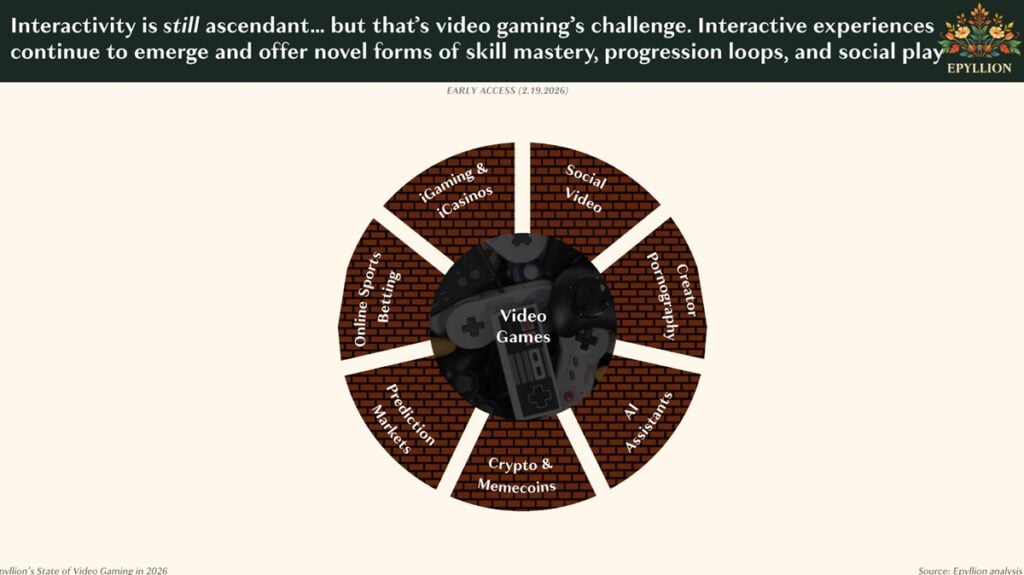
There are things like loot boxes that sort of pull them all over into the side of being more addictive than purely being fun. And I think, you know, Matthew Ball has come up with a very interesting slide deck about the attention war that’s happening. And in some ways he’s pointed to things like prediction markets as showing that the addiction markets are sometimes winning against games now which are more in the category of fun.
And if you think of who’s going to win that attention war, you have to pay attention to what’s growing and what’s not. And MatthewBall pointed out that a lot of the Western game companies who have maybe not embraced a lot of innovation in recent years have been very conservatively focused on continuing to milk their triple-A franchises. Those companies are not growing at the same rate as others around the world. And I think that when the market slows down and the market growth slows, Matthew pointed out that the only way that you can make more money and grow is through extraction.
You extract more money from your existing player base. And that allows you to grow more money. And I think that’s part of the realization that some CEOs and investors have on the one side where they see that, ‘OK, if we want to extract more money from our players, then maybe we should pursue live services games. And they continuously pay us instead of us just collecting $60 and then moving on.’
So we’re in a very interesting time in space right now where you see these different competing forces. And it’s not always clear who’s going the way.
Alex Xu: This is a very interesting talk with you. I have to follow this whole topic and continue. Because you wrote a book about Xbox many years ago. And you have a lot of observations on big companies doing games. In your many years of interview history, you must have interviewed a lot of Eastern and Western head of big companies and also a lot of entrepreneurs for small indie studios as well.
What do you see their attitude of the new wave after the free-to-play wave, the live service wave? A lot of big companies lost money. They have a lot of failures. And in the very beginning, a lot of players, developers, they said they hate free-to-play.
I think it’s quite similar like now people are saying about AI. Players and developers, they say AI is useless. Our AI is a slop machine, right? If you use AI, we dump you right away. And the investors and the big boss, the CEOs, they say, ‘Well, this is a very useful tool, right? You can do triple-A games much cheaper. And why not? You can do live service feeding content much cheaper and more frequently. You can keep the users staying there. Every investor is very excited. And the investors backed the big companies. They also say if your company doesn’t have any AI concepts, I will stop investing any money into you. To me, it’s a new fight. It’s similar like many years ago, right?
Dean Takahashi: It’s like a new fight with the same sides. And if you look at the debate everybody had during the pandemic about the metaverse, right? And everybody thought, ‘Oh, the metaverse is where we’re all going to go online to meet each other because we can’t meet each other in real life anymore.’
But as soon as the pandemic was over, then the metaverse dreams crashed and burned. All of the investment that went into the metaverse, it vaporized as well. And I think the parallel thing alongside it was all of the interest in blockchain and cryptocurrency. And I do remember one quarter when Andrew Wilson, the CEO of Electronic Arts said, ‘There’s no question that blockchain is the future of gaming.’
He was trying to make the investors happy because the investors say this is the thing. This is what’s going to change the game industry. You’re always going to be able to own whatever games you buy and then take them from one game to another.
If one company went out of business, you wouldn’t have to worry because you own the characters, or the property you purchased in the game and you could just take it to another game. And it turned out that the gamers and the game developers were also equally skeptical about blockchain and that they felt that it was a bunch of crypto scams and a lot of slop again. These weren’t real games.
(The gamers thought) they were just simply schemes to try to trick people out of their money. And so I think a lot of the same people are probably thinking that with the AI that the same kind of scam is happening, the same confidence game where the con artists are collecting a lot of money, raising funds for the companies and really not delivering on better games for players.
And so that’s the current battle right now. There are interesting arguments people are making on both sides of that battle right now. But there’s other trends that have really become more real. And if you unpacked some of Matthew Ball’s slide deck, he made the argument that, yes, it’s true that in 2025, the growth for the game industry was about 9% in revenue growth and that sounds pretty healthy. But he said, ‘Take out the fact that the Chinese companies selling in China account for a few of those percentage points, as well as the Chinese share of the global market. And then you take out the 2% to 3% growth that comes from Roblox’s fast growth with user-generated content. And then take out some of the platform revenues as well.’
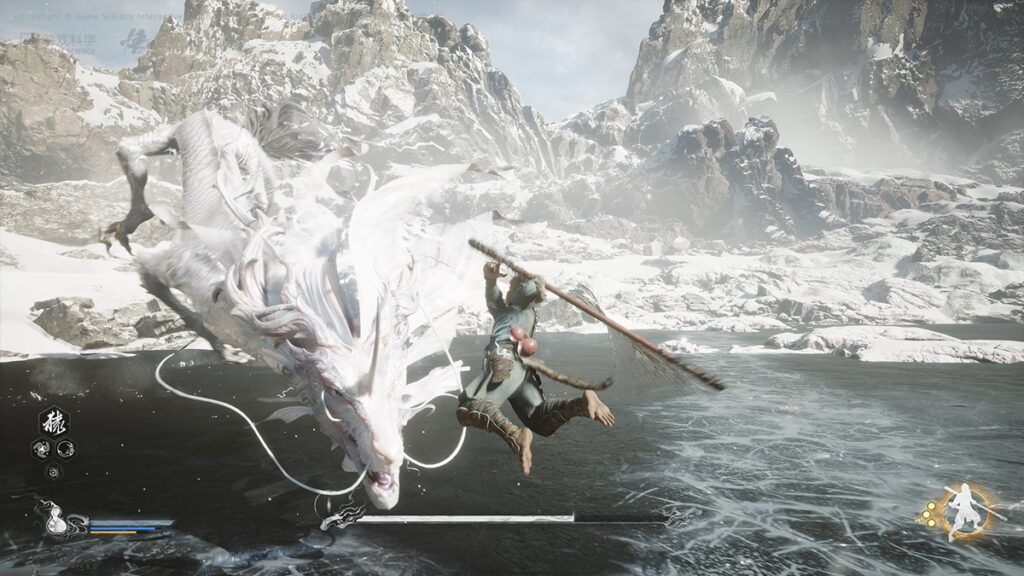
And you get to Western publishers having essentially zero growth. And so the 9% growth number is more like an illusion. And it’s misleading people to think that the game industry is fundamentally healthy when, in fact, there are very interesting trends around games like Black Myth: Wukong. That sold 25 million copies very quickly and was extremely successful in China and taught the Chinese that their culture and their mythology was just as important as any of the Western culture and that it could be the basis for games that sold well on a global scale and that investing in these kinds of games then was actually a wise thing to do.
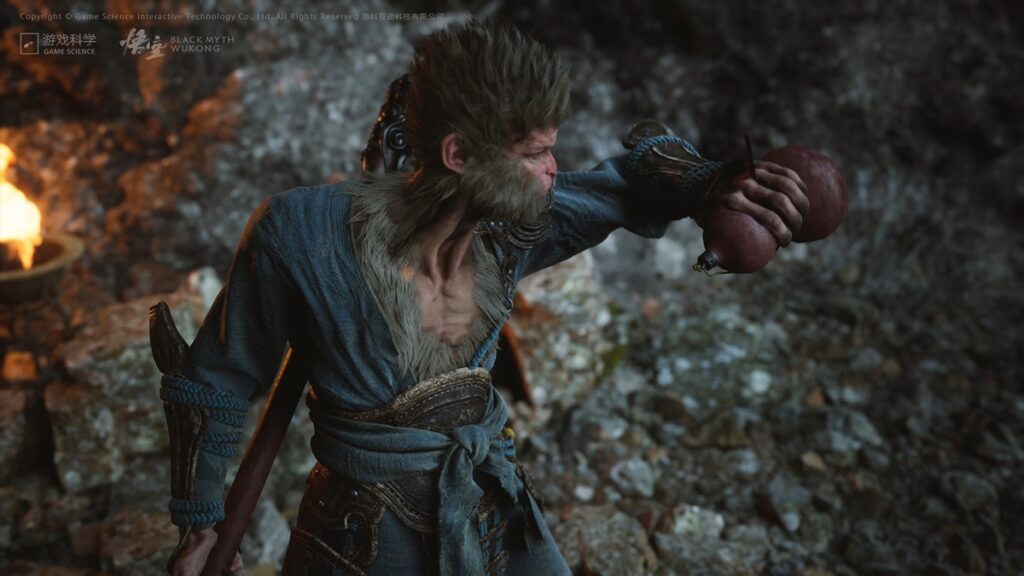
Some of those very rich Asian companies didn’t necessarily have to invest all of their money, their extra money into Western publishers and games. That is one of the reasons why we’re having so much change happen and one of the net results of all of this is looking at the share that each region has in the game industry now.
There’s a fellow named Amir Satvat who keeps very good stats on employment around the world and he believes in the last five years that North America lost about 11% of all of its jobs in the game industry. He thinks there’s something like 750,000 jobs in gaming and he noticed that the rest of the world grew like 0.5%.
And so in the last five years, we didn’t lose lots and lots of jobs in the game industry. It was, it stayed about the same 750,000 jobs but the distribution changed where there are a lot fewer jobs in places that were normally thought of as the centers of the game industry. And so California accounted for 47% of all the layoffs that happened in 2025 across the entire world.
And so you can see some of the consequences of these changes that we’re talking about where I think the rest of the world is learning how to make games and areas that embrace change when it’s due are poised to benefit. And I do think that in the AI battle that’s the big question right now.
Can or will the companies that invest most heavily into it and embrace AI? Are they going to be successful or is it another dead end like the metaverse? And I think we’re learning along the way but I do believe that no one should dismiss this technology in the same breath that they would have dismissed blockchain or the metaverse.
I think there are fundamental changes and I think there is definitely some FOMO — some fears that people have that if they don’t do it then, they will fall behind. You could argue that if games don’t embrace this technology, then they might be the last industry in the world to embrace AI because every industry is going to change from medicine to warfare to government.
That’s something to be aware. But also, in games, if China embraces AI in games and the West doesn’t, then China is poised to take a lot of the market. And I think some of this is not simply a contrast between stubborn game developers in the West and welcoming developers in the East.
It’s almost more like a combination of those things but also the way the governments are poised as well. China pays a lot of attention to the technology and tries to set up the best policies it can. But it does regulate the market and that controls the speed at which the companies will move. And in the West, there’s almost no regulation and the government knows almost nothing about AI. In an unregulated way, the companies are free to do what they want but many of them are also choosing not to embrace AI. So I don’t know what the net result of all those dynamics will be but it is the most interesting thing to watch right now.
Alex Xu: We were talking about Microsoft. You wrote a book about them and after years, Microsoft seems like they are retreating from game industry because of AI. What is your observation on that specific topic?
Dean Takahashi: I think their CEO (Satya Nadella) has made some interesting observations. They make sense to business people, I think, but they are causing a lot of concern among gamers.
Alex Xu: But he was the one who gave Phil Spencer the power to acquire, to spend his money, to acquire so many gaming companies. The same guy, right?
The mammals and the dinosaurs
Dean Takahashi: Yeah, (Nadella) is probably a little regretful about how that turned out, I think. But it’s a 25-year-old business and what he’s saying now is that it really has to stand on its own. We’ve helped it and we’ve helped the gamers enjoy this technology without enjoying as much financial success as we should. And he can just look over at his AI divisions and see how much money he’s making with AI technology and other kinds of investments — servers and data centers and all that.
And he’s making so much money [on AI] that you could say he doesn’t have to worry about making money with Xbox. But he’s changed his mind and he’s thinking that, no, that’s not how you should measure the business results. Every business should stand on its own. And I think that’s fair, right?
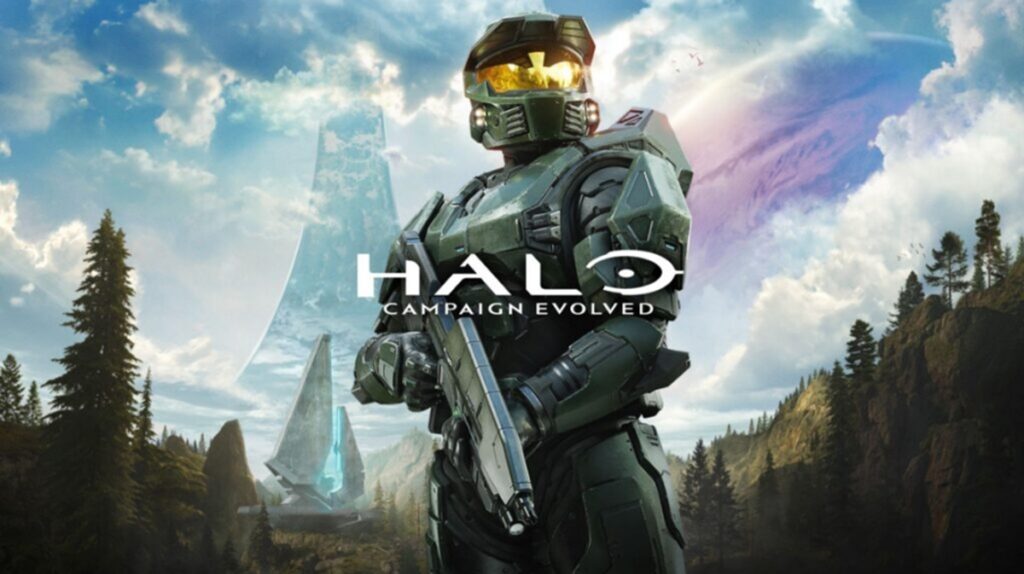
The sad thing then is that all of those companies that Microsoft has acquired, all of the Xbox businesses, they’re going through a lot of layoffs now and they’re selling off some of the businesses. They are trying to retreat and focus on the triple-A franchises that are doing the best for them. So franchises like Minecraft, Halo, or Gears of War, they’re happy to keep those alive and focus on those and to try to deliver things that the fans want.
They don’t want those franchises to go astray. They don’t want to forget about the core of what gamers really want. And so that’s job one for them. If they have more money left over or if they can make enough money, then they can invest into new things. Like they did just invest into Hideo Kojima’s Physint game, right? Sony decided to cut that.
I think it’s still possible for Microsoft to invest in new IP and new things, but they have to get their house in order first. And that’s what Satya Nadella’s marching orders are. That’s what Asha Sharma, the new CEO of Xbox, (has as) her mission is right now. Get them back into shape.
And I think I was talking to another company CEO this week, and I asked, you’re a small company. Don’t you worry about all of those big triple-A companies? Why are you going to compete in their space? And his reaction was, ‘We’re the mammals.’
We are the people that they should worry about. And it’s like, you know, he’s saying the indie game developers are the ones that provide all of the surprises and the great games, the innovations that the big guys aren’t because they’re too conservative and they’re too busy right now with getting their house in order. And I think that’s the danger now for Sony and Microsoft, that they’re not going to invest enough for this future generation. And the creativity is still going to be in the hands of the indies.
Alex Xu: I think he’s right. Especially in China, the big companies all facing that challenge largely because of AI. Because AI is making every indie game studio able to develop things that are very creative, new ideas that are way cheaper. That’s true.
At least I see a lot of developers, the designers, don’t require programmers to do (code or tools) for them to design things faster. That’s happening, right? And most of the designers, they don’t know how to write code. But now, after they design the game, they can really make the game using AI coding. That’s true to everywhere in the world. They’re doing games in this way. Even if they are players, they’re skeptical about the AI-generated images or art things, right?
We are very cautious here as well. Because those developers are players themselves. Those indie game developers, they’re all players. They know this is not the right art. We should generate using AI. We call it gacha. We generate 100 images and we use only one of them. They use their players’ eyes to choose what to use, what to not use. So here players are more relaxed. They just play the game before they judge whether your use of AI is good or not.
If you give me better experiences, in the recent interview with Shao Yun, he introduced the recently launched Chinese game natively using AI, but mostly using text, (with very little ) art. You traveled back in time to Ming Dynasty. You would be the emperor, the last emperor of the Ming Dynasty.
Because that’s a pure text-based and Ming Dynasty, China-based game, I don’t think in the West people have played that. But that’s a very interesting game design. Why did he choose that dynasty, that emperor? Because in the very specific time range, those people around the emperor, they cheated the emperor. They don’t like the emperor. They deliberately forget about what the emperor told them to do after a few days.
They said, ‘Oh, you didn’t ask me to do that. They forgot.’ Because AI sometimes forgets about things. So when people are playing that game, they see AI forgot about what the emperor said. But people say, ‘Oh, that’s reasonable, right? Because they cheat this emperor in that way.’
So people are using AI in very interesting ways to make new experiences to the players. This is new. Some players, even in the Ming Dynasty, say, ‘Why don’t you make an atom bomb? And you can bomb those bad guys. They’re having fun in this.’
One thing Shao Yun told me is they are training AI to generate more strict and expected results (when it comes to coding). In games coding, we need that. But in game imagination, we want to train AI in the other way. We don’t want to give AI too many boundaries. We want AI to imagine even better than people. But now all the AI training is going that direction. So when we are using AI, we only can count on AI to do some very strict things, within boundaries. But why can’t AI generate imagination? That’s because we are not training AI in that direction. So all those indie game designers, they are safe because they have the imagination. They can just use AI as tools.
Dean Takahashi: There is some sign that companies are embracing AI in different ways, even in the West now. You can pull it back to the subject of fear, like security is one particular place where I think people are learning to believe in AI. And I did an interview with a pretty good technologist in the game industry named Glenn Fiedler.
And someone told him, you should take the latest version of Anthropic’s Claude, the Fable 5, and set it loose on your existing code. And he contributed a lot of code to open source over the years. And so going back more than a decade, and he set loose Fable 5 on this code. And the result was that it found lots and lots of vulnerabilities in his code going back more than a decade. And these were things that came from possible attacks that he had never thought about because no human would ever sort of think of attacking in this way that was so brute force and painstaking. But a machine could do that.
And so then he realized. He was a big AI skeptic and then he realized that, wow, all of this code is vulnerable to being attacked right now. And so he had to learn how to use Fable and AI, and then he used it to plug all the gaps and to patch all the holes in his code and reduce all those vulnerabilities in his open source code. And so he became a believer in the programming side of AI.
The AI programming worked, but also the detection of the security flaws also worked. And so he flipped from being a skeptic to being a believer. And you can’t really just believe in AI for half your company. I mean, the other half is creative work. So half of it is all technical and infrastructure and fixing things. And if you believe that it’s useful in the technology side, why don’t you believe that it can help you on the creative side?
There’s a monolithic belief that people have that it’s never going to work in the creative side. I think you can detect that people are going to go through the same experience and they’re going to find out that it’s probably useful in the creative side as well. And I think they are starting to come up with some AI native games.

There’s a developer in the U.K. called 10Six Games, run by Susan Cummings. (Her team) has has created a game where you can generate characters on the fly using generative AI. And these can be entertaining characters that you can use to fight a bunch of zombies. And this is a feature of the game that players could enjoy because they’ve never had this ability before to create such creative or realistic characters.
They didn’t know how to actually create the art or whatever, but now all they have to do is give the prompt and they can get the result. And so I think there’s that kind of use for AI. Studio Atelico has another game that’s very similar to that. The Owlchemy folks also are working with a company called Artificial Agency in Canada and they’re putting together a game where you talk to other robots and you are working in a coffee shop to make a bunch of things in a production line, like a food production line, to provide all the food to all the customers. And so the human is one person operating with three different robots and they have to talk to each other using this regular voice request.
And then sometimes the robots will get it right, sometimes they’ll get it wrong, but it’s kind of funny that the human has to word things in a way that robots are going to understand and they’re going to work together to provide all of the orders for the orders.
So I think that people are now finding that on the creative side as well that there are ways that AI can help. I think some of the art departments of the game companies as well are finding that they can use art generative AI to create concept art for games for prototypes and that they can get a lot more prototypes done faster using this kind of AI. And they can agree on a concept more quickly. And then once they agree, they can still handcraft the art in a manual way and maybe get through that process faster than if they’re trying to do that with generative AI.
So the compromise here is that consumer-facing art really should be done by the human. And yet internally art that has only an internal purpose can be used to get the work done faster or more efficiently or with less people, less time. And I think in these ways, AI can sort of creep into the entire organization.
Alex Xu: In early years when we are the designers talking with the programmers, they have to find a lot of videos from old games to show that this is what I want. That was a very hard conversation between designers and developers. And now you can use Seedance to make a video for you to show them. This is exactly what I want. Just look at this. You don’t have to care about what kind of art you’re using. You’re just showing the gameplay in that way way better than you show it with the other game’s image or just one image or some text.
And now even designers can be the coder. They can code like this. Let’s see what if I designed the game like this. (You can tell the AI to program so it looks like that). Small studios are using all these types of testing nowadays. But it seems that big companies are way slower because of the players are very sensitive. If I know you’re using AI, you’re wrong. They should be scared. I think the CEO you interviewed said the right thing about the indie studios. They are doing a lot of creative things and doing things very fast, welcoming new technology.
Switch from tech to games

Alex Xu: I think you came from the technology side. Many years ago, you started from doing interviews using the technology side, right? And what made you change your track to more focus and interest in games?
The truth is the technology enabled games the whole way of game development, right? From the 3D acceleration card, GPU, CPU, everything. Console, hardware. And games also helped technology. And now it seems that technology is helping games again. Do you think games can go back to help technology again? And can you share a little bit about your personal thinking why you changed from technology to games and what you see that the two tracks are helping with each other?
Dean Takahashi: I think games were more fun.
Alex Xu: That’s the only reason?
Dean Takahashi: There were a lot of people that actually told me along the way that you should have stayed more focused on tech and AI. And that would have been more interesting or better for your career. But I love playing games. And I always felt like that was the end goal that I had for learning about technology.
I remember way back when in the days of MS-DOS. I would create a boot disk in order to be able to play a game that otherwise would not have enough memory when it loaded into the PC. And eventually I didn’t have to do that anymore. But I always thought that learning the technology was worth the trouble because the entertainment you get out of playing games is just so much more interesting or so much more fun. Y
I didn’t get a PC to go play with a spreadsheet, right? I wanted to find games along the way and I have games like The Last of Us or games like Halo, Call of Duty, Gears of War, or all these games. They give so much enjoyment and I play them with friends. And during the pandemic I played a whole lot of Call of Duty: Warzone.
The most outlandish opinion
And it kept my mind happier and focused. And so here’s the most outlandish thing that I have to say. And that is I don’t think that technology companies like Nvidia should be the most highly valued companies in the world. I think the entertainment and game companies that can bring so much joy to people are ultimately going to produce the products that we’re all going to love, even after the AI era, right?
I think that AI should be able to enable something with a higher purpose. And even if that purpose is just fun and entertaining us, I think technology and AI by itself is not the end goal for humanity, right? It’s what you do with it that is going to be the fun part. And so I think that eventually game companies could be the most valuable companies in the world.
Because the AI is just going to, at some point reach its technology zenith. And folks at Nvidia may not like that, but I don’t think they should get rid of their gaming division.
Because the gaming division looks pretty small right now compared to the AI division. But it’s going to deliver eventually. And again, I think that’s the craziest thing I could possibly say, because there is no gaming company today that’s anywhere near worth a trillion dollars or five trillion dollars like Nvidia.
Alex Xu: Yeah, yeah, yeah. Totally agree, totally agree.
And you see big investors also looking at gaming industry as well. You see the EA acquisition deal, $55 billion. I think there are still big investors, game founders. They still like the game business because eventually when AI replaces most of people’s job, not just in the gaming industry. Most of the other industries are firing people because of AI.
I don’t think that’s a bad thing eventually because people not living for working, right? Everybody lives in this world for fun, for entertainment to enjoy life. So more people get replaced by AI voluntarily. For example, cleaning your home, something like that, looking after your baby. You like AI to replace a lot of this workload. You don’t go to work every day.
You work only one day a week or one month a year, something like that. Eventually, what will you do? You can go outside doing sports, offline entertainment. That’s gaming as well. Olympic games, right? But a lot of people like playing games at home. Why not? So eventually you will realize the games is one of the most valuable business in the world. I think that’s partially the reason why EA is still valued like that. And people still throw money into gaming business.
Dean Takahashi: I think I absolutely agree that this is the way it should be eventually. If AI is going to eliminate all the jobs in the world, the humans are still going to be around. And I think that if we’re not going to work, then we might as well play. And if we play, people could pay us to play. We’re giving them our attention.
Alex Xu: And attention is proving to be valuable.
Dean Takahashi: And I think people could wind up being happier with universal gaming, I think. It’s not so different from paying people a living wage just because somebody else has taken their jobs. I think AI has taken their jobs away. And this different way of looking at the world eventually will come to pass.
I do worry, of course, that there will be a timing difference. If AI eliminates all the jobs and there is no government support for people or there is no universal play that’s possible, then we’re going to have some very difficult times. But the transition you would hope will eventually happen where the play is going to be the purpose in our lives.
What other technologies matter?

Alex Xu: Do you see any interesting technologies aligned side with the game or maybe outside game? When we were talking about metaverse, Meta actually invested a lot in VR technologies. But it seems that was another wave running away again. What are the other interesting technologies you see very promising in the future? Besides AI, besides crypto or VR, what other technologies do you think are very interesting? Maybe in the future we will all get amazed by that new technology.
Dean Takahashi: I do think that Zuckerberg is still on the right track to actually produce these VR glasses.
Alex Xu: Oh, AR and AI and …
Dean Takahashi: VR combined. It’s going to take a long time to be able to integrate that into a pair of ordinary sized glasses and to get enough battery power to it. But he’s talking now about introducing this kind of product in February 2027. In the short term, he has an opportunity there because there are so many obstacles to some of the other technologies right now.
The memory chip prices are so high that neither Microsoft nor Sony really wants to introduce a new game console right now because it’s going to cost the consumers over $1,000. Who wants to pay for that? The glasses he’s introducing are going to be very expensive as well. But if he stays with this concept and this technology and eventually gets it to a mass market affordable price and great technology then I think that’s the kind of product that will eventually take off more than the smartphone.
It’s eventually the replacement for the smartphone that we all carry around right now. And so that could introduce a very important new technology wave when it arrives. But sadly it’s not really here yet and it’s not evenly distributed and affordable to everybody. Other technologies, I don’t follow as many technology companies as I did before.
When 80% of my job was technology I covered a lot of tech but now it’s about 20% of my job. 80% now is games. But in the 20% there are very interesting companies like Colossal Biosciences, which is trying to do genetic engineering and AI and combine other technologies to bring back extinct species. They want to bring back the Woolly Mammoths. They have successfully brought back at least a couple of Dire Wolves that are also extinct.
And they are working on many others, they’re also setting up with some of the governments of the world. They’re setting up like a genetics bank to store away species that may be near extinction. And if they go extinct and we don’t have their genetic code then we can’t bring them back. But if there comes a time when we are able to bring these lost species back, they’re setting up the genetic banks so that we will always have that in case of calamity.
So I think companies like that are very interesting. There’s another one called the Biological Computing Company that I wrote about. And they are putting brain cells into petri dishes and training them to solve problems. And it turns out that they think that these brain cells can come up with algorithms that are better and faster than electronics. And that eventually they could get algorithms out of this that are very different from the kind that you get from more like synthetic computers. You can tell that the brain does some things far more efficiently than computers do.
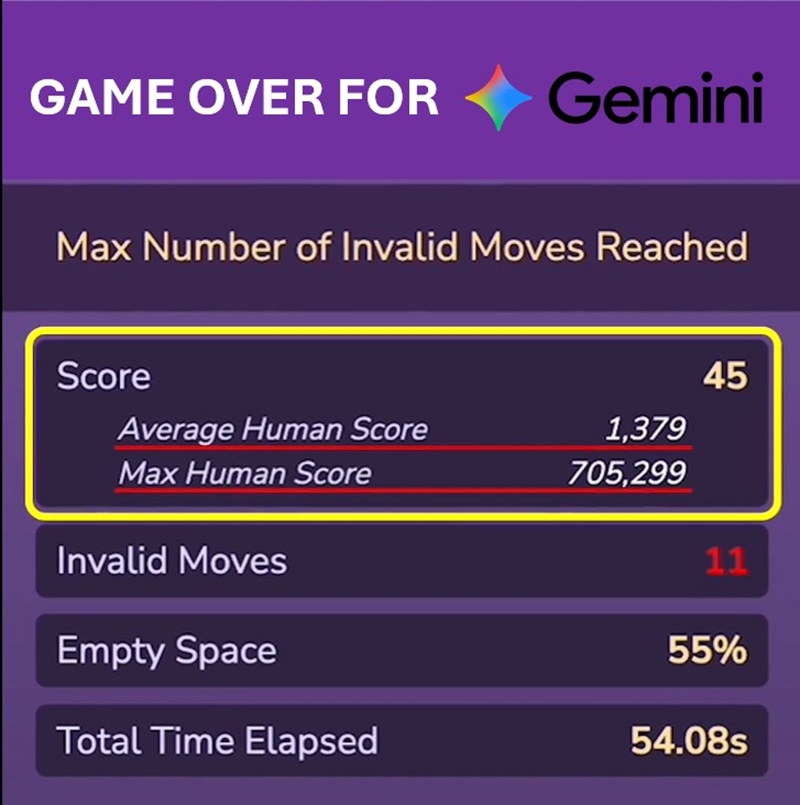
If you look today, if you ask a big AI LLM to play a game like Tetris, by the third move or so they would make a stupid move that no human would ever make. Because they have not yet developed as much human reasoning capability as an ordinary person has. And so an ordinary person can learn to play these games better and faster than the computers that we have today can.
And so I think that’s an indication then that these neural algorithms that they come up with that are more likely to imitate the process that the human brain uses. They could help us advance AI to another level. And so that’s what the Biological Computing Company is trying to do. So I think I think there’s I’m still fascinated by different kinds of companies like that that have the potential to, you know, change our world.
Alex Xu: A recent model called JEPA is changing that. What you’re saying because that’s also learned some way from the brain — how make judgment very fast without saying any text. Right. That’s way more efficient. You just make judgments very fast. So JEPA doesn’t say anything. It just mimics what the brain does to make quick judgment very, very fast.
You don’t have to say anything that’s very useful when you’re playing game, especially when you’re playing game. You don’t have to say anything but you make a judgment very fast. So I think that also one example to learn from human brain. The whole AI thing is all generated from learning from the human brain.
That’s why I might I ask my son to go learn the human brain as his major right now. And then eventually that will help with AI and help with him playing games even and you see the intuition and the Pokemon Go deal and the Eve CCP deal invested in by Open AI. We have several deals. The professional AI guys are investing into game related business because they need some valuable useful data from us. I think that’s another thing. Maybe gaining is making contribution to AI in the in the reverse way. Another another way we are contributing.
Dean Takahashi: I think that reasoning capability is something that the company Arkadium has been able to do where they’ve got 25 years of data that they’ve kept about how people solve puzzles and play. They word games and they can use that to train the models. The AI models have to do better at playing games. And that turns out to also be useful in different like things that physical robots need to do in the real world too. And so I think they’re doing that. And so is General Intuition. Another well funded AI and games company. the gaming data we get every day from either multiplayer games or other single player games. I think it’s going to turn out to be very useful for all these companies that are making things like robots.
Alex Xu: There’s another very interesting topic I recently talked with my friends and I wrote a podcast article about that recently. It seems that a lot of people around me, we don’t have time playing games. We love playing games, but recently we don’t have time playing games because of AI. We keep using AI to do a lot of things. We cannot make any money based on that. We just do experiments. We just AI every day for fun. You can say I want to do my podcast so I have to test every AI model.
I don’t have time to play games. I don’t regret it because I’m already having fun playing with AI. And I burn a lot of tokens and spend way more money versus playing a live service game. Maybe we should design the game specifically and borrow that kind of fun th AI model is giving us, right? That’s true because we are creating things. We are ordering somebody to do work for us. We have that power. We have that fun with giving orders.
And we are also having a positive reaction very periodically. We produce something. We get stronger, we get better feedback and we feel fun. Do you see any games that can burn so much money like I’m using AI right now? Even $200 per month is not enough for me. Some of my friends are burning more than $1,000 per day. And we are having fun because of that. We’re not making any money spending. It’s just for fun. So that’s maybe another new genre of games. We should leverage that and we should design some new genre of games based on that learning and amplify that to be a more fun game and making more money.
Dean Takahashi: You can make a game show out of who does the best AI prompt and show the result on the screen and the audience can judge who the winner is.
Alex Xu: That’s a game idea, right? Make a game like that. Okay, that’s interesting. Make your own TGA game conference in the game yourself. You choose which game comes out to the stage.
Dean Takahashi: I think it is going to be very interesting how long it takes for somebody to reproduce Grand Theft Auto 6 using AI. And to make something that’s just as compelling as a game that’s been under development for 13 years probably with the thousands of game developers, human game developers working on it.
How long is it going to be before one person can do all that work using AI? I don’t know. But the thing that enables that are the individual indie game developers. I think AI is going to enable one developer to do the work of 10 or 10 to do the work of 100. And I think that should be the most threatening thing out there to the companies with thousands of employees right now. And I think also that’s going to make games affordable to more people because it’ll be cheaper to make them again.
Alex Xu: I don’t think the big gaming companies right now are the ones to make games cheaper. We have to rely on the vast majority of the indie game developers. I have big hope on them. It’s happening here in China actually. And you saw some of those in the Western world as well. But we don’t see many entrepreneurs doing AI native games in the Western world. If you see some of them, please make an introduction. And I will be super, super interested in talking with them.
Dean Takahashi: I’m waiting for the day when AI can translate GamesBeat into 190 languages around the world. And I think that’s possible and I don’t think it’s very cost effective yet. But I also would love to be able to communicate with people who don’t speak my language and to have translation done in real time on the fly in a very accurate way. So I’m hoping that AI delivers a lot of the things that people have been promising so that I can talk to people, more people around the world.
Alex Xu: I already made this AI process to make all my English podcasts into Chinese and launching on Chinese podcast platforms. I can make you speak fluent Chinese already, but that’s not on the fly yet.
Dean Takahashi: Later I think we will have that.
Alex Xu: Everything will be real-time. I firmly believe in that. I heard Seedance is making a new version, real-time Seedance. Maybe 30 frames per second like a game rendering engine. So the future games will render in the Seedance way. That’s scary.
The games media

And when we were talking about TGA, my next topic is about the game media. When the whole gaming industry is having trouble in the Western world but I see you are independently doing this game speed. And I see people like Geoff Keighley, he can still make this game media business and is growing very fast, developing very good. So what is your ambition on GamesBeat? And where do you see room for things like this at TGA or some of the best things in the Western world in the game media business area?
Dean Takahashi: I believe something like the Game Awards should really be in every country. I think that putting a version of the Game Awards into China would be a great success. I think that GamesBeat’s ambitions are really more about uniting the world in one community. I think that’s possible with games. I’d eventually love to see things evolve that way.
For us, that means most of our conferences and our energy right now are focused on games. But we’d also love to develop more verticals for what we write about and cover or talk about with things like entertainment and with technology and how they all influence each other or change each other over time.
When I was becoming a journalist, one of my hopes and dreams was really to become a foreign correspondent and to go to some other country and write about it and have those stories come back to educate people about what it was like to be on the front line somewhere. I was very pleasantly surprised that I did become a foreign correspondent, but it was because of gaming.
I could travel around the world talking to people and writing about games. I hope that our organization could grow the same way and not have just people who travel to some place but people who live in some other place write about the gaming community that is in another country, really, and have all of that contribute back to the game scene.
We’d love to expand to have events in different places around the world. But I think we expand into new coverage areas like technology and entertainment, but also into new places. For me, that’s a big dream. We don’t have to get there overnight and we don’t have to become the biggest company in order to do that. But I do think that that would be a great service to the games community to do that. So that’s the big dream.
Alex Xu: I strongly suggest you come to ChinaJoy to make The Game Awards in China and invite all your friends everywhere in the world to come to China to have a feast or something like that. And make The Game Awards for the world, for the whole gaming world, everywhere in the world. I think things are changing. More and more people are coming to ChinaJoy.
Less than 20 years ago, we only saw Chinese developers. That’s a Chinese-only conference. ChinaJoy is usually only for the gamers. And now we have a bigger and bigger to be part. And I think we are going to have our ChinaJoy version of Devcom as well. And why not? We can have a TGA China as well.
Dean Takahashi: I can come over there and help. But I think China is quite capable of growing its own as well.
The best interviews?
Alex Xu: We can link with somebody here together and make that happen. And let’s zoom out a little bit about.
You have been in the industry doing this for 38 years. You wrote more than 20,000 stories. I couldn’t believe in that. You were working so hard. You interviewed almost everybody in the world. What are the ones you interviewed? Who left the deepest impression on you? Let’s say who moved you the most? Who did you learn the most from? And especially who changed your mind about something during your interview? You have deepest impressions. Please share some of your memories with us.
Dean Takahashi: I tried to do that without taking too much time. But I do think of people that I interviewed for the first time. And they went on to do great things after that. They always appreciated or remembered that I gave them a chance to speak. To amplify their voice so that they were heard by more people.
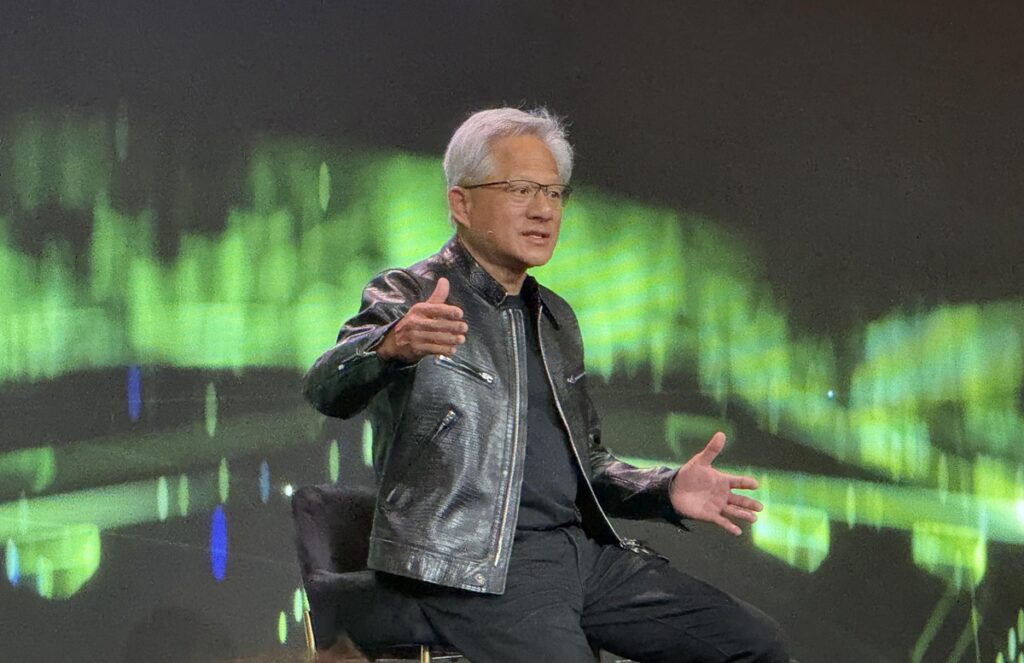
One of those people was Jensen Huang. He is the CEO of Nvidia (note: We did this interview before the recent Nvidia evenets). When I was at the San Jose Mercury News, I wrote the very first story ever on Nvidia.
At the time, they were one of something like 80 graphics chip companies in the world. They were all intent on making 3D graphics for games. I didn’t know whether he was going to succeed at that time. But he was always the most interesting character. And he had a different way of seeing the world and speaking in a way that motivated his people. I think that he used to tell his employees and engineers, we could be out of business in 30 days. This was the reason why they had to succeed at what they were doing.
And I think it was very interesting to see that they correctly pivoted at the right time. From being very focused on games. To using the programmable GPUs to think about computing other kinds of problems. Including AI. And I think that was perhaps why they’ve been so richly rewarded in the market. That they were really the first to realize that this is something that they should invest in. And sacrifice some of the current business that they had in the aims of developing a brand new market.
I think it’s not so different from the story about Andy Grove (former CEO of Intel). Who I also interviewed. Intel they decided to pivot away from making memory chips. To make the Intel microprocessor. Those legendary leaders. Andy Grove asked Gordon Moore, ‘If we got fired and a new CEO came in here, what would they do?’ Moore said ‘They would probably sell off the memory business and focus on the PC.’ And then Andy Grove said to him, ‘Why don’t we do that then?’

That was very interesting. And I think there’s also other people out there, like say, Seamus Blackley, who was one of the co-creators of the Xbox. And he has said that some of the hardest problems to solve are not in these purely technical spaces. But rather the convergence of many things all working together. And for him, that means games.
Even if you do perfect execution and get rid of all the bugs and come up with a great design. The thing you never know until you put it into the market is whether gamers are going to like it or not. And so gaming, even if you execute everything perfectly according to your plan, you can be totally wrong about what the market really wants. And so that to him is one of, say, the hardest kinds of problems to solve.
Even more difficult than coming up with some new technology. So it’s the application of that technology in a way that makes sense to benefit the most people out there.
I think of those people like Tim Sweeney. He was one of the people who figured out that the technologies that were converging fast enough to deliver something like the metaverse when he was talking about this more than 10 years ago. He said we’re just not that far away. And that belief drove a lot of the industry to think maybe this is the next big thing.
I think it didn’t work so far, but I think that dream was very relevant in times like the pandemic when everybody was stuck inside not being able to go outside and meet people. And so developing new technologies that could reach all those people. So Roblox did great.
It had spectacular growth during the pandemic. And so did Call of Duty: Warzone, the game that I played. It got 100 million players during that time. And so I think there have been plenty of times when different people in the game industry made a huge difference in terms of what direction. The industry is going or should go.
I look forward to finding more of those people and their perspectives. I think one of the things that I think I’ve learned from all of that journalism is that diversity of perspective is so important. The example that I always turned to was going back to how foreign correspondence covered the Vietnam War.
And the American government at the time was trying to get everybody to believe that we were winning the war and that we should just stick with it because victory was just around the corner. And then foreign correspondence would go into places like Saigon and into the rural fields of Vietnam and the mountains. And they would find that this is not true.
It looks like we’re losing. And our allies are not as nice as we think and that we’re also doing a lot of wrong things in these places. And they would send their stories back to Washington D.C. and to New York where all the editors were. And the editors were the ones who had the final say of what goes into the newspaper and what gets told on the news. And they would cross-check this information with the people that they knew. Like, are we winning the war?
And the people in the Pentagon where they had friends would say, yes, we’re winning the war. And so they changed the story and said, we’re winning the war. And so that failure to believe somebody else’s point of view could be important. It’s like when you’re inside a bubble, you can’t tell exactly what the truth is.
Like, we’re in an AI bubble now. But if you look at it from the outside, you have a new perspective on it. And I think that’s very important. And so I think having that diversity of perspective from people around the world is really what I believe is what can come out of game journalism.
Alex Xu: A lot of very valuable stories. You’re the whole history already. You’ve been making annual predictions for 14 years already. If I want to talk about that prediction topic, for example, maybe let’s think it a little bit longer. For example, five years or even 10 years. Looking back from 10 years later, what will be the prediction on the game industry, the whole world gaming industry, what will be the biggest change or the biggest surprise.
The current landscape is Sony, Xbox, PlayStation, Xbox, console, Apple, Google Play, mobile, and on PC, there’s Valve. You know, the landscape is something like that. And there’s a special market there in China, right? In China there’s no Google Play. There is Steam, but will Steam still be there? I don’t know. So what do is biggest change in the landscape of worldwide gaming industry in 10 years time, or maybe just five years? I mean, I think some of the trends that are already here will get more pronounced.
A prediction

Dean Takahashi: And one of the things I hope for is for the little guy to win, right?
And I think people used to talk about how testing games was the ground floor to get into the game industry. You became a game tester and then worked your way up and eventually you could become anything in the company. You could become a game designer, creative director, or you could become the CEO eventually. And I think that’s occasionally happened.
But I think there’s like a basement below the ground floor now. And the ground floor is very hard. It’s very difficult to get jobs at game companies. And we’re turning out a lot more people who want to make games than there are available jobs for them now. But the basement is user generated content. And it’s Roblox and Fortnite and Minecraft. And this is where you can learn how to make games.
And I think that in five years time, those people are going to own a lot more of the market. At the most recent Roblox Developer Conference, they announced a couple of things that are very significant. You’ll be able to play Roblox games in an offline mode. And you can share those games with another friend who can play them but doesn’t have a Roblox account. And they also have a WebAssembly that they’re using to create web versions of Roblox games. So that you, again, don’t have to log in. There’s no friction for you. You just share a link with somebody and you start playing that Roblox game.
Tim Sweeney looked at this from the outside at the rival company Epic Games. And he said, ‘Well, this is like the Roblox game engine now. And they are reducing friction and they’re making it so anyone can make a game using AI. And they can share those games across the whole world and not just inside Roblox.
A solo GTA VI?

And so I would hope that those are the people who are going to come to dominate the game industry. And that we’re going to return to smaller companies, all the mammals and not the dinosaurs that are making these games and succeeding. So five years from now, I hope that’s some of the future that we will see. And that it’s not so crazy to think that somebody could make Grand Theft Auto 6. Just one person.
Alex Xu: But do you think if everybody can make GTA 6 or 7 at home themselves, the platform companies, maybe not the current platform, but the future platform companies may own the whole universe because they can decide which game who can see which game. Just like with the mobile games right now, they are spending more than 95% of their revenue to acquire users, to use their acquisition. That’s their cost. How can you make people see your game, know your game? That costs you almost every penny. You have to beg the platform companies to give you traffic. The platform company become way more powerful than the current platforms. That’s scary as well.
Dean Takahashi: I would steal a comment from Seamus Blackley to address that. He remembered the movie Jurassic Park and how they tried to keep the dinosaurs inside the park and put up the electric fences to keep them in. The comment that the scientists had about this strategy was “life finds a way.” life finds a way to escape the park and to go where it needs to go.
And in the same way, the platforms are kind of like the parks where, the platform owners want to confine the games and the gamers and to constrain them so that they have to pay a tax whenever their games are shown to other people. And I think that games find a way as well, the same way that life finds a way. They manage to escape the platforms and they manage to implant themselves into the newest platforms where there are no constraints. And they can find growth that way. So I think people will try to confine the indie game makers and tax them in some way. And I think the gamers will try to find ways around that.
Alex Xu: Yeah, it makes a lot of sense. Maybe not us. The gamers are always smarter than us. The last topic is about your books. You write too many articles every day. That makes you very, very busy. But I still love to see your books. If someday you will have more relaxed time, I’m still looking forward to your new books. Maybe I can also contribute a few chapters within your new book about talking about China. What do you think? If you have time, you want to write new books, what are the topics you’ve been thinking in your brain? You really want to write a new book about what topic. Do you have any topics in your mind already?
Dean Takahashi: I don’t have as much time right now to do them. It is easier to write 20,000 stories than it is to write one or two books. Yes, that’s true. It takes a lot of discipline to get those books done. If I were to write something, I believe it would follow some of the same pattern that I’ve been talking about here.
That is, talk to as many people as you can and travel around the world to do that. Find out what it is you want to say. I think that’s a better way of approaching ideas and the truth than to come up with a preconceived notion that you have dreamed up from only your own perspective. Novelists are not the only people that are good at that. Journalists who have a preconceived notion and just one idea and one point of view. I think they’re not the best journalists.
Alex Xu: I really like the book written by Jason Schreier, Play Nice, about deep research into a history of a very famous company (Blizzard Entertainment). That kind of topic attracts me a lot. I have been always wanting to find a topic to write books. I have the same problem. I am too busy writing articles per week. One article per week for me is already a big burden.
I don’t have time to interview a lot of people focusing on one topic. Spend a lot of time on one topic for a book. That’s really hard for me. Whenever you have any idea, be sure to include me.
Dean Takahashi: That will be my honor. I appreciate the invitation. Thank you.
Alex Xu: Thank you so much for spending so much time talking with me. I always love to talk with you. Right after that 2017 Devcom interview, every game conference I always knock your door and have a conversation with you. I hope we can keep this going. I stopped traveling during COVID. Now, starting from this year’s Gamescom, I restarted traveling. I think I will see you offline more often in the future. Every few years, maybe we can have a new podcast, something talked about the future. Maybe five years time we can do a review one and see whether the gamers already invented a new way of finding games. Overthrowing the current platforms. I hope that happens.
Dean Takahashi: Let’s aim for that.
Alex Xu: Awesome. Thank you so much.