
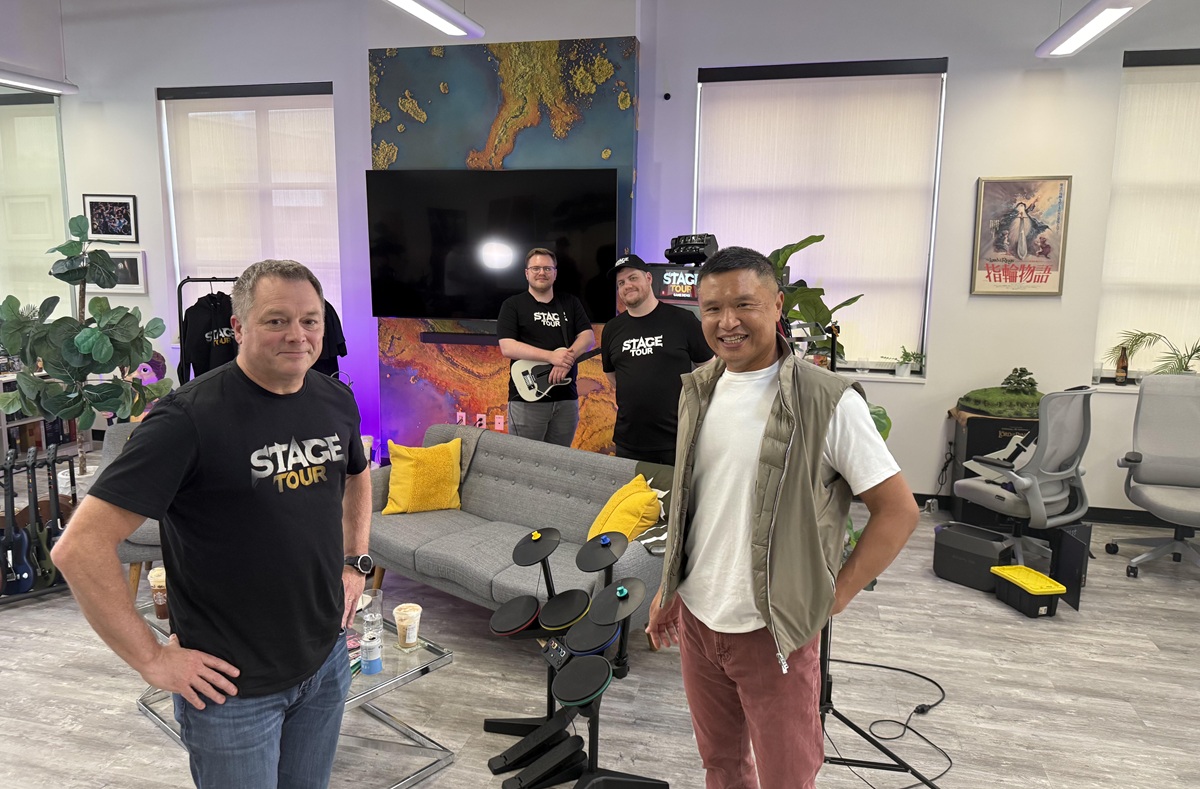
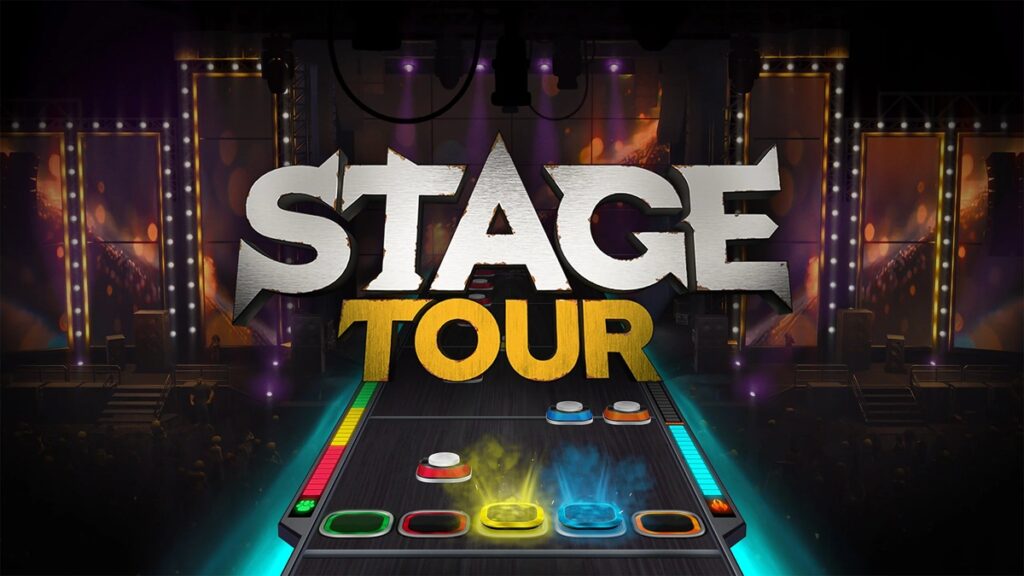
Once a gaming franchise dies off, it rarely gets on encore. That seemed to be the case with RedOctane, the company that brought us Guitar Hero, along with Activision. But now RedOctane Games has been reborn under the Embracer Group’s ownership (through its Fellowship Entertainment division). And the resulting Stage Tour will debut on December 10.
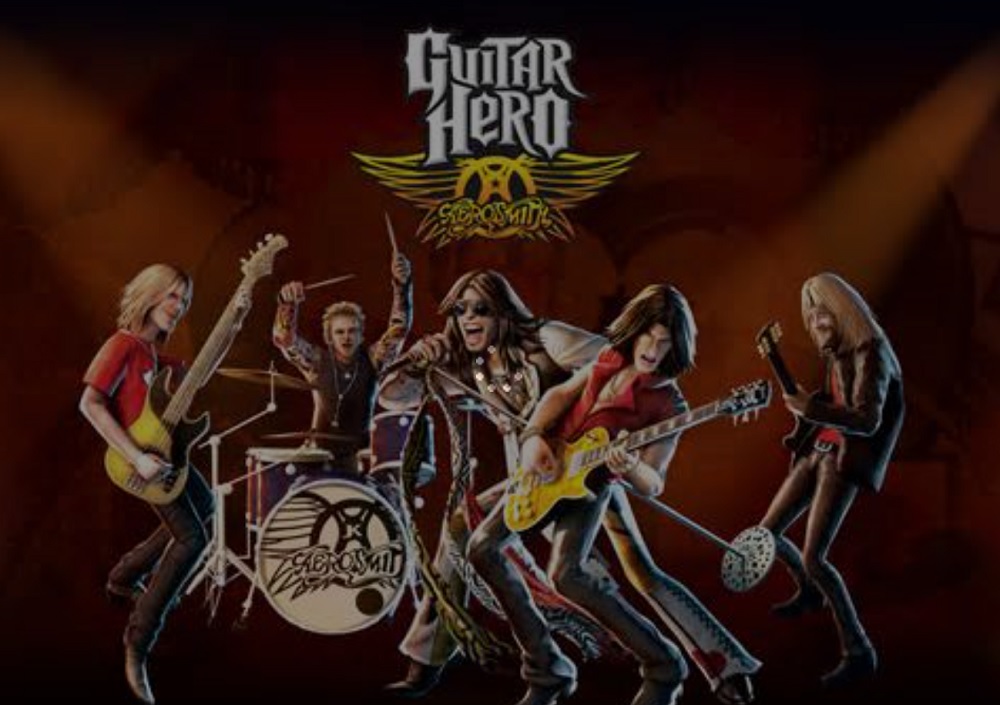
Guitar Hero debuted in 2005 and grew to $1 billion in sales by 2008. The franchise topped $2 billion in revenue — and then it collapsed because, along with Rock Band, music rhythm games based on Guitar Hero flooded into the market. While it rocketed to the top of the charts, Guitar Hero games died just as fast through oversaturation, much like the ill-fated Skylanders franchise.
But Lee Guinchard, the COO of Embracer Group and one of the original members of the RedOctane team, kept the dream alive. While his new company doesn’t own the Guitar Hero name, it has been able to create a grassroots-level team to create a new game, Stage Tour, from the ground up to revive the genre. The new RedOctane Games funded a small dev team and is publishing the title. Preorders are going well, and its trailer from Opening Night Live at Gamescom has been viewed more than 18.5 million times.
In addition, brothers Charles and Kai Huang, the original founders of RedOctane, joined a special advisory board for the company. Charles and Kai were the original founders of the Guitar Hero franchise back in 2005, having partnered with Harmonix Music Systems to launch the groundbreaking title that helped define a generation of rhythm gaming. They sold their RedOctane company to Activision for $99.9 million in 2006. By 2010, Activision shut RedOctane down.
Their involvement in the new project brings deep heritage and insight to the new studio’s future direction. I interviewed both Guinchard and Charles Huang at the Fellowship/RedOctane office in Livermore, California.
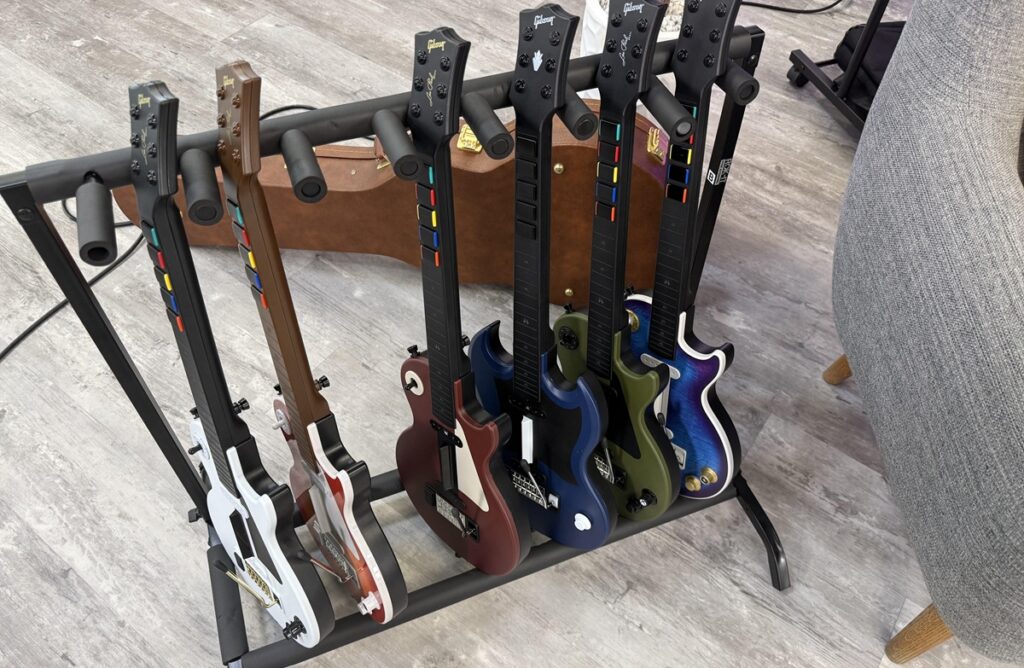
The $40 game will feature over 90 licensed tracks spanning six decades. Confirmed bands on the setlist include Metallica, Paramore, Blink-182, and Motley Crue. It is coming out on PlayStation 5, Xbox Series X|S, PC (Steam/Epic Games Store), and Nintendo Switch 2. There’s an official partnership with Gibson, where players will be able to unlock and collect more than 180 authentic in-game Gibson, Epiphone, and Kramer guitars, alongside 50+ unlockable bandmates. It has classic Quickplay, Practice, and Karaoke modes. And it includes a brand-new solo roguelite “Tour Mode” where every run presents unique challenges.
The hindsight for Guitar Hero’s demise
Charles Huang noted that on the days before the collapse 15 years ago, the RedOctane team became less important in the Activision view because it blew up so fast that they needed multiple studios to work on the various projects that were meant to feed the voracious demand. The teams involved hundreds of developers. The end came when there were multiple titles stacked every few months releasing to the public.
Huang said the original Guitar hero team had an “interesting mesh where there are the rhythm game guys at Red Octane. There were the music game people, and they’re kind of cool in bands in things like that. You fuse it together and that’s where the magic happens.”
The music and the game people had to be pushed together, Charles Huang said. The team had a lot of attention to detail, but over time, the franchise lost what made it special. At the same time, the competition with Rock Band further flooded music gaming. Inventory of guitars and unsold versions of the games piled up. Guinchard was well aware of these problems, and one of the early choices he made was to outsource the guitar making to Gibson.
Guinchard said, “I’ve said to Charles several times. ‘My God, this is like it was in the real old days.’ There are different people. But it feels special, like the old days. And now we have older people who are listening to the younglings. And, of ccourse, the young will listen to the old guys because there are a lot of things they don’t know about. They take the guidance. It’s magic, and it wasn’t planned. It just happens because everybody’s rowing in the same boat.”
How it was born
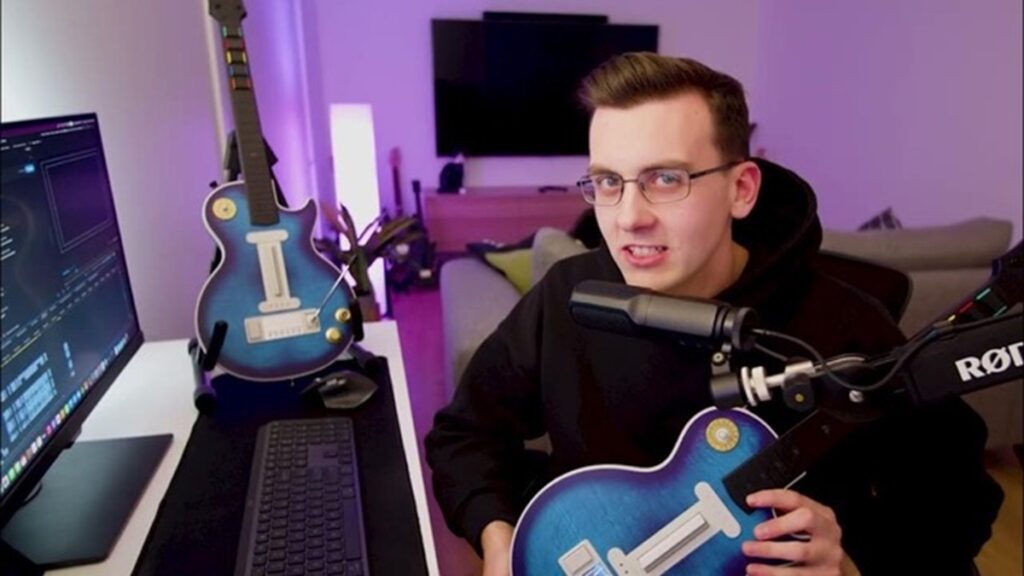
It turns out that the big fans of Guitar Hero never put the guitar down. And they banded together to bring music games back and give them another shot in the market. Guinchard investigated the post-collapse community and found people who kept plastic guitars alive.
“If you’re going to go and make a a reboot or a remake of something that hasn’t been out for ages, why wouldn’t you start back with the actual people that loved it?” Guinchard said.
Guinchard got the work going on a back burner, after Embracer had its crash, where it failed to raise a $2 billion round of funding and then had to sell off a lot of studios, close businesses and lay off a lot of people.
“I was still going to keep scratching around here, on weekends,” Guinchard said. “I started getting my screwdrivers out, mucking around, playing with these games from the community. Then I actually started to get to know these lads and I stuck myself into those communities.”
“One of my first places to go was to hang out with people that really care about it, not just a load of you know suits and shit, and what I found was it was way bigger than I thought,” Guinchard said. “The groundswell. The people doing all these streaming streams very well, and the knowledge about the past because they were in it from the very very beginning.”
He acknowledged the community was in the weeds some, talking about the supply chain and how to do things and why there was some bit of code from the early Guitar Hero games. Guinchard figured out a license from Xbox on controllers could fix some problems and the community appreciated the authenticity that went back for years. One of the key problems was nailing down the latency, or lag when someone pressed a button on a guitar and causing something to happen on the screen.
He added, “I really start to get into this. How would this work?”
Meanwhile, Guinchard had to work on the Middle-earth franchise and help in the restructuring. And then came the CRKD guitars, born from the community as a modern plastic guitar. And rather than make a clone of an existing guitar, the team decided to get a license. So Guinchard sent someone to talk with Gibson’s people to do a Les Paul game controller guitar. That happened quickly.
Guinchard brought the top people in the community to the office to play with a new guitar. He started to talk to them about what a new game should look like. They talk about the game modes and how to stick with some core features.
“And we were away at the races,” he said.
At first, he hired them all for three months and wanted to see what would happen. After a few weeks, it was clear the team was serious. They decided to create the code from the ground up, rather than go with open source.
Guinchard said he didn’t just want to hire them to build one game. He wanted to create a studio and then build an ongoing business. Guinchard hired Simon Eberger, who handled Guitar Hero production at Neversoft and went on to Vicarious Visions, which eventually made Diablo 4. Eberger found that the team had a lot of discipline and came on board as studio head.
They put a budget together and enlisted co-development partners, or external developers working for another company. They found a group that had experience on music rhythm games. Those teams got to work on taking the game to new platforms like the Nintendo Switch 2.
Pitching the idea
Guinchard brought the idea up to Lars Wingefors, CEO of Embracer Group, the controversial Swedish company that raised a ton of money and bought more than 100 game studios — and then shed many of them once it could no longer get funding to keep it all going. Wingefors gave him the green light, but he wanted Guinchard to move deliberately — not create a huge triple-A team to get a major game or remake out the door.
Guinchard had permission to use his Freemode division of Fellowship Entertainment to experiment with a new game. And for some reason, Activision kept the Guitar Hero name but it let go of RedOctane. And so Embracer was free to create a new studio, RedOctane Games, in 2025, headed by Simon Ebeler.
It was a small effort, just like the original Guitar Hero, which took about 30 people to make back in 2005, Huang said. And Guinchard’s RedOctane Games team managed to get Stage Tour built with 10 to 15 people. (That doesn’t include around 20 or so contributors who helped with the note charts, or matching song notes to the graphics on screen). The mission was to keep what was great about Guitar Hero — the plastic guitars, now made separately by Gibson — and evolve the rhythm game with 20 years of player feedback.
Guinchard said the approach was to work with the underground community that built their own games and kept the genre alive and never stopped playing. It’s not a corporate revival, but a return from the fans up, he said.
Everyone has memories of the heady days when Guitar Hero was king. Rock Band, built by Harmonix and Electronic Arts, later emerged as competition. And DJ Hero helped further expand the market by making the rhythm games into social experiences. People who rarely played games picked up plastic guitars and their living rooms became stages, Guinchard said.
Friends formed imaginary bands. Children discovered music their parents loved, while parents discovered bands their parents listened to. Guitar hero was a social and cultural phenomenon, but eventually the economics stopped working. Physical inventory in stores piled up. Plastic guitars sitting on store shelves were returned by the retailers. The industry hit the brakes.
But Guinchard contends that, for the next decade, music gaming did not disappear. It moved away from the mainstream industry and into the hands of the people who cared most. One of the results was Clone Hero. YARG followed. Old guitars were repaired, adapters were built and custom charts appeared by the thousand, Guinchard said.
Fans modified controllers and experimented with latency, polling rates, highway speeds and calibration. Entire communities formed around games the traditional industry had effectively abandoned, Guinchard said. Without intending to be, these communities were running the longest user research program in the history of the genre. They knew what worked, what did not and exactly where the old games could be improved.
The same went for reinventing the modern guitar plastic game controller. Tim Clark, one of the people in those early conversations, told Guinchard to “start with the guitar.” So rather than committing tens of millions of dollars to a new rhythm title, the emerging team began
experimenting with what a modern guitar controller could be.
They liked Hall Effect sensing, better switches, modern wireless performance, firmware, apps, compatibility with the games fans were already playing and twenty years of hardware lessons.
CRKD, a young collectible gaming hardware business inside the group, had the industrial design, manufacturing, firmware and direct-to-consumer capability to actually build it. That made CRKD the bridge between talking about music games and something fans could hold, Guinchard said.
Starting with the instrument also reduced the risk. The team did not need to prove immediately that millions of people wanted a new rhythm game. It could first discover whether people still wanted to pick up a guitar. The answer became clear quickly. They did.
A greenlight
The team took the project to Wingefors and the board, targeting a fixed budget.
Guinchard told Wingefors, “I’ve got this thing. Trust me on this one. Believe me, it’s just something that we need to do.”
He pitched the idea of doing an ongoing business, rather than just a game.
He go the full green light in July 2025, and the pitch worked because the budget wasn’t ambitious in the triple-A way. It wasn’t in the hundreds of millions of dollars, or even tens of millions. Guinchard was able to do this because he had been given the charter to experiment within Embracer through the Freemode division. The original title was Stage Legend, as Guitar Hero wasn’t available. The name eventually evolved into Stage Tour. But it turned out that the RedOctane name was available because Activision changed the division name to Guitar Hero and gave it up when it closed down the studio.
Guinchard brought in the Huang brothers, who were old friends, and the younger developers were in awe. They got along well and the Huangs came on as advisers.
“It was more like a sanity check,” Charles Huang said in our interview. “Lee was trying to push this through Embracer and he told me about it. I started thinking about it. It seemed like the younger folks have so much better a grasp of what they should be building today.”
Asked if he wanted to join the team, Charles joked, “I’m happily retired, sitting on my rocking chair, staring in the backyard.” (He’s actually running marathons with his wife).
He added, “Actually, it’s always exciting to be around people with energy, and just the fact they build something called YARG and there were people streaming it and watching. I thought, ‘hell yeah.'”
A market starts to reappear
Fortnite Festival, then changed the atmosphere. Epic Games acquired Harmonix, the music game studio behind part of Guitar Hero and all of Rock Band, in 2021. Then it brought music rhythm games back to modern fans.
Its significance was not that it recreated Guitar Hero. It did not. Its importance was that one of the world’s largest entertainment platforms was teaching a new generation the basic language of music games: notes moving down highways, timing, combos, difficulty progression and the idea of playing songs rather than simply listening to them, Guinchard said. He was encouraged at the good feedback.
The new studio started from conversations that Guinchard had with Brian Bright, Tim Clark and John Devecka. Lore Hero, a podcast, captured some of the comeback story.
Bright was involved in the community around Clone Hero and a newer game dubbed YARG (Yet Another Rhythm Game). They continued to demonstrate that the dedicated audience had never gone anywhere. Two signals were appearing at once. A mainstream audience could still understand and enjoy the genre, and the core community still cared deeply about it.
The question was no longer whether anyone still wanted music games. It became what a music game designed today should actually look like. And the people best placed to answer that question were not inside a publisher, he said.
The community becomes the team
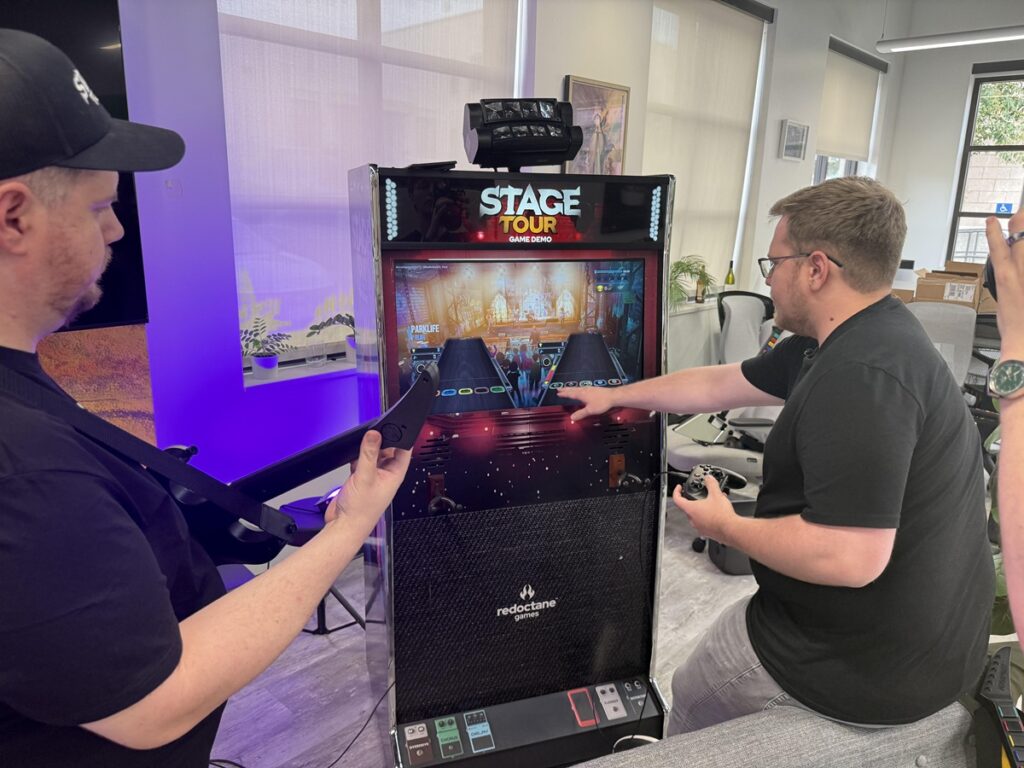
This is the heart of the Stage Tour story, he said. The community was not researched, surveyed or consulted. It was hired.
People from the Clone Hero and YARG worlds joined. Members of the Lore Hero team contributed ideas, then joined the project and helped steer the vision. Charters, modders and tool builders who had spent years understanding what dedicated rhythm fans wanted began working alongside people who had helped build the original commercial phenomenon.
It created an unusual combination. The veterans knew why Guitar Hero had become enormous. The community knew why people were still playing music games years after publishers stopped making them. One understood the phenomenon. The other understood its evolution, Guinchard said.
That changes what gets built. When the people writing the engine are the same people who spent a decade arguing about calibration on Discord, the small things that make a music game feel right are not a polish pass at the end. They are the starting point.
A community that stayed with music games, post collapse
Alex (EliteAsian123) worked on YARG when he was 16 in high school during COVID-19 in Canada. He had seen the Clone Hero game and then decided he wanted to build something better. He teamed up with other people in the community and launched the game in 2023. Hardcore fans thought it was cool. Guinchard met Alex when he was about 20 and was in the middle of college.
“I thought, ‘My god. This kid is a really good engineer,'” Guinchard said.
Alex decided to join and take his last year of college off. He brought the ability to make just about every plastic guitar from the past work on the game.
I watched a couple of community members play perfect games — with no notes missed — on Stage hero in the office. Nick Rakers, a streamer and musician from Melbourne, Australia, started playing Guitar Hero as a kid and became very good at it before getting into real guitars and singing. He now has his own indie band and works as a sound engineer for his day job. Rakers wrote and performed the song in the Stage Tour “Play Your Way” trailer.
Jacob Inselmann, known online as awisemoose, started making YouTube videos as a kid back in the original Guitar Hero days and became one of the community’s leading content creators and streamers. He joined RedOctane Games as the community manager at the very beginning of the project and has been heavily involved in playtesting and providing feedback throughout the game’s development.
The community also included people who were good at note charting, where they had to precisely time the graphics on the screen with the pace of the sound notes. It’s a skill that was spread out across the community and the team tapped those people.
The game has a high difficulty at the top, but it comes with medium and easy settings that mainstream players should be able to enjoy.
The thread connecting both eras
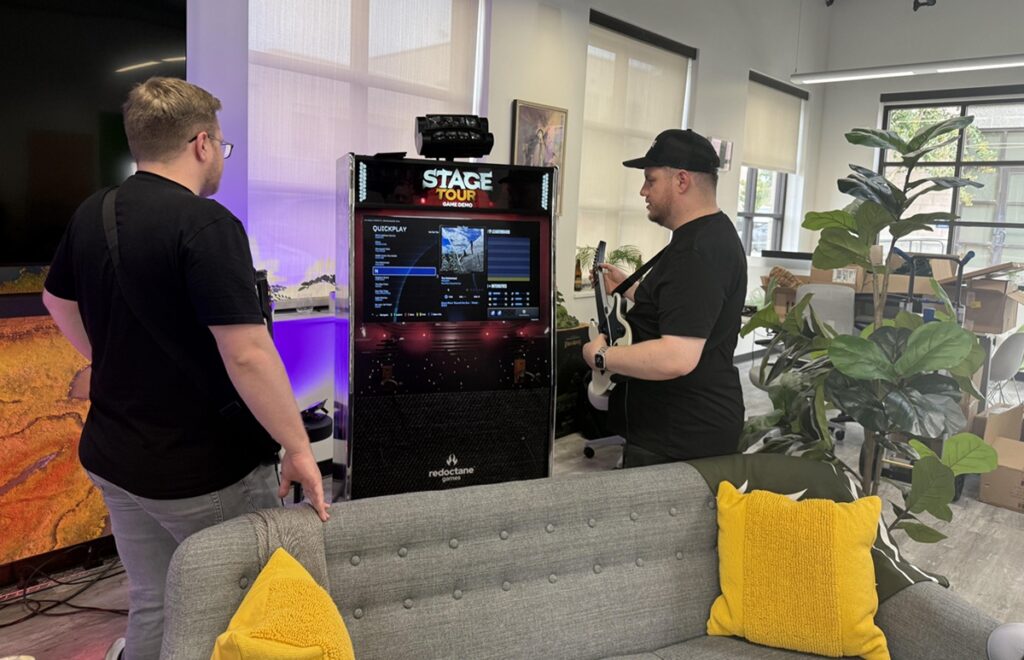
A few people carried a direct line from the first era into this one. Charles and Kai Huang, founders of the original RedOctane, had stayed in touch with the people they built it with.
Guinchard had worked with them before the $99.9 million Activision acquisition in 2006 and stayed involved with Guitar Hero through to its final chapter. He was one of the people left turning the lights off when it ended. Years later he was one of the people helping turn them back on, this time as a cofounder of the new RedOctane. Today Guinchard is COO of Embracer Group, which will spin out Fellowship Entertainment in 2027 with RedOctane Games as part of it. He is also COO of Fellowship, working alongside CEO Phil Rogers.
That continuity mattered less as a management story and more as a memory. Someone who had seen the category at its beginning, at its peak and at its end could help the new team understand what had made it work, and what had gone wrong when the industry tried to scale it faster than fans could keep up, Guinchard said.
A home for it to happen
The environment this grew in deserves a brief mention. Embracer Group’s Freemode division had been assembled with an unusual mix: gaming hardware, retro and heritage gaming, ecommerce, music technology through Singtrix and John Devecka, and game development.
Nobody set it up to bring music games back. There was no Stage Tour roadmap in a drawer.
But restarting music games was never just a software problem. It was an ecosystem problem, needing developers, hardware engineers, manufacturing, music licensing, console relationships, ecommerce, marketing and community all in one place.
Freemode happened to have most of those pieces, and the room to let a small experiment grow without turning it into a corporate project before it was ready. That is the extent of the corporate story. The rest of it belongs to the people who built the game, he said.
RedOctane returns

Eventually the project became too substantial to remain an experiment. In August 2025, RedOctane Games was announced when Guinchard did an exclusive interview with GamesBaet.
The Huangs returned as advisers. Simon Ebejer, whose career included Guitar Hero production at Neversoft and later senior roles at Blizzard, became studio head. Developers from the modern rhythm community joined veterans of the original era.
The name carried history, but the objective was not to recreate the old company or reproduce the past. It was to combine the experience of the original era with everything the community had learned in the years since.
Familiar, but fresh
The philosophy behind the new RedOctane is simple. There is no reason to pretend the old games were not great, and no value in changing things simply for the sake of changing them. At the same time, twenty years of development and community learning cannot be ignored.
That thinking became Stage Tour. The fundamentals are immediately recognizable. Notes travel toward you, music is at the center, scores matter and improvement feels rewarding. Around those fundamentals is a game built for how people play today.
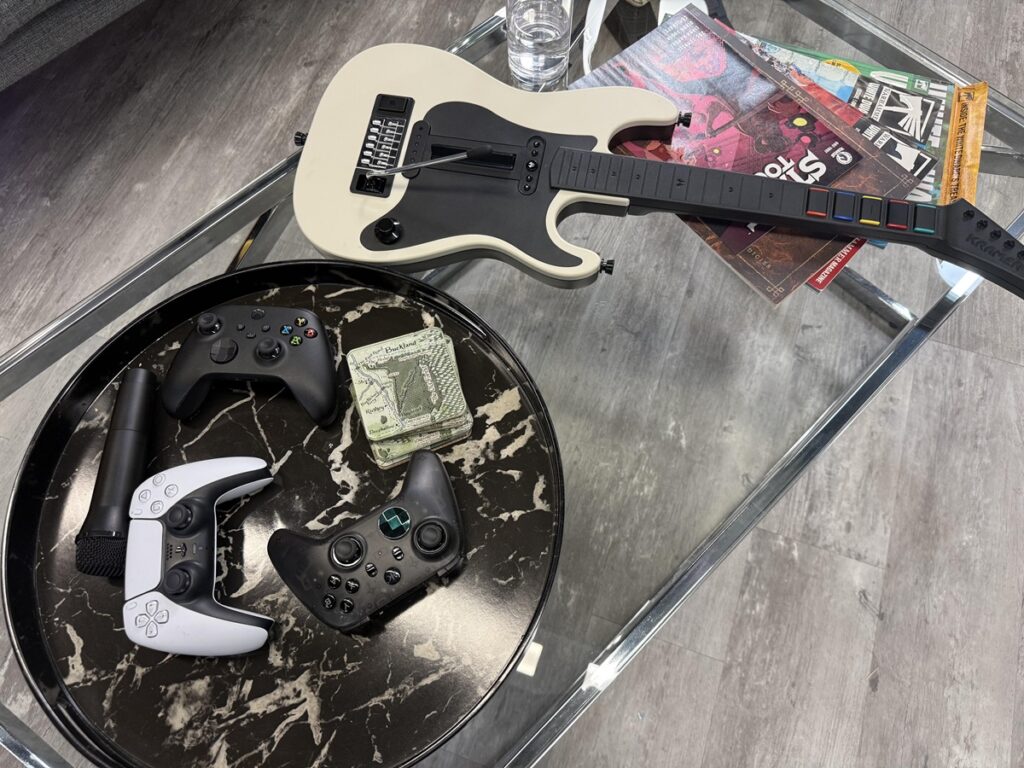
Guitar, drums, microphones, gamepads and keyboard all have a place. Fans can play solo, on the couch or online. They can approach the game casually or competitively. Modern controllers sit alongside legacy hardware that fans have kept working for two decades.
One fan can spend an evening chasing an Expert leaderboard score. Another can pick up a gamepad and simply play. Four friends can create a completely different social experience again. The instrument no longer decides whether someone is allowed into the party.
Validation for Play Your Way.
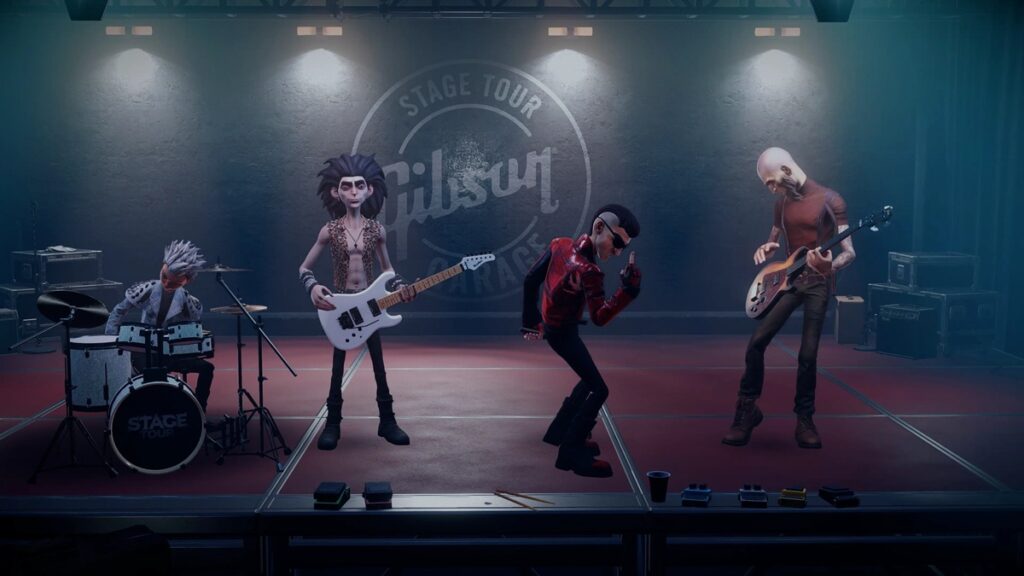
Then Gamescom happened By 2026, something that had started as conversations between a handful of people had become a real multi-platform videogame. Stage Tour appeared at Gamescom Opening Night Live alongside some of the biggest games in the world.
The team sat in the audience at Opening Night Live at Gamescom in Germany. The crowd roared when the trailer, which RedOctane Games made on its own, played. In front of the team was a fan who took a picture of the QR code and ordered a bundle on the spot.
Now the team has preorders running on the web site. Guinchard can’t say what the numbers are yet, but he added about the early preorders, “They are running about 10 times are what we really thought.”
Various trailers are being viewed a lot, and the Gamescom video has been viewed 18.5 million times. Marketing has been by word of mouth. Digital preorders opened last week, and the team unveiled the arcade mode and backward compatibility with guitars.
The reaction mattered because it felt different from nostalgia. People were not only saying they
remembered Guitar Hero. There was a sense of surprise that this kind of experience was truly
returning, and recognition from the community that the people making it understood what they had been asking for.
That distinction is important. Nostalgia can generate a trailer view, sell a retro controller or support a limited edition. If people want new songs, new instruments, new modes and new experiences, there may be a functioning genre again.
Paid demand changes the conversation
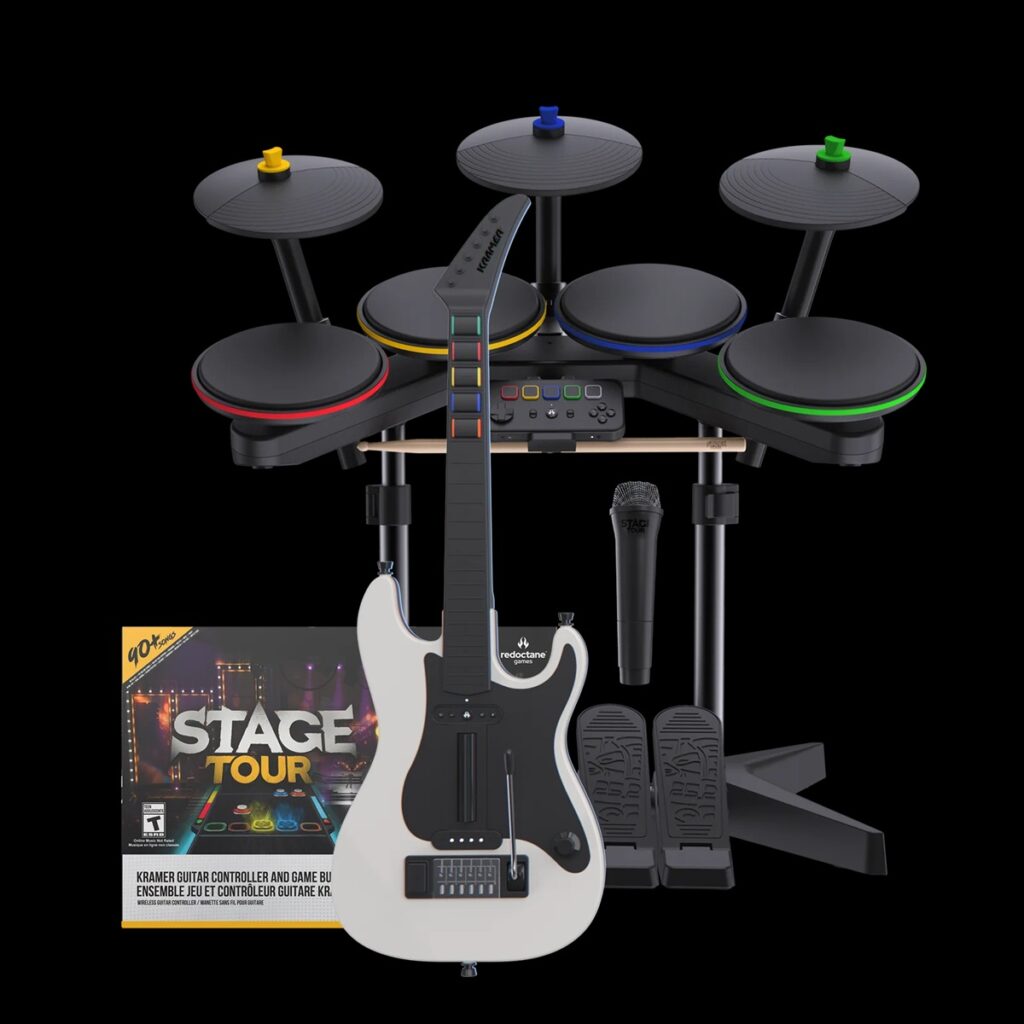
The next surprise was the level of commitment from fans. The team had hoped the Gamescom reveal would connect, but the response went well beyond expectations. Everyone involved was blown away, Guinchard said. What mattered was not the volume of conversation. People were committing to Stage Tour. They were buying the game, ordering instruments and putting real confidence behind the idea that music games could matter again.
That does not determine what happens next. The game still has to launch, fans have to enjoy it, reviews matter, hardware has to perform and the content pipeline has to keep flowing. But there is a difference between people saying they miss music games and people deciding they want to be part of their return.
A different development model
Stage Tour has been built on something much closer to an indie development budget than the $100 million or more budgets increasingly associated with major video game productions.
That constraint shaped the project from the beginning. The objective was never to compete by spending more. It was to keep the team focused and put resources into the things that matter most to a music game: how it plays, how it feels, the songs, the charts, the instruments, latency, playing together and the community around it.
It also means accepting that not every part of the game needs to arrive at the scale of a blockbuster that had hundreds of developers on it for years. Stage Tour can evolve. Environments can become richer. Characters can grow. Presentation can improve. New songs, modes, instruments and experiences can be added over time, with the community involved in deciding what comes next.
That is the same way Clone Hero and YARG grew. Get the foundation right. Ship. Listen. Improve. The difference is that this time it has a studio, a hardware company and a music licensing team behind it.
Build the instrument. Prove people still care. Build the game. Listen to the community. Keep improving it. If that model works, it may show something more important than whether one game succeeds. It may show that music games can be a sustainable category again.
What happens if Stage Tour works?
Success does not necessarily mean immediately making Stage Tour 2. It could mean creating
something the games industry has not had independently at scale for a long time: a music game platform.
Guitar is one part of it. Drums expand it. Vocals expand it again. Gamepad play lowers the barrier to entry. New songs continually refresh the experience. Events bring artists, bands and entertainment properties into the world. New hardware creates new ways of playing. Over time, different musical experiences can sit around the same ecosystem, Guinchard said.
The interesting word may be platform rather than game. If RedOctane can connect software, music, hardware and community sustainably, the opportunity becomes considerably larger than recreating Guitar Hero. It becomes a question of what music gaming should look like for the next decade, Guinchard said.
After the December launch, the team will work on downloadable content (DLC), where there may be a theme with a number of songs, more characters and more Gibson guitars. There’s a lot of rock and metal, with music spanning six decades, as well as some for the younger audience. The aim is to get people to replay the songs and do it in a social way. The guitar bundles are another way to generate higher sales at launch. And there is also a direct-to-consumer web site where players can order as well.
“The idea is, Red Octane Stage Tour just becomes a business. It’s kind of paid live service in a sense, right? And you keep updating the game over time,” Guinchard said. “You keep this small team, and they’re constantly working on updating the game. So you don’t have to have a whole new team to do Stage Tour 2. The Stage Tour 2. There’s just Stage Tour.”
As far as the larger strategy of Fellowship, which could be spun off next year outside of Embracer, the idea is to get a full lineup of great games in formation.
The IPs under ownership include Middle-earth Enterprises (The Lord of the Rings), Tomb Raider, Kingdom Come Deliverance, Metro and Darksiders. Its studios include Crystal Dynamics, RedOctane, Eidos Montreal, 4A Games, Warhorse Studios, Dambuster Studios, Flying Wild Hog, Gunfire Games, Fishlabs and Dark Horse Media (Dark Horse comics). There are new Tomb Raider and Metro games coming soon.
Perhaps music games never died
There is a simple interpretation of what happened to music games. They became enormous, the market became oversupplied, consumers became exhausted and the genre died.
Perhaps the last part was wrong. Maybe the genre did not die. The business model did. The evidence was sitting in plain sight. People kept repairing twenty-year-old guitars. They built
adapters, created Clone Hero and YARG, made charts, competed for scores and kept playing.
Meanwhile, technology improved. Digital distribution became normal.
Direct-to-consumer commerce became practical. Controller technology got better. Manufacturing became more flexible. Online communities became more powerful and development tools became cheaper. Eventually an entire generation appeared for whom Guitar Hero was not something they were tired of. It was something older fans kept telling them was incredible.
Maybe the surprising thing is not that music games are returning. Maybe the surprising thing is that it took this long.
The unlikely encore
Somewhere in the middle of a difficult few years for the games industry, a few people started talking about music games again. Some had been there the first time. Others had spent the intervening years keeping the genre alive in their bedrooms and on their Discord servers. Some knew software, some hardware, some manufacturing, some music and some community.
They built a guitar. The guitar became an ecosystem. The ecosystem attracted developers from the community. The developers became a studio. The studio became a game. The game may now help reopen an entire category.
There was no grand master plan. Perhaps that is precisely why it happened. Industries are not always revived because somebody decides they have found the next billion-dollar market. Sometimes they come back because a relatively small group of people never stopped believing that something was fun.
The first era of music games was built around a phenomenon. The second is being built around a community. This time, the people who never put the guitar down are the ones building it, Guinchard said.