
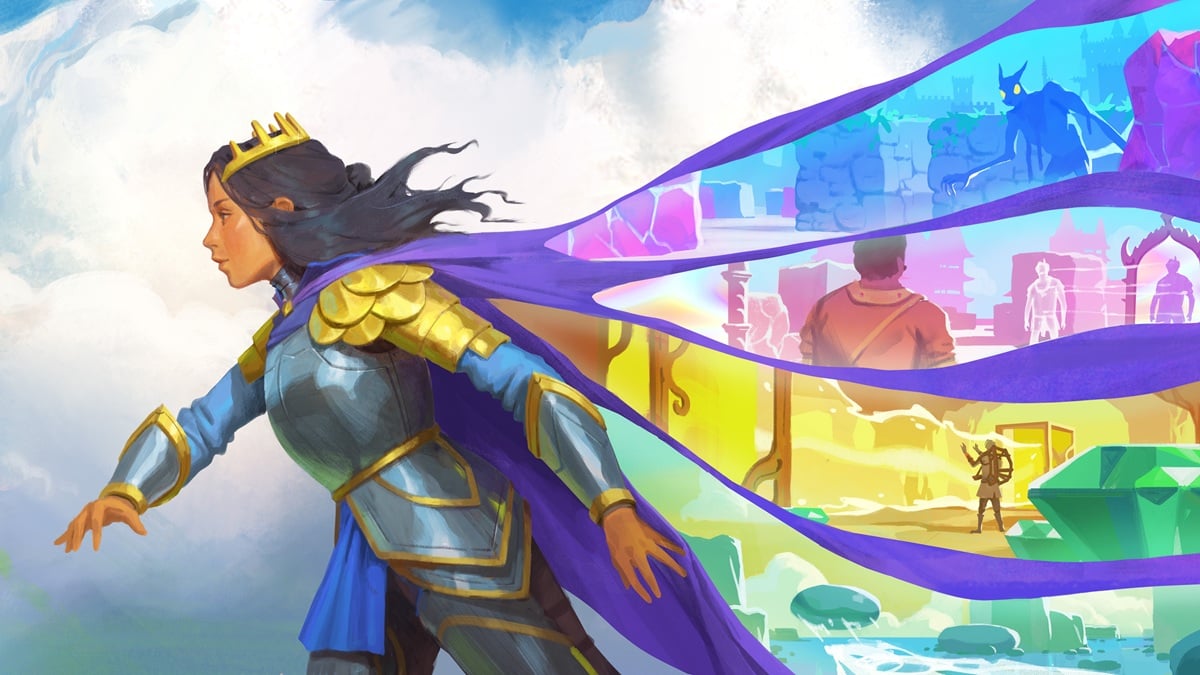
It took more than 10 years for Thekla to finish its latest puzzle game, Order of the Sinking Star.
For creator Jonathan Blow, leading the small team of 10 or so people has been a long journey to make the biggest puzzle game ever with as many as 1,500 puzzles. The maker of Braid (2008) and The Witness has taken progressively longer to make each of his games, but he has done so in his own unique and uncompromising way.
The game has no microtransactions or other fees beyond the $30 price. It shipped last Thursday and, in a crowded gaming market, it’s among the most unique and original titles you’ll find in the gaming market.
The journey was not without struggle or worry. A couple of years ago, Thekla was in danger of running out of money, despite the riches from the success of The Witness, and Blow didn’t necessarily want to use all of that money on the new game. So Thekla secured a publishing partner in Arc Games,
That enabled the indie game studio to get to the market and come up with something polished in time for the fall season. Blow said he thinks of the game as a “game design supercollider” because it has four worlds within the game and it takes inspiration from earlier puzzle games.
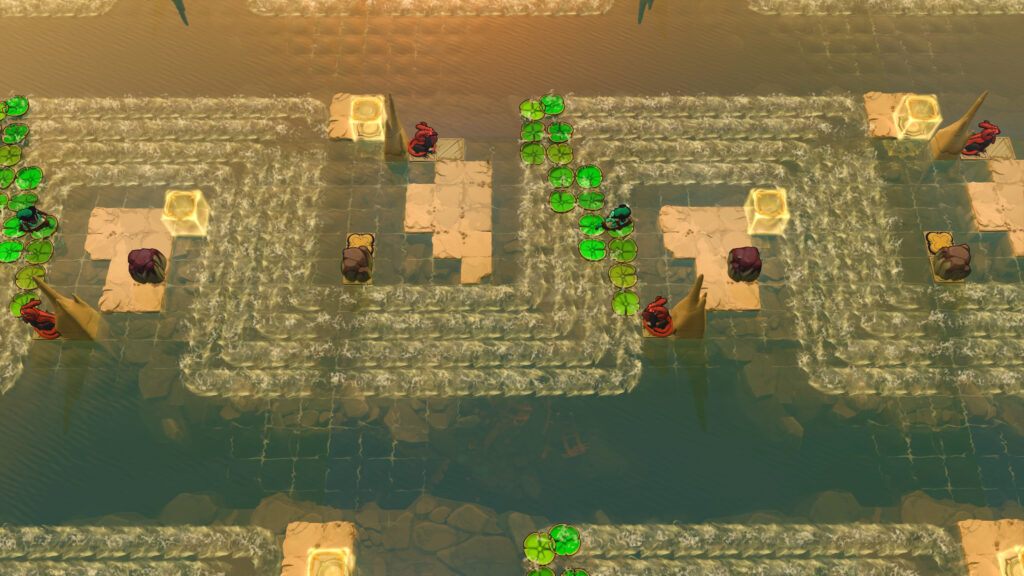
Blow recognized the contribution those games made to the puzzle genre, but he felt he could add to their experience and secured permission to use them in his title. He brought the mechanics of titles like Alan Hazelden’s 2014 game Mirror Isles, which uses mirrors to swap your position and thereby cross from one island to another. He also used Hazelden’s Skipping Stones to Lonely Homes, where players skip stones in water to create pathways.
To build the game, his team created a new programming language, Jai, from scratch, as wells as a custom game engine.
Blow enjoys being experimental, yet he does not embrace everything new. He’s not a fan of AI technology, even if it could help him port the code of the game to a new platform more easily. He doesn’t mind being outspoken as an independent game developer, and he shared his own views of layoffs in the game industry.
And while he agreed to team up with Arc Games in publishing the title, he has not compromised on a creative vision and always focused on making something unique in the market.
He noted the next project will be easier in part because both the custom engine and the programming language are done. And he will focus on being unique.
“That’s always where I’ve wanted to be. It’s just my personality,” he told me. “I never wanted to do stuff if other people were going to do it. I always wanted to be doing the things that nobody would do if I didn’t do them. That definitely describes this game, oh boy. That will become more and more clear to people the longer it’s out and the further they get into the game. There’s a bunch of surprises.”
Here’s an edited transcript of our interview. The game is available now on the PC via Steam, Steam Deck, Nintendo Switch 2 and PlayStation 5. Arc Games gave me a copy of the game for the purpose of this story and review.
GamesBeat: Congrats on the big day.
Jonathan Blow: I’m happy that the game is finally out. As you’ve alluded to, it’s been frickin’ forever. Of course what you hope for, after working that hard on something for a really long time, is that people are going to appreciate it. That appears to have happened. We’re getting really nice responses. The reviews on Steam are super good.
It’s funny, because it almost didn’t–I was doing so much work in the last month to get everything done. By the time launch day rolled around, it just didn’t seem real. Oh, I guess it’s launch day now? I guess we’ll see what happens? But all the pressure was in the week before that.
GamesBeat: Even if you took a long time to get it done, you still have to survive the last 30 days.
Blow: It’s shocking, too. Probably most developers have a thing like this. But you just get a lot done in the last week or two weeks, because everyone on the team knows that it’s going out to people. This is it. Even though everyone at the company is super productive, there’s always this phenomenon where, in the last week or two, just an insane amount of things happen. The game really comes together.
GamesBeat: I hear good things. In so many ways, this is unique. People see it as something nobody else has tried to do.
Blow: As an indie–indie means a lot of things now. But as an indie on the creative end, that’s one of the strengths. On the one hand, you’re not triple-A, so–while I would have said normally you’re not competing with Call of Duty or something, the Wardogs guys just managed to do that. But usually, for most of us, we’re not trying to operate on that scale. The strategy is just different.
Part of the strategy is, if you’re interesting in a way that other games aren’t, if you’re doing something different that other games are not doing, then hopefully–it’s always a bit scary every time you put a game out there, because it’s always different. Are people going to appreciate this? But the theory is that yes, there will be a decent number of people. That has held true three out of three times. We’ll keep doing it. But who knows? It’s always a risk.
GamesBeat: Did you set out with particular goals in mind? Did they include doing a thousand puzzles?
Blow: Well, if I were smart enough I would have foreseen the thousand puzzles, but I didn’t.
GamesBeat: I guess it’s actually 1,500?
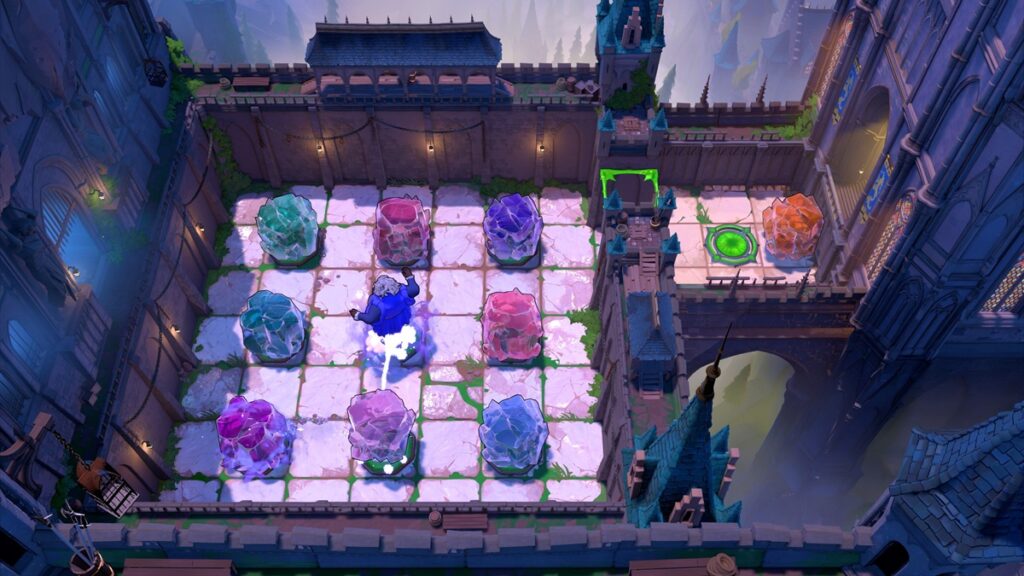
Blow: It depends on what you count. We said more than 1,000, because that’s a round number. But it’s really around 1,500 depending on what you count as a puzzle. The core design idea–there were a bunch of ideas. There were these games in simple systems like PuzzleScript, as you know. They had very limited graphics, but I thought they had really nice designs. I wanted to get more exposure for those games. That was dovetailing in my mind with this idea I had after The Witness. In The Witness, the way the game design works is you get introduced to these little puzzle symbols, and then they get put together later. It’s interesting and fun because when they come together, there are surprises. Oh, I thought I knew the rules to this thing and that thing, but it turns out there are more details. We can make fun things happen.
In this game I thought, “What if we just put ingredients together again to generate surprise, but what if those ingredients, instead of being these tiny simple things, were whole games?” I was looking at these PuzzleScript games – they’re not all in PuzzleScript, but some of them are – and I thought, “If I select the right starting games that will combine with each other in fun ways, then this can be a sort of game design supercollider where you bring all these rulesets together and they mash in the middle and generate a huge explosion of possibilities.”
That was the idea. Somehow, though, I just didn’t think that huge explosion of possibilities would mean a big game. Maybe that’s just not me thinking it through. Maybe I willfully didn’t notice that part in order to trick myself into making the game. I don’t know exactly. But that’s how it came to be. The fact that it’s a big game comes from the core design idea about wanting to put these rulesets together. It’s not just an arbitrary thing.
One other piece of motivation I can fill in there to help it make sense is just–I’ve been thinking about game design pretty hard for a long time. I did the experimental gameplay workshop at GDC for many years before handing that off to other people. That was always a place where we showcased experimental things people were doing. I was always thinking about how you make designs that are new. A lot of times, when games get made, they’ll have new characters. They’ll put creativity into the characters or the settings. But often the design isn’t that new. It’ll be a copy of another game with a couple of incremental changes or whatever. I was always interested in pushing that forward.
One thing that I noticed – especially with puzzle games, but really all kinds of games – is that even if you’re trying to do something new, because it’s unknown, you’re trying to figure it out in the beginning. How does the game work? What are the rules in the game, the objects in the game? What is the player trying to do? Usually that doesn’t work that well in the beginning. You just keep revising it. If you’re a good designer you keep playing around with it until it works better and better.
At some point you reach a place where everything functions and it’s fun. Then you ship the game, because nobody sits on games a lot longer than they have to, because they’re so difficult to make and so expensive to make. They take years even if you’re not doing a mega-project like this. All these games sort of tend to get released at the same level of what I’m going to call interactive complexity, for lack of a better word. You made the rules more interesting until you got to the point where it was good, and then it goes out.
Part of what we did with this game is we said, “Let’s force ourselves to go above that ceiling by starting with things that are already fun.” They’re smaller games, but each of them is already intact and already fun. Then, when we put that together, we launched up to someplace that’s bigger or more complex and interesting than we would have gotten organically if we were doing this thing we normally do about just building up a game element by element. That was the idea. It should have been super obvious. But that’s how I explain it to myself now. If you went back and listened to me explain the idea of the game 10 years ago, it might have sounded a little different. I don’t remember. But that’s how I see it today.
GamesBeat: The Mirror Isles example, what do you think you get out of it through–I suppose you could call it a retelling, or a mixtape of it or something. What was the intention behind including something that someone else had created in this so you could do something different with it?
Blow: There’s two levels. The base level is just, let’s make a version of this game that will be more appealing to a regular gamer. The source games, like Mirror Isles and Heroes of Sokoban, were free web games back in the day. The graphics were very primitive and the sound effects were almost nonexistent. The level designs were not that polished in some cases. People who were very enthusiastic about game design, I think, were the people who played these. But they didn’t escape into the mainstream at all. I think that’s validated by the fact that any time I talk about this, nobody has ever heard of these games. Even though they were fun and good and free, they just didn’t get traction.
So part of it was, let’s get recognition for these designers and these games by just taking those designs and both making them a lot more graphically and sonically rich, to meet the expectations of what people want when they download something off Steam or PlayStation or whatever, but also, let’s refine the designs. One of the problems with puzzle games historically is that a lot of them, most puzzle games, are a bit too hostile for regular people. That’s why puzzle enthusiasts gravitate toward them. Once in a while there’s a puzzle game that breaks through to the mainstream, but even then, often it will be a situation where people are super into it for about the first half, and then they bounce off, because it just gets grueling.
We wanted to make something that shows people what’s really cool about these games, but is more approachable, but without dumbing it down and turning it into fake puzzles, which is the other approach. There’s lots of puzzle games on iOS or whatever where they’re supposedly puzzles, but you just drag some things around until you’ve solved the puzzle. It’s not hard. That’s fine. If people want to play that, that’s cool. But those games don’t, for me, help show what’s really interesting about these kinds of puzzle games that puzzle enthusiasts know. I’m just trying to build a bridge between the puzzle enthusiasts and the normal people.
GamesBeat: There’s a sort of politics or philosophy to puzzle game design that a lot of people aren’t aware of.
Blow: There’s a lot of deep thought that goes into, “What’s a good puzzle?” If I have a puzzle that works a certain way with these objects in this room, how big should the room be? How much space does it need? Do you spend a lot of your time arduously pushing things around in a painful way, or not? We tried to pick the right balance of all those things for this game.
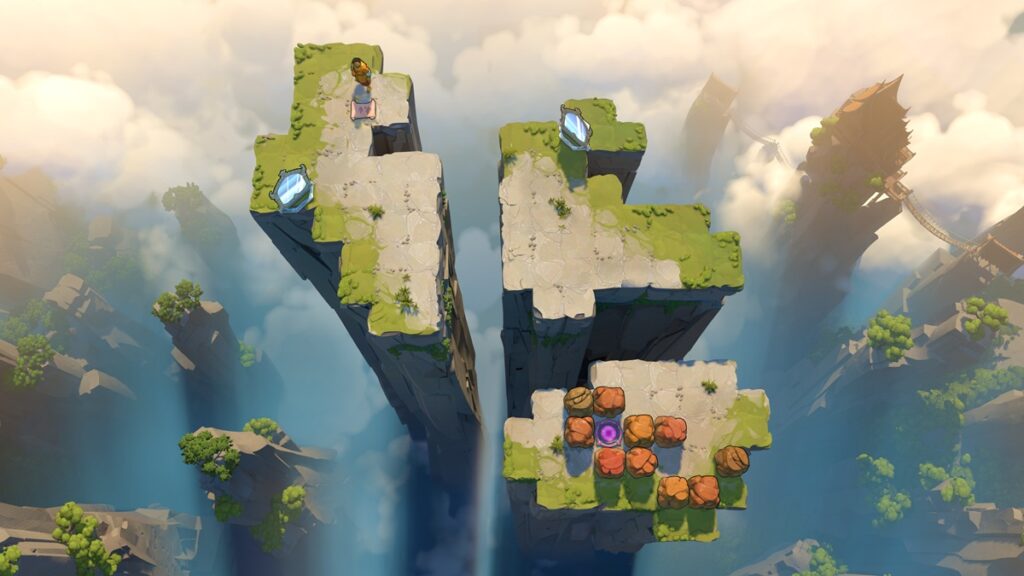
But all of that is the first part. The second part is, when you have sub-games, like Mirror Isles or Heroes of Sokoban, and then you put them together–because we curated these four games very carefully, you get a lot of richness out of the combinations of them. The mirrors in Mirror Isles are really cool because they teleport objects around, but then depending on what the objects are, because we have all these cool objects from the other games, you can have effects.
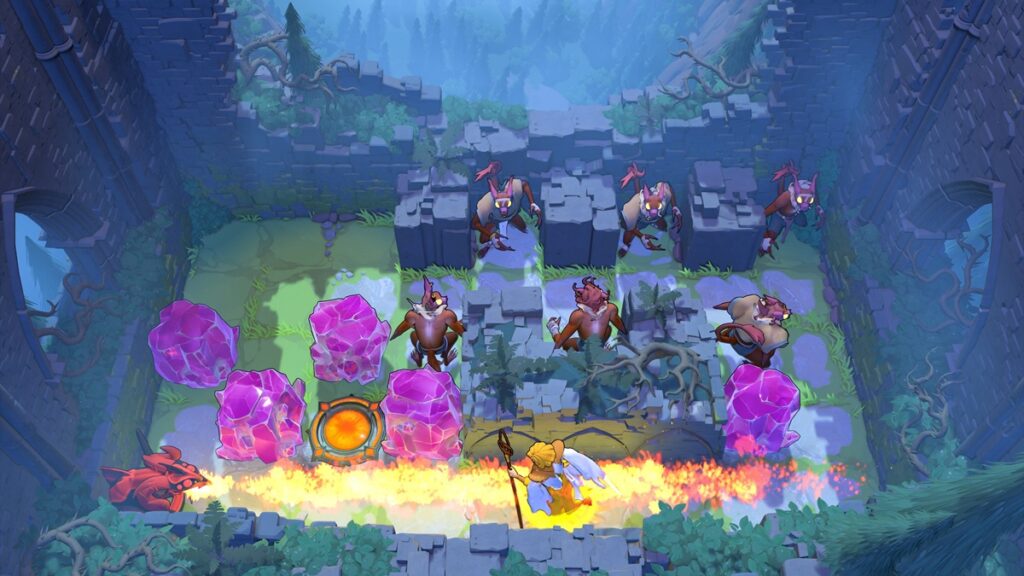
For example, there’s a little mine cart that goes back and forth. If you teleport it, the way the mirrors work they turn 90 degrees, so now it’s driving in the other direction. If it was going vertically, now it’s going horizontally. It’s a fun surprise. But when you see it, it makes perfect sense. With skipping stones, the direction they’re skipping gets reflected by the mirrors. It skips in a different direction. You get lots of cool puzzles out of just the basics of the combinations. The vast majority of the levels and the puzzles in the game come from the combinations of these different worlds. We put all the four worlds up front because you have to learn how things work before you can even appreciate why it’s cool that they come together.
GamesBeat: There’s something interesting about your approach to this. The game industry has such a reputation for copying ideas. Many others wouldn’t take this approach, but you’ve been intellectually honest about recognizing what’s come before your game and how you’ve included it. You’ve formally acknowledged that inside your game and explained what you want to build on top of what’s come before. Why did you take that position?
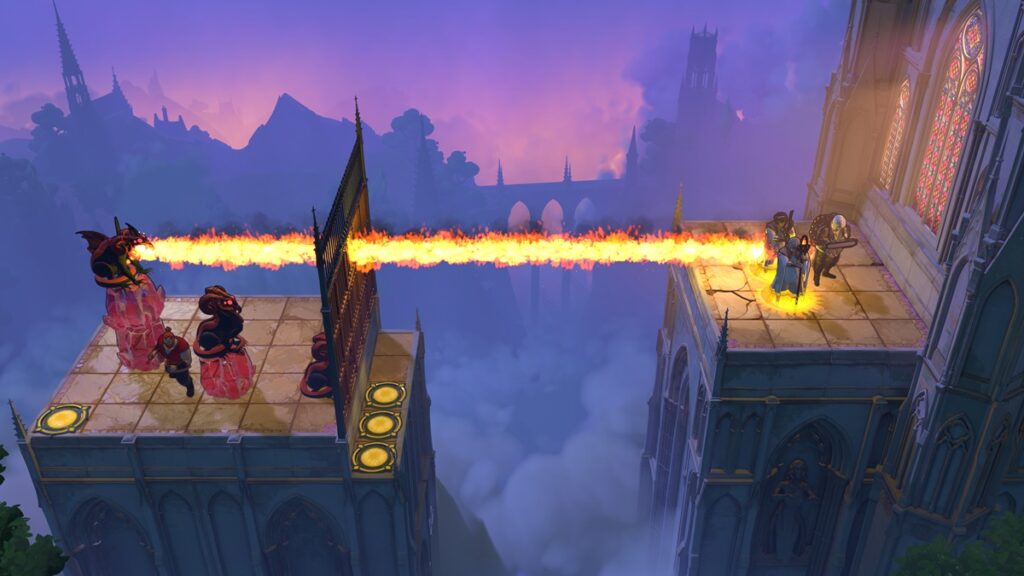
Blow: There’s two halves of it. One half is just that this was part of the motivation for the game originally. Let’s get some recognition for these designers. It turns out that since then, at least one of them, Alan Hazelden, has gone on to release more games on Steam that have gotten some recognition, but I don’t know if that helps with his older games very much. The other two designers definitely don’t.
Braid was obviously successful, and then The Witness was even more successful. What do you do from a position of success? You should look to use that in a productive and effective way. You don’t just want to grab the bag of money and go buy awesome cars or whatever. You can do that, sure, but–it’s just contributing back to the community and helping out these other designers. The other part of it–once those things are in your game, you should acknowledge them and provide credit, just out of basic decorum.
GamesBeat: There’s an interesting part about the time involved here. A lot of game developers would look at this example here and say, “Wow, this is intimidating, to have to think that a game might take 10 years.” They might be afraid to try something similar. Looking back in hindsight, do you feel like this was the only way to make this game?
Blow: Absolutely not.
GamesBeat: And if you had regular game industry executives in charge here, they’d say, let’s quadruple the size of the team and get it done four times faster. I’m assuming it would not work that way.
Blow: That’s never how the tradeoff works. It’s more like you quadruple the size of the team and maybe get it done twice as fast. Or sometimes you quadruple the size of the team and the game fails to get finished because you’re too disorganized.
It has been a big mega-project. We could have made this game in a shorter way for sure. But it was part of this whole mega-project we’re doing. I wanted to make a new programming language for making games. That involved–even in 2016, we had this language running, but we kept improving it over the years. It was running at a basic level back then. But then, well, the code has to be in this language if we’re going to use it for games. But our engine that we just made for The Witness is in C++, the most popular language at the time. It’s absolutely not a business decision that most people would make.
First of all, even back then most developers wouldn’t make their own engine, especially small indies. Now it’s almost unheard-of. I’m very happy for the developers who still do that. It’s like we’re carrying the torch. But most people would use Unity or Unreal. So we made this whole engine, and that took a decent amount of time. Then we made this really big game. It’s three things. Programming language, engine, and game. Then we also did the Braid anniversary edition in the middle. That took time.
If we had just used C++ in the engine from The Witness and done this game, how long would it have taken? The answer is less than 10 years. I can’t tell you how much less, because it was also a big game design-wise. Lots of stuff overlaps. It probably could have gone at least two years faster. Maybe four years faster. Somewhere in there.
GamesBeat: The team was around 10 people?
Blow: When you talk about a 10-year time span things can change quite a bit, especially when COVID landed in the middle of that. That’s when people are making life changes and what have you. I think we started with about eight full-time people. That’s what we had at the end of The Witness. Now we’re at about 10 or 11. In the middle I think we went up to 14 at some point. But it’s never been a team that was big by any kind of video game standards. Even for what they call a mid-size developer. I don’t actually know. You’re much more into these business categories than me. I think if someone says “mid-size developer” they mean 40 or 60 people.
To put all the previous statements in context, we have four programmers. We not only made the game with four programmers, we made the engine and the programming language. For brief periods we had more than that. But that’s kind of crazy. Looking back, wow, we actually managed to do all that. Most people, if you’d even checked in five years ago, halfway through, would have told you this would never–it seemed like the list of things we were doing, most people would have said this was totally unrealistic and it would never happen. But it happened. That’s great.
We will not make it as hard for the next game. We’ve been playing life on super hard mode. The next game, we’re using the same engine and the same programming language. All that is factored in. Then we’ll see where we go.
GamesBeat: If it is intimidating for players to try to start such a game, something that could take a long time to finish, what do you think is–I’m not asking you to give away the story, but what is the reward they get for going through everything?
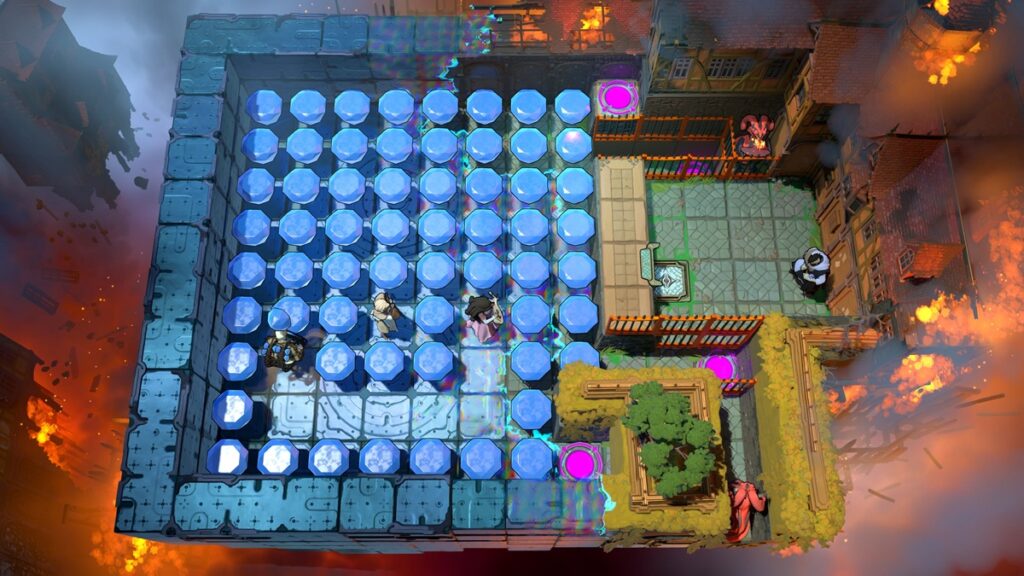
Blow: Well, hopefully–first, we don’t want it to be like, “Oh, I’m suffering through this game because the end is supposed to be cool.” We want every moment of the game to be good. That’s one thing about this. The puzzles are probably the most fun of any game that I’ve worked on. They’re certainly the highest quality. It’s hard to explain if you’re not a puzzle designer. What’s a high-quality puzzle versus one that’s not? But it means they’re very focused and clear at communicating to people–the puzzles are always based around a cool idea that you can see and appreciate and understand. Some surprising fun way that the objects interact. The fun of the game, from step to step, is just supposed to be that you keep seeing new stuff.
Part of the art in making that feel good is that we don’t make the puzzles too difficult or too grindy. I think it should be acknowledged by the designer and by the game itself that when you play a puzzle game, you’re working. You’re thinking hard. We shouldn’t ask you to think harder than what you’re getting out of the deal. We shouldn’t ask more from you than we give back to you. We’re very mindful, throughout the development process, to make sure that’s the case. That’s part of it.
Now, on top of all that, there are–people who know my games know that I like surprises. There are a number of significant surprises in the game that, as far as I know, are not publicly known yet. The game just came out and it takes long enough to get to these things that most people–I think one or two of the reviewers have seen some of these things. The ones who played the game for the whole month. But nobody, apart from our playtesters as far as I know, has seen how the game ends, which I think is going to be very surprising and interesting.
There are what I would call things that would be classically recognized as cool secrets. Then there are surprising and interesting endgames. To me an endgame–it ups the ante of everything that you’ve done in a way that feels cool and feels final, but is surprising. But also it follows naturally from everything that you did, so it makes sense. There’s that part. And then, from the fiction standpoint, at the beginning of the game of course you get introduced to all these characters and worlds. There’s this lingering question from the beginning. You’re exploring some territory where these worlds meet together. Why is that? Who is this Order of the Sinking Star that the game is named after, who seem to have something to do with why this is happening? You don’t meet any of them at the beginning. It’s an abandoned facility, essentially.
The further you get into the game, especially if you push past the first endgame–because it’s such a huge game, you have to give people a satisfying conclusion if they don’t want to be super completist and play everything. The first endgame, you still definitely–we don’t give it to you. You have to get there. But that’s meant to be totally enough, satisfying and complete for the people who feel satisfied at that point. If you push past that, you can start getting into some stuff where you learn more about the story, what’s going on. It gets very science fiction-ey, in a technical way.
We recorded some of this voice acting just a couple of weeks ago. I was sitting there with the editors on break, because I was listening to the actors say this stuff. I was talking to the editors. “This is seriously the only video game that would ever pay an actor to say a half an hour of the stuff we just recorded.” It gets kinda nuts. Who knows if people will like that part? But it’s more of a deep lore component to the game. What’s going on behind the scenes?
GamesBeat: You mentioned playtesting. What was that like? What did you learn from it? It seems like playtesting has changed during the time that you’ve been working on this, where there’s things like First Look out there now. You can just find a bunch of users through that. You have access to a lot more people who can playtest something. In the past you’d be forced to do things like a public beta.
Blow: We didn’t do anything like that. We wanted to keep it relatively small. Personally, I’ve always had a different philosophy on playtesting than a lot of people in the industry. It’s because, especially with the kind of games that I make, I’m very cautious of how playtesting can–it’s not exactly that the playtesting itself can go wrong, but the playtesting as a component of the entire development process, in terms of then–what do you do with your observations of the playtesting results? How does that guide your development? I think a lot of the time that goes wrong.
Again, it depends on who you are. If you’re someone like Call of Duty, you’re obviously–you want everyone in the world to pay money for your game. What playtesting turns into is, is something a problem for a significant percentage of the player base? And if it is, you have to change it. You have to file off that sharp corner. But I think even with stuff like Call of Duty now–again, I think the reason WARDOGS is so big is because Call of Duty got really stale, year after year. I think even Call of Duty fans will tell you that. I don’t think I’m saying anything surprising there.
It’s just the result of this–well, part of that is the trap of having a successful franchise. If you give people something really different from what they expected, they get mad. Part of the contract of making a Call of Duty game is you’re giving people what they expect from Call of Duty. But at the same time you have to innovate. That’s a challenge. But I think this playtesting process feeds into that. If you get negative feedback about things from a significant fraction of players, you just have to change it.
Going back to this topic of indie games, the creativity behind the game is more of the reason people would be interested in it. You have to guard that creativity. You have to not let the development process damage the creativity very much. That’s a very delicate topic. On the one hand, if you go do a playtest and everyone’s like–if literally everyone in the playtest hates it, then yeah, you probably did something wrong and that’s bad. But if 25% of players totally hate something in an indie, that’s actually maybe good, if the other players actually like it. We’re not trying to make something for literally every player in the world.
It’s just a different thing. It has to be approached differently. For playtesting–well, also, because this is a game with a lot of secrets and stuff like that, a lot of puzzles where you don’t want to know the answers when you play them, we didn’t want to be super public about playtesting. The secrets would all be out right now. I want to leave that stuff for players to discover. Obviously if players discover that and then are loud about it on the internet, that’s fine. But I want it to be something for the final players to discover.
GamesBeat: What you said about Call of Duty getting stale rings true to me. I could feel it getting stale year by year, but I was not the one to predict that last year’s title would go over so poorly with players. The 100-foot-tall soldier you’re fighting turned out to be the breaking point.
Blow: There’s always an unpredictable component. It’s funny, because I remember seeing videos of people pooh-poohing that. But Call of Duty also did Zombies, and people loved that. Is a 100-foot-tall guy really that different from zombies? Apparently it is. It’s just to say, I understand how the developer can make that kind of mistake and not realize that they’re making it.
GamesBeat: Maybe a more relevant question for you, if you have that many puzzles lined up, what can you do to mitigate this notion that the player might get tired of them in the middle of doing a certain kind of puzzle?
Blow: There’s a bunch of things. First, again, puzzle to puzzle, we try to make sure it gives you more out than you put in. Even so, sometimes–different things are harder or easier for different people. Players can get into a part where it feels kind of grindy for them. For cases like that, it is a very non-linear game. You can go off in a different direction. It’s not just different puzzles in that direction. It’s totally different mechanics, because the other worlds are combining over there. Maybe you like those better. And then to get to this endgame that I mentioned, you don’t have to be a completist about doing all the directions you could go. You need a certain amount of them. You can gravitate toward what you like and that’s good enough.
Also, just helping people–I actually don’t know what’s the minimum number of puzzles right now that you would have to do to get to the ending. It’s structured in a certain way and the structure is what I see. But that’s also part of what motivates players. Back on The Witness, we were doing early playtests with people. We had one of these areas that turned into the swamp later, which–the early version of it was just a room where we had, I don’t know, 30 or 35 puzzles in there? Which doesn’t sound like much today, but back then it seemed like a lot of puzzles. You would solve three or four and then go up a little elevator to the next level and solve five or six and go up again. But you could see them all from the beginning, because I thought that was cool. The effect on players as they walked into that room, though, was just, “Oh, God. I have to do all these puzzles?”
There’s an art of presentation, an art of giving people the feeling of progress in the middle of things. Here we have it structured so that every little puzzle is–the puzzles are little stars on the ground. The little stars lead up to big stars, and the big stars are what get you into the place where the endgame is. You figure that out somewhat around the first third of the game, probably. Before the end of the first half. You’re counting progress in these big stars, and then seeing what you can do to get to one of the big stars and solve it. This gives people goals that are broken down enough that they’re achievable within a tractable, a reasonable amount of effort. “Oh, if I just play a few puzzles I’ll get to this thing, and that’ll be one more.” It’s not exactly like a power crystal that powers the thing, but it’s analogous to that. That’s one more, and that feels good to me as a player, that I got that. It’s multiple levels of progress.
Now, this is a kind of thing where–a lot of these people who make FarmVille style of games will tell you about the importance of this kind of design. Giving people stacked goals that are woven together. In their case, it’s always just to sell the most in-game currency as they can, or pump up your time in the game. I try to have a more cooperative relationship with our players. We don’t have any microtransactions in this game. It’s just a premium game that you bought and you own it. We don’t try to sell you anything after that. But those design skills are still design skills. They can be used in these ways.
This question, as you asked it initially – how do you make sure people don’t get tired and quit – once we realized it was a big game, that became an important question to me. If this game is not just for the most hardcore puzzle dudes, what do we do structure-wise to just help you have fun with it?
GamesBeat: For me, what’s enjoyable to think about is that I’m going to have fun playing this one puzzle. Then I’ll see where it goes from there. There’s enough fun packed into this one thing that it’s enough to motivate me. That leads to solving more puzzles. Is that a way to think about playing this game? I guess what seems interesting here is how you get people to connect different things on a more meta level. This is all part of something with a bigger purpose, a bigger metagame.
Blow: There’s different levels of that. One level is the stuff I just discussed about big stars versus little stars. But also the way–there’s an overworld that you travel around to get to the puzzles. One of my questions early on was, “How do we make this more than just a glorified level select screen? How do we make it interesting? How do we make it feel like you’re exploring?”
We used a little bit of design–it’s not quite like a Zelda game, but it’s a bit like that. I’m going off into some territory. I don’t know what’s going to be there, but I know I’m trying to get to the next place over. That’s the goal that comes in and out. As you reveal more of the terrain, you get more of a view. Here’s everything. I’m starting to understand the relationship of all these to each other. But also, in each screen, because it’s a screen by screen game, the puzzles that you find there are all related in a way that you can understand and appreciate.
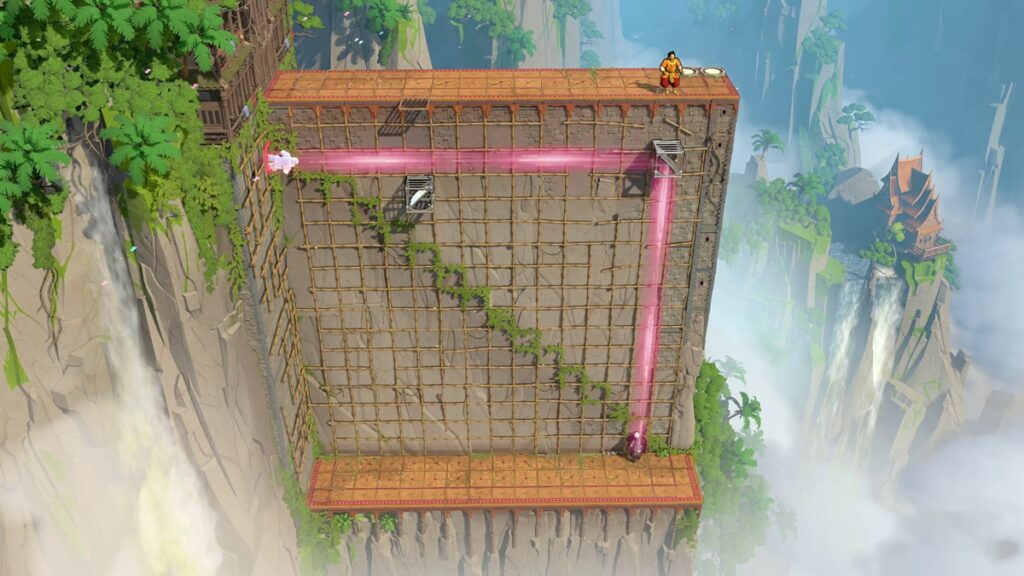
It’s not just a sequence of puzzles. I do these couple of puzzles that introduce some idea, and then I use that idea in the overworld. In the Mirror Isles area you do the first four Mirror Isles levels, and then that gives you a mirror in the overworld. You can use the mirror to teleport around in the same way that you did in the levels. Then you use that mirror to figure out how to get to even later levels. The game works that way. That helps tie things together so they have more meaning.
On the story side, the further you get into the game, the more it turns from fun little fictions for the characters and stuff into something that spends a significant amount of time actually just talking about what the game is about and why it is the way it is. The Order of the Sinking Star from the title is–I don’t want to say too much about it. I think this is a player discovery thing. But they’re people who are putting these worlds together in the fiction of the game. Why are they doing that? What’s their motivation? To some extent it’s a fictionalized version of my actual motivation for wanting to do the game. In that way, we start talking more explicitly about some of these things that are deeper design ideas. That may help people understand, help communicate this stuff to them.
GamesBeat: How do you begin to think about financing something like this? It’s 100 person-years, 10 people for 10 years. Were you ever worried along the way that you might run out of money before the finish? Or is it so inexpensive that that was not a worry?
Blow: It’s not that low-budget, especially on the programming side. We need programmers who can build engines, who are not cheap programmers. That’s just part of my living life on hard mode and doing all this ambitious stuff. In terms of the art team, we need relatively senior people a lot of the time, because it’s just–the game needs to look good. Our art lead right now was at Bungie previously. I don’t remember his official title, but he was leading a subgroup of artists there. That was some years ago, though. He’s not involved in any of the recent Bungie stuff at all.
It hasn’t been super cheap, to be honest. Now, The Witness and Braid were both successful games. We had money to draw from. But one of the reasons we signed with Arc Games to publish the game was we got a little bit extra to get us over the finish line in style. We weren’t at the point where it was like, “We spent all the money.” We could finish the game. But we didn’t have enough left to finish it to the magnitude that we wanted and make it as beautiful as we wanted and have all the features we wanted. Partnering with Arc just gave us the remaining amount that we needed in order to really do the game in the way that I wanted to, as opposed to having to do a suboptimal version and being sad that we couldn’t do the whole thing.
GamesBeat: Did that turn out to involve some pitching work that you had to think about in order to make that happen? It seems like you’re probably not the kind of person that loves doing pitches.
Blow: I don’t love it. I understand how to do it. I’ve done a ton of public speaking. In some sense, just talking to publishers about stuff is easier than that, because it’s not in an auditorium in front of 1,000 people.
Also, though, I’ve drawn some lessons about being indie, and I bring them to that. When you’re an indie and you’re talking to the press or whoever, what is your value as an indie to someone in the press? One is just, maybe you have a game that people are interested in. But part of it is also–because you’re not a vice president of Electronic Arts, you’re not as constrained in what you can say. That’s more interesting when you’re being interviewed.
When you’re talking to a publisher as an indie, I think you take that thing I just said about not having constraints on what you say and you turn it in a slightly different direction. Look, I’m going to be super honest talking to them about this business stuff. I’m not going to hide anything. People might–there’s always this pressure to make your business look better than it is when you’re talking to people. If you do that, you’re starting a relationship–if you have a relationship with them, they’re going to find out later that your business isn’t as good as you told them it was. It behooves you to just be as honest as possible. Here’s what I’m thinking. Here’s what I want to do. Here’s how much money you might make. Of course they’ll have their own estimations of those things. But I think the honesty and the lack of BSing can be refreshing sometimes. Maybe that helped.
I started pitching this game way back in 2017, 2018. I was pitching it around a little bit, because I wasn’t sure I wanted to spend all of the money from The Witness on it. But back then the nature of the conversations–it just wasn’t going in a way that was useful. I decided to self-fund. We self-funded for a long time. Around DICE in 2024 I was starting to talk to people about this. I’m sure you remember what the environment was like in 2024 and 2025. Even sometimes now. Nobody wanted to fund anything. I thought, “I’m just gonna be chill. I’ll just talk to people about the game. It’ll take a while to have these conversations.” And it did.
We signed with Arc last summer, middle to later 2025, when it was still a pretty hard time. That means they believed in the game, which is great. I’m thankful to them for that. But I’ve been having discussions with some number of publishers. I didn’t break out the list and call every single publisher that exists, because there are people you want to work with and people you don’t want to work with. I called the people that we would want to work with and talked to them. Some of them just weren’t interested, and some were. We got to where we got to.
GamesBeat: Since you do have permission to let yourself speak freely, you’ve been able to witness all of these other companies having so many struggles. Studios closing down, lots of layoffs. What do you make of the game industry’s collective problems right now? What do you see as the pathway through it?
Blow: I’ve been in the industry for a long time. I had this interesting thought. I was having a conversation with someone. It’s common knowledge that 2024 and 2025 were this horrible time. I don’t know where you see the boundaries of that. Somewhere in that period was this uniquely horrible time where it’s impossible to get projects funded and all that. But then I was thinking back. If it was 2005, it was pretty hard to get projects funded. There wasn’t a lot of money floating around. If you took all the people who were saying it’s such a terrible environment now and teleported them back to 2005, would they think that was also a crash?
Now, objectively, there also is a crash. But I’m just saying, in terms of how hard the environment is, how hard it is to pitch a game to people and get them to fund it, it’s probably been equally hard in the past. In terms of the number of companies struggling and having layoffs and going out of business, obviously it’s an unprecedented time. I think that’s part of the boom-bust cycle we see a lot of the time. We had a relatively easy time that probably peaked in 2021. After everyone got used to COVID and got used to being at home, all these online games took off. 2022 was also really good. Then it took a while for people to realize that a lot of the bets they made during that time weren’t going to pay out.
That’s kind of just normal, right? When times are good companies don’t tend to be very lean and efficient, because they don’t have to be. Then times are not so good, and then everyone who isn’t lean and efficient is going to have some problems. My own company got kind of not that lean and not that efficient. We obviously had some income from our successful games, but also just–when you’re in the middle of a 10-year project, literally halfway through–I was hoping we were halfway through. If it took even longer that would have been horrible. But it turned out we were halfway through around 2021 and 2022.
You’re just unmoored from reality. We haven’t shipped a game on Steam in five years. How are people going to react? Are they going to like what we’re doing? What are we doing from day to day working on the game? How productive should a programmer be? What should they get done? It’s easy for those things to drift as you have less contact with people, or if you’re just in a time of very easy money.
GamesBeat: There’s definitely one thing that favors you guys, which is–the averages of the game industry in any given year just look terrible. There are 20,000 games coming out a year. What are your chances of being successful in that year? It’s a terrible place to be average.
Blow: The median game on Steam makes something like $50.
GamesBeat: But what that means is the ones who make or break the year are the outliers. An outlier is what you want to be. Clearly you’re an outlier. It’s either a very good bet or a very bad bet, but still, you’re going to be in a place where there’s not that many others like you.
Blow: That’s always where I’ve wanted to be. It’s just my personality.
I never wanted to do stuff if other people were going to do it. I always wanted to be doing the things that nobody would do if I didn’t do them. That definitely describes this game, oh boy. That will become more and more clear to people the longer it’s out and the further they get into the game. There’s a bunch of surprises.
We’re going to be supporting the game, obviously, for some number of weeks. Then we’ll think about–we haven’t fully decided on any further ports, but we’ll think about that. I also get to think about the next game, finally, which I haven’t been able to do seriously for 10 years. As a creative person that’s a bit–I mean, I’ve gotten used to it, because The Witness was six and a half to seven years. I know how it goes. But it’s going to be great working on something new as well.
GamesBeat: From what I hear, if you turn it over to AI, you can get your port done in a day.
Blow: That’s not what I see as the result, but–it’s this thing right now because AI is the cool thing. People who report astonishingly outsized results get attention. It travels, and so that’s what you see. I think the reality is much more muted than that, when you’re talking about a high-quality experience that someone would pay money for. I think you see that already. There are slop games on Steam. They fall into that less than $50 revenue bucket that we were talking about. It’s just not that easy. We just have to see where it goes.
Ignoring the money stuff and being on the Steam charts, I’m just happy that people are enjoying the game. If I look at someone’s YouTube video or their Twitch stream, they’re having fun with it, which is really all you want as a creator. It’s very easy to make something and then people just aren’t interested in it, especially when it’s weird. My whole career is making weird games that don’t look anything like each other, so you can’t say, “Oh, if you liked Braid you’ll like Order of the Sinking Star.” The two games have nothing to do with each other. Well, you can undo in Order of the Sinking Star, so that’s kind of like Braid.
But I’m very grateful that people appreciate it. That’s been the fun part. For 10 years we’ve been working on this thing. When people finally play it, that’s a really nice time.