
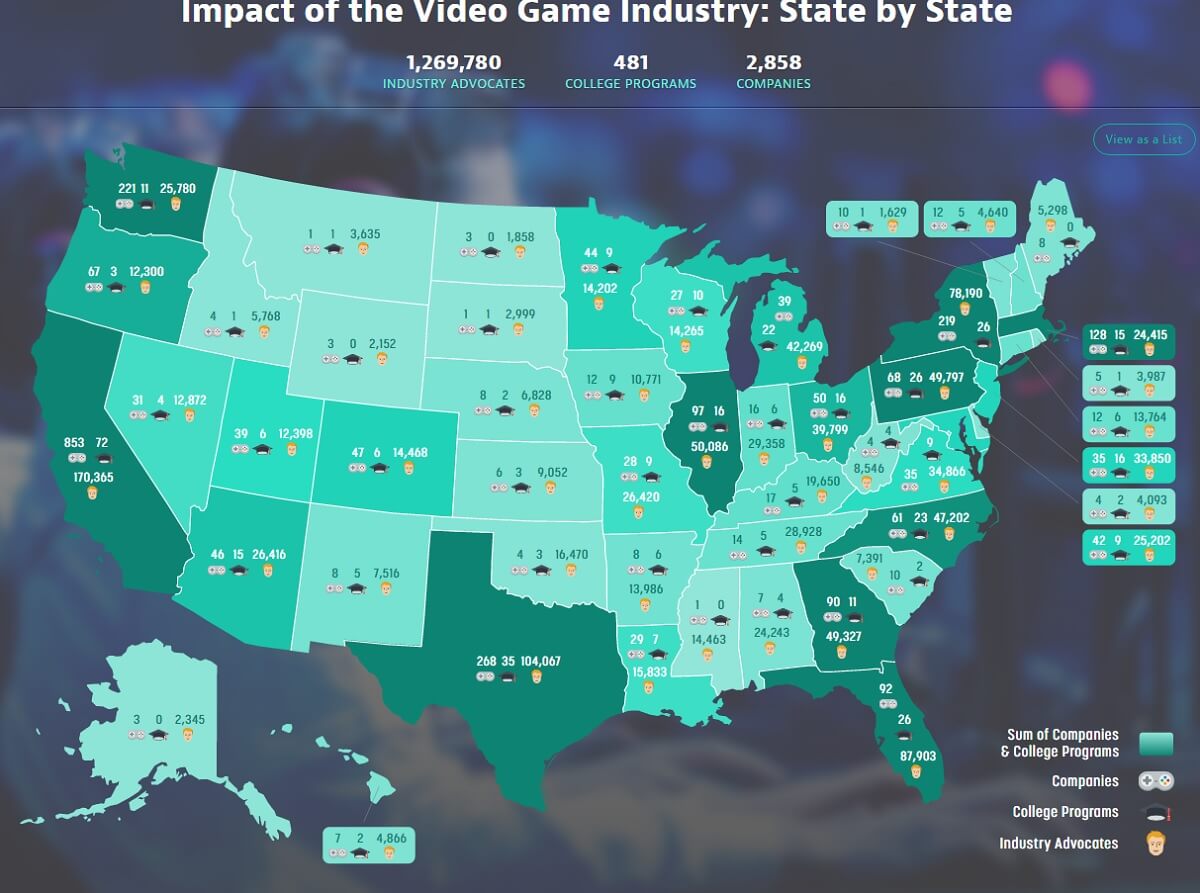
There are more than 150 higher-ed institutions offering video game studies in the United States. But here’s a terrifying thought: what if there are no jobs for those grads?
Amir Satvat, the game job champion who keeps track of game jobs across the world in his spared time (at this site), worried about that in a LinkedIn post. This worry is bothersome in part because it’s coming from someone who has helped 5,000 people find jobs in gaming.
“Three years ago, I warned that games roles were drifting from North America and Western Europe. I shared numbers, regional breakdowns, and what those shifts would mean,” he wrote. “Some believed me. Many did not. I believe the evidence is now conclusive.”
Another crisis now needs more, if not new, attention: early careers in games, he said. (Satvat will speak in a fireside chat at our upcoming GamesBeat Next 2026 event on November 2-3 in San Francisco).
“In my tracking, there have typically been 1,500–2,000 open games roles worldwide for people with zero to one years of experience. But the North American and European share keeps shrinking,” Satvat said.
Approximate openings today:
• North America: 300–350
• Europe: 300–350
• Asia: 900–1,000
These are current openings, not annual hires, he said.
“My estimated annual placement odds for early-career candidates have slipped from 5% to 4%. For North American candidates seeking only North American roles, I believe the odds may be closer to 2%,” Satvat said. “These are population-level estimates, not anyone’s individual destiny.”
He said his tracking and conversations with candidates and hiring teams also conclusively show that comparable positions now go to people averaging roughly 2.5 more years of experience than they did three to four years ago.
An “entry-level” opening means little to a beginner if an experienced candidate gets hired into it, he said.
He said he hears of once-vaunted triple-A early-career recruiting teams reduced to one person, or, at max, three or four covering the world.
“I’m especially concerned watching the strongest graduates: highly qualified, well networked, widely known, and recommended. Even they, from top 25 National schools, are struggling to find games roles, and sometimes employment at all. Even from USC,” he said.
Satvat asked us to think what that means for someone without those advantages.
Scarce openings, geographic barriers, competition from experienced workers, and weakened recruiting and mentorship capacity are effectively locking out too many newcomers, he said.
The result? Experienced people leave. People retire. Tomorrow’s senior developers need somewhere to begin today.
“Are we imagining a Star Trek future where machines simply replace everyone? What is our plan to develop the next generation?” he asked.
Studios need to protect genuine beginner roles and the time to train people. Universities and training programs need transparent placement outcomes, broader career preparation, and smaller class sizes where opportunities cannot support enrollment, he said.
Satvat said both responses are moving too slowly.
“We must examine ALL programs. A handful of visible, successful schools placing some graduates cannot tell us whether the wider system is working. Even those schools are struggling,” he said. “The overall landscape for earlies is frightening to me.”
And he said, “I saw the geographic shifts in the data years before their consequences became impossible to ignore. I believe another serious crisis is deepening now, and I intend to keep it on the front burner.”
“We cannot keep asking people to prepare for an industry that has no place for them,” Satvat said.