
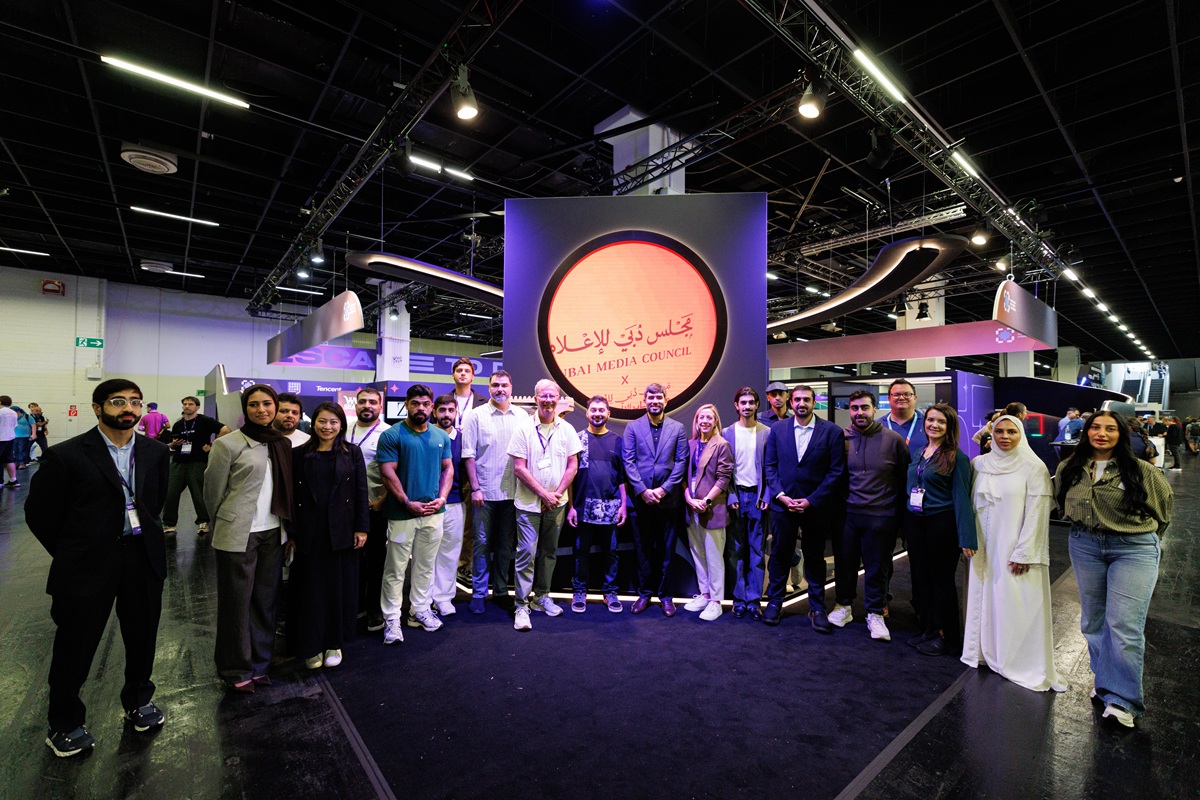
Dubai showed up at Gamescom last week to show that it was serious about gaming.
The emirate, which is part of the United Arab Emirates on the shore of the Persian Gulf, was one of 47 countries that showed up with booths that were meant to entice game developers to open up shop in their territories. The advantage that Dubai has is that it has diversified beyond oil over the decades and now has a $120 billion economy, including its own gaming ecosystem.
This year, the Dubai Films and Games Commission (DFGC) under the aegis of the Dubai
Media Council, showed up with its largest contingent yet at Gamescom, which drew 368,000 people to Cologne, Germany last week to be part of the biggest game expo in the world.
With a large expat workforce, Dubai has attracted a lot of digital nomads, including some who know how to make games and can train the population to make games. And now Dubai is in the process of coming up with accerlators and funding for game companies that set up shop there.
Last year, Dubai showed up with three games for its gaming pavilion. This year, the Dubai booth had more than 10 games to highlight.
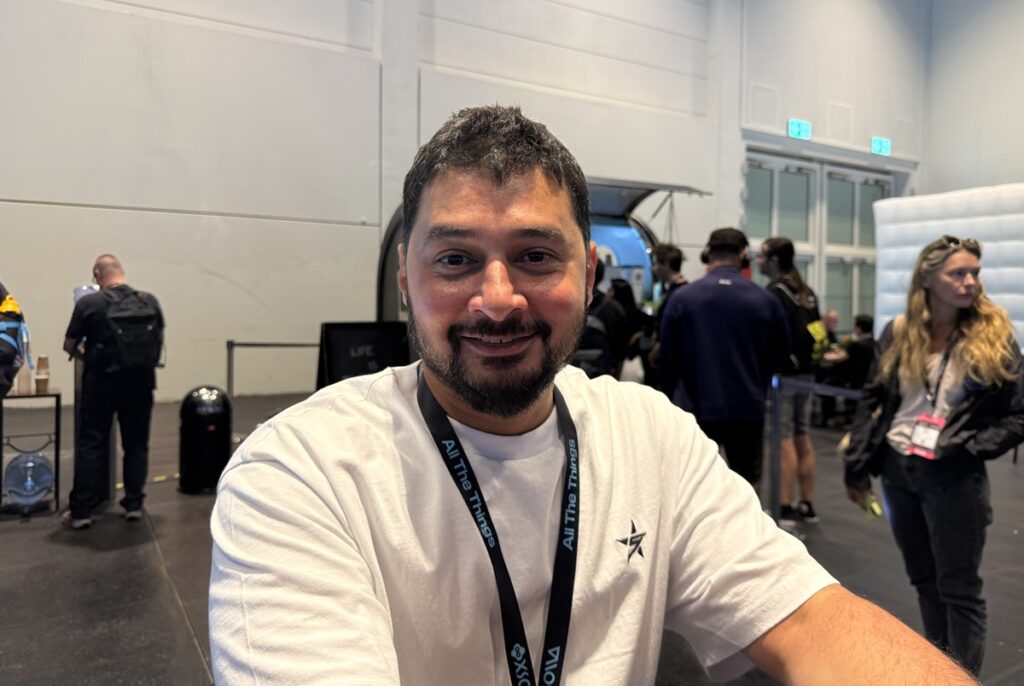
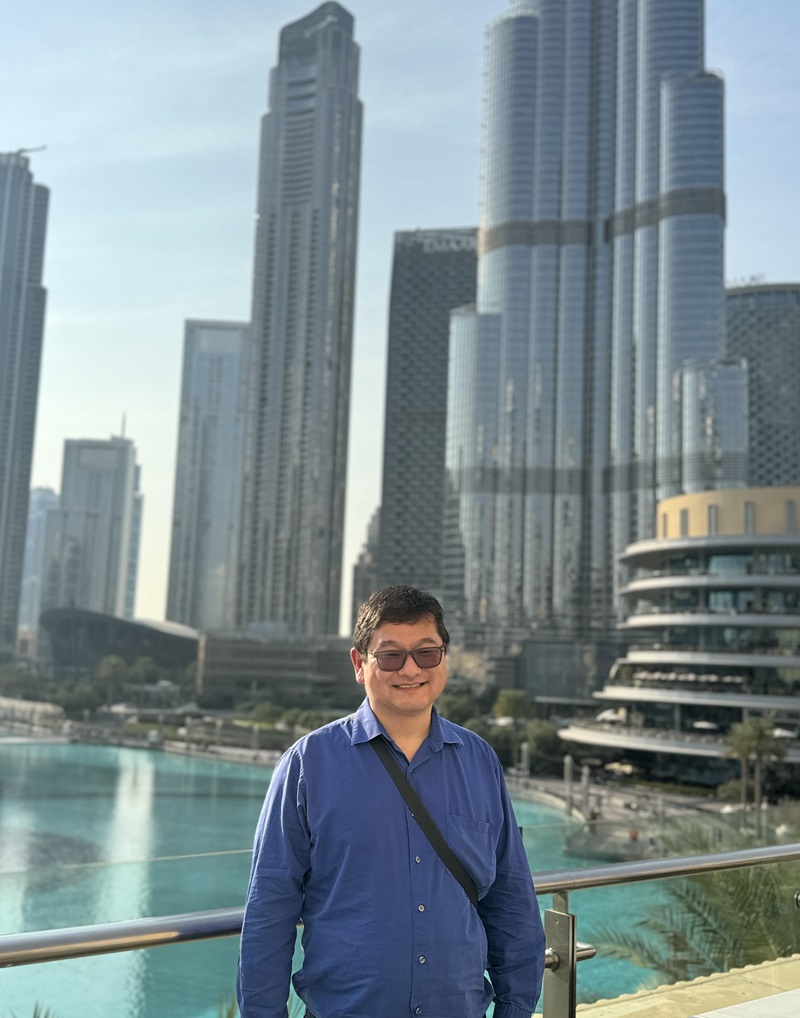
I spoke with Faisal Kazim, Games Commissioner at Dubai Films and Games Commission (DFGC) about the effort to create game jobs in Dubai.
“There is a tendency among some people to view gaming purely from an entertainment lens, but we count it among society’s most powerful creative forays. Innovatively built games can impart knowledge, connect people who would never otherwise meet, and build real careers,” Kazim said.
Kazim said that gaming is a force for good, for both the people who make them and those who play them.
Dubai Films and Games Commission sits under Dubai Media Council and now runs the
Dubai Program for Gaming 2033, the plan to lift the emirate into the world’s top 10
gaming destinations by the end of the decade with 30,000 jobs. To do that, the city is doing what it can to make the creation of games easier in Dubai. So far there are 495 gaming companies in Dubai, up 34.5% in two years. And the GameForward accelerator is backing new game studios. The hope is they will add $1 billion to the economy by 2033.
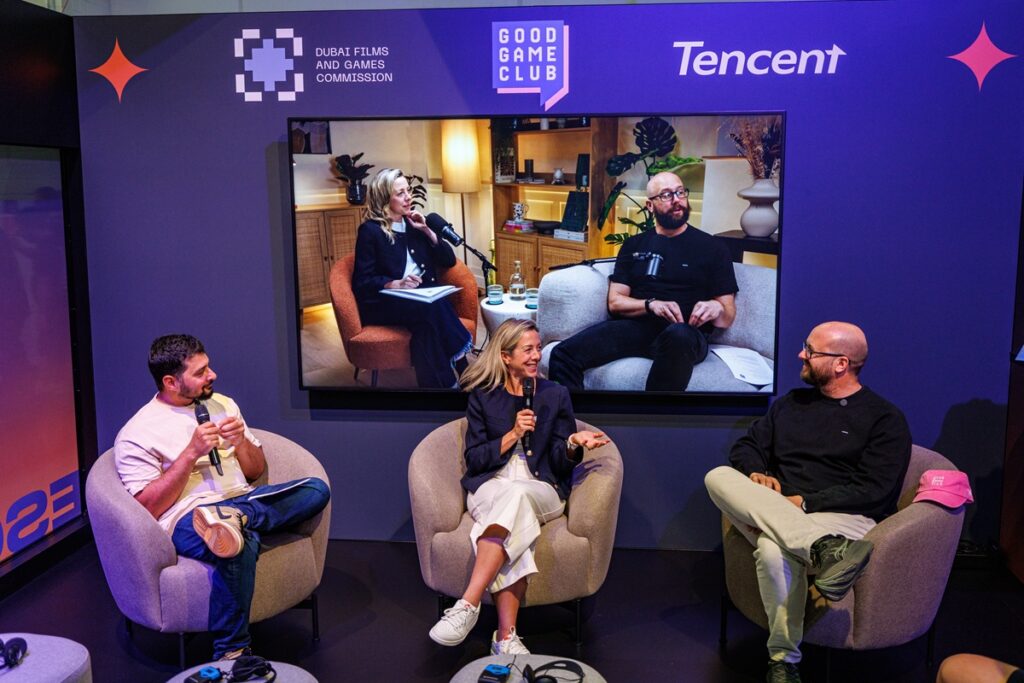
Dubai recently launched the Good Games Club podcast, which focuses on the positive impact games can have on people and the planet, is relocating to Dubai, bringing its coverage into the same ecosystem it’s been reporting on from the outside.
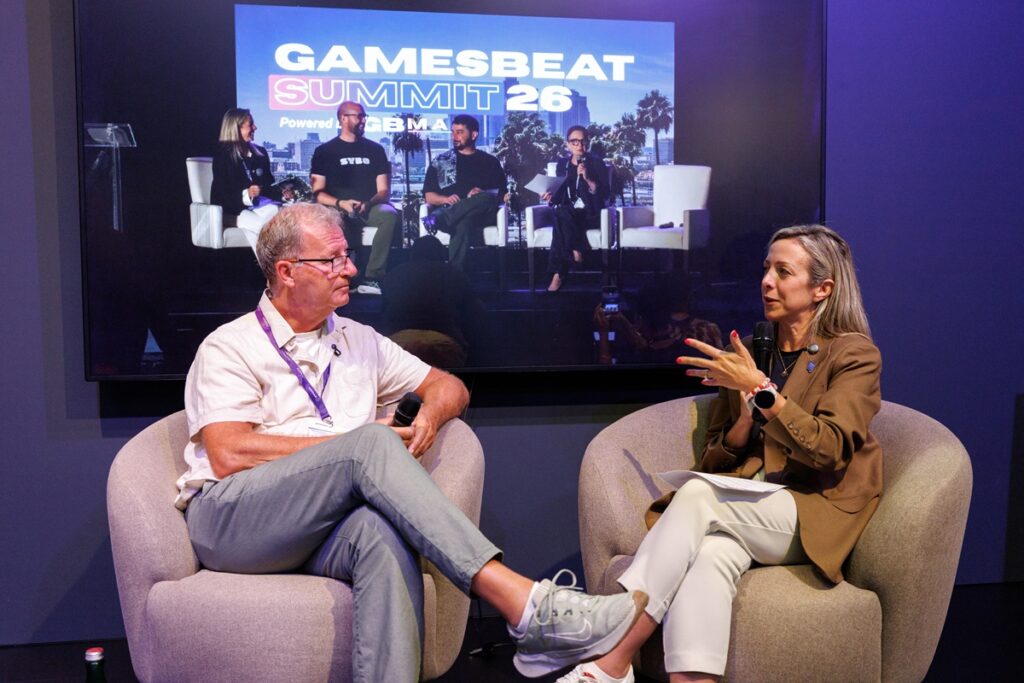
Here’s an edited transcript of our interview.
GamesBeat: Do you have a booth this year? Are you counting how many UAE or Dubai companies are at the show?
Faisal Kazim: It’s bigger than last year. Last year was our first ever attempt. Initially, the first bit of feedback we got from Gamescom was to ensure we had a game showcase, not just meeting rooms. We showcased a few games, but only three games last year. This year we focused a lot on identifying good games that we could showcase globally. This year we had 10 showcases. The games are at various stages of development. Some are very early – they’ve just participated in an accelerator and they have something playable to show – all the way to games that are already published on Steam. They’re collecting feedback and proving themselves. This time we have a bit more variety as well.
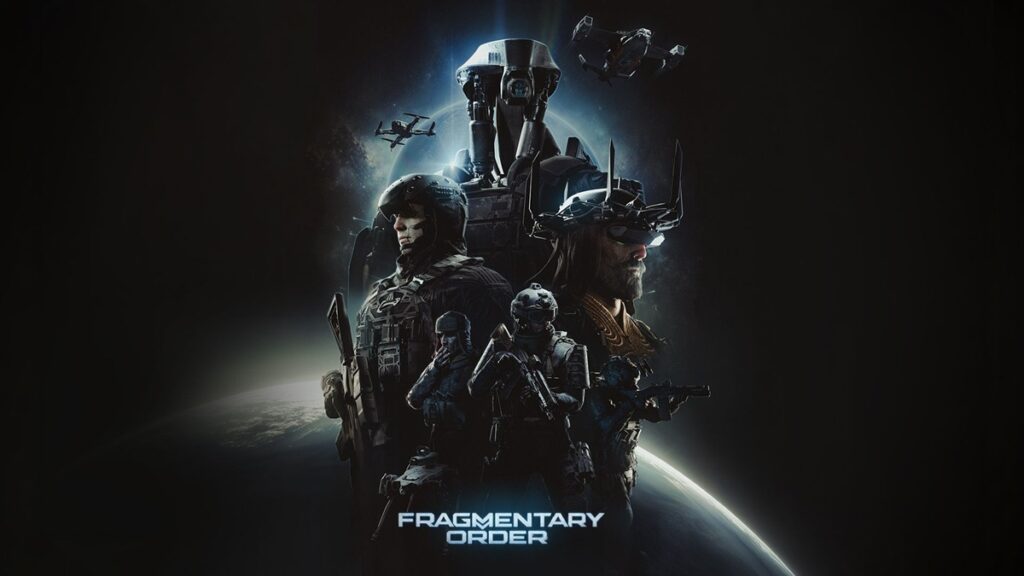
GamesBeat: Fragmentary Order seems like one of the more prominent triple-A-like games coming out of Dubai. Are there more games like that, or do you see a different kind of game company showing?
Kazim: Fragmentary Order, I loved the trailer. I saw a playable demo as well. It’s looking very good. They’re not ready yet to showcase their demo globally, but hopefully soon, in the coming months. Even for the indie games, double-A games–we’ve seen a lot of very good double-A games recently, globally. We have a few examples of those. We have World of Sea Battle showcased at our pavilion. You could call that a double-A game. That’s very exciting. It’s a multiplayer game where you compete with ships.
Kazim: It’s classic, yeah. Not like Battlefield.
GamesBeat: Were some of these different projects that you helped along the way?
Kazim: We’re starting to introduce new programs. The Dubai Department of Economy and Tourism launched an accelerator program called Game Forward. They have a demo day, and the top three games participating receive grants. That helps them get to their next stage of development, or maybe even get published, depending on what stage they’re at. So yes, we have games that were at Game Forward showcased at our pavilion.
There are other projects we’ve been helping a bit more indirectly. We try to matchmake as much as we can. Whenever we host networking events, we ensure that we have game developers as well as publishers and investors together in the same place. That results in people getting publishing deals. We have at least two games that are backed by PlayStation thanks to those indirect connections that we were able to make. So there are some things we’re working with directly and some that are a bit more organic.
GamesBeat: Do you see the gaming population in Dubai continuing to grow? Are there more of these companies?
Kazim: We completed a new round of market analysis a week ago. The previous number we had, back in 2024, was 360 gaming companies. According to our latest assessment, I don’t remember the exact number, but it’s close to 450 companies. That’s more than 30% growth in two years. It’s growing at a healthy rate. We’re happy that the announcements by Dubai’s leadership and the crown prince–they sent a strong signal to future developers that Dubai is taking this sector seriously. The hope is that people continue to follow their passion and take it seriously.
GamesBeat: The categories that seem interesting, or genres that people are focusing on, do you see any details there? Is esports still happening?
Kazim: Just like the rest of the world, mobile gaming is big. About 50% of Dubai’s game companies focus on mobile gaming. An interesting finding for us is that the other half, unlike the rest of the world, is majority PC. The rest of the world split about evenly between PC and console. We’re working with the console platforms to make sure that game developers have easy access to dev kits, so we can have people sharing our culture and our stories to console players as well.
GamesBeat: Do you have your share of Roblox and Fortnite creators?
Kazim: That’s a focus. But again, it’s something that can happen organically. In Dubai we’re always trying to focus on what makes Dubai a good place to develop games for the right reasons. We’re not developing games on our own. We’re ensuring that we have an environment that’s ideal for game developers. If you look at incentives, for example, in the past we’ve been 100% reliant on organic growth. But we’ve realized recently that we don’t want game developers in Dubai to be at a disadvantage compared to other regions. A lot of gaming hubs around the world offer incentives. We want to be able to at least match those incentives, or provide something that’s unique to Dubai, that’s attractive compared to other hubs globally.
GamesBeat: What form is that taking? Are there particular kinds of tax breaks, grants, or fund matching?
Kazim: We haven’t announced this yet, so I can’t share details, but we’ve worked with people that have worked on successful incentive programs for more than 10 years. The idea is not to replicate any other incentive program in Dubai, but to create something that is unique to Dubai. Dubai is naturally a low-tax environment anyway. Maybe a tax break isn’t the way to go. Maybe cash rebates are the right way to go. Maybe something like what Turkey is doing. We’re working with people that are experienced with incentives. Within the next 12 months we’ll be able to announce the details.
GamesBeat: Is there disruption that’s happened because of the war?
Kazim: At a personal level–we were talking about this earlier. Looking at road traffic as a good indicator of how many people are actually there, because you see all kinds of headlines in the news–what I can tell you is that, for example, on the flight here, the flight was full. I just came back from a vacation two weeks ago and all of those flights were full. Traffic on the road was a little bit lower, but it’s always lower in summer because people go away for the summer. In the last few days I noticed an increase in traffic. People are coming back for school and so on. It seems like the people who live in Dubai, who have settled in Dubai, are continuing to do so.
We’re still continuing our events. Another good indicator was the recent announcement of the Abu Dhabi Formula One Grand Prix. It was just confirmed a few days ago by Formula One that the race is still going to go ahead in Abu Dhabi. That’s a strong indicator that things are okay.
GamesBeat: Even during tumultuous times, does the case for games still seem as sound as ever?
Kazim: Games have always been a medium where people can come together wherever they are in the world. If you have a development studio, it’s very likely that you have a mix of people working locally and remotely. It’s always been a global industry. We’ve seen that in terms of numbers – again, going back to the number of companies – we’re seeing an uptick in the number of gaming companies based in Dubai. We’re still confident that we’re okay when it comes to the gaming sector in Dubai.
GamesBeat: When you get down to the details of things like incentives for creating jobs, how does that work in a world where there’s so much remote work? A company could have its headquarters and leaders in Dubai, but you probably want more of their employees working in person there, to achieve the purpose of creating jobs in Dubai. Employing remote people all around the world doesn’t really help that, even if it’s still good that the company is successful.
Kazim: Dubai has always been–we’ve relied on two things. One is organic growth. We want people to come to Dubai not just so they can take advantage of an incentive, a financial incentive. Rather, we want people to experience Dubai. These studios or companies that have five people in Dubai and 20 abroad today–those people might come to the Dubai office to visit. Maybe they’re skeptical of the region more broadly, but once they visit Dubai, they understand their misconceptions. Then they start to think, “What are the schools like? What are the communities like? What if I moved here? What if we moved other teams here?” We want those things to happen.
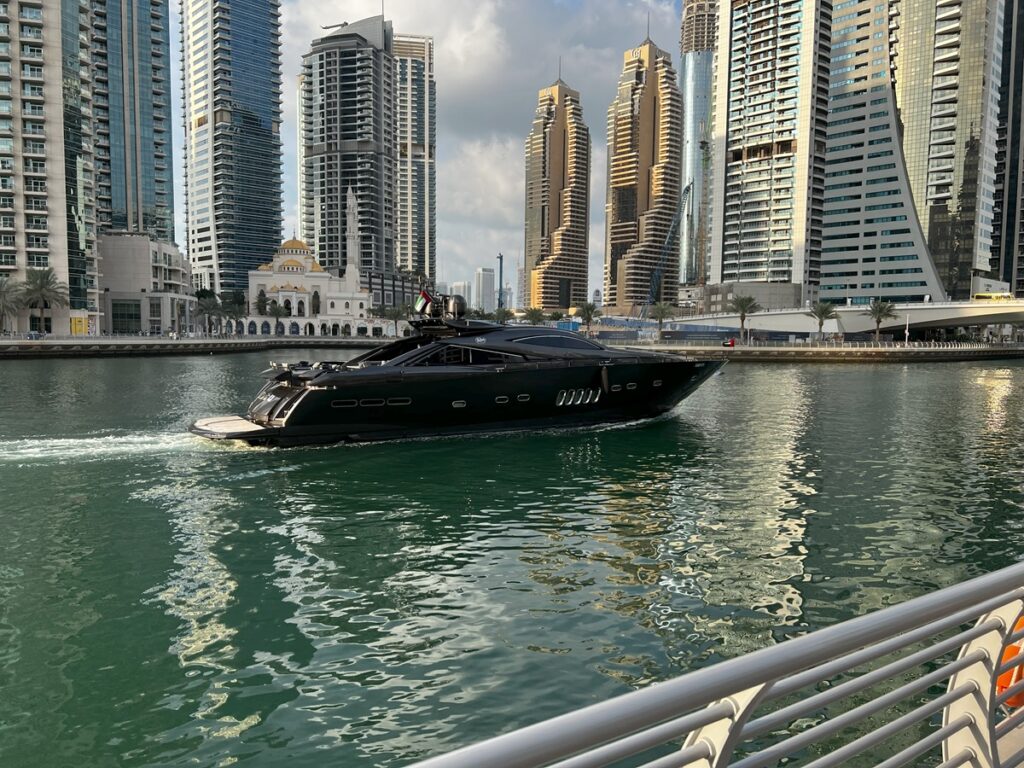
We also want to export our culture in a natural way. We don’t necessarily want to develop a game that’s a replica of Dubai and export that to the rest of the world. We’d rather have a situation where you have teams around the world that get to come to Dubai once or twice. Then you have another team that’s fully based here. We want stories to be shared more naturally, in a more subtle way. I always like the example of Witcher 3. You can tell it’s Polish, but there’s not a Polish flag waving in your face. It’s subtle and it’s beautiful. That’s what we want to do.
GamesBeat: Is there more emphasis on local culture in the games that are being developed, or do they tend to be more global in content?
Kazim: A bit of both. If it’s a global game, maybe there’s an event where we can invite people to experience Dubai, and then they’re inspired to integrate elements of Dubai’s culture and Arab culture into their games. On the other hand, when it comes to programs–the Game Forward program I mentioned earlier is a good example. We’re including at least one Emirati on each of the teams. That way you have teams learning from at least one individual who can share more about our culture in whichever game they’re developing, regardless of whether it’s reflecting our region in terms of how it looks. Hopefully we can have elements of Dubai’s culture and Arab culture in these games.
GamesBeat: Sometimes you want games to be the most desirable industry, too. If you look at Silicon Valley right now, the most desirable industry is AI.
Kazim: I think it’s like that everywhere these days.
GamesBeat: The attention that goes toward games is smaller than it might have been. Investors look at whether they should put their money in Nvidia or in games. The answer to that is clear right now. I wonder how attractive games look in your market, as opposed to the way they might look in a place like Silicon Valley.
Kazim: One way we’re looking to address that–it’s a very hard question. But one way we hope to solve that is by connecting the local developers with some of the more established publishers and investors around the world. That’s a gap we’ve found. We have early stage programs. We have a program with the United Nations UNDP and HP. The focus is on early stage developers, new developers between 13 and 18 years old. It’s a great program, and what we’ve learned through that is something interesting. We find that 75% of that cohort’s developers are women. We’ve heard that in the rest of the world it’s a male-dominated industry. That’s an interesting finding, and we want to make sure that carries forward in later years.
We also have traditional educational programs like bachelor’s degrees from universities like the American University of Dubai. That has a bachelor’s degree in game development and game design. But then what we’ve noticed–there was this gap for people that have learned how to develop games, and maybe even learned how to monetize games and potentially self-publish. They still have trouble securing deals with larger publishers and investors. We’re working with Xsolla to launch an accelerator program that fills that gap so we can ensure that people can still be heard amid all the AI noise.
GamesBeat: It seems like you recognize that you have to have a population that grows up playing games before you can have a population that makes games.
Kazim: This is the first generation where we’ve had people like myself, people who played games. We want the next generation to be able to create games that maybe we wanted to create when we were growing up. We didn’t have the opportunity. I definitely want to make sure that my kids, for example, have the opportunity to create whatever is in their imaginations, whether it’s in Roblox or it’s in Fortnite or it’s their own game.
GamesBeat: Any other big items on the agenda?
Kazim: One big step forward for us recently was our leadership. Dubai’s ruler, as well the second deputy ruler of Dubai, they’ve all told us we need to focus on the positive side of gaming, the positive impact gaming can have on people and societies around the world. Most mainstream media around the world focuses on the negative impact of games. People claim that gaming leads to people being isolated and so on. Whereas I can tell you from firsthand experience, with my kids for example–I might have mentioned this to you before. They play with their uncle in Caracas, Venezuela. Their connection is the absolute opposite of isolation. Gaming brings people together. Why aren’t we showcasing these stories rather than stories of isolation?
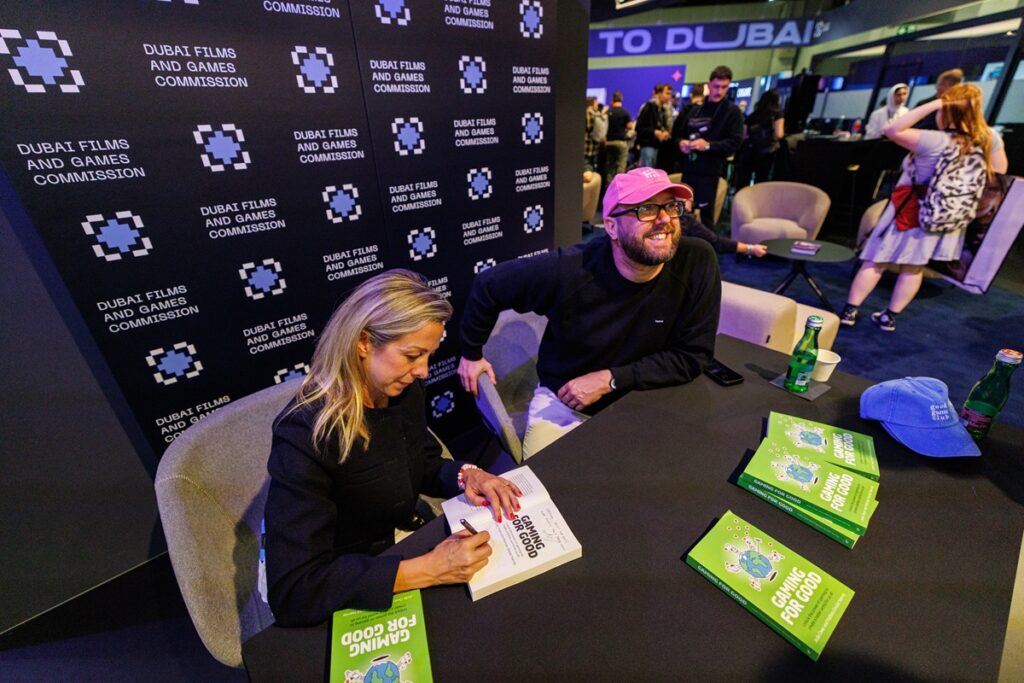
We started to focus more and more on the positive impact of gaming. We want everything we do in Dubai to have this overarching theme of good gaming. We partnered with Jude Ower and Mathias from Sybo to launch a podcast called the Good Game Club. We wanted to identify and share these stories globally to hopefully drive positive change. This is one of the first things we did. Now we have a lot more in the pipeline that’s all under this theme of good gaming.
GamesBeat: It’s interesting, because there is an addictive side to gaming, and it pays to recognize that it’s there, but it’s not good to forget that there’s a fun side to gaming that’s great for everyone. That’s the predominant way people experience games.
Kazim: Fun, happiness, positivity, and again, connectivity and community. We’re having a session with the father of the late Mats Steen. I don’t know if you’ve seen the Netflix documentary, The Remarkable Life of Ibelin. His father, Robert Steen, will hopefully be at our pavilion. He’s going to share how much of an impact Mats is continuing to have on communities around the world. No one knew that he had this chronic illness. His parents had no idea that he had such a big community of friends. He met his girlfriend in World of Warcraft. When he passed, they posted this blog about his passing, and they were surprised in a big way by how many people were supportive and responding to him. All these people showed up in person at his funeral. It’s an inspirational story that I think will be very long-lasting. There are many facets to the positive side of gaming.
GamesBeat: Some of the question is how you incentivize more of that, and in a targeted way. It’s one thing to support gaming in general, but if you want this goodness side to come out more, how do you draw that out?
Kazim: We’re working on that. Again, I don’t want to spill the beans yet. But I agree with you 100%. It needs to be more targeted. There is tremendous potential when it comes to driving positive change through games.
GamesBeat: When do you think we’ll see blockbuster games coming out of Dubai?
Kazim: We have Fragmentary Order. You could definitely call that a blockbuster. I’m really looking forward to that one. The rest is still in early stages, but we’re going to get there.
Disclosure: Gamescom paid my way to Germany for the event. The content of this story is solely the responsibility of GamesBeat.