
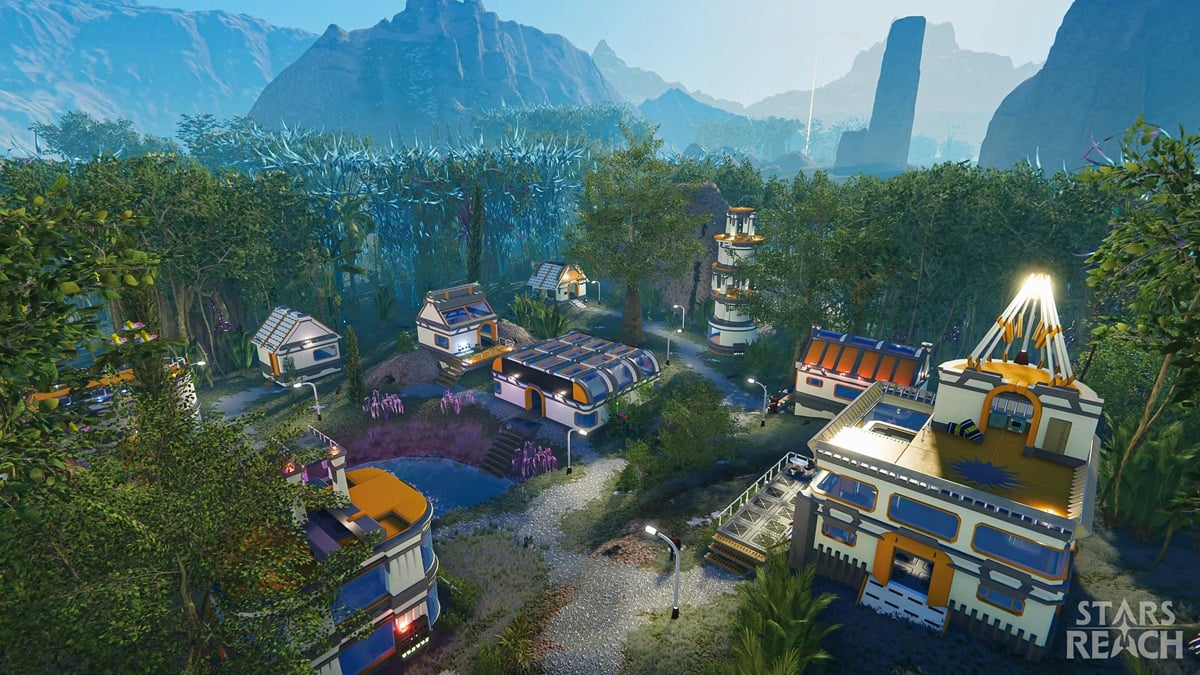
Developer Playable Worlds announced that its years-in-the-making sci-fi online game, Stars Reach, will launch on PC via Steam Early Access on August 18.
Stars Reach is a sandbox massively multiplayer online role-playing game (MMORPG) where players leave a lasting mark on a galaxy. Powered by cloud-native technology, every asteroid, planet, and settlement exists in a persistent world that evolves through player actions. After eight years of development, it’s available today on Steam.
Raph Koster told me in a recent interview that this is the game he has always wanted to make: a sandbox MMO. It provides players the tools to terraform worlds, build civilizations, and shape the future of a persistent galaxy.
Imagine a galaxy where every cubic meter can be terraformed, populated, and ultimately transformed. Build trade empires, tame wild fauna, and create a functioning government for an entire planet.
This is the vision behind Stars Reach, a new sandbox MMORPG where players can carve rivers, melt stone into lava, harness ecological disasters, or burn entire planets to ash. In a universe shaped by the permanence of players’ actions, ecosystems evolve, wildlife goes extinct, and player-built communities rise and fall. Early Access welcomes players to come in early and help shape what the game becomes.
Harkening back to the golden age of MMOs that centered around ultimate freedom, Stars Reach asks players to forge their own path through a classless, open-ended progression system with hundreds of skills and through a galaxy that encourages creative experimentation.
Across a vast simulated universe, players explore new planets, build homes and settlements, gather resources, craft, trade, fight, govern, and leave a lasting mark on the worlds they discover. Across land and space, players battle hostile enemies and defend their homesteads.
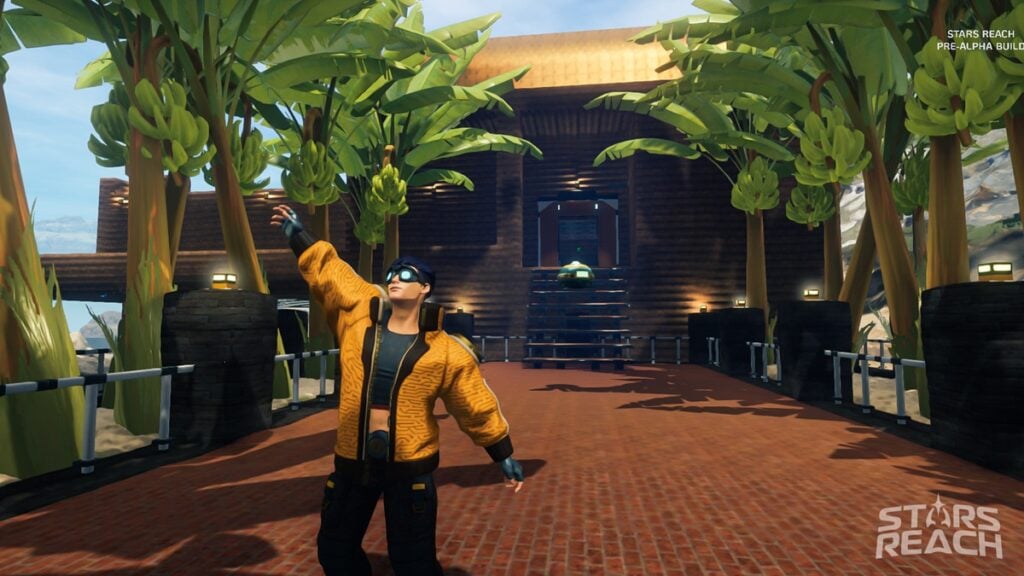
Playable Worlds’ cloud-native technology makes this kind of reactive online world possible. In Stars Reach, trees grow from saplings, lakes freeze, and caves either collapse naturally or by a player’s hand, rendering previously accessible areas now blocked. With environments capable of changing at a moment’s notice, players must think creatively, adapt to the unexpected, or devise an entirely new approach.
Led by co-founders Raph Koster and Eric Goldberg, Playable Worlds has been hard at work bringing new systems and features to the experience of Stars Reach. Prior to the Early Access launch, a number of substantial updates went live, including an improved character creator with enhanced customization options, combat refinements, and enhanced wildlife migration with increasing threat levels if left unchecked.
This version includes exploration across multiple planets, resource gathering and harvesting, exciting combat, an in-depth crafting system, trading between players, and more. It also introduces a unique threat: a planet-eating hive mind that players must cooperatively defend against. More features will be progressively added, including spaceships, additional species, factions, political structures, and PvP combat.
Stars Reach is out now in Early Access on PC via Steam with three paid tiers: the Firstlight Pack ($29.99), the Voyager Pack ($49.99), and the Cosmonaut Pack ($79.99), each offering increasing rewards and cosmetics.
I got to play a version of the game with Koster in early June during the Summer Game Fest.

Armed with a PC with a mouse and keyboard, we started out at the same place where all players do at the outset. It’s a space station with a Hall of Heroes — a place called Haven. It was a colorful but not too cute sci-fi setting. It was a detailed world, but not one that seemed massive like World of Warcraft. It was more a smaller space, but with enough room to explore.
Koster showed me you can switch your camera view, whether in MMO style where the camera is loose and you use the right mouse button to drag around the camera. There’s a tutorial, but we didn’t bother with that as Koster was driving.
With Stars Reach, there are a ton of worlds that you can explore in a single giant galaxy. In the space station, you’re part of the Transplanetary League and you get to choose where to go. First, he took me into space on a spaceship. The galaxy various space zones and planets that are all connected via wormholes so you can travel between them fast. What’s unique is that the environments can be stable and familiar, like your own home.
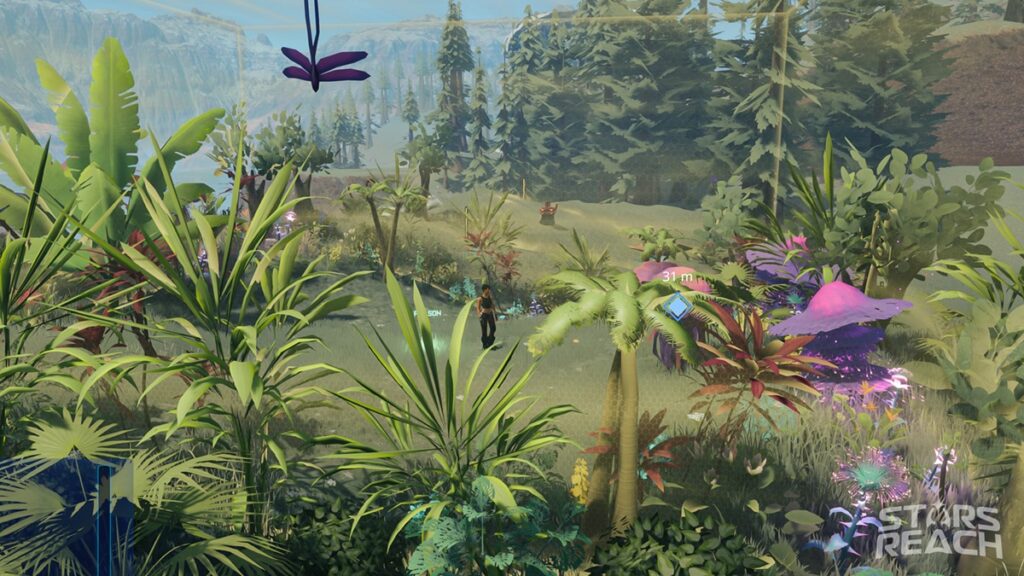
Or they can be generated on the fly. We made our way to an asteroid and jumped around on it in low gravity. I floated across the space and crash landed on the asteroid. Koster explained that everything was simulated. In space, they simulate low gravity. You can dig tunnels and mine for resources. Then you can use those for crafting.
You can fly spaceships around and engage in space combat. We headed down to the surface to see a generated landscape. We played in a world that was set up for the demo, so we could carve it up without messing up anything that belonged to real players testing the game.
Players are able to grow trees, stunt trees, prune them, or plant them to bring them back. You can use a trailblazer tool to cool down a fire and put it out. Everything reacts to what you do in the environment. Every planet is simulated to this degree.
All the minerals can be mined out. You can even drive creatures extinct, Koster said.
“All of this simulation isn’t just for funsies, right? It all affects gameplay. I mentioned the connections to farming. You saw the connections to combat, the connections to crafting, all of that. But it does lead to lots of random fun kinds of things,” Koster said.
If a place becomes more like a town, the players can actually elect a government and set laws for that planet and run a private server the way that they want. But it is inside the larger game, so they can still explore the whole galaxy and trade with other planets. When you step across a wormhole border, you move from the private place to the public place.
“We really see it as a reinvention of MMOs. This is gameplay that I don’t think you can get anywhere else,” Koster said.