
Team17 teased us a couple of months ago as it delayed the release of the multiplayer combat game Hell Let Loose: Vietnam. It pushed to the date from June 18 to August 13. Now the game is launching today.
The title from Expression Games is releasing into the crowded first-person shooter market, competing with the likes of Call of Duty and Battlefield. But this game focuses on a historically accurate niche: 50 vs. 50 human multiplayer games that feel like big, coordinated battles. I’ve played the game a bit, and I also interviewed the game’s development leaders too.
A good way to describe it is as the opposite of Call of Duty, where every soldier is a hero. In this game, you are just one soldier who is part of a very large team. The title has a historical focus in the Vietnam War that is relatively rare in the shooter genre. And it aims to carry on the legacy of realism from the WWII game, Hell Let Loose, which sold more than $100 million. The team believes it identified a niche for shooter fans who are tired of first-person shooter games.
Hell Let Loose Vietnam is set in the Vietnam War and it pits the North Vietnamese Army against U.S. forces with technological superiority. In that respect, it’s a highly asymmetric conflict. The Americans have advantages like attack helicopters, armor, artillery and heavy machine guns. And the Vietnamese can use unconventional warfare such as mortars and tunnels that take them behind enemy lines.
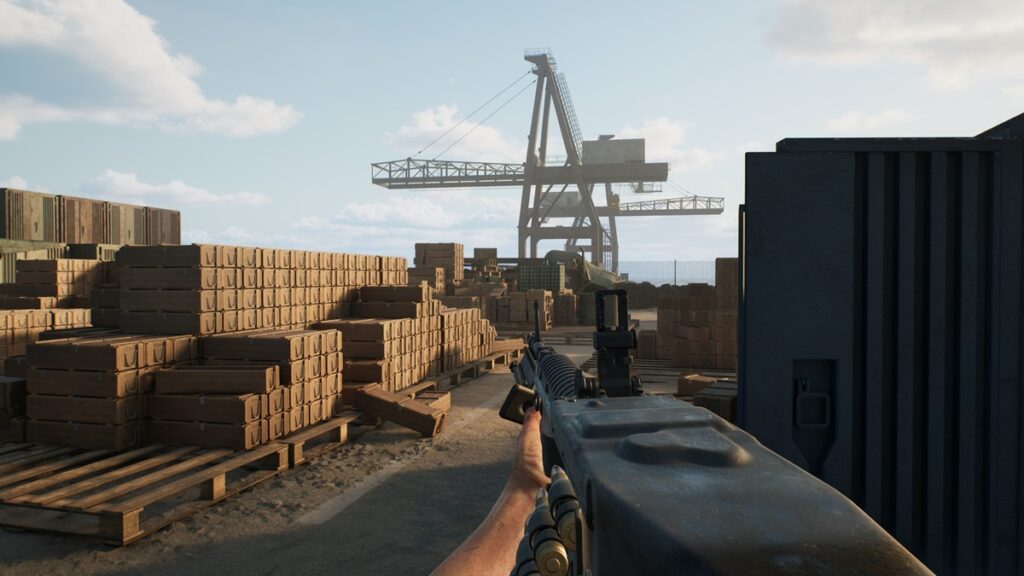
But that asymmetric structure makes the game fairly terrifying. You don’t know where the hidden enemy will appear in the jungle. You don’t know where the enemy lines are except in a general sense. And all you have to count on is your commander, who is just another player.
Since the game doesn’t want to move into the realm of civilian warfare, it is not meant to depict the U.S. against Viet Cong guerillas, who blended with the civilian population and were a huge part of the war. I think that was a reasonable choice by the game developers, given the dark history of civilian deaths in the war. While the game is meant to educate us about history, it’s also grounded as entertainment.
I was able to play the closed beta test of the multiplayer battles a couple of months ago. Back then, the team discovered some issues they had to fix and so they took more time to finish. And I played again last week briefly and got another taste of the action.
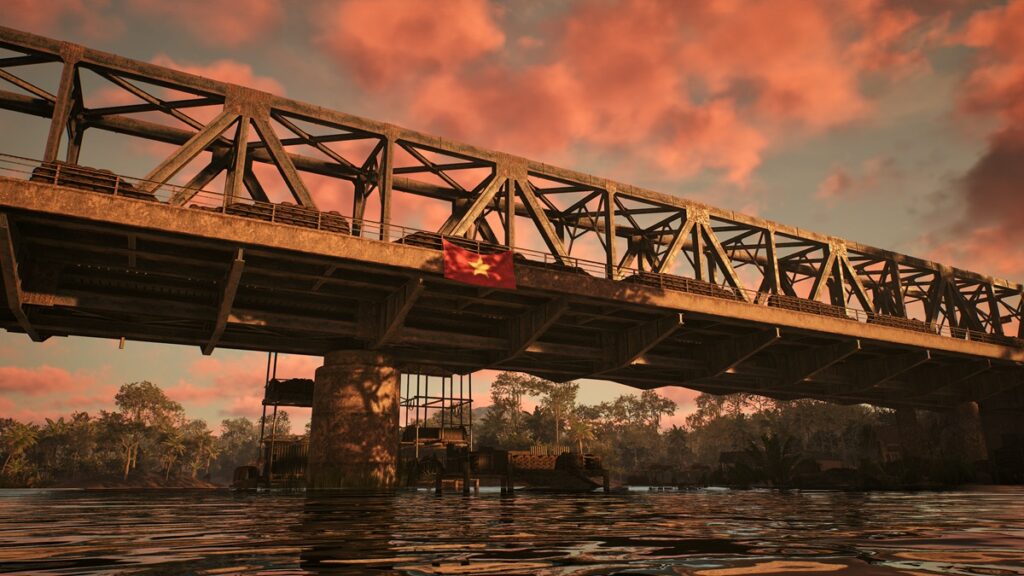
In the previous closed beta test, I fought on a battle map focused on the struggle for an island called the Dragon’s Teeth in the middle of a river near a bridge. There were five different victory points to take on either side.
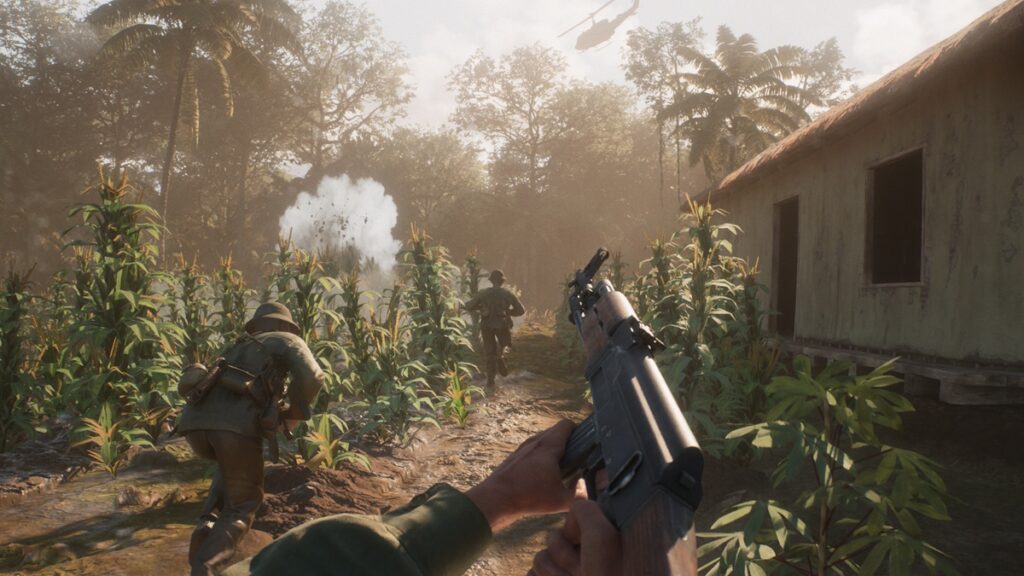
In this battle, the commanders, speaking to the team with microphones, made a real difference in directing the battle. You never knew which way the enemy was coming from. The Americans could fly behind enemy lines in helicopters, which the North Vietnamese could shoot from the sky. And, as noted, the North Vietnamese could infiltrate U.S. lines. They did so by using tunnels which underscored the home-turf advantage of the North Vietnamese.
This was reflected in the combat on the ground. I was shot numerous times and I had no idea which direction the shot came from. By contrast, I was able to get a couple of kills, but only by inadvertently coming up directly behind some enemies. The odds of that in a vast map were pretty low. I took to crouching or crawling my way toward hot spots.
Both times, the enemy seemed more organized. Our commander had a real strategy and flew squads to the bridge and then resupplied those squads with ammo. But both times, the enemy pushed into the victory points and took the strongholds. We could not push them back. The pace was fast, and the battle lines moved quicker than I thought. Even so, every time I tried to move fast, someone picked me off.
I felt like there was something I was missing because the basic assault rifle that I used most of the time was highly inaccurate. It bounced when I fired and it was hard to get a bead on a target from a distance for anything except the first bullet. Somehow I think they need to get a better handle on the gun accuracy, unless it really is just my bad aim.
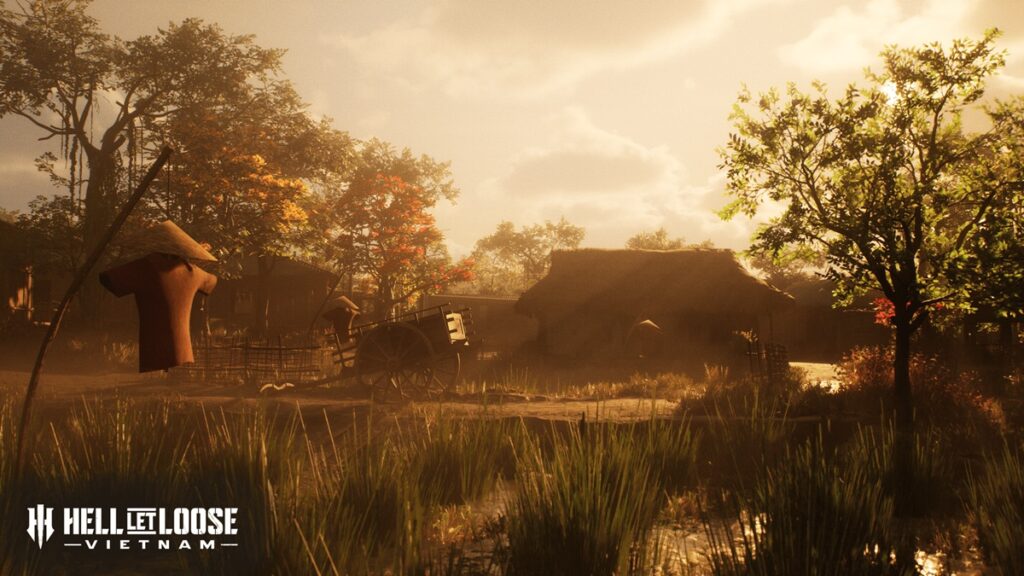
This time, I settled on burst fire, using a few shots at a time to take pot shots at distant enemies. Then I adjusted my aim. Still, it was hard to get close to where the commander ordered us to go without just getting shot from just about any direction. There were snipers on the enemy team, and maybe that’s why I was getting shot from afar. But the game’s FPS gameplay is far different from something like Battlefield or Call of Duty. First, the weapons from the 1960s are not that accurate. They’re also fairly hard to fire using a game controller. I think I would have to fiddle with the game to get a much better idea of the right aim settings. And yes, I am one of those players who would rather have highly accurate firing over realism.
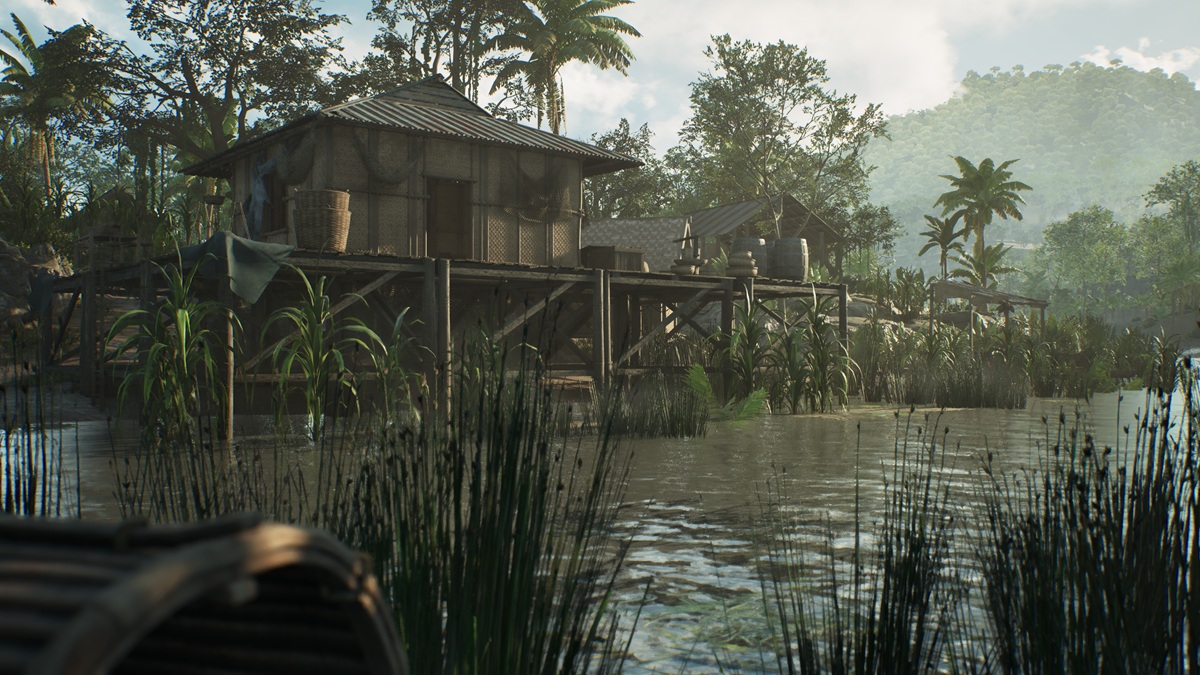
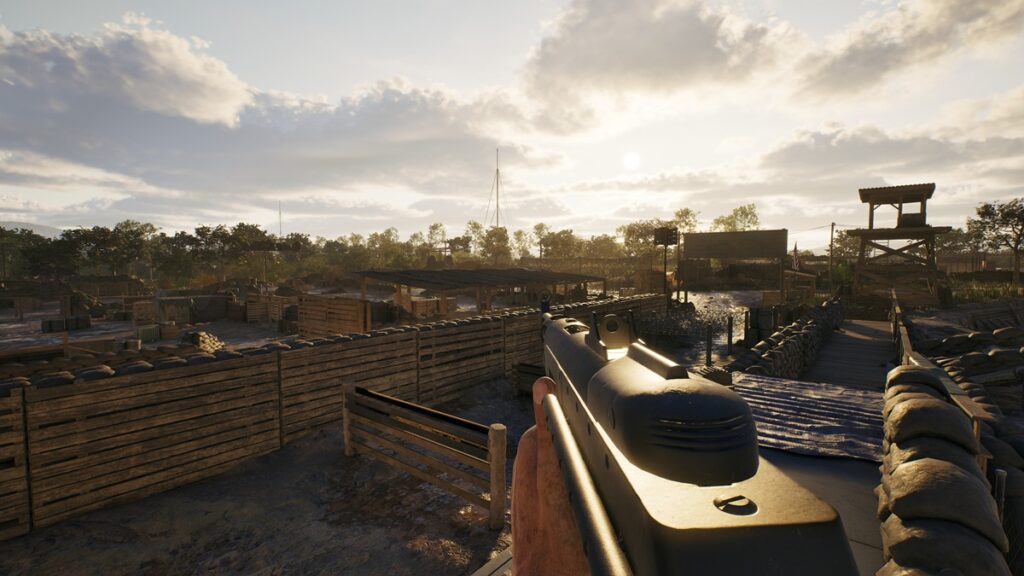
I felt immersed in the jungle. The graphics weren’t super high-quality, but they did the job of making you feel like you were either in cover, protected by ferns from view, or vulnerable in the open. The use of Unreal Engine 5 seemed like it paid off with a mix of quality and fast performance.
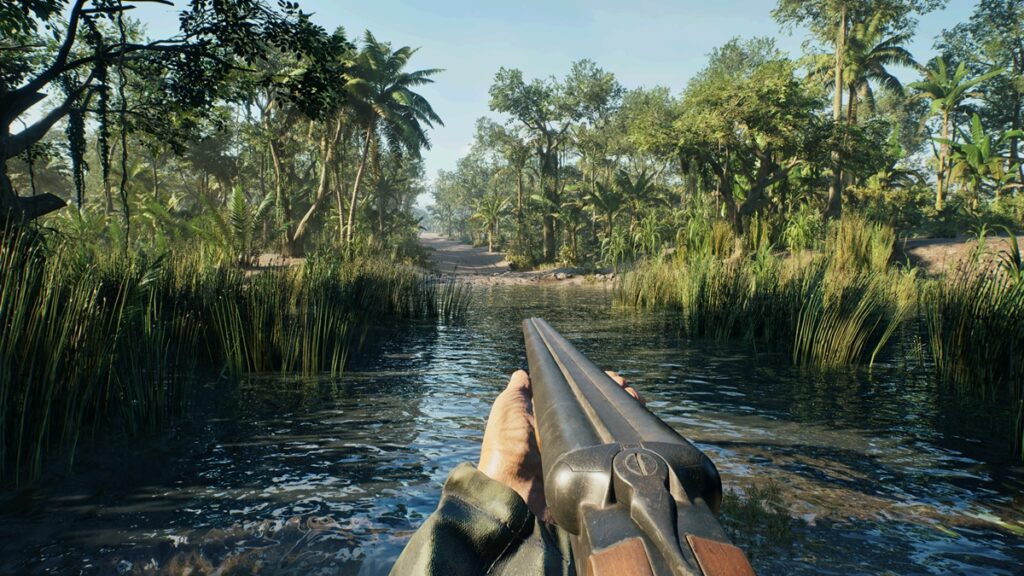
I tried out the tutorial and it was useful. This time, I was able to swim underwater without a problem. I was grateful to have controller support in a shooter. One of the things the game does well is convey the terror of fighting in the jungle up close, as you can fight with knives or small arms in a death struggle with an enemy a few feet away.
The game works well using local voice over IP to communicate with teammates. But the team chose not to allow proximity voice chat between opponents, largely because there is already so much chatter among commanders, squad leaders and unit leaders. I always understood the commands of the leaders — but then again, when I played, these were the developers. I can’t imagine how much you have to play the game to be good as a commander.
This time, I played as tank gunner. When I spawned at the base, there was no tank available so I had to trot into battle with just my pistol. One time, I got lucky and a developer came up behind me in a tank and asked me to join as a gunner. Then I got used to shooting the gun at enemies that were on the other side of the river. We did well for a little while but soon enough, someone took an RPG or something like that and took out our tank.
Compared to World War II games, the pace of the game was different. To me, it felt faster, with a lot of the difference being the flanking made possible by vehicles, helicopters and the tunnels. It’s a pretty harsh and intense environment, where survivability seems low.
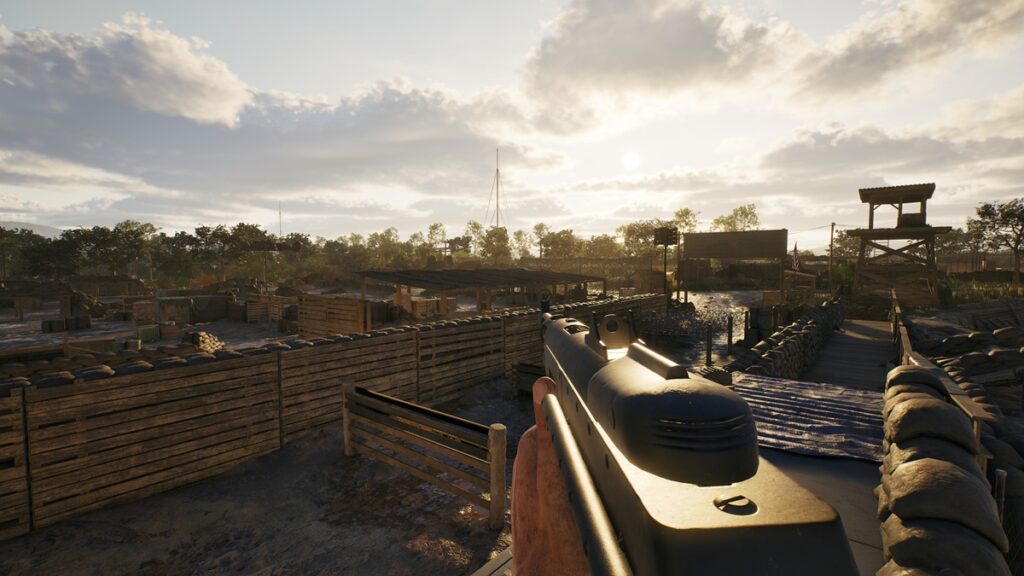
There is some progression that allows you to carry more weapons, utility, and lethal equipment. But you’re not handicapped at the beginning. The game will launch with six maps and it will have live service plans.
Overall, it’s is a very different kind of FPS experience for those who want something different. But it’s not a run-and-gun game where you can go in with guns blazing and expect to do well. You have to take your lumps, and you have to go back in and try to be sneaky. That’s the only way to survive in a war like this.
I give it four out of five stars. The more I play, I could change my mind but that’s my starting point.
Interview with the development leaders
I did an interview with Paul “Rushy” Rustchynsky, game director at Expression Games; Kieran D’Archambaud, technical director; and Ryan Playle-Howard, senior art director.
Rustchynsky has been in games for about 20 years and he worked previously at Evolution Studios with D’Archambaud making racing games. D’Archambaud also did a stint at Rare, and he also spent the last four years working on the Hell Let Loose franchise (which debuted in 2021 as a World War II game with 50v50 multiplayer).
“I’m very excited about the launch,” Rustchynsky said at the outset of our interview. “It’s exciting to get it into players’ hands,” Playle-Howard said.
The delay helped address balance and performance

I asked them why they needed the extra couple of months to finish the game. Rustchynsky said the main reason was to make game performance better. The team saw that players on lower-spec PCs were struggling, and the goal was to let everyone play at 60FPS or better.
“That’s how we feel the game plays best, and secondly, it was balance. We had a lot of excellent feedback from the community, our war correspondents, and we were able to go back and re-look at some of the asymmetrical elements and try to make sure that both sides have an equal chance across the range of modes,” Rustchynsky said. “Balancing asymmetrical games is is tough. It’s very, very tough, and it’s taken a long time to get us into a position where we’re confident we will see equal fights.”
I noted that when I played in May, the American team got wiped out multiple times, as the North Vietnamese could tunnel behind their lines and launch surprise attacks.
D’Archambaud also said the team began to aggressively examine performance and optimization just two weeks before the open beta, and it turned out that just wasn’t enough time to aggressively change the performance.
“If we had released on that [previous] time schedule, players wouldn’t have had a good time,” D’Archambaud said. “The extra time has made it so it plays really good now.”
The previous Hell Let Loose game was made on Unreal Engine 4, but this one graduated to Unreal Engine 5. Now the game’s graphics look particularly good, especially in capturing the environment of Vietnam with its river waters and dense foliage.

In the past couple of months, the team figured out that American helicopter pilots were too exposed to infantry fire. So they made it harder to shoot them down, and they modified how much damage a helicopter could take. Helicopter pilots can also drop spawn points where players can appear after they’ve been killed. The team also nerfed the tunnels a bit, making travel through the tunnels slower. Plus, you can’t connect as many tunnels together. Now the balance has turned out better.
D’Archambaud said there’s a learning curve in figuring out how to be effective as a helicopter crew. It’s hard to fly those aircraft, and so players have to train more to do it right. Helicopters can also now spot tunnels and mark them with flares. Then they can be destroyed. And he noted the team will monitor post-launch play and examine the analytics. Then they can make changes to the balance and fix other issues too.
Why hitting targets is harder
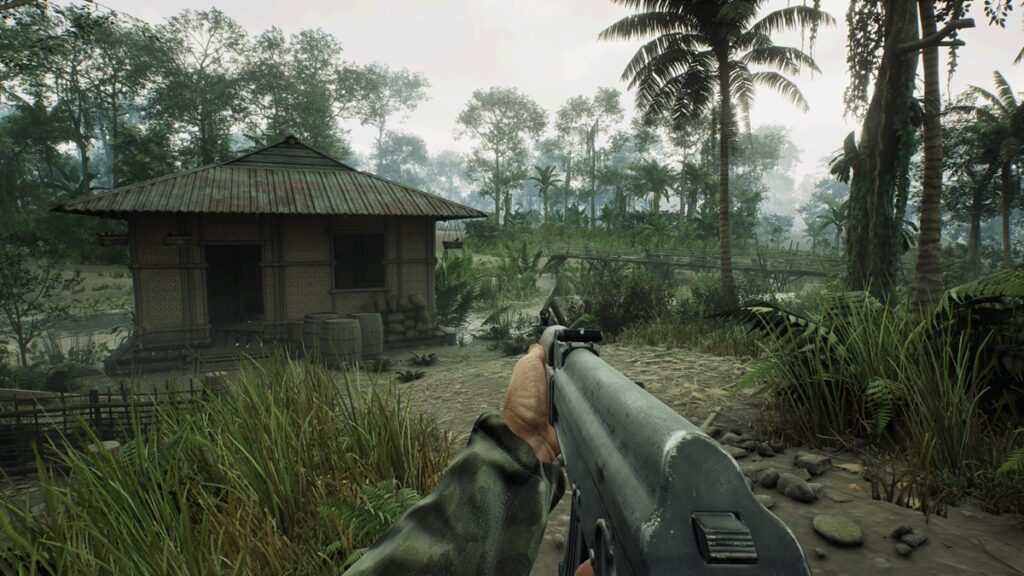
I noted that I had trouble shooting accurately with my Xbox controller. I asked if there was a way to tune it or do something to make it as accurate as a Call of Duty game is. The point here, they said, is that it’s a more realistic game where the kick matters and the guns are less accurate.
Rustchynsky said part of the inaccuracy was intentional, compared to Call of Duty or Halo. Those titles use aggressive aim assist with controllers. But the important lesson of Hell Let Loose Vietnam is to stay in cover, he said. You should remind in cover, like hiding behind a tree. Then you can shoot “snap” shots and then go back into cover. To me, that sounded like burst mode was far better for that than continuous fire. Rustchynsky agreed.
“We do have some aim assist. I’m not willing to detail how that works. There are some some things that behind the scenes that help you aim on a gamepad, but not in the same way as other games. Because if we did that, it would reveal locations of players, and that’s a very critical element,” he said. “As we often say, clicking on people’s heads [with mouse aiming] isn’t the primary goal of the game. Yes, shooting people is going to help dictate part of the battle and the flow. But ultimately, you find that there’s numerous ways to play inside the game which actually contribute more than shooting people. Communication, placing down spawns, fulfilling your role objectives, building nodes, building defenses — all these things really contribute.”

He noted that mouse players will always experience finer precision. And maneuvering a tank or helicopter is far easier on a gamepad than it is with a mouse and keyboard. That’s because you have more analog inputs on a controller. Still, he noted the team will listen to feedback.
Firing in burst mode is also better because it doesn’t give away your position as much, and it’s also not like Call of Duty where players are heavily armored and require a lot of hits to bring down.
I noted that the game was also a lot like Battlefield 6, where you can get shot from any direction and you may have no idea where the shot came from.
“Again, that’s that’s partially intentional because a lot of the game relies upon strong communication. So when you’re down, hopefully you’ll have some information, you know based on where you heard the shot potentially coming from, or when you’re down on the ground and bleeding out, you can still look around and hopefully tag somebody,” Rustchynsky said.
Part of your duty is to stay alive, and not go in guns blazing like a hero. You can use the environment where to your advantage, and then talk with your teammates about where the enemies potentially are.
“Ask your commander to bring in a strike in a hurry to basically flush people out, or fire up a flare in the air to get some recon markers on the maps,” Rustchynsky said. “You can try and piece things together because a lot of it is trying to work out where the enemies are at any one point and communicating that information through the chain, so your team can effectively deal with those enemies in those regions.”
Why commanders are critical
More important than any single shooter’s skill was the experience of the commander, in my opinion. I asked them how much that matters.
Rustchynsky said that the commander is the last role you want to learn in the game. Ideally, you can climb up the ladder of experience, playing tutorials and becoming a squad leader over time. You learn each role and then can understand it more as a commander.
“Hopefully, you’ll have enough information about how those roles interact with one another as a squad,” Rustchynsky said. “You can become a squad leader, and then you start to learn about how squads interact with command? And it’s this kind of leveling up [that matters]. You can’t be a commander immediately. You have to complete at least the tutorials. Post release, we’re going to actually up the requirements a little bit.”
He added, “Having a good commander make a massive difference, not just in terms of being effective and competitive, but just how how fun the gameplay is. Because when a team is working together, that’s when Hell Let Loose is is at its best.”
To be really good at it, you’ll probably need 20 to 30 hours of playtime, Rustchynsky said. The commander has a lot more things on the screen, like munitions, support and resources they can control. They can bring in napalm strikes or spawn new vehicles. Getting used to flipping between first person and the strategic map is important.
“I think it’s a great journey to go on because every single role that you play plays out so differently, and being able to see it from all the different perspectives once you’ve kind of mastered all 17 roles is a great experience to have and offers so much variety,” Rustchynsky said.
D’Archambaud said some players have spent years getting good at the roles in Hell Let Loose: World War 2.
“You have to work together to be successful because,” he said.
And in Vietnam, the roles are more complex, like becoming a good helicopter pilot who won’t crash and kill everyone on board.
Playle-Howard said, “I still get nervous. Even now, even though I’ve done it a million times. That responsibility is scary because you know that you could ruin someone’s experience if you if you lead them to death. You can also make it good as well. That mastery path is everything to this game. And it’s it’s where the magic is really chasing that mastery experience of each role.”
The different maps
The maps consist of a grid with 15 different capture points when viewed from the strategic point of view. The three victory points for any given match can be spread randomly around with each different match. There are five vertical lanes for combat.
Then you can play different offensive or defensive modes like Conquest or Domination.
continuing to balance and tune our maps as well throughout. So it’s not something that we’re we’re too worried about if there are small, you know, imperceptible differences between them. But I like the fact, obviously, if there’s huge amount of contrast, I think Ryan can talk to to that bit a bit more.
“We chose a wide tapestry for visual motifs in Vietnam, and there are a lot of different range of biomes. Obviously, it’s not as broad as Europe. But we wanted to bring some diversity from that to show those textures, and then we’ve got a plan for live service to show more of that variety.”
He noted when playing Dak To, an airfield map, the team spent about 45 minutes in the bottom of the map on that particular mode fighting over a village front. It’s a completely different experience when the victory point is in a different location.
Rustchynsky said the U.S. is likely to be the first to capture a victory point because of the mobility of the boats and helicopters. But it doesn’t mean they are going to be able to hang onto it for the longest time. The rivers also affect gameplay a lot because you can swim and dive under cover in this game, in contrast to the World War II game.
“Every map generally feels unique and has a different feeling,” Rustchynsky said. “One thing we wanted to do maybe slightly differently from the first game was to lean into what’s different, what’s unique about each map.”
While it’s been six years since the game studio Black Matter made Hell Let Loose: World War II. Expression Games came into the picture a couple of years ago to make Hell Let Loose: Vietnam, with Team17 staying as the publisher. Expression Games took about two years to make the game, though a small team was busy in the first six months before it ramped up.
“It’s a hard game to understand how to have fun and how to succeed in it,” said D’Archambaud. “We certainly try to make the rough edges of the original better and make it easier to enjoy the game. But we don’t want to destroy what’s special about the game, because there’s nothing else quite like it.”
Rustchynsky said the team found a good niche with Hell Let Loose, with a unique formula that no one else is replicating. It’s almost more like playing a sports game with a whole team, rather than playing as an individual.
“There’s more depth. There’s more strategy. There’s more tactics available in Vietnam, and it’s something that we feel that you know the experience,” Rustchynsky said. “This new setting will bring in fresh players, and hopefully they can enjoy that, and then they’ll check out World War Two as well after playing checking out Vietnam.”