
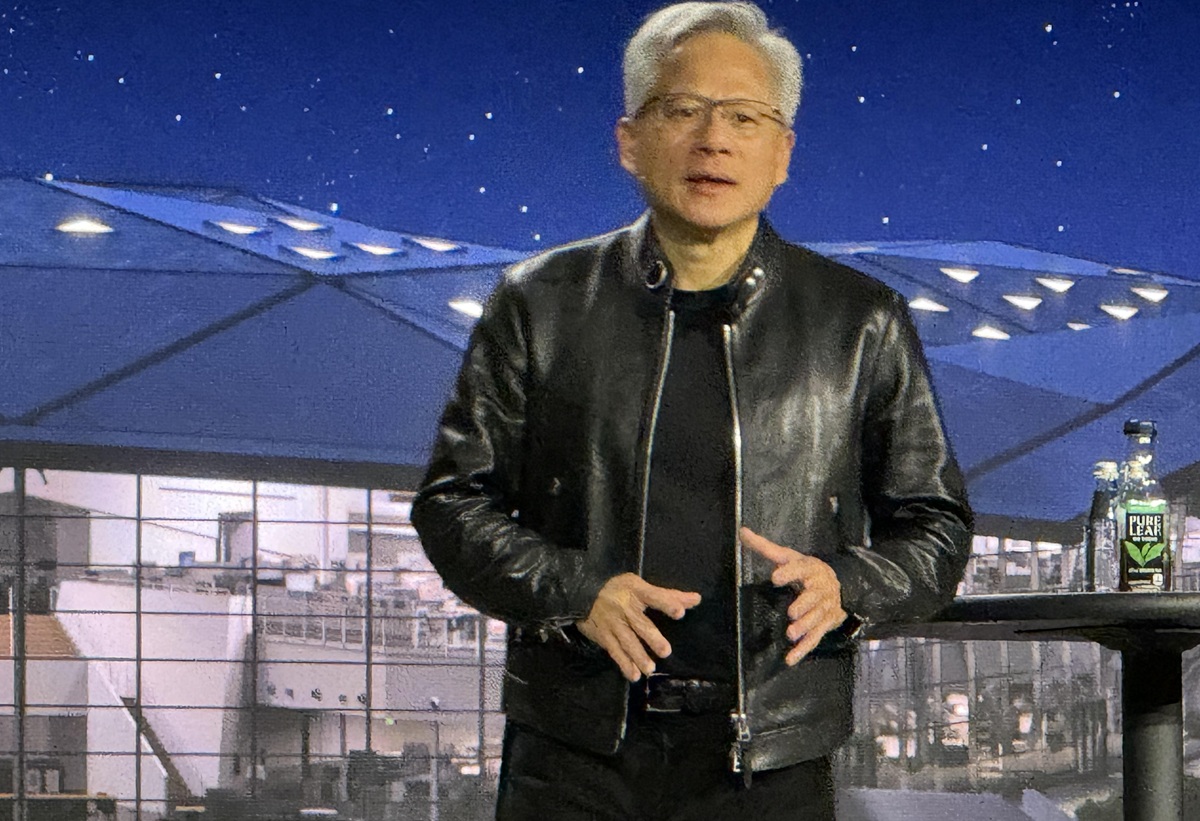
In his first tweet ever, Nvidia CEO Jensen Huang called for federal policymakers to avoid putting premature restrictions on “open-weight” AI models because that would stifle competition.
Such a move by lawmakers could drive innovation overseas, Huang argued. His message was backed by Microsoft, Meta, Palantic and 20 more companies on Friday.
Huang argued that open models help America lead in technology. He said open ecosystems move faster because more developers, startups, researchers, and institutions can build. He noted that open-source platforms like Linux, the internet stack, help America lead modern computing and shared software lowered cost, spread knowledge, and made systems stronger.
He said that open weights make AI accessible, as startups, universities, companies, and governments can use advanced AI without starting from zero. He said they also give people control, as users can inspect them, tune them, run them on your data, and build AI for your own mission. Huang, who wants the right to sell the most advanced AI chips to China, argues that America should run faster, not close itself off: Openness drives competition, improves safety, and helps the world build on American technology.
Open-weight AI models are available for users to download, modify and run on their own infrastructure. Chinese open-weight models are growing in popularity versus rivals like the Ameircan companies Open AI and Anthropic, neither of which signed the letter. (Update: Anthropic posted its opinion here). Those companies are developing their own proprietary closed models. But Sam Altman, CEO of Open AI, praised Huang’s effort.
U.S. policymakers are wondering if they should restrict access to Chinese models in the U.S.
Moonshot AI, a Chinese startup, caused a stir this month after launching a model called Kimi K3. It can beat some of the American models on benchmarks.
U.S. Treasury Secretary Scott Bessent told CNBC on Tuesday that the Trump administration would review if Chinese companies were stealing American intellectual property, and stated that the government has “the ability to sanction them because of this theft.”
But in the letter on Friday, the group of U.S. tech companies cautioned against any rash actions. They wrote that open-weight models strengthen competition and ensure that the benefits of the technology are “broadly shared rather than concentrated in a few hands.”
Microsoft CEO Satya Nadella endorsed Huang’s open letter, and Elon Musk, who runs an AI business under his rocket company SpaceX, also shared Huang’s letter on social media.
Here’s the full post from Huang:
Open Weights and
American AI Leadership
July 24, 2026
In the 1980s, early open-source software pioneers challenged the prevailing belief that software would advance only if companies kept tight control over their code. This movement pushed for a transparent ecosystem where developers around the world could study, modify, and improve software.
Software developed by the open-source community now supports most of the internet and underlies systems used by the world’s largest technology companies, as well as the U.S. military and federal agencies conducting scientific research, cybersecurity, and other critical missions. Open source did more than lower the cost of software; it created a shared foundation of knowledge on which generations of American engineers and entrepreneurs built their institutional sovereignty.
The United States now faces a similar choice with artificial intelligence. Our AI leadership will be judged not by one frontier AI model, but by whether the United States builds a strong, open ecosystem that diffuses into every sector. This is essential for creating opportunities for innovation and prosperity across the country. It requires expanding access to AI, encouraging competition, robust application layers, and giving Americans greater control over the technology they rely on. Open-weight models—AI models that anyone can download, inspect, modify, and run on their own infrastructure—are an important part of that foundation because they make advanced AI more accessible, adaptable, and widely available.
Open weights expand access to the AI economy. Startups, established businesses, universities, and public institutions can build on advanced models without training one from scratch or paying frontiermodel prices for every task. Open weights let every organization match the right model to the right job at the right cost, reserving frontier-scale capability for genuine frontier problems and running efficient, specialized models everywhere else. That discipline is what will make AI economically sustainable as its use scales into the billions of everyday tasks. America wins the AI era by diffusing it into the workflows of factories, hospitals, farms, classrooms, and main street businesses.
Open weights also strengthen competition and competition is what keeps the gains of AI broadly shared rather than concentrated in a few hands. By allowing many organizations to build, adapt, and deploy advanced models, open weights create rivalry not only among model developers but across cloud chips, applications, and services. That competition spurs innovation, drives down costs, and distributes the benefits of AI broadly across our economy.
Open weights also give customers greater control. As organizations invest in AI, they want to know that they will not become locked into a single provider or lose the knowledge and capabilities they build over time. Open weight models help provide that assurance by allowing organizations to control their own data, evaluate and adapt models to their own needs, and deploy them wherever their business requirements demand. And as organizations create value with AI, open weights allow them to own that value through self-improving models, specialized capabilities, and accumulated knowledge that drive American sovereignty and prosperity.
To be sure, open weights carry real and distinct risks. Once released, the weights are beyond the original developer’s control, and modified versions are difficult to trace or reverse. But the right response to this risk is not to prohibit open weights. In a world where cybersecurity attackers use advanced AI, defenders need access to models with comparable capabilities so they can detect, simulate, and respond to emerging threats. Open models broaden defensive capability, increase transparency, and allow vulnerabilities to be discovered and remediated across many teams.
In fact, openness may be one of the most important paths to AI safety and security. Relying solely on closed models is not inherently safe: they can be breached, misused, or fail in ways that outsiders cannot detect. And concentrating advanced AI capabilities behind a small number of closed models compounds that risk. It results in a small number of single points of failure, weakens competition, and leaves critical technology in the hands of a few providers. Open weight models, on the other hand, allow a broad community of researchers and developers to examine their behavior, identify vulnerabilities, develop safeguards, and improve them over time. Just as open-source software demonstrated that transparency can be more secure than obscurity, AI safety may depend on giving more people the ability to test and
strengthen the models on which society relies. It allows for rigorous benchmarking and evaluation, red teaming, and protections tied to real and demonstrated harms rather than assuming that closed systems are safer by default.
A strong AI ecosystem is not a foregone conclusion. Policymakers have an important opportunity to act. This includes expanding access to compute for startups and researchers, investing in shared training assets (datasets, tools, evaluation frameworks), and keeping the frontier plural by avoiding premature restrictions on open models that stifle competition or drive innovation overseas. These measures must also look at how strong application layers can expand sovereign use of AI across the economy.
In shaping this ecosystem, policymakers should be careful not to conflate legitimate modeldevelopment techniques with misappropriation. Distillation, or the practice of using one model’s outputs to help train or improve another, is a widely used technique for model improvement, evaluation, and validation. It reflects a long tradition of learning from, building upon, and improving existing technologies, a tradition that has helped drive innovation since the rise of the open-source software movement. By contrast, unlawful efforts to extract value from closed models raise legitimate concerns. Those concerns should be addressed through targeted legal and commercial frameworks rather than sweeping restrictions on techniques that play an important role in AI innovation.
The age of AI can be one of prosperity. With the right choices, open weight AI can expand opportunity, strengthen competition, extend American technological leadership, mitigate risk, and ensure that the benefits of this extraordinary technology are shared broadly across our economy. That future is worth building, and the United States should lead in building it.
American Innovators Network ● Andreessen Horowitz ● Arcee AI ● Arena ● Black Forest Labs ● Box ● CrowdStrike ● Dell Technologies ● Emergence Capital ● Hugging Face ● IBM ● The Linux Foundation ● Mariana Minerals ● Meta ● Microsoft ● Mistral ● Mozilla ● NVIDIA ● Palantir ● Perplexity ● Reflection ● Replit ● ServiceNow ● Telnyx ● Y Combinator