

This story was written as a guest post by Jon Kimmich.
Dean Takahashi asked me what I thought of this week’s Xbox layoff and restructuring news. Tl;dr: this feels like the sequel to situation Microsoft has already lived through once, memorialized in a memo called “The Burning Platform.”
That memo came from Stephen Elop at Nokia in 2011, when Nokia was watching Apple and Android turn the mobile phone business into a platform war it was no longer winning. Elop told the story of a worker on an oil platform in the North Sea that had caught fire. The choice was to stay on the platform and be consumed, or jump into freezing water and hope to survive. His point was that a burning platform forces behavior that would otherwise seem unthinkable.
It was not technically a Microsoft memo, but it became part of Microsoft’s mobile story almost immediately because Nokia’s answer was Windows Phone; Microsoft eventually bought Nokia’s handset business; and the whole episode became a case study in how quickly a dominant position can evaporate when the platform underneath the business shifts.
That was Nokia’s moment. This is Xbox’s. (Editor’s note: You can see the Xbox leadership’s point of view in this story).
First, the human part: this is tragic for the employees impacted. These are talented people, many of whom did exactly what they were asked to do. But as a business event, it is hardly shocking. People I know inside and around Xbox have been talking about the state of things for years. This platform has been smoldering for a long time.
Xbox did not come into being because Microsoft wanted to dabble in consumer electronics. It was born out of strategic necessity. The concern was that another company could use the living room as a wedge into Microsoft’s dominance in the home office. If Sony, AOL, cable companies, or some other consumer platform became the place where families networked, communicated, bought media, and eventually worked, Windows’ centrality could erode. Xbox was Microsoft planting a flag in the living room before someone else turned it into the next platform layer.
Then came the cold-start question every platform faces: would third-party developers and publishers show up?
That was the central problem. A console platform is a two-sided market: consumers do not show up without games, and publishers do not show up without consumers. At launch, you are selling a belief system as much as a box. Retailers, developers, publishers, press, and players all have to believe there will be enough gravity for the box to matter.
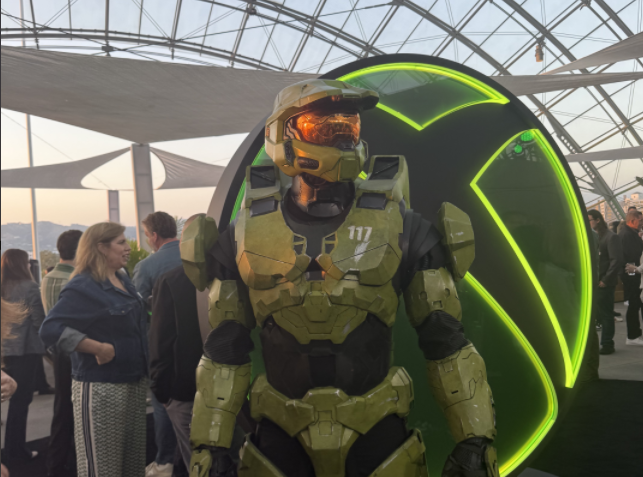
That is why first-party content mattered. It was not simply about owning studios or filling a release calendar. It was about proving commitment. Halo was not just a game; it was evidence that Microsoft was serious. Bungie, Ensemble, FASA, Rare, and the publishing deals around Dungeon Siege, MechAssault, and others were all part of the same platform argument: we will create enough gravity that third parties can safely invest.
In that context, spending aggressively made sense. We were buying time, credibility, and the right to become a platform.
That question, “would the third parties show up?” was why Ed Fries gave people like me the money and mandate to go buy studios and make deals. We were not collecting teams for bragging rights. We were building confidence in the platform before the market had enough evidence to supply that confidence on its own.
The mistake was applying that same logic to Game Pass. Game Pass was not solving the same cold-start problem. Xbox already had customers, content, distribution, and a brand. Game Pass was trying to change the revenue model of an existing business. That is a very different bet. Subsidizing content to create a platform is one thing. Subsidizing content to replace transactions with subscription lifetime value is quite another.
Xbox grew into arguably Microsoft’s most successful consumer brand since Windows, reaching its high-water mark with Xbox 360. But after that, the question became: what is Xbox’s corporate reason for being? Making money is necessary, obviously, but inside Microsoft that is not enough when your margins are lower than Windows, Office, Azure, and the rest of the company’s mainline businesses.
Xbox One tried to expand the mission from games to broader entertainment, TV, media, and services: jack of all trades, master of none. Was this a success? No. Instead that market is owned by mobile devices, Smart Tv’s and commodity hardware.
Xbox Series X|S’s purpose was to lower hardware entry barriers and pushed users toward Game Pass. ‘Every screen is an Xbox’ was the later expression of the same desire: stop being trapped by the console cycle and become a services platform. But Game Pass subscriptions flattened out. And if you’re not expanding, you’re contracting. Slowly, and then increasingly faster, until the big crunch at the end.
And here Microsoft is again, standing on another burning platform.
The console installed base is smaller than it needed to be. Sony owns the premium console mindshare. Nintendo owns the premium mobile console mindshare. Steam owns PC distribution. Mobile is controlled by Apple and Google. Cloud has not become a mass-market replacement for local play. And Xbox carries a cost structure built for a growth curve that did not arrive.
That is not just outsider commentary. Xbox’s own recent reset memo was unusually blunt: a roughly 3% accountability margin, more than $20 billion spent over five years excluding Activision Blizzard King while annual revenue declined nearly half a billion dollars, Game Pass coming off more than eight months of decline before starting to grow again, and a studio system described as overextended. Reporting around this week’s restructuring has been just as stark: Xbox’s business is ‘not healthy,’ and its margins are reportedly 3-10x lower than comparable platform and publishing businesses. That is about as close to a corporate burning-platform memo as you see in 2026.
And yet, Xbox still has some of the biggest franchises in gaming: Call of Duty, Blizzard, Fallout, The Elder Scrolls, Age of Empires, Halo, Minecraft. These are billion-dollar assets, many in varying stages of disrepair, underinvestment, strategic confusion or some combination of all three. Given that, focus is not optional. Focus means letting some things go.
If that were all this was, it would be painful but straightforward. The harder truth is that the whole thing was built on a smoldering platform now on fire: the Game Pass thesis.
Game Pass has not literally disappeared. Millions still use it. Microsoft can point to past revenue records and PC growth. But the idea of Game Pass has collapsed: the belief that recurring subscription LTV could justify an enormous first-party cost base, day-one content economics, and the opportunity cost of training customers not to buy.
The old promise was that if Microsoft could get enough subscribers across console, PC, mobile, and cloud, the math would eventually work. But when console subscription growth flattened, cloud and mobile failed to break through, and Xbox PC did not become a true alternative to Steam, the math stopped being just a problem of strategy and became an existential P&L problem. At that point you go from ‘this will make money eventually’ to ‘we are setting money on fire in the parking lot.’
And none of this should have been a mystery. During the Activision Blizzard review, Microsoft’s own submissions acknowledged that Game Pass can cannibalize base game sales after titles enter the service. You can overcome that if subscription growth is fast enough and the funnel is big enough. You cannot overcome it if growth slows while first-party budgets keep climbing.
Had Microsoft executed on PC and become a true alternative to Steam, especially given that it owns the underlying OS, that might have bought time. Had Xcloud on mobile become a real mass-market service, that might have kept the subscription growth story alive for quite a while. But neither happened. King came along too late to change the core dynamics, and mobile remains brutal, platform-controlled, and not especially well aligned with Xbox’s traditional audience.

So what now?
Elop’s memo was famous because it said the quiet part out loud: the biggest danger was not jumping. It was staying put.
Xbox’s layoffs are the ugly visible part. When you’re jumping out of a burning building, you don’t get to do it gradually. The real story is that Microsoft appears to be admitting the Xbox strategy of the last decade was not economically viable. That Xbox is on fire. And that Asha and her team are going to jump, without knowing precisely where they will land.
Xbox must decide what it is. A platform? A publisher? A subscription service? A hardware business? An entertainment ecosystem? It can be more than one thing, but it cannot be all things at once, behaving as if all those missions are always equally true, all the time. It cannot simultaneously be the Netflix of games, a Sony-style console platform, a Steam competitor, a mobile cloud entrant, and a Disney-scale IP publisher without deciding which of those jobs actually pays for the others.
Microsoft still has the assets to matter. It has franchises most publishers would kill for.
It has Windows, though that platform is also starting to smoke, and will eventually catch fire too if nothing is done.
It has cloud infrastructure. It has capital. It has decades of platform experience. But the mission must change from ‘Game Pass will pay for our sins’ to ‘restore value to the franchises and platform layers that still have pricing power.’
So they jump. Where will they land? What will work? What is even possible? I have my opinions and thoughts, no doubt you have yours. I wish them nothing but success. After all, I have history with Xbox. We shall see.
Xbox’s burning platform is not just the layoffs. It is the moment when a company finally admits what the numbers have been saying for years. As Hobbes put it, “Hell is truth seen too late.”
Jon Kimmich is CEO of Software Illuminati, a games consultancy. He worked at Microsoft for 16 years, including during the dawn of Xbox.