
On July 6, Microsoft is expected to announce a massive number of layoffs at the Xbox game division. We hear that the number could range from the hundreds at five game studios that are targeted to be shut down if they can’t be sold or spun off. Or they could lead to thousands including those at big Xbox game studios like Activision, Blizzard, Bethesda and more. Others have reported that this is just part of a larger wave of layoffs at Microsoft.
Management, including new Xbox CEO Asha Sharma and No. 2-ranked Matt Booty signaled that the numbers were slipping at Xbox and they would have to “reset” the business. Sharma, who was appointed CEO of Xbox earlier this year to replace longtime Xbox CEO Phil Spencer, has said that Xbox’s revenues have declined even after $20 billion of acquisitions — not counting the $68.7 billion acquisition of Activision Blizzard — and that its “accountability margin” has slipped to 3%.
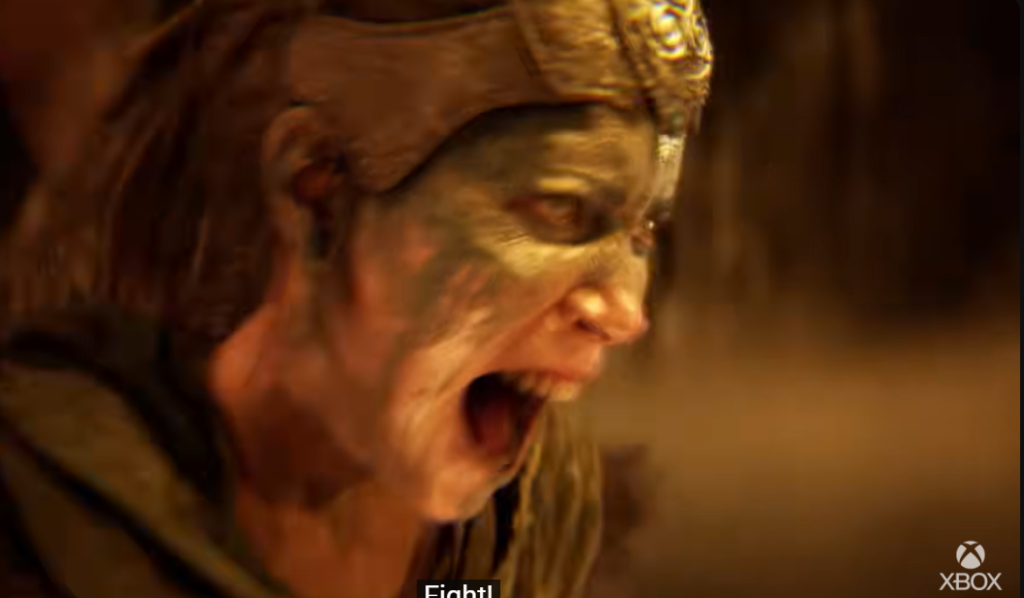
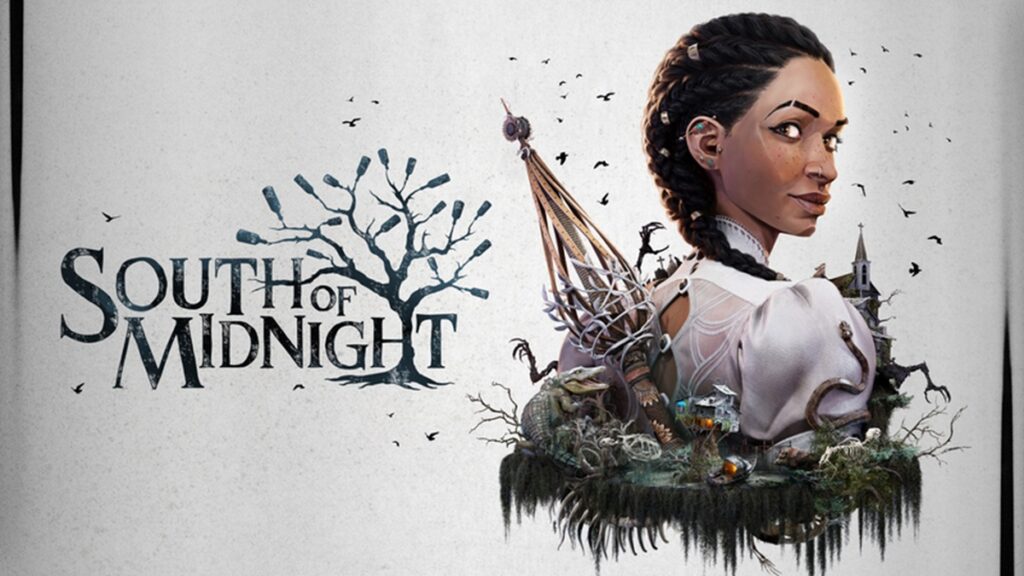
We have heard that the studios facing closure or possible sale include Double Fine (Kiln, Keeper), Undead Labs (State of Decay 3), Compulsion Games (South of Midnight), and Ninja Theory (Hellblade/Senua). And we have confirmed a report that another studio that hangs in the balance is Arkane (Prey, Dishonored), the studio that is making Marvel Blade.
Double Fine Productions could lose 100 jobs if it is shut down. Undead Labs could lose 110 jobs. Compulsion could lose 90 jobs, and Ninja Theory could lose 135 jobs. All told, that’s about 435 jobs, not including Arkane. The irony is that Microsoft is making the cuts just a few weeks after it showed off some glorious new games at its Xbox Showcase during the Summer Game Fest week, including games like Ninja Theory’s Senua and Undead Labs’ State of Decay 3.
To make sure its voice was heard, the Xbox members of unions represented by the Communications Workers of America spoke out against management and the pending layoffs at the Xbox division on Monday. More than 200 employee union members joined the call.
CWA District 9 vice president Frank Arce opened the call by confirming that the union expects Microsoft to initiate layoffs in the Xbox division, but he noted that the union now represents more than 3,500 employees at Microsoft and the company should not be treated as disposable. Those workers have unionized since 2022, and since that time Microsoft has had multiple layoff events.
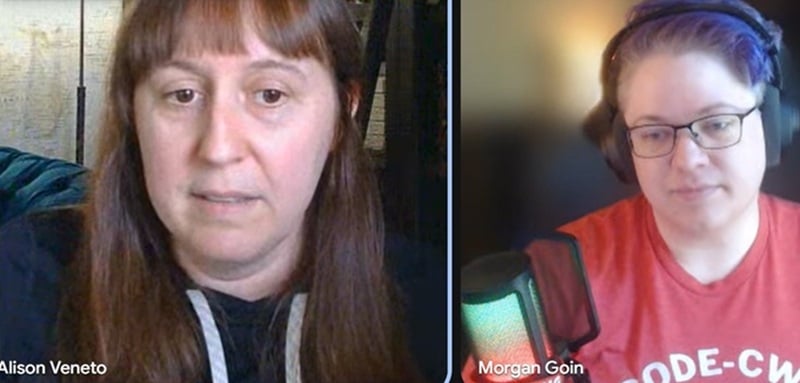
I interviewed Morgan Goin, a senior encounter designer at ZeniMax Online, and Allison Veneto, a senior editor for franchise development at Blizzard in California. They weren’t able to tell me anything that violated their non-disclosure agreements, but they did speak as union representatives — both on a call with 200 other CWA members at Xbox and in an interview with me.
In a statement, a Microsoft spokesperson said on Monday, “We respect the right of our team members to make their voices heard. We have a long track record of good faith partnership with labor organizations, as demonstrated by the several finalized bargaining agreements our teams have reached with the CWA and our labor principles. We are continuing to negotiate in good faith with the CWA to reach agreements across Xbox.”
Goin has worked in games for 11 years. She had been laid off in the past at Hangar 13 and at Arkane Austin. In the latter job, Microsoft closed the studio in May 2024 with no warning, even though the company had followed various directives from the management. She was able to transfer to ZeniMax Online, but the move did cost her a month’s gap in employment at a loss of some tenure. ZeniMax workers approved a union in December 2024.
Veneto is a senior editor for franchise development at Blizzard in California. She said she came from a union family and got a union scholarship. She has worked on cinematics for more than a dozen video games to date. She’s on the bargaining committee for her story and franchise unit.
Here’s an edited transcript of our interview.
GamesBeat: Was there any response from management? Did they say anything specifically to the union?
Morgan Goin: No. There’s not been any response from management to us [as of Monday June 29 in the afternoon]. This is just my opinion, but the impression I have is that the leadership at ZOS, ZeniMax Online Studios, doesn’t know any more than we do at this point. Just the impression I get. That’s not something they’ve said. I think we’re not going to know until Microsoft is ready to tell the public.
Alison Veneto: At Blizzard, we know that over the weekend CWA was working with Microsoft – they mentioned that in the press conference this morning – to move along some of the layoff proposals that the Warcraft team specifically had asked for a few weeks ago. There has been some back and forth there to try to get some positive movement.
GamesBeat: But no indication yet that this would be a policy that could stretch across all of Microsoft yet?
Veneto: No indication of that yet. Obviously the union wants to support as many workers as humanly possible.
GamesBeat: On some subjects–I don’t know how you reason with folks who are in this argument that all of society is in. A lot of people would say that you can’t stop AI from coming. If you look at the capital markets and the billions or even trillions of dollars moving into this now, it seems like an unstoppable force. How do you argue with people about where we are today in terms of its effect on game developers?
Goin: As far as AI is concerned, I work with systems old enough and finicky enough that I’m pretty confident they’re never going to be able to do the vast majority of my job. For other disciplines that’s going to be very different. There’s going to be a place for some kind of LLMs, generative AI, different kinds of AI. But I don’t think it’s going to do all of the things that the current proponents say it’s going to do. My personal opinion is that it’s going to be something closer to a spellcheck or an autocomplete sort of system, or an enhanced search, just because the amount of problem-solving and lateral thinking that we have to do as designers is pretty extensive. That’s not something that can be done by a probabilistic language model.
Veneto: In our negotiations with the company, we’re trying to put down proposals where we can just keep more of an open conversation about AI as it develops. You don’t know what’s going to happen in the next few years. Can the union have some say in how it is being used with the workers? Which is obviously a tall ask, but we would like to have a say in how AI affects us. Obviously if you’re in more of a creative position, it’s not like you can duplicate creativity. AI always does the same thing. It’s an aggregator. That’s what it does. We’re trying to make something more interesting than that.
I’m happy to use the tools. I experiment with the tools that exist now,” Allison Veneto, a senior editor for franchise development at Blizzard, said in an interview with me. “If it makes my job easier, I’m not against using them. But it’s a question of letting the workers have some agency over the decision about how they use it in their job.
Goin: We already have some types of generative art in a program like Houdini, where you’re able to give it one fence section and then you can create a spline and it will smartly create a fence for you. We already have stuff like that.
Veneto: For quick temp ideas that are ultimately going to be done by a real artist, it can be a quick way to generate some things. If you’re not good at explaining the thing you want to describe, there are some uses. But again, it would be great, in an ideal world, if every worker could decide if AI is useful to them, versus them being told that they have to use it.
GamesBeat: Do you think this will get solved more by a technical discussion, as opposed to an ideological peacemaking?
Goin: My perspective is that the company has so far not been moved by ideological arguments. In my experience, they are more likely to be moved by numbers and facts. That’s why, when I was speaking, I tried to say a lot of things–if I had to defend this in court, I could stand up and defend this in court. This is accurate.
When you start to ask questions like, “What is the ROI of this expense on the balance sheet for having access to these generative tools?” then it’s going to become a lot harder for these companies to justify something that is often wrong and needing to be reworked. At many times it will be cheaper to pay a person to do the work. Video game workers in general are underpaid relative to their counterparts in other industries, because of the passion tax that we’re all aware of. We’re very much cheaper, and we have more dependable output that is responsive to feedback in a way that generative AI will not be.
Veneto: Can they just agree to a contract where workers have some say in how it’s getting used? Six months now it’ll be different. One thing we can structure is just the conversation. We have to have a conversation about it where the workers get a say, versus getting into the technical nitty-gritty of the exact use cases, which would be impossible.
GamesBeat: There’s probably something to address as far as persuading other employees. I don’t know how this conversation goes, but a fair amount of people have said that they’ve noticed all the layoffs in North America, while so many jobs are being created elsewhere, and that one reason for that could be unionization, or just lower costs elsewhere. In that environment they ask, how can a union be successful? How does that discussion play out?
Goin: You do have co-development studios across the world. I’ve seen this most often at studios I’ve worked with around concept art. I think you’re going to run into similar quality issues that you run into in other industries when you outsource things. Yes, it will be cheaper, but there is a tradeoff that companies are not accounting for. I’m not sure the tradeoff is going to work as well for more artistic products as compared to physical products. I do not like the way a lot of clothing is made these days, for example. I don’t think it’s ethical. I would still fight for people’s rights, even if they’re many time zones away from me. I just have more power to do that in the way that I do now.
The other thing is that I don’t have control, ultimately, over managerial decisions or entrepreneurial decisions. I take the tack of, this is the thing that I personally have the power to control right now. This is what I want to put my effort toward, alongside other social good things. This is the way I can most directly affect the industry’s overall good health. I want to be able to not pull up the ladder behind me and make this a place that people can go into. Because I hate having to go to career days and say, “Here’s what my career was. I was here for this long and then I got laid off. I was there for this long and then I got laid off.” I hate having to have the conversation and say, “Look, if you want to get into this industry, you’d better have a spouse with a consistent job, because that’s the only way I made it.” I hate having to see the looks on kids’ faces. I don’t want to do that anymore.

Veneto: I didn’t decide that Blizzard was based in Irvine. They made that decision, and Irvine costs what it costs. I’d actually rather not live in Orange County, but that’s where they decided to place it. But at least for Blizzard in Irvine, the base of talent you get to pull from in the Los Angeles area is enormous. If you want to make these top of the line triple-A games, industry-leading work, you need these incredibly talented people.
I work in cinematics specifically. Everyone has an insane resume. All the lighters have worked on all the biggest movies you can think of, all the animators. If you want this quality, this is where that base comes from, and where that experience comes from. Especially for us specifically, our games have really long histories, really long legacies. World of Warcraft has been around for 22 years. If you want to keep that going, the employees who have been there a long time are so valuable. There is a real case for us, and for the workers that exist today, to keep these companies going, because they built these companies.
GamesBeat: It seems that both for and against a union, the pandemic threw everyone for a loop. In some ways it proved that people can work anywhere, but if people can work anywhere, then that might be an argument for moving work to lower-cost areas.

Veneto: You’re making the unionization case for us there, because a lot of people would like to work from home. That would be great. That’s part of the union contract. At Blizzard, we shipped four games during COVID working from home. It proved that could happen. We see that as a reason to let workers who want to work from home work from home.
Goin: It’s also the case, at least at Hangar 13, that we were working with the Czech studio a lot. We already had weird hours, dealing with time delays. It’s already a global industry. Even if it feels a little silly to come into the office to be on Zoom calls all day.
GamesBeat: As far as the concentration of talent goes, is there an example to learn from Hollywood? The movie business has forever been associated with Los Angeles – and it still is, especially as far as deals go – but it seems like it’s in a worse state than even games right now. There’s a lot more incursion from AI into that industry as well. People are saying alarming things like, “We can do this with 90% less talent.” Is there a way to counter that, from your point of view? Do you think that games will not go this way, or that games have a distinct and different solution?
Goin: It may affect some parts of the market. Perhaps children’s animation has a lot more of that. Or educational games. They’ve had a terrible go of it for many years. I anticipate that some sectors are probably going to be affected by it. But there is a quality to cost tradeoff that they’re going to have to make. They say they can do something, but I’ll believe it when, A, they do it, and B, are critically acclaimed for having done so. It’s too early to say.
I don’t see a path forward where somebody just says, “Make me a game like Castlevania” and produces an award-winning game. As designers, we are in a space where we create pleasurable friction. That’s something that’s fine-tuned. We have to do a lot of playtesting to get it right. We’re human. I don’t see a world in which a generative AI, in the style that they’re creating right now, is able to create something that is as fun to play, in an artistic sense.
Veneto: There’s a big question about whether audiences will accept this. There has certainly been a lot of pushback from the player base on that kind of work. I came from the film industry initially. They have been going through a rough time. But the entire film industry in the U.S. is unionized, and the unions are holding strong and keeping things together. Again, what’s happening to the film industry is actually more of a case for unionization. They had a very long writers’ strike to make sure they didn’t get replaced by AI. Nobody made a movie for a year. The actors as well. The only way to work against this, hold up against this, is the unionization movement.
Players want things that are made by people. They’re connecting with people in so many ways when they play these games. There’s a real community there. We have the Blizzcon conventions where we meet the players because they want to meet the devs. They don’t want to meet the robot that made the game. They want to hear our stories, how we came up with our ideas. That’s such an important part of the whole experience.

GamesBeat: It seems like one of the big differences is the project basis of how movies get made. The thing that enables that is something that doesn’t exist on the game side, which is the continuation of benefits that can happen because the unions have negotiated that.
Veneto: It’s a very different structure. The film unions are craft unions, organized by individual crafts. I would be in the editors’ guild if I was still over there. But yes, most movies are only around for so long. Your job only runs for so long. If you’re a set decorator you’re only there for a couple of months, whereas making a video game takes many years. We’ve structured video games a lot differently. But it makes more sense, because you’re always putting out more content. I’ve worked on Diablo for the last four years. We made a game, then we made an expansion, then we made another expansion. When I was in the movies, you’re on a movie, then the movie ends, then you go on to the next movie.
Goin: They don’t put out patches for movies.
GamesBeat: I’ve been asking about theoretical things, about things I’d expect management and unions to discuss, but what’s the reality more like as far as how the conversations go? In management’s own proposals, is there anything you sense is what they really care about? What are the issues that you have to work through?
Goin: There’s a lot of nitty-gritty there. In general, it seems like there is occasionally a disconnect between our ZOS leadership and Microsoft’s directives. This is just the impression I get. That’s not something they’ve said directly. There are many times where I get the feeling that this is something being dictated by Microsoft corporate rather than something that ZOS leadership itself wants to implement. That’s going to be very different depending on the individual fiefdoms of the studios. BGS, Bethesda Game Studios leadership is not as friendly as ZOS leadership.
At ZOS we had a pretty inclusive work from home structure. It was very successful. We shipped many things. Everyone was happy with it. Then Microsoft wants to put us all into their standardized three-day in-office work week system across the board without any changes to it, which we objected to. They also want to put us in the Microsoft performance evaluation system for our four-month assessments and yearly reviews, moving that from one year to twice a year, that kind of thing.
Veneto: At Blizzard, once we were acquired by Microsoft, the distance between any given employee and the head of the company got much greater. I can’t walk into Satya Nadella’s office. He does not answer my texts. One thing we’re trying to do, people who work at Blizzard love Blizzard. There’s a culture that they want to keep. I think leadership understands the importance of the brand and the people who make it, to some extent.
There are lots of things we’re going back and forth on around the contracts. Specifically, right now we’re working on the layoff protections. There is a lot of back and forth about what we’re asking for as workers and what their goals are as the corporation. The one thing we would ask is for them to keep moving these contracts forward. Some of the contracts are going very slowly. Warcraft has been bargaining for almost two years at this point. Let’s just get these contracts done. Let’s come to consensus on things. It’s bargaining. It’s give and take. There’s a saying that a good contract is when both sides walk away unhappy. But can we move this along? Can we find common ground on these things?
GamesBeat: About some of the financial numbers you’ve heard from them–in the memo that Asha Sharma and Matt Booty put out, they disclosed more than they have before. There was a bit of transparency on things like the 3% accountability margin, and how they’d spent $20 billion on the non-Blizzard Activision acquisitions and then their revenue fell. They haven’t talked about those sorts of embarrassing financial details before. It points to some urgency from their point of view, that something has to be done. But during the call today the union’s position was more that the company has the money. How do you reconcile what they’ve said with your own views?
Goin: We’re probably not allowed, as workers, to talk about direct numbers.
Veneto: Saying they haven’t made that much money except for Activision Blizzard is kind of a big exception. Since we’ve been acquired, I don’t believe our numbers are put out separately from Microsoft’s, but if you look at what our profits were in the years leading up to the acquisition, they were a lot healthier than 3%. I only get a 3% raise every year. Is that not a big enough number for them?
But it’s difficult. We want to see a game industry that has both Call of Duty and smaller, more indie games as well. You’re never going to make as much money off of those, but they serve an incredible purpose in the industry. It feels like a bit of an unfair comparison, to some extent.
GamesBeat: They are selectively disclosing numbers, and unfortunately the industry is not that transparent.
Goin: Unfortunately, yes.
GamesBeat: At this point, are you still hopeful that today’s actions on your part may have some influence?
Goin: I’m overall hopeful. I think ZOS is going to get there eventually. I think where we’ll get hit hardest is our QA co-workers. They’ve already finished their contract. They will go through the reduction in force agreement that they’d already bargained. We’ll likely see a hit to our QA force again. That’s my guess. They were already cut last year. Those are vital members, not only for the work they do now, but that’s often the testing and training ground for future devs. It’s very shortsighted to cut that avenue for people to enter the games industry and gain that experience. But to be clear, QA in and of itself is not just a pipeline to dev. It’s a vital thing that I depend on every day.
Because of the status quo protections that we have because we’re in the middle of bargaining – I can talk about that – it will be harder to chip away at union-covered members. But they could get rid of some middle management that aren’t under that umbrella. I’m not quite sure what’s going to happen. They could do something really stupid that I don’t think they should do.
Veneto: I’m hopeful that this is a strong time for games and the game industry. It’s still the most profitable entertainment sector in the world. People love games. Everyone plays games of different kinds. My mother is the biggest gamer I know. She’s on her phone the whole day. I think this is a great time for workers to unionize, to try to get a unionized industry the way the film industry is. Amidst all the change that’s happening at the corporate level, we have to build our own stability. There’s so much energy in the game industry to do that. A game coming out and everybody getting cut–can companies think more than five minutes into the future? We want to force these corporations to see us as people.
There’s a lot of energy among workers because everyone has experienced something like this by now. The money is there in the industry to support us, because it’s so profitable overall. It feels like a positive time. We have a lot of power. It’s a question of how much workers can turn out, how much they can mobilize, how much we can pull our levers to get corporations to see us and hear us.
GamesBeat: I know that Bloomberg has reported that some studios are up for sale or could face closure. Is there any expectation of an across the board layoff that will happen?
Goin: I haven’t heard anything to give me an indicator. Basically, it’s radio silence all the way down. The only things we know are what’s being reported by Bloomberg, basically.
Veneto: We’re reading it from you guys.