
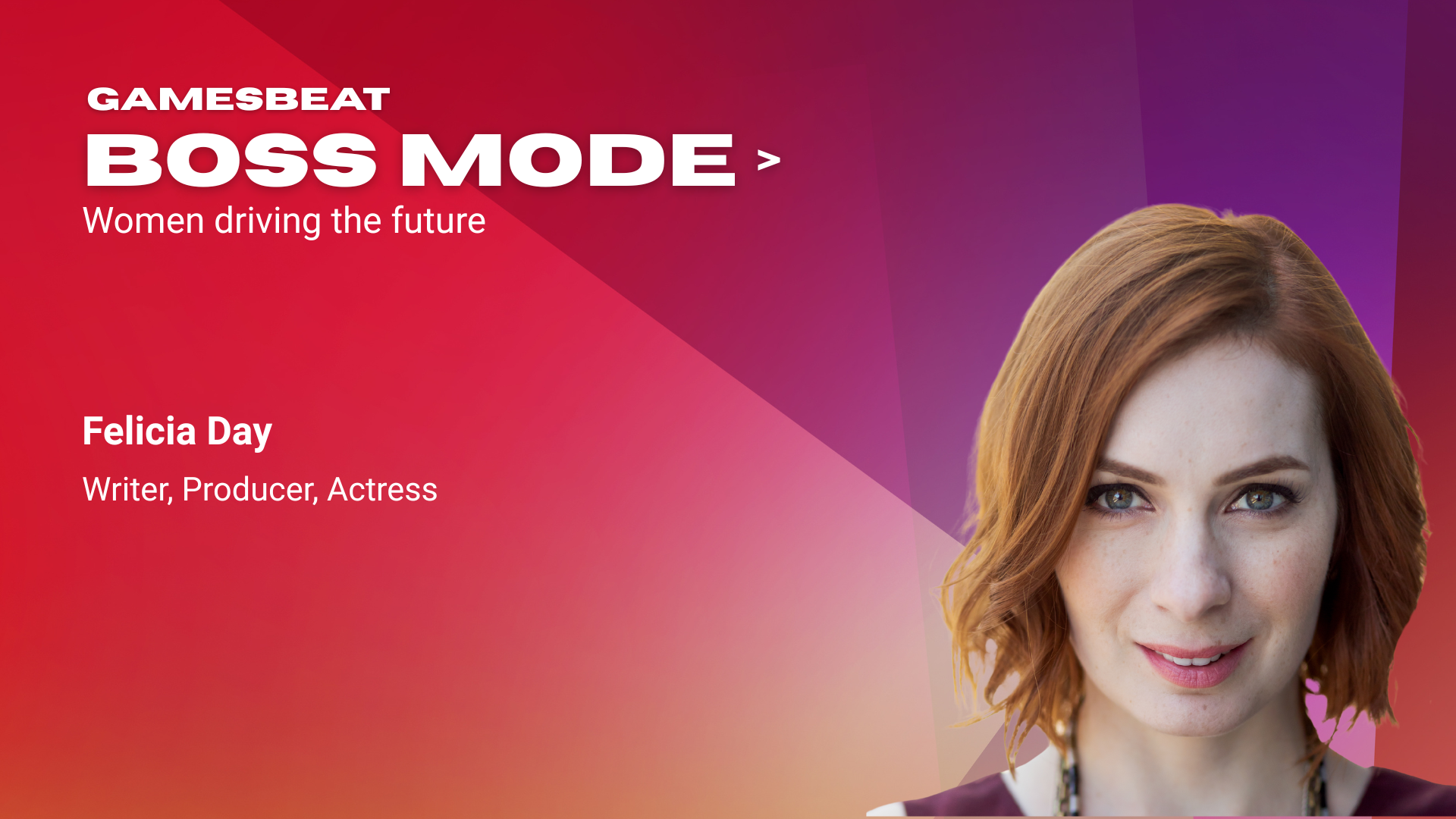
Meeting Felicia Day, one of the women who paved the way for women in “nerdy” media, was not on my bingo card for 2026. But I got that box filled in when Simon & Schuster reached out to me earlier this year. They offered to send me an advanced reader copy of a little book called The Lost Daughter of Sparta, written by a very familiar person.
The book is excellent, by the way. Day’s writing and Rowan MacColl’s illustrations are both sublime, and I will never not read a modern retelling of Greek myth. And that book is one of the reasons I was able to connect with Day. The other reason being that she was nominated for the BOSS Mode Lifetime Achievement Award earlier this year. Two reasons to speak? A BOSS Mode felt like kismet.
Day, for those who don’t know, is one of the founders of Geek & Sundry, an online-based multimedia company that launched several original series on YouTube centering nerdy interests like tabletop gaming. She’s also the creator of a web series called “The Guild,” a dramedy about a group of players in an online MMO, which aired a nascent YouTube back in the late 00s. For those who follow more mainstream entertainment, she also appeared on Buffy the Vampire Slayer, Supernatural, Eureka and Dr. Horrible’s Sing-Along Blog.
These days, Day is crowdfunding a return of “The Guild,” in the form of a new movie with the original cast. We sat down to talk about nerd media in the modern entertainment landscape. Below is an edited transcript of our interview.
GamesBeat: Looking back at your career, can I ask: What’s the project that you’re most proud of? What do you think is the project that has had the most impact?
Felicia Day: Both of them have to be “The Guild.” I started doing a narrative web series based on a television script that I wrote. 2006 was when I started writing the script, and 2007 was when we decided — me and my producer and my director — to take the first 10 pages, film it and put it on this brand new service called YouTube. Because of the success of that show, not only did I get a really fantastic deal to continue to make the show with Xbox and, for the last season, YouTube; but I turned that success into a company called Geek & Sundry, which was funded by YouTube and for a couple of years and then sold to Legendary Entertainment.
Out of creating a show for myself on almost no budget (for the first season, at least), I was written parts in shows like Supernatural and Eureka. Pretty much anything I’ve done since “The Guild” started was probably because of my own creative work, my own determination to show the world who I was, despite not qualifying for what was considered, you know, “valid” to be visible at the time in media. It’s the greatest gift for me, the fact that I could be visible loving nerdy things. The impact of nerd culture now is so pervasive, especially the participation of women in it. I hope I contributed to that, but I know that I would not be sitting here without picking up a camera and shooting in my house in 2007.
GamesBeat: I think “The Guild” is definitely responsible, in part, for the rise of online content such as actual play series. I know you had a direct hand in the creation of Critical Role, and I think a lot of that content started with “The Guild.”
Day: I think it was my idea to start livestreaming a D&D group, and I was told many times by many people that it wouldn’t work. I knew Ashley Johnson, and I couldn’t do the D&D myself because I was on Supernatural, and people needed to show up in-studio every week. I figured that her friends, actors who played D&D together, they’d probably be good. That’s literally how it all started, and I put my whole company behind them to build them up, using all my connections to get them visible because I loved them and they’re so talented.
I love being first. I love innovating. I love using technology and community to guide where entertainment goes next. I’ve never fit in the mainstream well. I’ve never been embraced by the mainstream, to be honest with you — here and there, but only by the creatives, never by the industry itself, only by the industry itself or the sort-of higher-up executives. It’s always the creatives who admire what I do, who create opportunities for me in their play spaces.
There were so many years where I was kind of resentful about that, and wondering why my stories weren’t getting through. Despite all of my success and all of the fans, they weren’t making my pilots, or greenlighting them, or hiring me for their show. At the end of the day, I’m now at a place where I’m going to do this without them, and I actually don’t have an end result I need from them.
I’m not trying to prove myself so they’ll embrace me. That ship has sailed. I’m here to prove that my audience is still there. We can make amazing content outside of normal avenues and allow creators to have more control over their work, because it was well-known, back in the day, that I did not sell the IP to “The Guild.” Now, almost 20 years later, I’m sort of rebooting the whole IP universe, not only with the movie but hopefully other things if the Kickstarter goes well enough, and I could only do that if I still owned everything.
I’ve been advocating for creators, especially in the environment where entertainment has become so top-down oppressive. Creatives don’t have the freedom or support that they did, and AI is now replacing a lot of it. For me the beautiful things in the world come from the strangest places, and I want to encourage people that, while you can’t guarantee success or riches from your creativity, you’ll ways have an avenue to affect one person. That is absolutely worth it.
So I have high hopes for the Kickstarter! There are a lot of people working on it. I’m 100% in. I’m funding it myself, and I’m very excited to see what we can do with this campaign — hopefully open more doors for people, because that’s what I always love doing.
GamesBeat: You’re one of the first to found a whole company on nerd culture by itself. Geek & Sundry was one of the first companies, to my knowledge, to take what had been very niche entertainment and bring it into focus with high production values. A major entertainment company that catered to people who’ve never really had their interests focused on before. How do you convert that sort of deep love and interest into a business? How do you translate that enthusiasm into success?
Day: Geek & Sundry was early. Rooster Teeth was also out there. Nerdist was there as well. Nerdist and Geek & Sundry were two original channels for YouTube. We started at the same time. I was always focused less on news and more evergreen material that was TV quality. I was told over and over again that long-form did not work on YouTube. But I had an idea and I went for it.
The thing about nerd culture now is that there are so many huge media companies being built around it. The problem is that around 2015 the bottom dropped out from under web video. There was no money to make for anything evergreen anymore. People only saw the clicks and numbers, and a hamster looking scared was “as good” as an hour of [Geek & Sundry series] Tabletop.
Now, I think there’s a big shift because that hour of tabletop can be licensed around the world and still looks good 15 years later. So that content I aspired to make back then was stuff that would last on an OTT for years. Everything has shifted back around to maybe the model that we launched in 2012. We just happened to be a little too early, but the great thing is we got to do it because YouTube gave us a grant to start.
Nowadays, it’s a very, very challenging to start a media company, and my aspiration would never been to start a media company. My philosophy is, “Do less, but do it better.” Going back to the core tenet of what I have, the things that I made almost 20 years ago, people are still watching today. That’s the kind of content that I would love to make coming out of this Kickstarter.
If you’re a startup with no money, you have to start small. You have to make everything as quality as you can, to show people that you have a vision and that you stand out from everything else. You’ve got to find what you’re doing that’s different, and find the fans where they are and get them invested. They say that 1,000 fans on Patreon is all you need, depending on the scale of what you’re trying to aspire to do.
If we got 50,000 backers on Kickstarter, we’re probably making a lot of other stuff. 50,000 views on something? Nobody in Hollywood would care about that, but those 50,000 people are making something happen that’s probably going to be more popular than anything that a network does. 90% of stuff that they make doesn’t have that many views. 50,000 function can make a lot happen. That’s what I’ve always concentrated on.
GamesBeat: What would you say is your Boss Move? Your big career win or your defining moment as a creator?
Day: I think, in general, my Boss Move is knowing myself and what I have to offer the world. Knowing myself is the greatest superpower I have, being certain in the things that I need to do to make my life fulfilled. That journey is worth going on, no matter the odds. In fact one of the reasons that I decided to do a 20th anniversary of “The Guild” was that, a couple of years ago, someone from Hollywood called me about it. Nobody had ever called me about “The Guild.” They’d only called me to maybe do show-writing on another gaming show that was somebody else’s. That was not interesting to me.
When they called, I thought, “Wow, somebody wants to do something with my show. This is exciting! Maybe I’ll have someone help me, or give me some money to make something.”
They wanted to reboot the show with younger actors. I was so furious because I created all of this because I was rejected out of the industry that didn’t find my face or my voice that useful. Now they wanted to take the one thing that I had control over away from me for some money, and I was so angry.
I said, “Nope, you’re not recasting me in my own show. We’re going to do this again. We’re going to show you that this show, the characters mean something, regardless of what this industry thinks. I would rather not make it if I have to deal with Hollywood people interfering in the creative, because the fans know that I made that show for six years and they loved it without people policing what I wanted to put on the screen.
I need a lot more money this time because movies are expensive, but I have faith that we’re going to make this together and prove a point that our worth is not people’s usefulness for us. Our worth is our voice.
GamesBeat: What would your boss music be?
Day: I hate to say it, but I think it’s “Sabotage.” I just love that song, and it makes me feel so badass.