
Presented by k-ID
k-ID wants every studio to be able to ship globally on day one
For years, compliance has been one of the biggest costs of launching games globally.
Whether navigating COPPA in the United States, or market-specific requirements in countries like China, Japan, and South Korea, compliance has traditionally required specialized legal expertise and lengthy implementation cycles. Large publishers could afford dedicated teams. Smaller studios often faced difficult decisions about which markets they could realistically support.
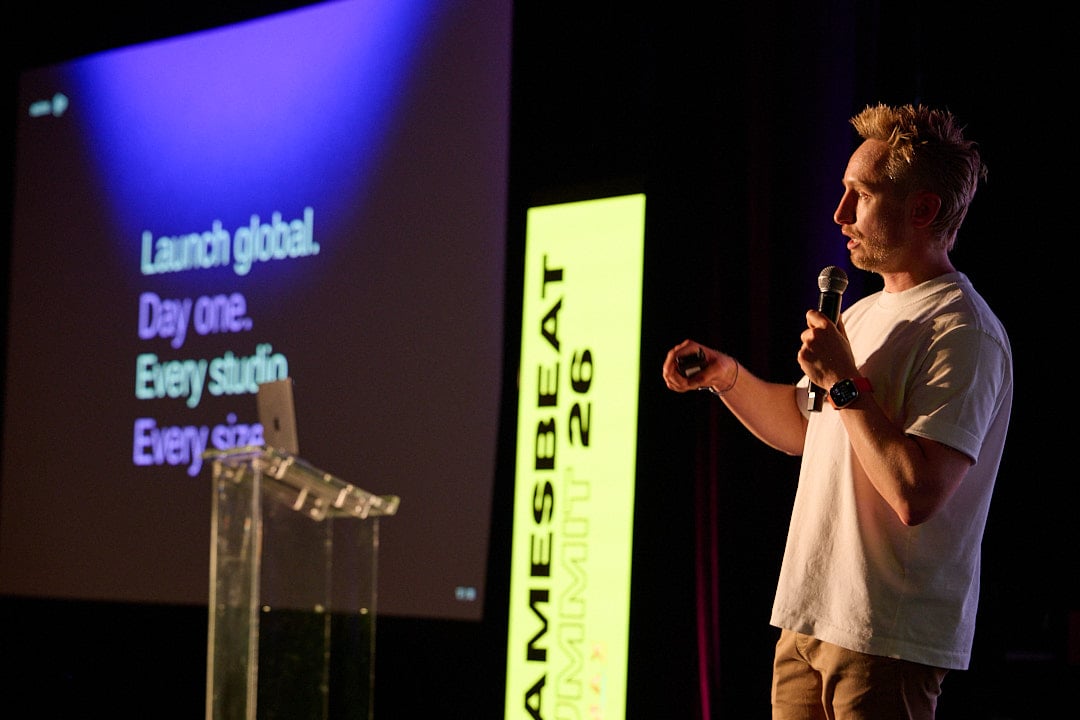
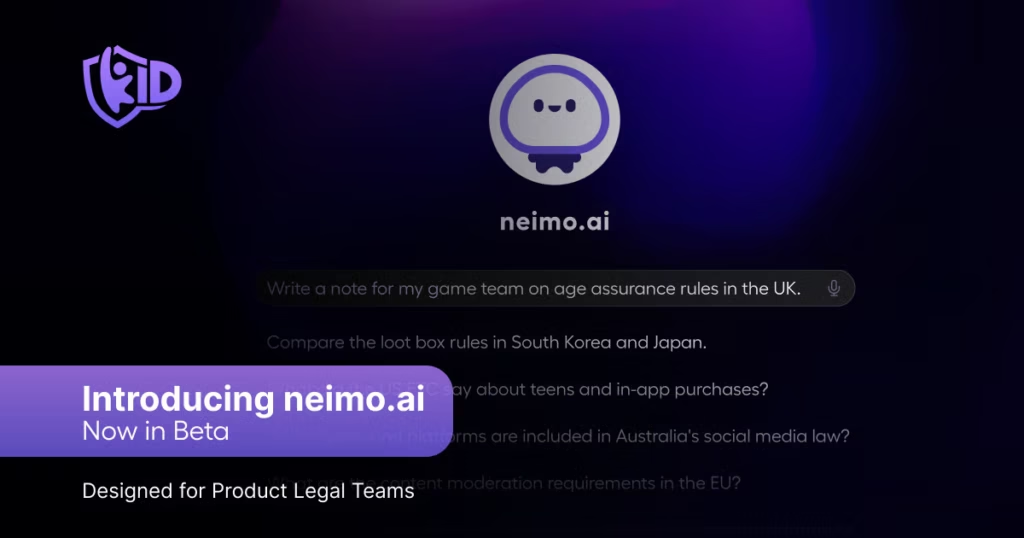
At GamesBeat Summit, Mike Mongeau, Head of Product at k-ID, showcased Neimo, a compliance intelligence platform designed to connect with AI tools such as ChatGPT, Claude, Gemini, Cursor, Lovable and any other application that supports the Model Context Protocol (MCP) during a sponsored session.
Compliance as infrastructure
Neimo is designed to make regulatory expertise available throughout the design and development process, helping studios navigate thousands of regulations across nearly 200 countries without leaving their existing workflows. Their MCP connector allows developers to identify country-specific compliance issues in their games by simply asking their AI tools to review their code.
“For 15 years, if you wanted to ship a game globally, like really globally, legally, there was a wall,” Mongeau said. “And that wall had a name. It was called compliance.”
He compared compliance to other layers of the technology stack that have already been transformed into infrastructure services. Compute once required extensive capacity planning. Payments demanded region-specific integrations. Today, those functions have largely been abstracted through APIs and platforms. Mongeau believes compliance is following the same path.
The company has already deployed the underlying technology at scale through k-ID’s own platform, which surpassed 40 million age-adaptive experiences over the past year. According to Mongeau, that same regulatory intelligence layer now powers products used by companies including Roblox, Take-Two, Konami, Bandai Namco, Capcom, Discord, and Twitch.
Human in the source
While many AI companies promote “human in the loop” workflows that rely on users to verify outputs, Mongeau argued that compliance requires a different model. Underpinning Neimo is a regulatory knowledge base containing more than 22,000 entries covering 3,000 regulations across 197 countries. The information is continuously maintained by human regulatory specialists and linked back to primary legal sources.
“This is not AI. This is HI. This is human,” Mongeau said.
Rather than relying on training data scraped from the web, Neimo draws from expert-curated information designed specifically for compliance workflows. Mongeau referred to the approach as “human in the source,” describing it as an effort to move expert validation deeper into the technology stack rather than relying solely on human review after AI-generated outputs are produced.
Bringing compliance into everyday workflows
Neimo connects directly into existing AI workflows through MCP, allowing developers to ask compliance questions from inside the tools they already use.
To demonstrate the difference, Mongeau showed a scenario involving a game studio preparing to launch in Vietnam. Using a standard AI model generated a generic checklist of legal considerations. Connecting that same model to Neimo produced detailed, jurisdiction-specific guidance backed by citations and regulatory sources.
“Same model, same prompt, same tool, different answer,” Mongeau said. “Neimo was the variable.”
The system can also answer questions that extend beyond legal text itself. Through analysis of thousands of mobile apps and games each day, k-ID has built datasets that track how companies are actually implementing compliance-related features in live products. That allows Neimo to provide insight into how developers are responding to evolving issues such as loot box regulations and online safety requirements across different regions.
“The law tells you what you have to do,” Mongeau said. “But Neimo can also tell you what everybody else is actually doing about it.”
From guidance to action
The presentation concluded with a demonstration of Neimo integrated into Manus, an agentic AI platform capable of performing tasks rather than simply answering questions.
In the demo, Manus analyzed the source code of an open-source game hosted on GitHub and conducted a GDPR compliance review across multiple jurisdictions. From a single prompt, the system generated a presentation outlining findings, created engineering tickets with severity ratings and remediation requirements, and built a dashboard tracking progress toward compliance goals.
“This is what compliance looks like when it stops being a bottleneck and starts being available at your fingertips,” Mongeau said. Just as cloud infrastructure and payment systems became accessible to organizations of every size, he believes compliance tooling is moving in the same direction.
“A decade ago, going global on day one was a big studio thing,” Mongeau said. “Today, going global on day one should be everyone’s thing.”
For k-ID, the long-term goal is to help developers spend less time navigating regulations and more time building games. As AI becomes increasingly embedded across development workflows, the company sees compliance as the next major category poised to become infrastructure rather than overhead.