
Nauto and Nexar agreed to merge earlier this summer to create a real-world intelligence platform for the physical AI era to enable AI-powered fleets to drive safely.
The data the companies collect will lead to a merger of combined AI models, datasets and other technologies that could be a harbinger of AI-driven deals in the future.
I spoke with Stefan Heck, CEO of Nauto, about the deal in an interview, and I’ve ridden in a car with Nauto technology a few times in recent years with Kevin Van De Leur, solutions engineer at Nauto. As such, I’ve been able to see the safety system get safer over time.
“It’s very complimentary,” Heck said. “Nexar has information where you wouldn’t go with a big truck. We have information where some rural delivery vehicles go, but where you wouldn’t necessarily find a taxi or Uber driver at all. Right. If you go to rural areas, there’s no Uber service.”
Heck thinks the merger will accelerate the deployment of physical AI into vehicles and into new cloud applications as well.
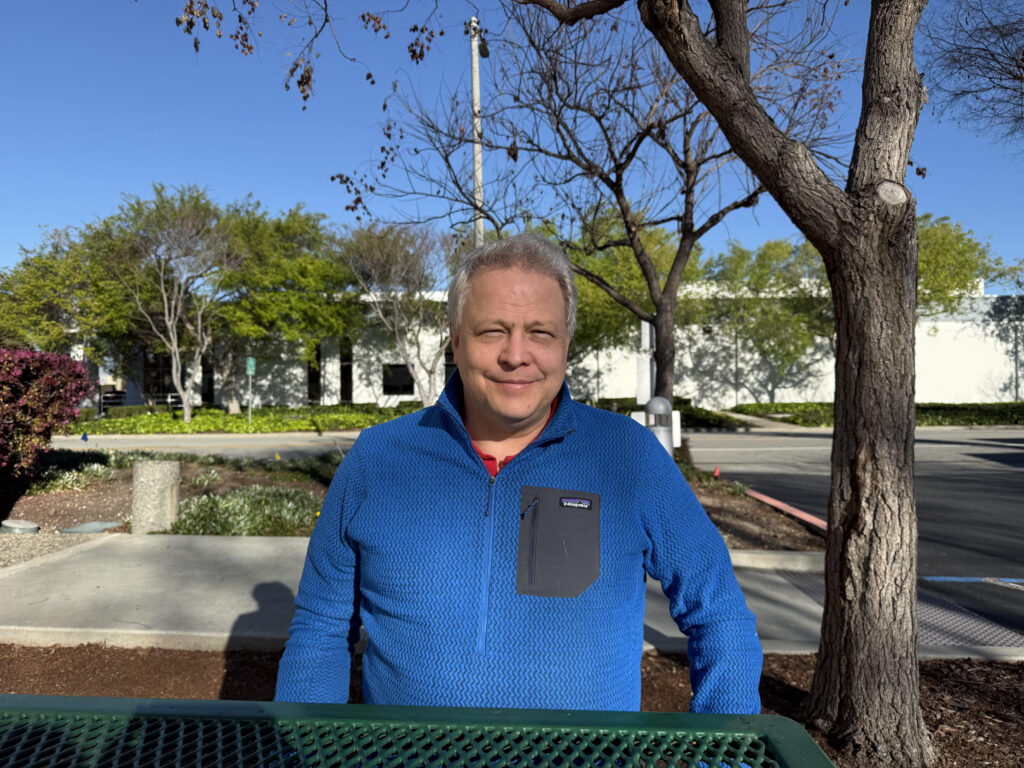
Zach Greenberger, Nexar’s CEO, is the CEO of the combined company. And Heck, Nauto’s founder and CEO, will chair the combined board. (Financial terms were not disclosed).
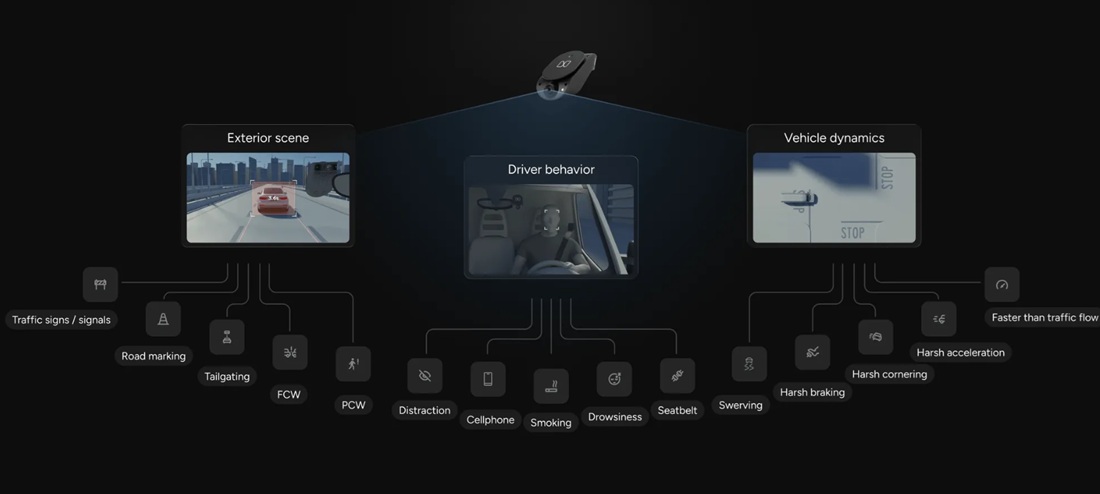
Based on what I know, Nexar collects real‑world data through a massive distributed network of connected dashcams that continuously capture video, telemetry, and contextual driving information. Nauto collects data through AI‑equipped fleet safety devices installed in commercial vehicles, focusing on driver behavior, risk events, and operational context.
They fit together well because Nexar specializes in environmental perception at scale while Nauto specializes in driver and fleet risk intelligence. The merger essentially fuses “outside‑the‑vehicle world modeling” with the camera pointed outward to capture the world. Nauto points is cameras both outward and inward, sensing both the driver and the road ahead. The result is a unified Physical AI dataset.
The combined companies will have an intelligence engine fueled by more than 300 million real-world miles captured every month across 50+ countries, representing over 10 billion miles of driving history. That scale, independent of any single manufacturer, powers intelligence that no simulation and no single company’s dataset can match.
Every organization asks different questions of the physical world. Until now, they’ve had to answer many of them with incomplete information. For the developers building autonomous and intelligent systems, it now provides the independent real-world record their models depend on: the edge cases no lab has replicated and the ground truth no single manufacturer can supply.
For the safety and operations leaders running fleets, cities, and infrastructure, it predicts and prevents what matters most before it becomes an incident and turns what happened into intelligence that improves every decision that follows. For insurers, it prices risk on what roads and drivers actually do, not on averages.
Existing customers will continue working with the teams, products, and support organizations they rely on today. What changes is the foundation underneath them. By bringing Nexar and Nauto together, customers gain access to deeper intelligence, more predictive AI, and a broader understanding of how the physical world behaves.
Heck said the info companies need is to understand what is happening right now, to learn from what happened before, and to predict and prevent what hasn’t yet happened.
Nexar’s cameras capture more than 100 million miles of real-world driving every month across 94% of U.S. roads, as well as more than 50 countries.
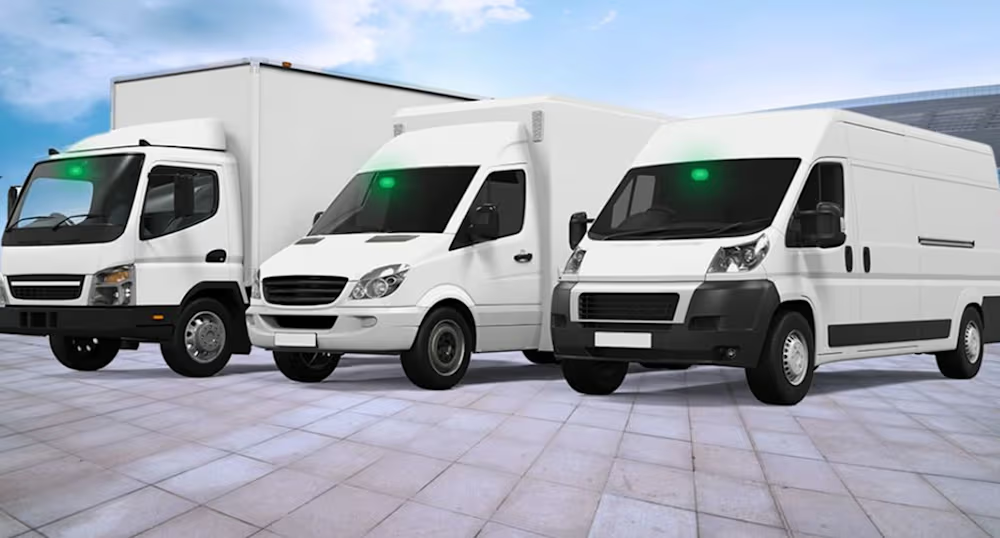
Nauto’s real-time safety system is built on more than six billion miles of commercial driving data. More than 1,000 fleets worldwide depend on Nauto to prevent risks before they turn into collisions and loss. nauto.com
“By having that real-world intelligence, you’re able to to make much better decisions tailored to that specific situation, that specific location,” Heck said.
The merger
The combined company has more than 200 people now.
As for the merger, Heck said, “We always had a vision that safety was really the first application. Obviously, we did the ride laws and know our system very well, and how we change driver behavior and help them stay safe.”
He added, “But the other part always was infrastructure, because there’s a lot of other challenges while driving. How do you find a parking space? How do you avoid construction, traffic jams? When there’s a police action, the road is closed, and so a couple months ago, we started thinking about what what other companies are out there that would help us scale even fast or scale faster together.”
Nexar turned out to be interesting. They have been broadly in the same space, but more B2C with ridesharing drivers, not enterprise customers.
Heck said, “We spend more time on safety. They’ve spent more time on infrastructure. So they have a product called Atlas that you know allows you to map out where all the roads are, how risky they are, what’s happening on them, and so really putting the two together gives us the leading physical AI platform that understands in real time what’s happening on the roads.”
The same system will stay there warning you before collisions, but it will now get intelligence to look ahead on the road and see what’s coming up, and it broadens the product portfolio, he said.
“The Nauto camera will be the premium camera. Some of the Nexar products allow a more affordable version for SMB customers. And combined, we have the largest dataset of really understanding roads outside of what Tesla has collected, and we make that available to third parties.”
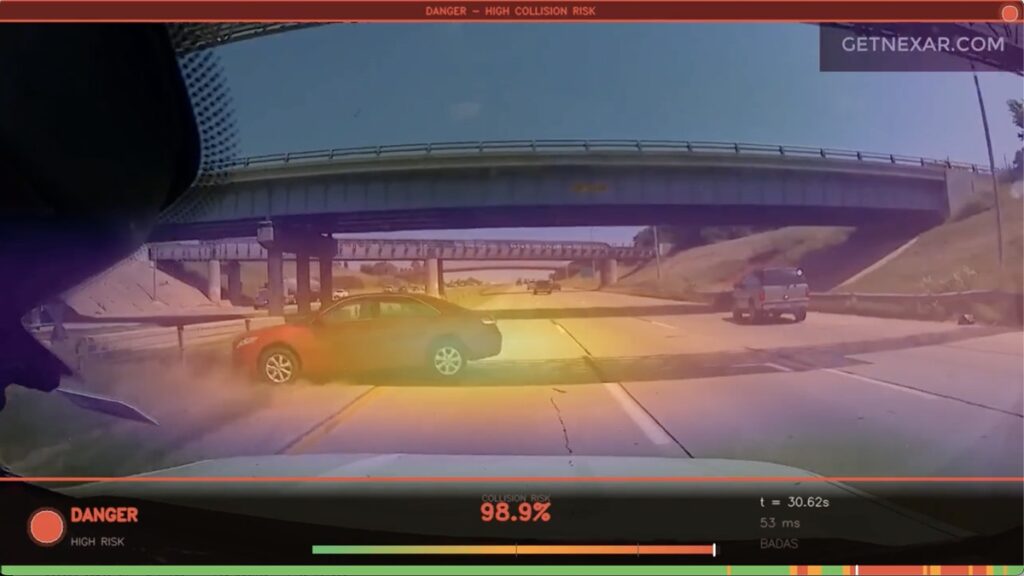
That data is privacy protected, anonymized. And the company can make neutral, anonymized data sets available, so you can see what’s happening out in front on your trip, or what’s happening for the route that you’ve designed for a particular delivery vehicle, he said.
The combined company will work together and talk more about its plans later. Nexar has a product called Beyond ADAS, which is really a next generation ADAS (advanced driver assistance system).
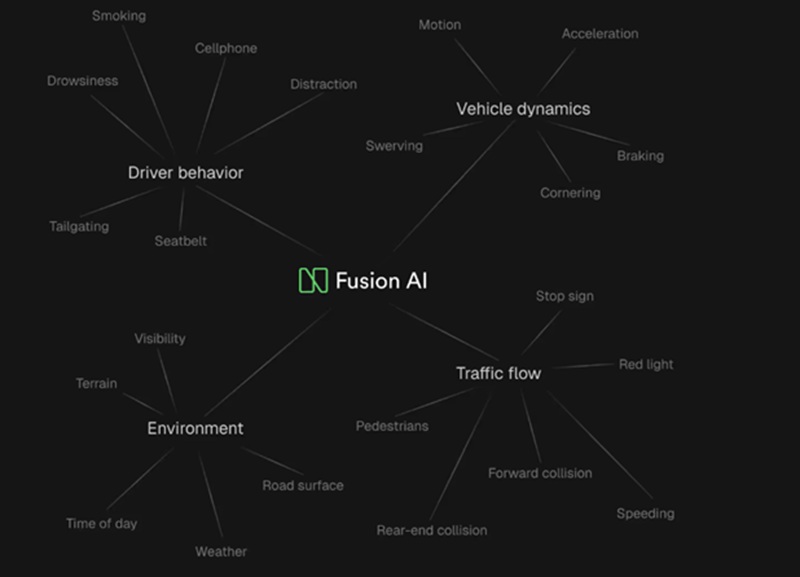
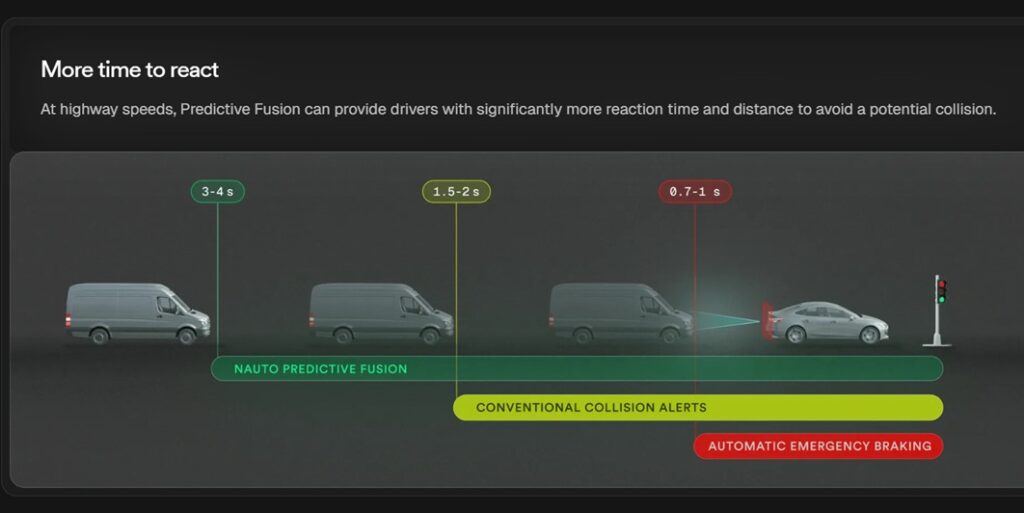
“We’ve developed something called Safer Fusion, looking at the full 360-degree situation,” he said. “So there’ll be some derivatives of that coming together in the future that vehicle manufacturers can use. It’s it’s like an acceleration. It’s like another leap forward into the same direction that we were already going in.”
So the infrastructure data will come together with the driving risk data to give a better understanding of the physical world and the models for it. This kind of understanding can’t be rushed, as Heck believes it takes 10 years of driving data to find rare edge cases.
“We’ve been collecting for 12 years now. It takes people a long time to catch up,” he said.
For the future, it would be nice if a map application could take you to a parking space near your destination, rather than the actual destination, Heck said. Or it could calculate the safety risk if you detour around a traffic jam on the freeway and find you have to go through neighborhoods where accidents are more likely to happen, Heck said.
“We’re looking broadly. We’ve got robotics companies that are working with us to look at that as as training data for a robot,” Heck said. “I think physical AI is just at the beginning. It’s kind of where language models were five years ago, where you know the understanding of physics embedded in these AI models.”
Driving in a car with Nauto’s advanced safety features
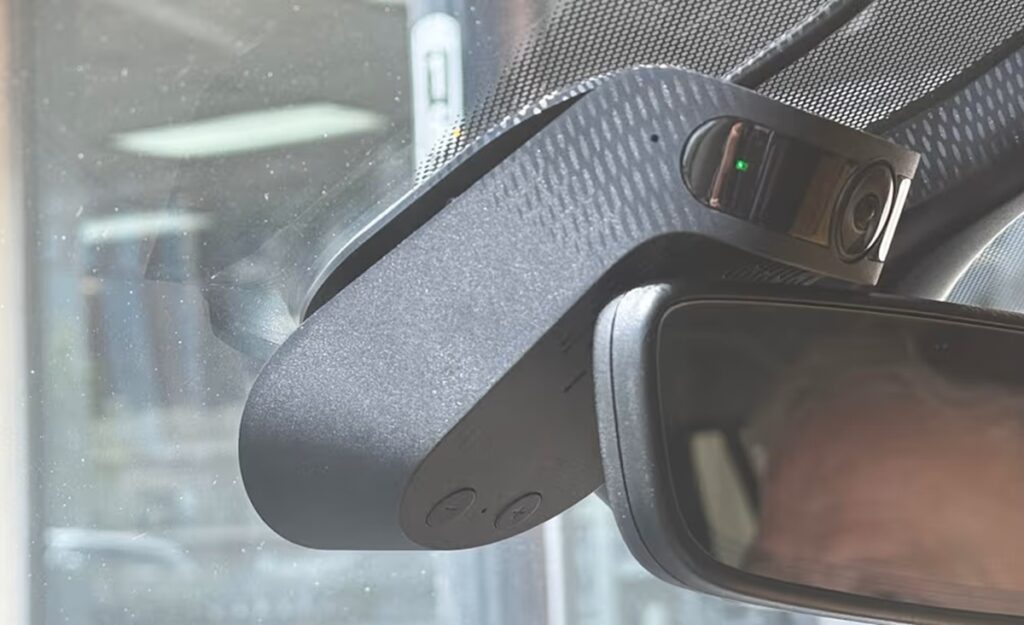
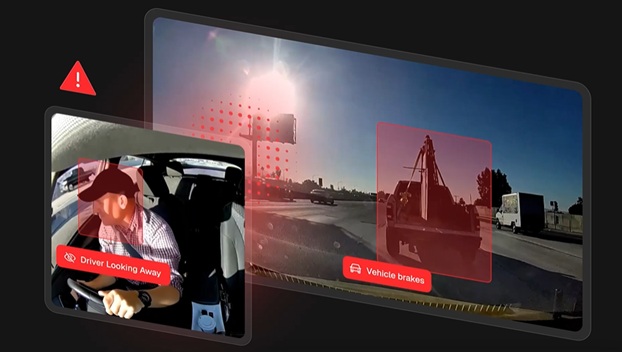
Kevin Van De Leur, the solutions engineer at Nauto, noted earlier this year that the company was using a newer version of its dashboard camera, which points both outward and inward. On the inward side, the camera points at the driver, and the AI interprets that data. By way of being prescriptive in a positive way, the system will tell you to doublecheck your seatbelt, rather than tell you outright to fasten the seatbelt. Those alerts get more progressive the longer you wait. A third alert is a lot louder so it gets your attention.
And if you hold the cellphone in your hand, you’ll get an alert from the system asking you to pull over and use the smartphone. If you look down on the phone, it will alert you for being distracted. It gives you multiple escalating levels of alerts.
“We really look at what are the what’s the highest risk at the moment, right? Like me holding the phone, or me looking down at the phone. And of course, the highest risk is looking down on the phone. This is this also helps with alert fatigue, right?” Van de Leur told me.
But you don’t want to “over alert” a driver, he said. If you get an alert for every single thing, you’ll start to ignore the alerts.
Heck said the team never wants to “cry wolf” because people get very upset at the system or even begin to ignore the alarms.
But if you are looking down and are holding your phone, and it detects an imminent forward collision, it will alert you with a high-pitch beep.
If you are drowsy, Nauto also has multiple levels of detecting how drowsy you are. Van de Leur squinted through his eyes, faking being drowsy. It looks at your eye-blink rate, yawning, stretching in your seat, scratching your head and eye closure. It detects prolonged eye closure and a slight drift. If you stare into the distance, it detects that as well.
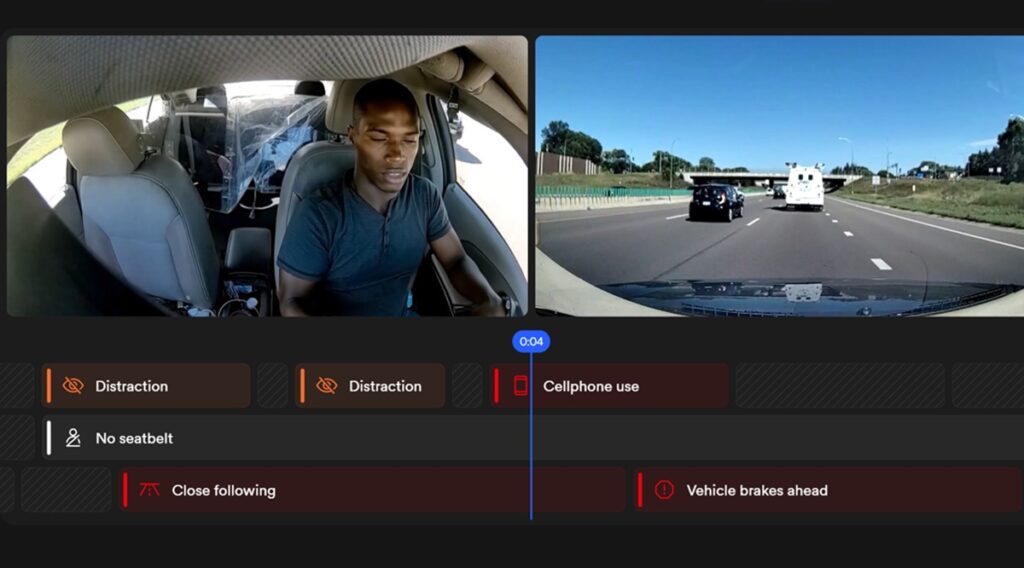
“These are all aspects that we look for to determine if you’re tired and drowsy, and we want to alert the driver before they fall asleep,” Van de Leur said. “That’s really important. But you also don’t want to alert them when they’re just yawning, right? It’s not really considered being drowsy. So that’s why our advanced drowsiness detector really looks at all these different aspects.”
The Nauto system can also fuse different systems and sensors together to assess risks. If you’re tailgating while being distracted, you need more alert time. It may tell you that you are following too close. There may also be a forward collision warning or pedestrian collision warning. In that case, the system will alert the driver at an earlier time.
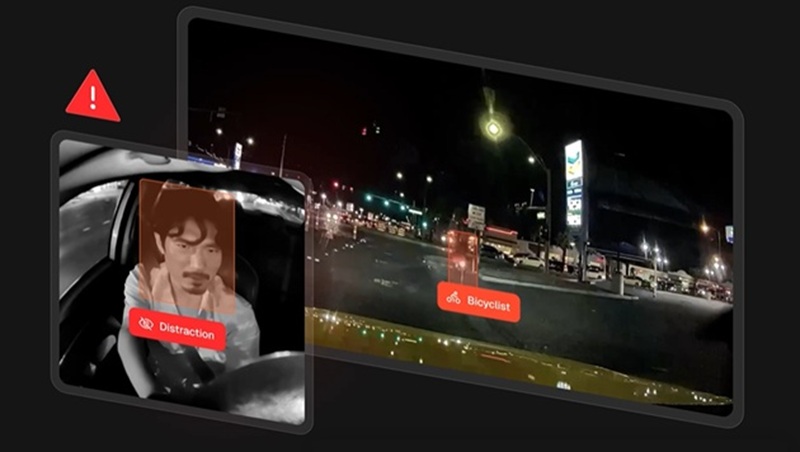
“We’re fusing risks together and really observing the contextual items outside versus what the driver is doing inside the cab, and then looking at how risky it is in order to prevent a collision,” Van de Leur said.
For tailgating, the system examines the situation for six seconds and offers an alert if you don’t stop. The alert also calculates your stop time if you have to react fast. The cameras are not recording all of the time for the sake of driver privacy. But if there’s a collision, then the footage is captured and uploaded. The device can send a notification to the fleet manager of the collision, and the upload of the data is automatic via an LTE cellular connection.
A driver can also push a camera button three times to alert the manager if someone is threatening a driver in some way. This “panic event” goes to the manager to signal the driver is in danger and needs help.
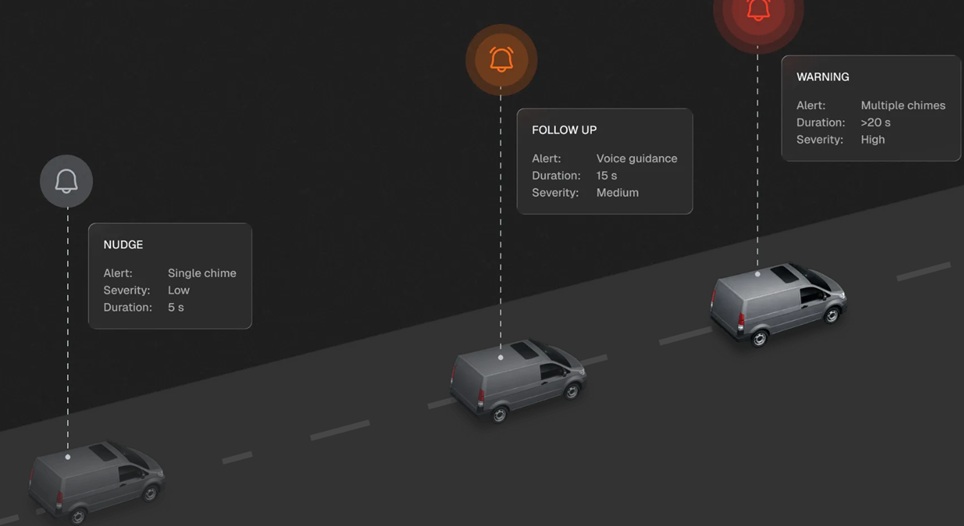
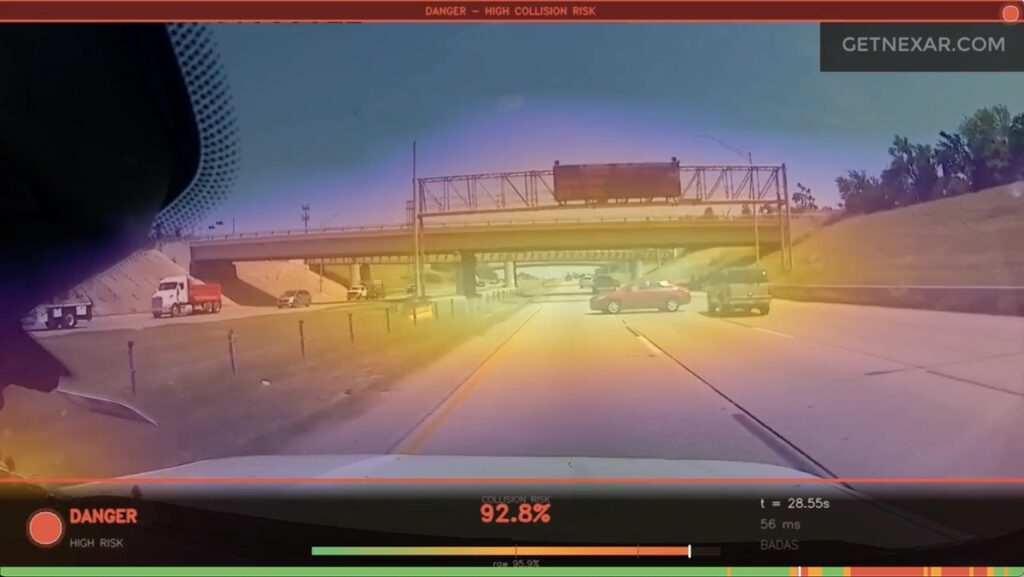
I saw the alarm go off when Van de Leur was deliberately looking down on his dashboard, didn’t decrease his speed and a stopped vehicle was getting closer. The system calculated that a collision was imminent, though it was just a test for my benefit to show a fusion alert. The camera can even send an alert to the fleet manager if your camera is obstructed.
The federal National Highway Traffic Safety Administration notes that distracted driving is the cause of 13% to 13 % of all car crashes involving injuries. But proprietary datasets like Nauto’s suggest distracted driving is responsible for higher percentages of accidents. Drivers using handheld devices rose 104% from 2015 to 2024, according to the NHTSA. In fatal crashes, cell phone use was involved in 14% of cases in 2024. Meanwhile, Inrix reported that traffic delays rose 12% in 2024 across 942 cities around the world. The typical U.S. driver lost 49 hours to traffic congestion, and that’s a loss of $894 per driver.
“We’re just not focused on driving anymore,” Van de Leur said.
How automated driving is advancing and getting more urgent
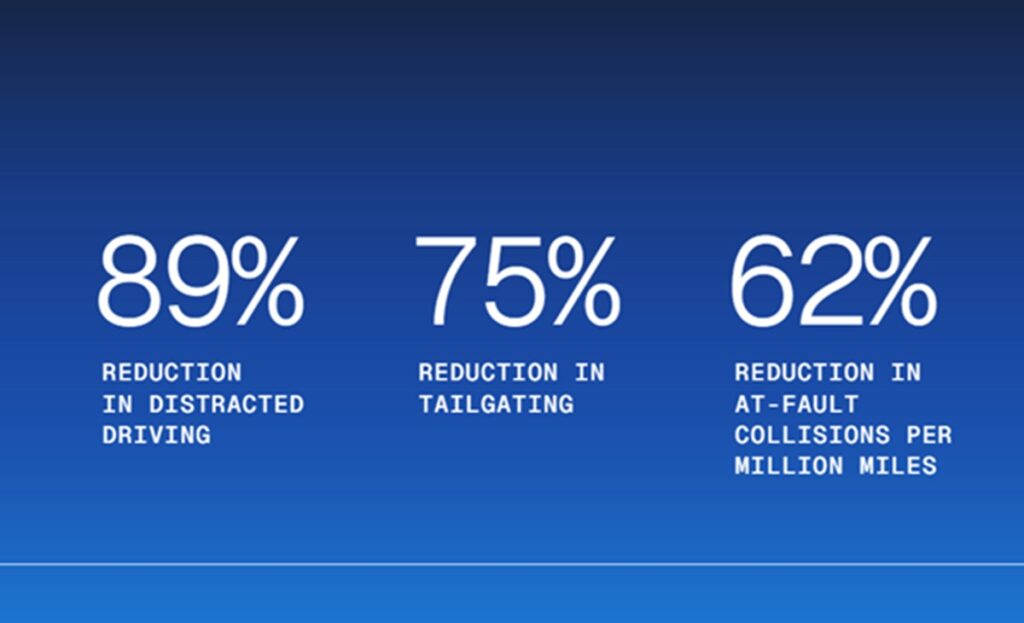
Since the last time I took a ride in 2024, the 2026 tech had advanced. Heck said the company skipped over three processor generations and had about eight times more computing power in the system. That allows it to track multiple events at the same time.
“That’s really set up to be able to deploy a lot more AI onto the vehicle, so we will gradually use it over time as we update,” Heck said.
Heck added, “If you look at the risk profile. You start doing one risky thing, like tailgating, and your risk gradually goes up. If you do something really dangerous, like use your phone, your risk goes up, but steeper. But if you put multiple things together, the risk just spikes.”
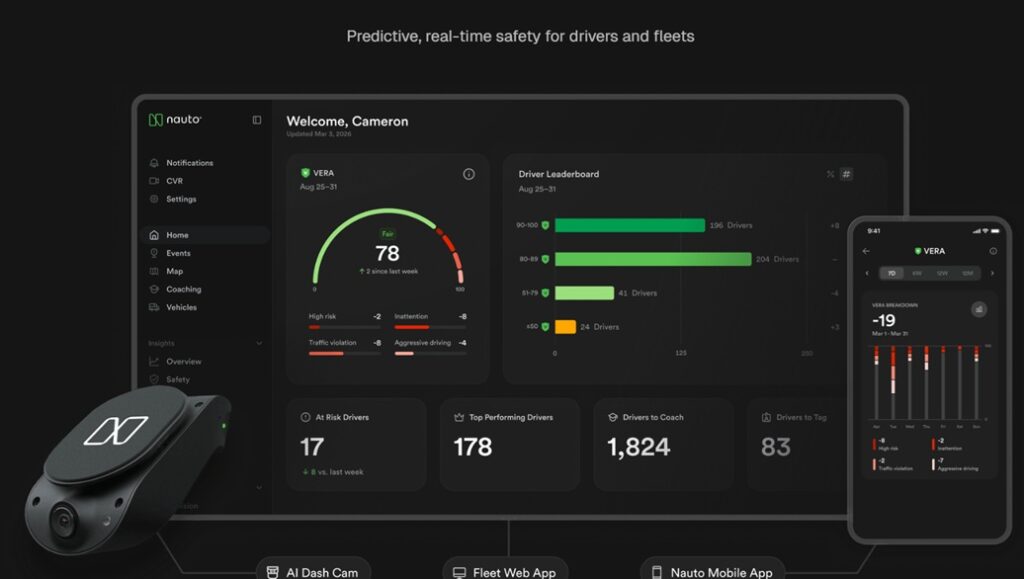
In managing fleets of cars, Heck said Nauto can save $1,000 per vehicle per year. And it saves on driver turnover by making the drivers better and ensuring they don’t get into collisions. Collisions turn out to be the top reason why drivers quit or take time off. A new driver can cost $60,000 in hiring and training. New drivers are also high safety risks.
Nauto can also save 10% of fuel costs by making drives more efficient with better routes. The return on investment, ROI, is 600% or so in four or five months, he said.
As people drive more, the collisions per person are going up, Heck said. Insurance losses are climbing and so are insurance rates.
Learnings from monitoring driving behavior
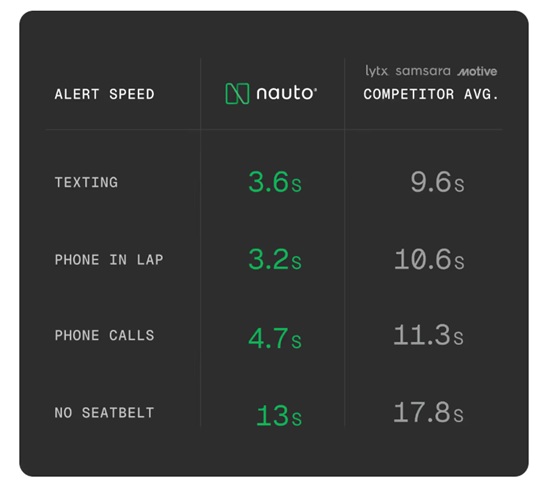
Heck said the company licenses its anonymized, depersonalized data for safety users to those making solutions for autonomous driving or driver assistance. There are about a half-dozen partners in the works now as companies are trying to be careful with safe driving. It turns out autonomous vehicles are good for mid-length routes that are pretty routine.
As for the kind of data people want to know? They want to know when traffic is going to slow down on their route and how to find a path around that. But humans are probably better in extreme environments like midtown Manhattan. Heck said data shows that autonomous drivers are probably better than 90% of human drivers. Meanwhile, there’s interesting data out there, like how a left turn is four times more dangerous than a right turn.
In future cars, there will be more Qualcomm-based AI computing built right into the car, and so the AI won’t need to be in places like cameras etc. Nor will there be a need to go outside the car for AI processing.
Right now, vehicles could still use more sensors for better world info. It’s not so easy for vehicles to detect animals darting across the road or stopping in front of a car because they’re dazzled by headlights. It’s also not easy to see oncoming motorcycles.
What are the unusual accidents? Someone will get out of their car to mail a letter and forget to put the car in park, so it keeps rolling along.
The future of self-driving cars
Jensen Huang, CEO of Nvidia, has praised virtual data from games to helping to create models for physical AI, like robots. But Heck thinks that only gets you about 85% to 95% there, but it doesn’t solve the last few percent of real-world problems that are extremely rare.
As for Heck’s view of self-driving cars, it’s nuanced.
“Overall, we’re progressing, but we’re not progressing as fast as the claims of tech companies. But it’s also not over. Why am I more nuanced about it? Take long haul trucks, for example. We’re on the takeoff point,” he said. “People driving Aurora drove 1,000 miles without a safety driver, without anybody in the truck. This year, I think we’re going to see coast to coast trips with no human driver, fully autonomous. Now it’ll be on particular routes. Interstate 10 is a little bit easier. It doesn’t go through big cities, doesn’t have rain, doesn’t have snowstorms. But to me, that’s a real milestone.”
Heck thinks that things like robotaxis will cross into the mainstream soon.
He added, “If you can go from LA to Georgia in one run, you’ve got a huge productivity advantage. That truck will drive almost 24 hours a day, versus a human driver has to stop every 10 hours. So that’s a huge thing we’re seeing. Robo taxis and shuttles are really taking off. Waymo is in a dozen or so cities, up from two. I don’t think we’re that far away from Waymo being in most major cities. That’ll happen over the next year, maybe two years. So I think those are two good examples if you look at dedicated autonomous cars.”
Heck estimates there are 15,000 or so self-driving trucks across the world now, and perhaps less than a million cars on the road that can do some kind of self-driving operation.
“I do think this is the year that we’ll see you know steep uptake,” Heck said. “When is it going to be like half autonomous vehicles on the road? I think that’s easily 10 years away because it just takes so much time to replace all these vehicles that are out there.”