
Get used to seeing the New York Times at gaming industry conferences.
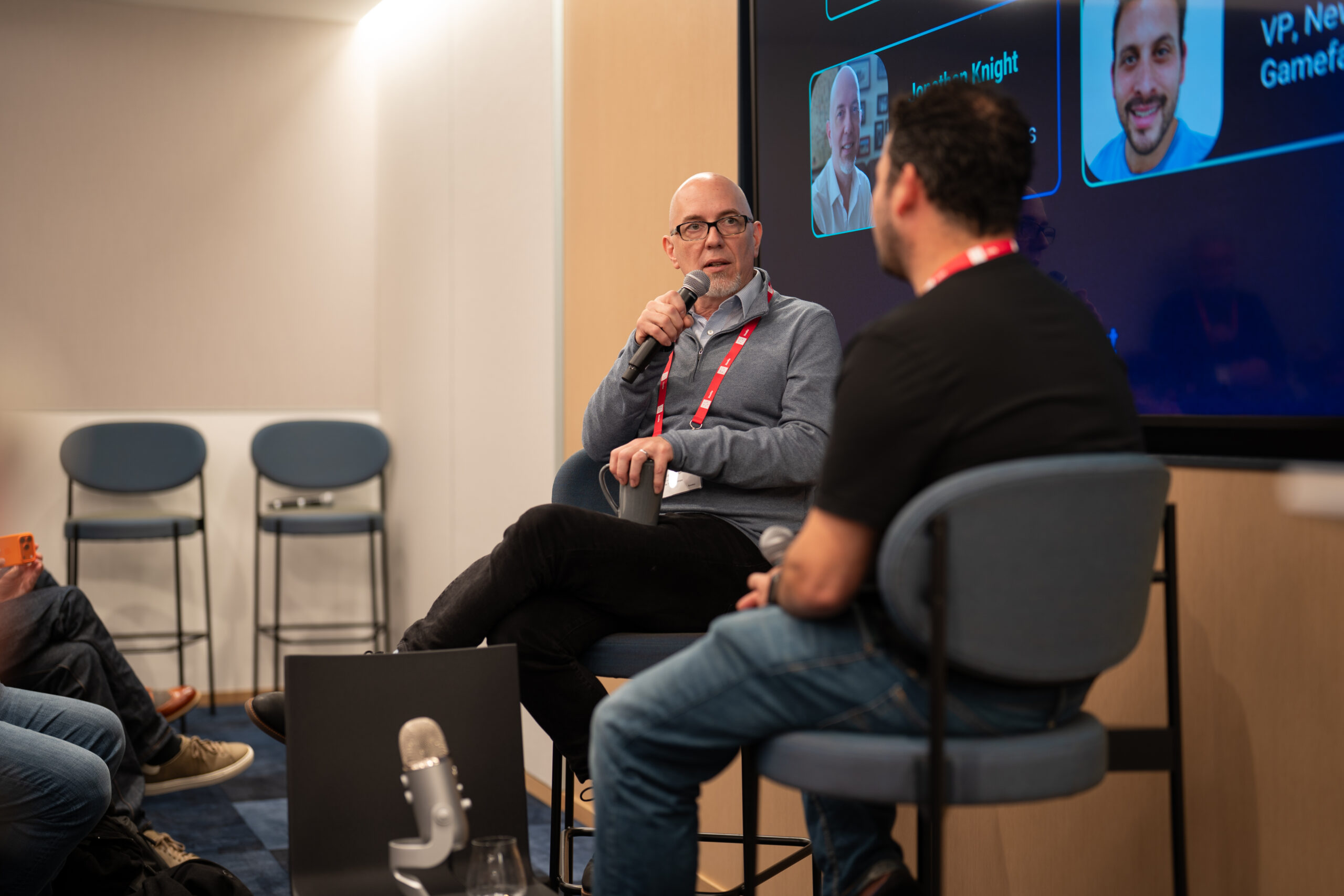
Jonathan Knight’s fireside chat at GamesBeat Next 2025 was one of the conference’s most-attended sessions. With rising uncertainty across the industry sparked by new technologies and shifting business models, the continued growth of the Times’ game section was a point of significant interest for the event’s attendees, who lined up to speak with the New York Times head of games before and after his session on day two of the event. Amid all the hubbub, GamesBeat managed to pull Knight aside at GamesBeat Next for a wide-ranging Q&A on the continued evolution of the New York Times’ games section.
The following interview has been lightly edited and condensed for clarity.
GamesBeat Next is primarily a conference for game developers. What are you hoping to accomplish by showing up here?
Knight: Well, it’s GamesBeat’s independent coming-out party, so I was mostly curious to see what it would be like, and to learn, just like everybody else. I was in the Hollywood-meets-games session earlier today that was fascinating, with Netflix talking about games. We’re open to all kinds of partnerships in the future; I think we’ve built a great product. We’re having a ton of success, we have a huge audience, we have great games, we’ve built out the app. Where we go from here is something I’m focused on. We want to be reaching new audiences where we can find them, and there’s a lot of big platforms and destinations out there that are carrying big audiences. We kind of stand apart, but we intersect in certain ways, and so we’re just looking for those intersections.
You mentioned platforms — how are you thinking about opportunities there, in terms of sharing scores and distribution? Can we expect to see Wordle on Netflix?
Knight: We’re open-minded about partnerships, is the message. The company’s strategy is to be the essential subscription to help curious people engage with and understand the world — and we want to be a destination. So, our strategy is to create direct relationships with users, have them come to our sites, create an account with us and ultimately, we hope, subscribe with us.
All of which is to say, we think we have a very valuable on-site destination, and that’s our strategy — to own those relationships. With that said, we’re also seeking to reach new audiences that we currently aren’t able to reach, and one way to do that is to form partnerships.

Is the New York Times leveraging user data from its games as a revenue stream at all?
Knight: We’re very pro-user; we’re very pro-privacy. What I like about the Wordle data is that we’re giving it to the users through Wordle Bot. Our users find value in comparing their scores to the general population; they find value in, “what was the most common starter word today?” Or, “how can I improve?” And we like to reflect those things back to them in our newsletters. So that, to me, is an exciting use of data.
Do you see AI as a growth opportunity for New York Times Games?
Knight: We’re a curious company that serves curious readers, and we’re deeply curious about AI. It’s a massive transformation, an it’s a fascinating technology that’s here to stay, and so, like anybody, we’re watching it very closely, and we’re folding it into all kinds of ways that we work, most of which would not be surprising to anybody.
The thing I will say is that it’s also an opportunity for us at the New York Times and New York Times Games to really showcase the value of human-made content, which is what we do. For our puzzles, they’re human-made every single day — human-edited, -curated, -tested. You can just trust that a New York Times puzzle is a New York Times puzzle, and we celebrate our puzzle editors and creators who put their names on the puzzles. That’s true of our journalism as well.
When was the last time NYT Games did a visual refresh?
Knight: We rolled that out at the top of 2024, so almost two years ago now, and that was the culmination of a multi-year transformation and rebrand, from the New York Times Crossword to the New York Times Games. It’s been massively successful: We won the Apple Design Award for 2024, and then we also won Apple’s Cultural Impact Award toward the end of the year
We sort of finished the thread, in a way, by revamping the Friends tab. We had focused in 2024 on the main tab, the main feed, which is the primary experience, of course — but for people who care a little bit more, we now have leaderboards for several of our games. You can connect with people, add friends. So there’s a whole Friends tab, and then there’s what we call the Me tab, which is about your identity and all of your stats now your badges, and that tab also got an overhaul. So, at the top of 2024, we redesigned the app, but actually, the second and third tabs got finished this year. Now, that fully completes our vision for the Games app.