
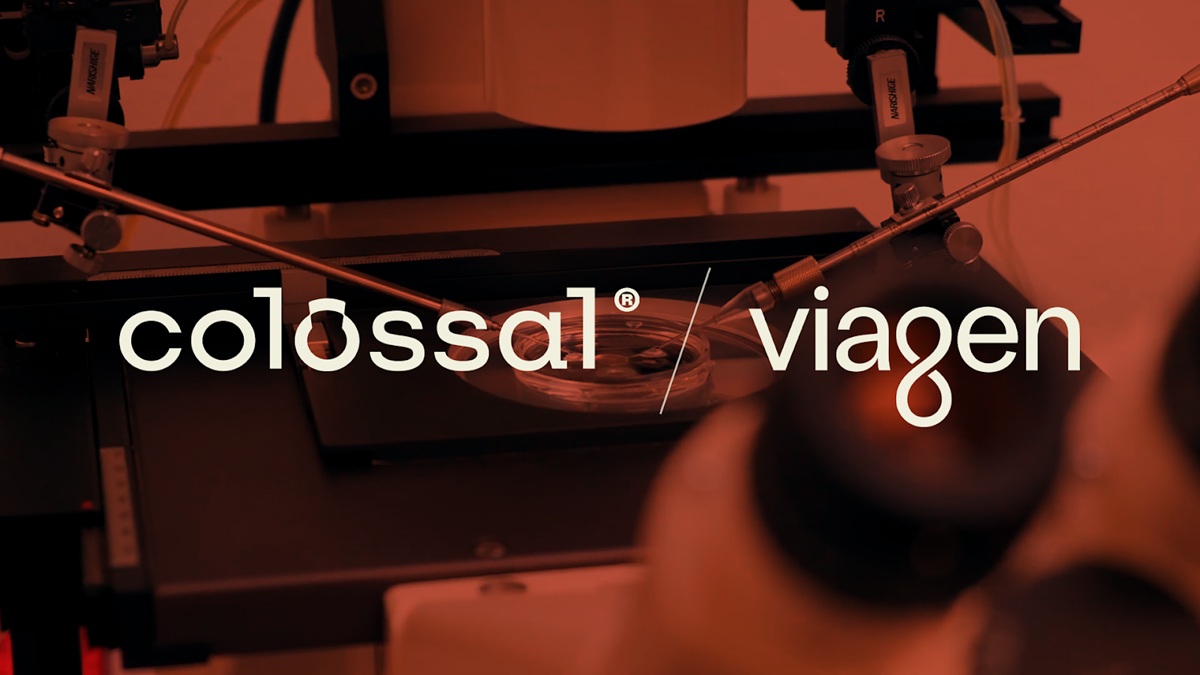
Colossal Biosciences, the de-extinction company that wants to bring back the woolly mammoth, has acquired animal cloning firm Viagen Pets and Equine.
Viagen provides genetic preservation and cloning services for pets, equine, and some of the world’s most endangered species.
The Texas-based company will continue to operate under its current leadership as a wholly owned subsidiary of Colossal while expanding its endangered species cloning platform to additional threatened species and countries worldwide.
This marks Colossal’s first acquisition, following the successful gestation of two announced companies— Breaking and Form Bio—since the company’s launch in 2021. The price wasn’t disclosed.
“Colossal is thrilled to welcome Viagen, the world’s leading cloning company, into our portfolio,” said Ben Lamm, CEO of Colossal, in a statement. “No other company comes close to what Viagen has achieved. Their unmatched expertise and cloning technology stack have become the world’s standard and their application of these critical and proprietary technologies to endangered species conservation makes them an invaluable partner in advancing our global de-extinction and species preservation mission.”
Founded in Austin, Texas in 2002, Viagen has grown from a livestock and genetic preservation company into the global leader in animal reproduction and preservation services for pets, equine, livestock, and endangered species.
Over the years, the company expanded through key acquisitions and partnerships, gaining exclusive licensing and access to the breakthrough technologies developed by the Roslin Institute of Edinburgh, best known for cloning Dolly the sheep.
Viagen will continue to be led by President Blake Russell, who has had a successful 25-year career in the animal genetics business and responsible for general management and operations.
“Joining forces with Colossal — the only de-extinction company and leader in biotechnology — gives Viagen the scale, resources, and shared vision to expand what we can do,” said Russell., in a statement. “Together, we can accelerate breakthroughs in genetic preservation, animal health, and endangered species recovery through biobanking and cloning at a scale that simply wasn’t possible on our own.”
Using groundbreaking technology to advance animal conservation, Viagen’s team has successfully cloned 15 species—including many world-firsts such as the Grevy’s zebra (not yet cloned as this is in gestation), black-footed ferret, and Przewalski’s horse—and has optimized protocols that deliver success rates approaching 80% in multiple species, far exceeding published averages of 2%.
Viagen have also cultured, and bio banked more than 40 unique species including 22 threatened or endangered species such as the White rhino, Black rhino, Florida bonneted bat, Perdido beach mouse and Indiana bat. These achievements firmly establish Viagen as a leader in animal cloning, setting unmatched benchmarks for innovation, efficiency, and conservation impact, the companies said.
Viagen has also been at the forefront of cryopreservation, a process that preserves biological samples by freezing materials at extremely low temperatures to halt their metabolic activity and degradation.
This technique also allows for the later revival of the frozen materials. Cryopreservation is an essential tool in biobanking for ensuring the long-term quality and integrity of stored samples. Using a combination of its advanced cloning technology and its ability to reanimate frozen cells, Viagen achieved another historic first when they successfully cloned two critically endangered Przewalski’s horses (one in 2020, another in 2023) from tissue that had been cryopreserved at the San Diego Zoo back in 1980.
“At Colossal we believe cryopreservation and cloning are essential tools to preserve, revive and restore biodiversity,” said Matt James, chief animal officer and executive director of the Colossal Foundation, in a statement. “Viagen’s proprietary technology will fuel Colossal’s de-extinction efforts and allow us to restore more endangered species populations as well as preserve their genetic diversity in Colossal’s Bio Vaults.”
Shawn Walker, chief science Officer of Viagen and one of the world’s leading cloning experts for more than twenty years said in a statement, “Partnering with Colossal Biosciences presents an extraordinary opportunity to apply our advanced cryopreservation and cloning techniques to the ambitious goals of de-extinction and species restoration.”
Walker added, “Colossal’s innovative approach aligns with our mission to preserve genetic diversity and support conservation efforts globally. We are excited to see how this collaboration can advance science globally.”
In 2022, Viagen expanded beyond cloning into advanced reproductive technologies for horses. The company introduced Intracytoplasmic Sperm Injection (ICSI) services to the equine market—a specialized technique in which a single sperm is injected directly into an egg, empowering breeders with the ability to select the sex of foals.
Leveraging Viagen’s leadership in the work of Somatic Cell Nuclear Transfer (SCNT), and decades of experience in the U.S. horse industry, Viagen seamlessly entered the ICSI space with unmatched expertise and innovation. Today, through cutting-edge technology, personalized care, and an exclusive license for Sexed Semen Technology from ST Genetics in the U.S. and Canada, Viagen continues to lead the field of advanced equine breeding science.
Viagen and its 25 employees will maintain its Whitesboro, Texas headquarters while integrating its team and expertise into Colossal’s technology platform and its broader de-extinction and species preservation pipeline.