
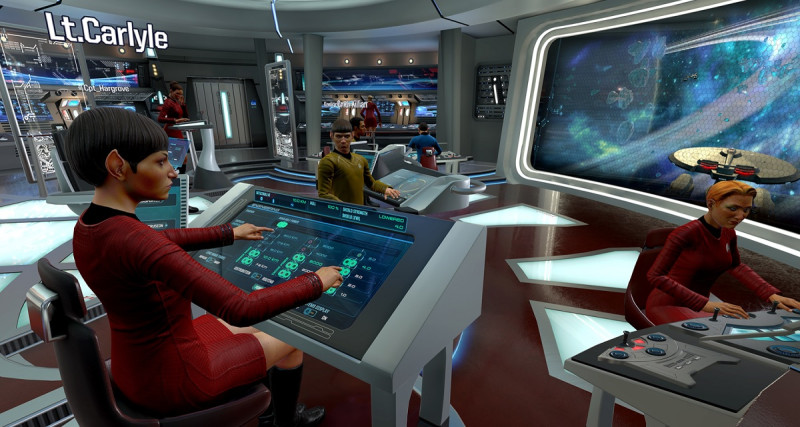
After hearing swirlings that the IBM Watson-powered voice recognition features for Star Trek: Bridge Crew would be deactivated, we reached out to Ubisoft for confirmation. As a result, it looks like that isn’t the case after all.
“Star Trek has always been about pushing technology forward, so in that spirit we are happy to be continuing our partnership with IBM Watson,” said David Votypka, the senior creative director at Red Storm Entertainment, the Ubisoft studio that developed of Bridge Crew, in a prepared statement. “Watson is standing by to await players’ orders in Star Trek: Bridge Crew and will be usable in upcoming content that is currently in development.”
Ubisoft and IBM also explained that the support is planned to continue through 2018 for both existing and upcoming content.
“We are excited to continue IBM Watson voice recognition in Star Trek: Bridge Crew throughout 2018,” said Joel Horwitz, a vice president at IBM’s Digital Business Group, in a prepared statement. “We look forward to our ongoing partnership with Ubisoft and to keeping our communities apprised of updates.”
The IBM Watson voice functionality has never been an integral feature of the game for most players, but it is a crucial facet for those that prefer to play as a solo captain. If you’ve got a full squad of friends on the bridge then you can rely on them for support, but being able to issue orders vocally to the AI is a huge boon when playing alone. Using only menus is frankly a bit cumbersome in a complex game like this. While this news is far from definitive on the future of the program’s support, it at least ensures another eight or so months.
Another great example of voice recognition in VR is with PSVR-exclusive psychological thriller, The Inpatient, in which you speak to NPCs using your real voice. Ideally, this type of support will become commonplace in VR over time instead of an ancillary bullet point feature.