
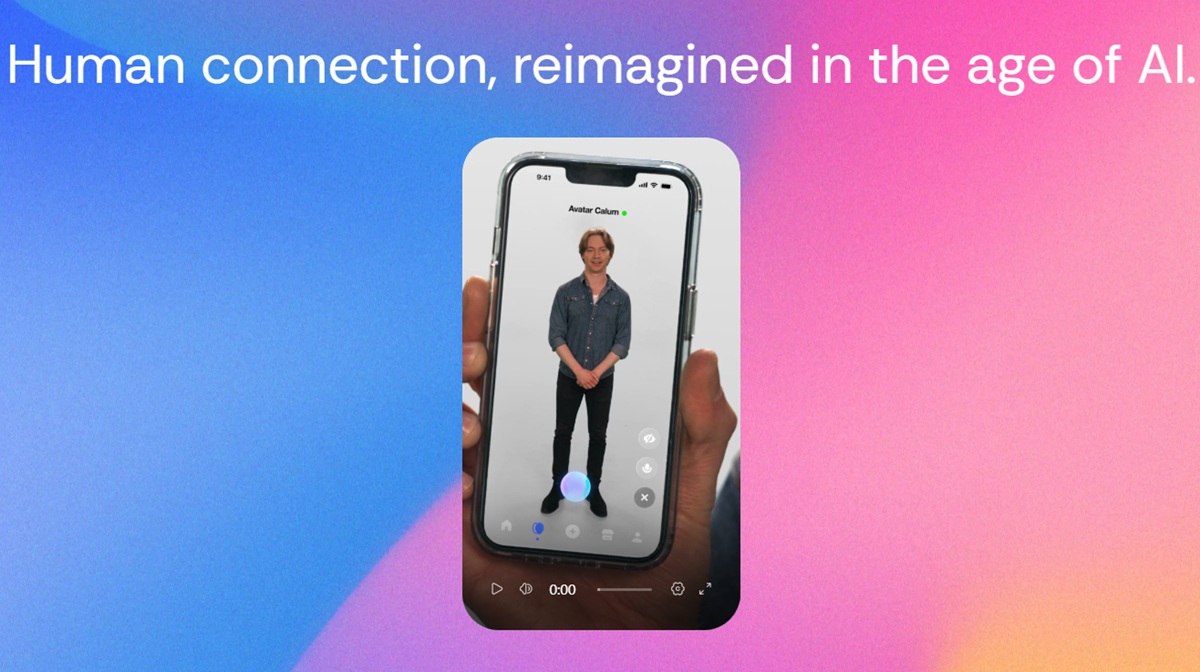
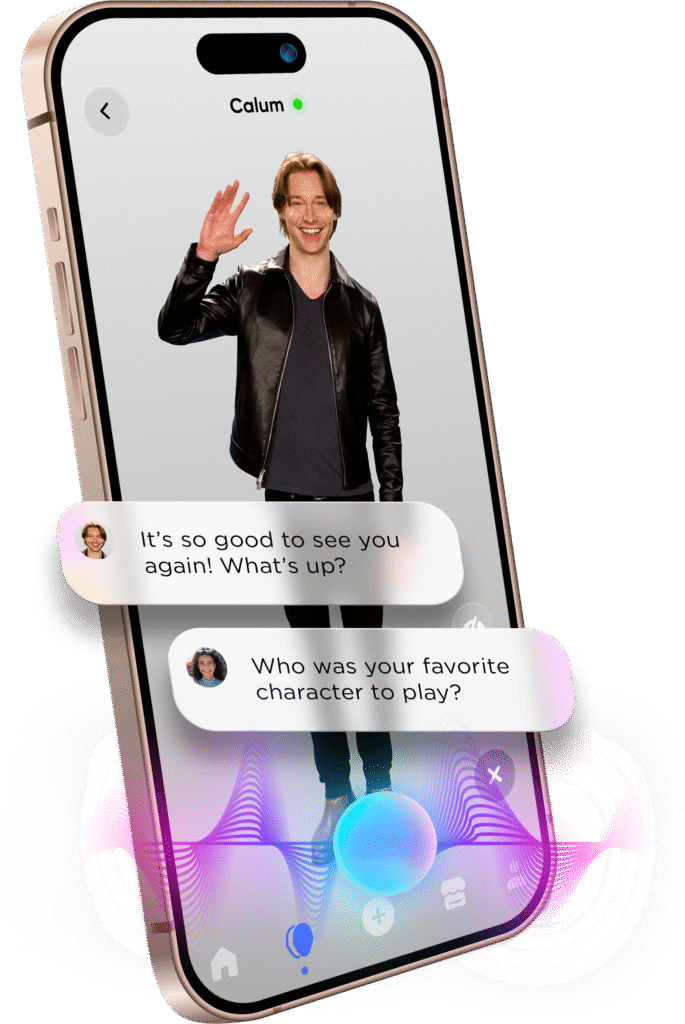
Everybody should have a digital twin. That’s the view of Calum Worthy and Russell Geyser, the cofounders of the AI startup 2wai, whose app is available today in early access on iOS.
Today, 2wai (pronounced 2-way) said you can now create your digital twin for free in just three minutes using the 2wai app. Consumers and influencers can quickly create their avatar following a few simple steps, and begin interacting with friends, family and fans.
Powered by 2wai’s patent-pending FedBrain technology, creators have total control of their avatar with managed access to pre-approved information.
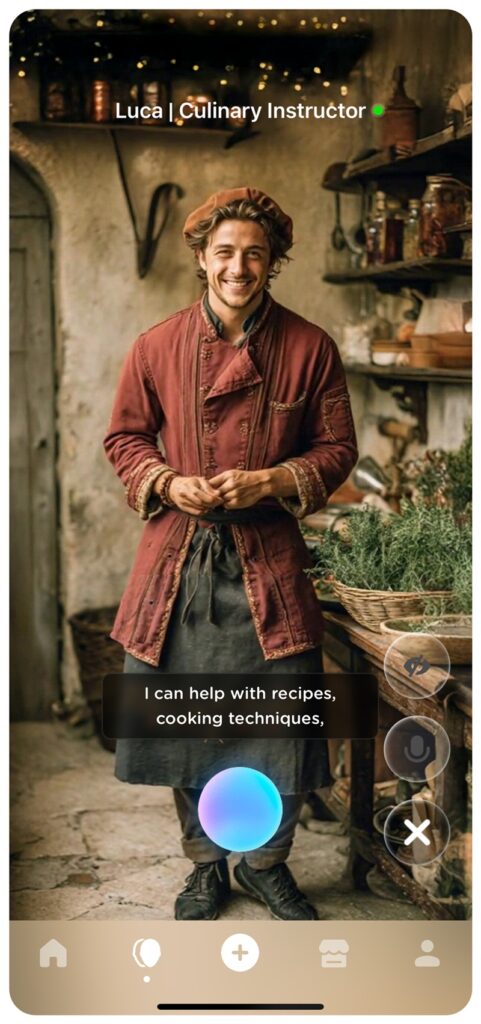
2wai said its mobile app breaks the boundaries of traditional social media by empowering everyone to create their own HoloAvatar and instantly dive into face-to-face conversations with celebrities, personalized assistants, cultural icons, family members, friends and more.
Using only a phone camera and the 2wai app, anyone over the age of 18 can follow a step-by-step process to quickly create their digital twin. Users can journal and record voice memos to keep their digital twins connected to real-life experiences and preserve legacies for generations to come.
“The ability to quickly and easily create your digital twin takes the HoloAvatar experience to the next level,” said Geyer. “Our app enables people to not only have meaningful conversations with avatars, but to preserve images and memories of loved ones – for free – in a totally new way thanks to our patent-pending technology. Imagine talking to an avatar of your great-grandparent telling you a story about when they were a kid – that’s the power of 2wai.”
Origins
The company started in January 2024 and it has been in stealth mode until now.
It started with an idea that Worthy had on the picket lines as an actor on strike with the Screen Actors Guild. He was picketing against the unbridled use of AI for actors’ voices and likenesses without compensation. Worthy didn’t want AI to be created with his voice and likeness and then say things that got him canceled in social media and the press.
“We started thinking about a different way to do AI. Is there a way to empower creators to own their AI, to decide what it says, to put perfect guardrails around it, so that it’s not some of the things that obviously you’ve seen” that are problems out there, Geyser said. “We saw this urgent need for individuals and artists and creators and professionals to have an agency over their digital selves.”
“That’s what I saw when I was walking the picket lines doing the SAG-AFTRA strikes. There’s a lot of fear around AI. And I thought that the next step is how can we utilize it, once we have the guardrails in place for our contracts with the studios that protect us,” Worthy said. “How can we then find the exciting ways to utilize this technology to, as Russell said, use it to amplify our voice rather than silence it?”
Worthy said he sees a lot of fear around AI, with concerns that AI will silence voices rather than amplify them. Many people are afraid of talking about it rather than face getting canceled. Geyser said he got interested in AI while working on a $250 million entertainment show in Las Vegas focused on the Avatar property.
“We posited the thesis that if there was a world where you could have real time chat interactions, not in the $100 million building that you have to build for these shows, but on your phone which everyone is carrying around, what would that be like? And what would the ubiquity of avatars in that space do for you?”
Generational Legacy: Preserve Yourself Forever
2wai empowers families to capture and preserve the voices, stories, and personalities of loved ones forever. Imagine an interactive avatar family tree where future generations can have conversations with digital versions of their ancestors, learning about their lives, values, dreams, and life lessons in their own words.
The company created a touching video, Generations, that shows how HoloAvatars can create an emotional experience for people who miss their loved ones.
Worthy noted that is father has cancer and Worthy has a fear that he may pass away and that one day his kids won’t really get a chance to know his father.
“I want to pass that down to my children and future children, a generational legacy,” he said.
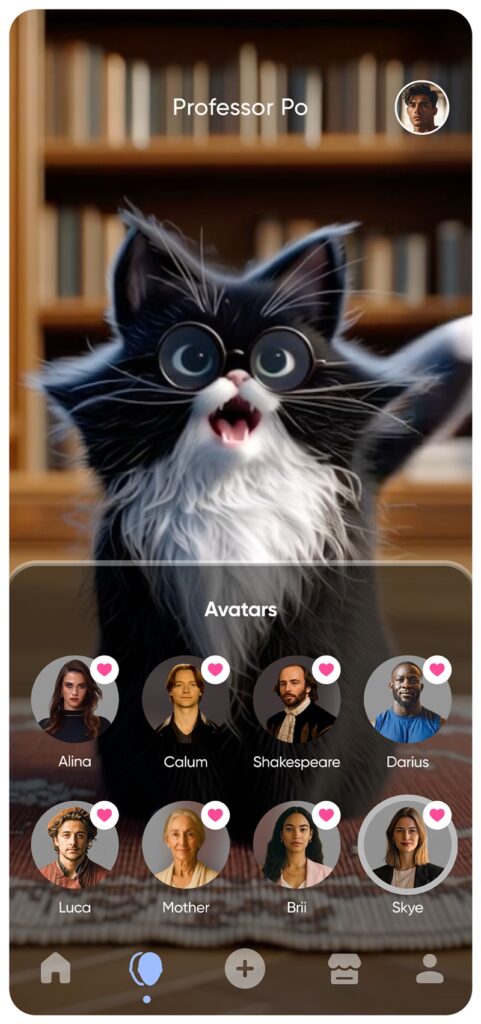
2wai demonstrated avatars like Alina, capable of speaking any language, and a digital Shakespeare for educational purposes. The technology, dubbed “Two Way,” is designed to be fully distributed and scalable, processing images on phones. They highlighted applications in education, influencer interactions, and generational legacy capture.
2wai is designed to be fully distributed and scalable, processing images on phones. There are probably 40 billion AI agents coming, and 2wai wants to make them useful. That’s why they did the Generations video where father, son and a virtual grandmother have a conversation.
“There are going to be these generational moments where you capture your kids, your parents, your grandparents,” Geyser said.
You could have an avatar of your child’s grandmother read a bedtime story, in her own voice but with words that she had never actually spoken. 2wai can do this by capturing a sample of someone’s voice and then make them say things that are in the same voice and character.
“It would be amazing if I could go back and talk to my ancestors 300 years ago and see what they were doing, and what was entertainment, what they were eating, and all those things,” Worthy said. “One of the things we’ve trademarked is called the Fed Brain. The Fed Brain is a closed data set that allows the avatar to only know what you want. And the general premise of 2wai is that we’re looking for you to own your avatar, create your avatar time stamp and have the provenance on the blockchain. Your avatar gets created, you own it, and you decide where it lives on this continuum of knowledge.”
Reaching the masses
The team built a demo avatar of the new pope and allow him to speak in any language to billions of Catholics around the world. He can speak in Korean and allow people to hear him talk in their own language.
“We worked with his best friend who was the envoy for him in the Vatican, and grew up with him in Buenos Aires. They wanted a very specific version of his voice that was a Buenos Aires accent with English, and so we created that for them,” Geyser said.
One company said it had 10,000 calls a day of people asking how to connect a mobile phone to a car. They wanted 2wai to work on an avatar that could be patient with people, speak any language and allow them to understand how to do this.
“Trust is key for celebrities and influencers,” Worthy said. “They really need to make sure that the brand that they’re creating for their avatars is trustworthy and they can know that they’re going to protect their brand and have a good reputation. We come from the entertainment space, and we know the brand is everything, and so we’ve ensured that our platform is a safe place for celebrities, influencers and everyday people.”
So far the company has funded its own operations. And it’s working with Fortune 500 companies to show what’s possible with the tech.
The AI Social Media for Creators and Influencers
“I feel like we’re just trying to, like chisel, our own niche here, where we’ve got things that are unique in terms of the way that the social applications come together. But our approach to putting this type of human, full body, photoreal avatar on device is something that gives us that advantage over other people who are entering the space as well, and we don’t have to kind of rely on servers and things the same way,” Geyser said.
2wai offers a powerful new channel: an always-on, multilingual digital twin that extends your presence across platforms and time zones. Engage fans in 40+ languages, respond creatively around the clock, and gather real-time insights to shape your content, products, and brand strategy all through your AI-powered avatar.
2wai’s patent pending, HoloAvatar Generation System enables users to create their own avatar, empowering individuals to take full ownership of their digital likeness — from how it looks to what it says.
The ability to input voice memos and dictate what the avatar “knows” in the FedBrain ensures complete control over content. Whether you’re preserving your legacy or scaling your influence, 2wai is your gateway to a new era of communication that is intelligent, expressive, and deeply personal.
“As an actor, my face is my brand,” said co-founder Calum Worthy. “With 2wai, creators can use AI to amplify their voice instead of replacing it. Consumers and influencers can relax knowing they have full control over their digital twin –2wai keeps creators in the driver’s seat.”
The early access version of the 2wai app is available for download on iOS. The team has 30 engineers and about 40 altogether. The company is seeking additional funding now.
Geyser said the team was aware there were other people out doing avatars like Nvidia, Meta and others. All of those avatars are processed on servers.
“And so our approach was do this fully distributed, so that it’s infinitely scalable. Could these images be processed on the phone? And if that were to happen, what types of conversations would then be possible to allow people to interact with these avatars?,” Geyser said.
In one demo dubbed “Alina,” a realistic-looking person named Alina talks about 2wai as the next wave of social media where anyone can create an avatar and have real-time conversations in any language. Then Alina reveals she is not the real Alina and is a 2wai avatar. Then she speaks in Spanish and other languages.
With such avatars, Geyser said that kids could have a conversation with William Shakespeare. You can converse with Shakespeare or follow an influencer or talk with an athlete. They asked me about my favorite Shakespeare play and I mentioned King Lear.
They asked an avatar to explain the theme of King Lear in French, and it talks about the theme of King Lear as the exploration of power, betrayal and the frailty of human nature, the poignant emphasis on the blindness that pride and folly can bring. It also delves deeply into familial bonds and the quest for redemption amidst chaos.
Because it’s focused on mobile, 2wai is focused on creating cost-effective AI models for people. The real technical challenge is to do them in real time. Building the guardrails also isn’t trivial.
The iOS app is out now and it has launched with a school solution with BT in schools in the United Kingdom. The user-generated avatars are launching today.
Trust and safety
I asked Geyser what the company could do to head off deep fakes or other misuse of the technology.
In reply, he said, “I would point to our user verification process for generating avatars. Users cannot simply create any avatar they want. They cannot upload photos or videos to create the avatar. Instead, they must go through a live step-by-step process with an audio guide that captures their avatar using their front-facing camera. We then compare those avatars with their uploaded photo identification to ensure they’re not imitating someone else.”
He added, “This is a very different process from competitors like Character AI, which allow for the creation of any fictional or nonfictional avatar. On 2wai, you can ONLY create your own digital twin.”
As for the “putting words in someone else’s mouth” concern, Geyser said, “When users are interacting with avatars of celebrities on the platform, the responses of celebrities are heavily guardrailed by our Fed Brain technology. Avatars will not speak exact words requested by a user, nor will they discuss sensitive topics without permission from the avatar’s owner. Typically, these avatars will only speak about topics that the owner has personally uploaded to the avatar’s brain via voice notes, documents, and other formats of “memory” media.”